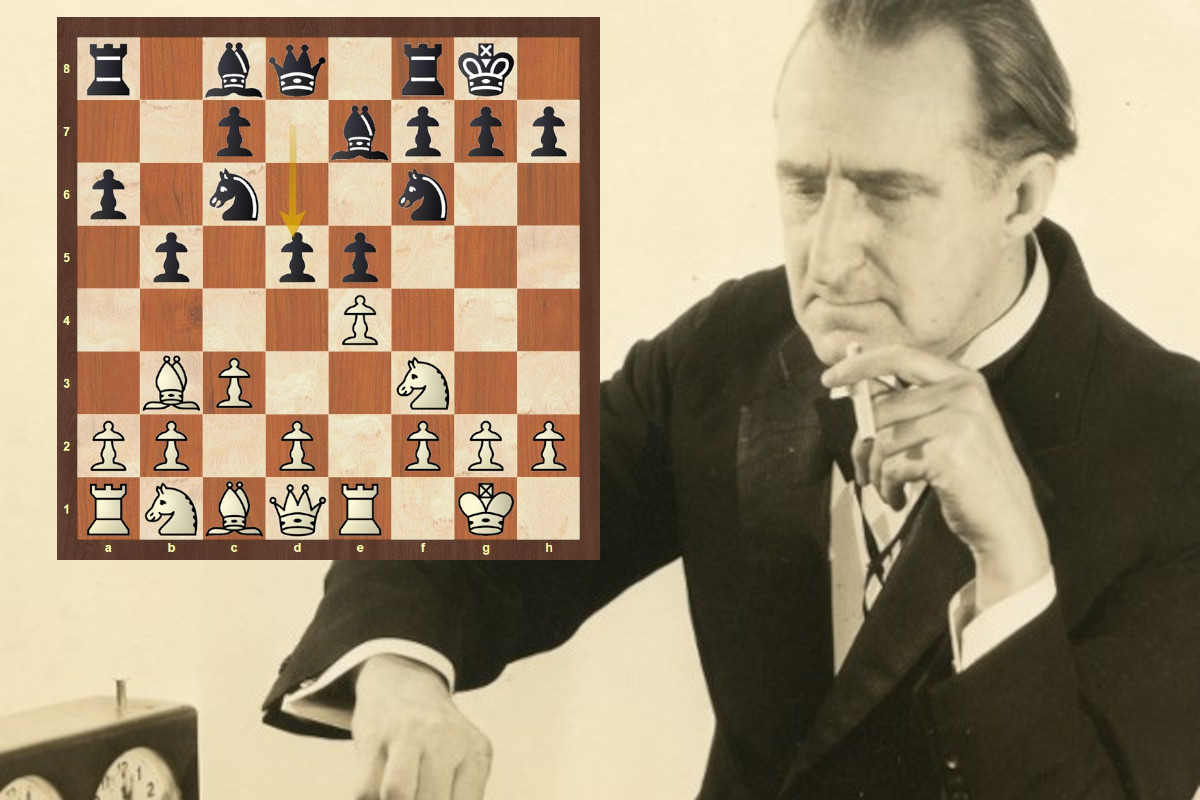
10/4/2026 – Jon Speelman looks back at the Samarkand Olympiad through a selection of short decisive games from the open section. From nearly 9,000 games played across the event, he filters out miniatures of 25 moves or fewer involving at least one player rated above 2500 - then selects a group of the most striking and entertaining examples! | Pictured: Ukrainian GM Igor Kovalenko (he played 15.Nb1! in the diagrammed position, trapping his opponent's queen) | Photo: Rafal Oleksiewicz / FIDE
new: Fritz 20
Your personal chess trainer. Your toughest opponent. Your strongest ally. FRITZ 20 is more than just a chess engine – it is a training revolution for ambitious players and professionals. Whether you are taking your first steps into the world of serious chess training, or already playing at tournament level, FRITZ 20 will help you train more efficiently, intelligently and individually than ever before.
YOUR PERSONAL CHESS COACH - Whether you’re taking your first steps into the world of club chess, or already playing at a tournament level: with FRITZ, you can train more efficiently, intelligently and with a more personalised approach than ever before. FRITZ is more than just a chess engine – it’s a training revolution! Whether you’re taking your first steps into the world of club chess, or already playing at a tournament level: with FRITZ, you can train more efficiently, intelligently and with a more personalised approach than ever before.
Expand your Chess Horizon
The perfect equipment for 2026 with the latest ChessBase program '26, Mega Database, ChessBase Magazine and Premium-Account!
€349.90
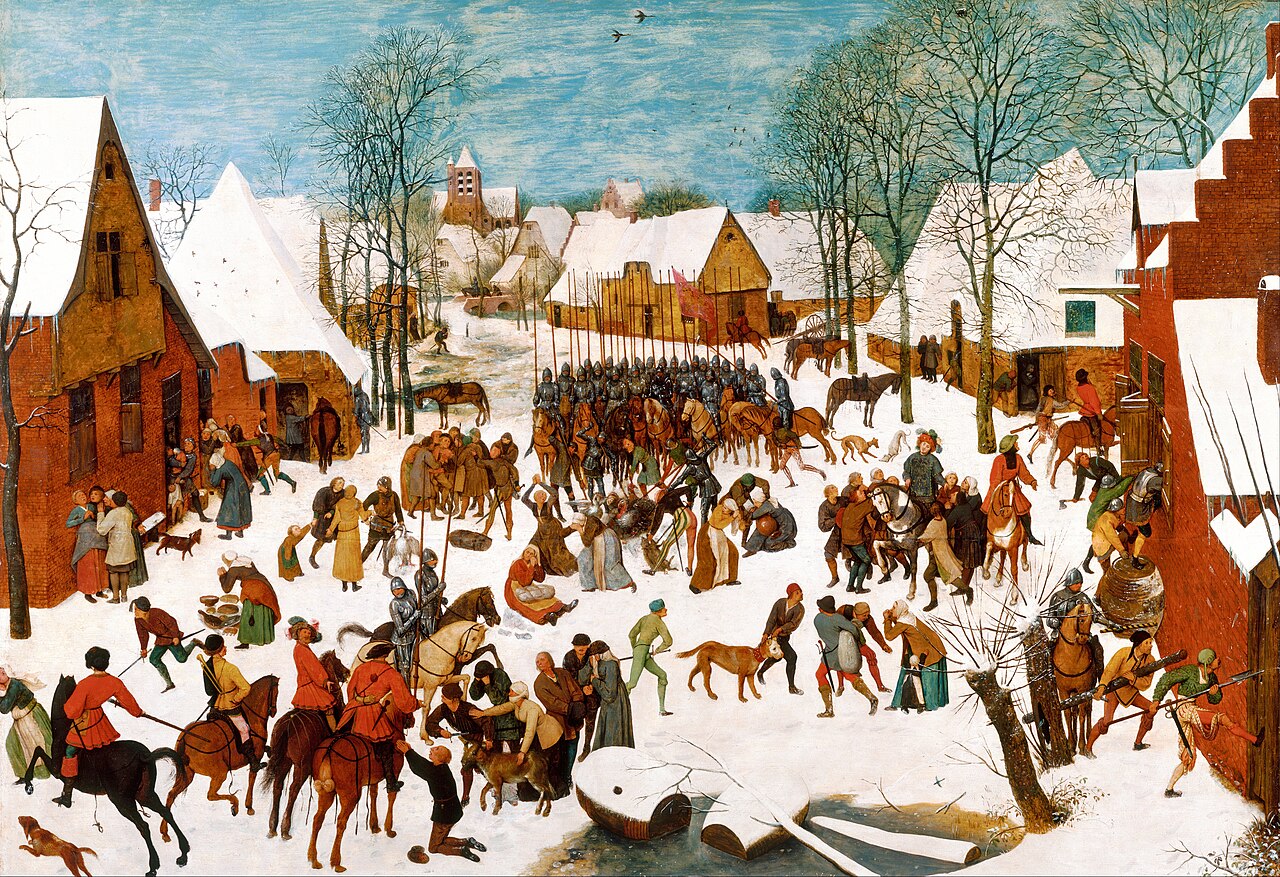
The massacre of the innocents
[Note that Jon Speelman also looks at the content of the article in video format, here embedded at the end of the article.]
The Samarkand Olympiad was the largest ever with over 200 teams in the open section and only a few dozen fewer in the parallel Women's Olympiad. Consequently, there were about 800 games a day and so getting on for 9,000 overall.
Many of the best games have already been highlighted here, and I thought that I'd look for some miniatures - games of 25 moves or fewer. To restrict these to a manageable number, I took decisive games in the open section only and required at least one player to be rated over 2500. This yielded 40 games about half of which were from the "massacre of the innocents" in the first round (with pairings of top half v. bottom). I selected the best and/or most amusing with fairly light annotations and have kept them in broad chronological order.
This compact course is designed specifically for practical play. Instead of overwhelming you with endless theory, it focuses on the critical lines, typical plans, and recurring tactical ideas. Looking for an opening that gets your opponents thinking on move one? Grandmaster Andy Woodward has relied on 1.b3 for years in blitz and bullet, using it to defeat strong masters and grandmasters who underestimated its hidden venom. While many players dismiss the opening as harmless, they often find themselves caught in unfamiliar positions, tactical traps, and uncomfortable middlegames. This compact course is designed specifically for practical play. Instead of overwhelming you with endless theory, it focuses on the critical lines, typical plans, and recurring tactical ideas that matter most when the clock is ticking.
Free video sample: Introduction
Free video sample: King's Indian Setup
Several oil-on-oak-panel versions of "The Massacre of the Innocents" were painted by Netherlandish painters Pieter Bruegel the Elder and his son Pieter Brueghel the Younger (c.1565-1567). The work translates the Biblical account of the Massacre of the Innocents into a scene in the Southern Netherlands in the prelude to the Dutch Revolt against Spanish rule
I ended up with a "cricket team" of games, and you can find another (only slightly gratuitous) mention of cricket in the notes to game 7, Rapport v. Demchenko.
After the fiasco last month, I did finally manage to log on to XSplit via Twitch. So I've also done the usual video version this time, which I'm recording (in the regrettable absence of a time machine) on Friday, October 2nd - my 70th birthday.
Select an entry from the list to switch between games
In this video course experts examine the games of Bent Larsen. Let them show you which openings Larsen chose, where his strength in middlegames were, how he outplayed his opponents in the endgame & you’ll get a glimpse of his tactical abilities! Bent Larsen (1935–2010) was the greatest chess player in Danish history, and for a time, the second-strongest player in the Western world behind Bobby Fischer. Between 1954 and 1971, he won the Danish Championship six times, and achieved numerous international tournament victories throughout his career.
Free video sample: Introduction to Bent Larsen by Peter Heine Nielsen
Free video sample: Introduction to the Opening Section
Jonathan SpeelmanJonathan Speelman, born in 1956, studied mathematics but became a professional chess player in 1977. He was a member of the English Olympic team from 1980–2006 and three times British Champion. He played twice in Candidates Tournaments, reaching the semi-final in 1989. He twice seconded a World Championship challenger: Nigel Short and then Viswanathan Anand against Garry Kasparov in London 1993 and New York 1995.
9/16/2026 – GM Jon Speelman returns to the theme of opening preparation in the computer era, examining how engine-assisted novelties can unsettle even the strongest players. His examples begin with Fabiano Caruana's preparation from the recent Grand Chess Tour final, before moving to an earlier attacking idea by Hikaru Nakamura and, finally, the famous gambit introduced by Frank Marshall (pictured) against José Raúl Capablanca in New York in 1918.
8/3/2026 – In his latest column, Jon Speelman moves from Hatfield House and Queen Elizabeth’s Oak to a series of chess puzzles, with rook endings, defensive choices and a spoof opening line among the themes. He also introduces the idea of a "Fluffy Duck" opening, inspired by an advocaat-based cocktail, and invites readers to suggest a suitable variation! | Photo: <a href="https://www.puredrinkology.com/recipes/snowball/">Puredrinkology</a>
King’s Indian fans who choose the Mar del Plata attack (7...Nc6) against White’s classical system (1.d4 Nf6 2.c4 g6 3.Nc3 Bg7 4.e4 d6 5.Nf3 0-0 6.Be2 e5 7.0-0) usually aim for a complex position with mutual attacks on open wings, requiring long-term strategic planning and tactical sharpness in critical moments. Computers often do not know how to handle the arising complex strategic positions, which suits players who like to think on their own instead of memorizing long variations. However, the fashionable Bayonet Attack (9.b4) interferes with Black’s ideas. After Black’s main move 9...Nh5 the positions opens, the lines get forced and computer analysis is important again. But this DVD offers an antidote against White’s Bayonet Attack, namely 9...a5! This move leads to sound positions with very few concrete lines, in which the focus is on strategy not on tactics. Objectively chances are equal but if Black knows what to do things might quickly become dangerous for White.
YOUR PERSONAL CHESS COACH - Whether you’re taking your first steps into the world of club chess, or already playing at a tournament level: with FRITZ, you can train more efficiently, intelligently and with a more personalised approach than ever before.
How grandmasters win without fireworks: GM Jan Markos shows you 11 very practical tips from "How to play in a lost position" to "Be patient like Carlsen" that will improve your tournament chess.
The Nimzo-Indian has stood the test of time for over a century: Still a top choice for elite players today, from Magnus Carlsen to Praggnanandhaa, it remains one of Black's most reliable ways to fight for real chances against 1.d4 2.c4 3.Nc3.
1.c4 e5 2.Nc3 Bb4!? is an opening idea well worth considering. Black immediately threatens to double the pawns on c3 in the style of the Trompowski or Sicilian Grand Prix attack.
Italian Game Powerbase 2026 is a database and contains 8571 top class games from Mega 2026 and the Correspondence Database 2026, of which 479 are annotated.
Videos: Nico Zwirs discusses the Sicilian with 2…e6 3.d4 cxd4 4.Qxd4 Nc6 5.Qe3 Nf6 6.Nc3. Mihail Marin examines Sindarov’s 6.Ne5 in the Queen’s Pawn Defence. Plus the ‘Lucky bag’ featuring 41 analyses by Berg, Ftacnik, Gupta and many others.
€14.90
We use cookies and comparable technologies to provide certain functions, to improve the user experience and to offer interest-oriented content. Depending on their intended use, analysis cookies and marketing cookies may be used in addition to technically required cookies. Here you can make detailed settings or revoke your consent (if necessary partially) with effect for the future. Further information can be found in our data protection declaration.
Pop-up for detailed settings
We use cookies and comparable technologies to provide certain functions, to improve the user experience and to offer interest-oriented content. Depending on their intended use, cookies may be used in addition to technically required cookies, analysis cookies and marketing cookies. You can decide which cookies to use by selecting the appropriate options below. Please note that your selection may affect the functionality of the service. Further information can be found in our privacy policy.
Technically required cookies
Technically required cookies: so that you can navigate and use the basic functions and store preferences.
Analysis Cookies
To help us determine how visitors interact with our website to improve the user experience.
Marketing-Cookies
To help us offer and evaluate relevant content and interesting and appropriate advertisement.




.jpeg)













.jpeg)