British champion, Candidates semifinalist, author and analyst
Grandmaster Jonathan Speelman turns 70 on 2 October 2026. One of the leading English players of the 1980s and early 1990s, Speelman reached the Candidates semifinals, climbed as high as joint fourth in the world rankings and represented England throughout one of the most successful periods in the country's chess history. His career combined strong results in individual tournaments, repeated success in national competition, two appearances in the Candidates and a long record in team events, while his later work as an author, columnist and analyst made him a familiar figure well beyond tournament play.
Jonathan Simon Speelman was born on 2 October 1956 in Marylebone, London. He attended St Paul's School and later studied mathematics at Worcester College, Oxford, a background that fitted naturally with the analytical character of his chess. Speelman left Oxford in 1977 and turned to chess professionally. His progress was rapid: he was awarded the international master (IM) title in 1978 and became a grandmaster (GM) in 1980, at a time when England was beginning to produce a particularly strong generation of players.
 On this DVD a team of experts gets to the bottom of Kasparov's play. In over 8 hours of video running time the authors Rogozenko, Marin, Reeh and Müller cast light on four important aspects of Kasparov's play: opening, strategy, tactics and endgame.
Speelman's peak years came towards the end of the 1980s. His highest FIDE rating was 2645, achieved in July 1988, when he stood fifth in the world. By January 1989 his rating had slipped slightly to 2640, but his ranking had improved to joint fourth, the highest position of his career. That distinction is worth noting, since his peak rating and peak ranking came on different rating lists. At the time, he competed in elite events and in the World Championship cycle at a level reached by few English players before or since.
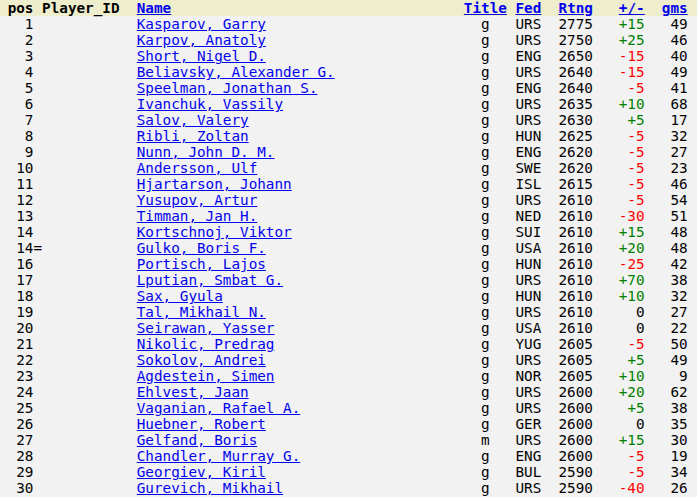
January 1989 FIDE ranking | Source: OlimpBase
Early achievements and British titles
Speelman had already established himself as one of Britain's most promising young players before reaching adulthood. He won the British Under-14 Championship in 1969 and shared first place in the British Under-16 Championship in 1970. Those results were followed by steady progress through the national and international ranks, and by the late 1970s he was already competing successfully at senior level. In 1978, the same year in which he received the IM title, he won his first British Championship and was also part of the England team that won the World Under-26 Team Championship in Mexico City, finishing ahead of the Soviet Union.
He returned to the top of the British Championship later in the following decade, winning the title again in 1985 and 1986. The three national victories came during a notably competitive period in English chess, when players such as Tony Miles, John Nunn and Nigel Short were regularly active at a high international level. Speelman's British titles thus were achieved within a national scene that was itself unusually strong.
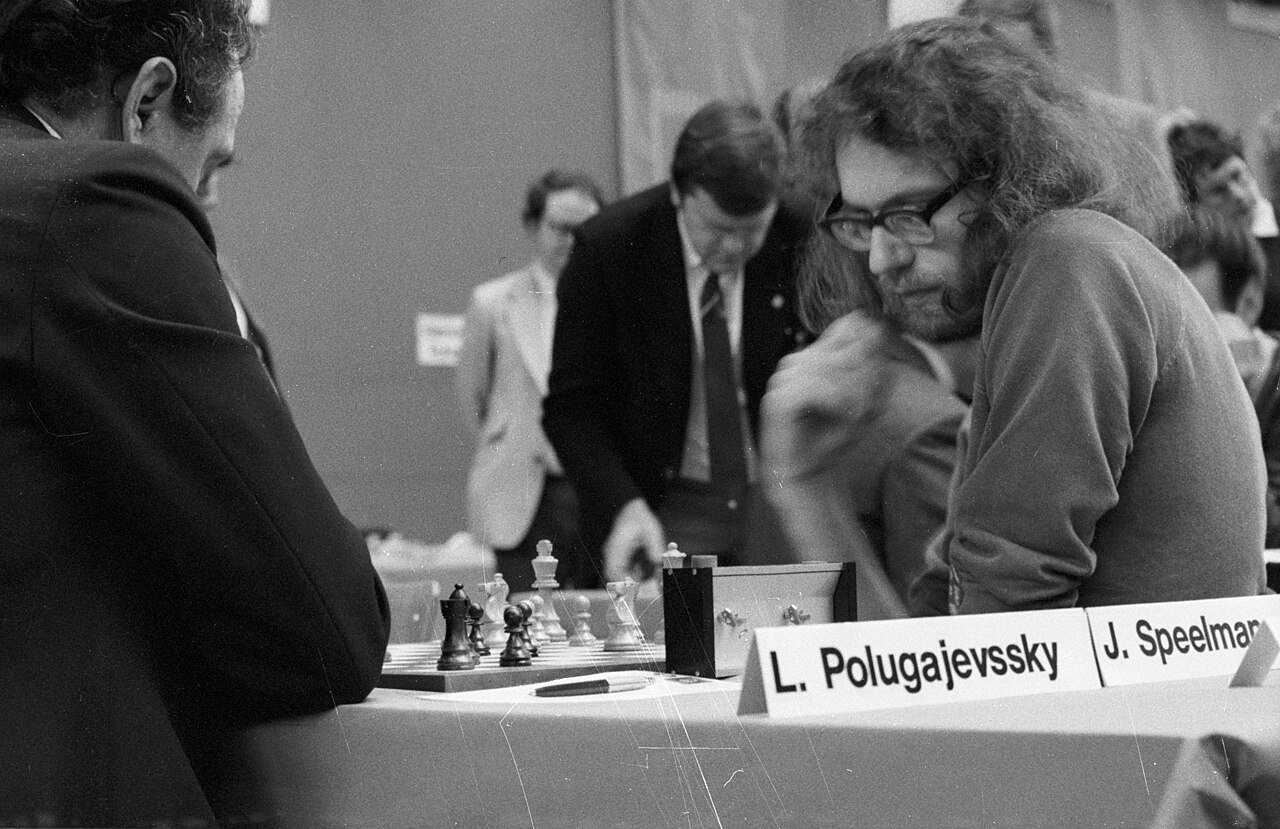
Jon Speelman at the 1982 Chess Olympiad in Lucerne | Photo: Krtschil via Wikimedia Commons
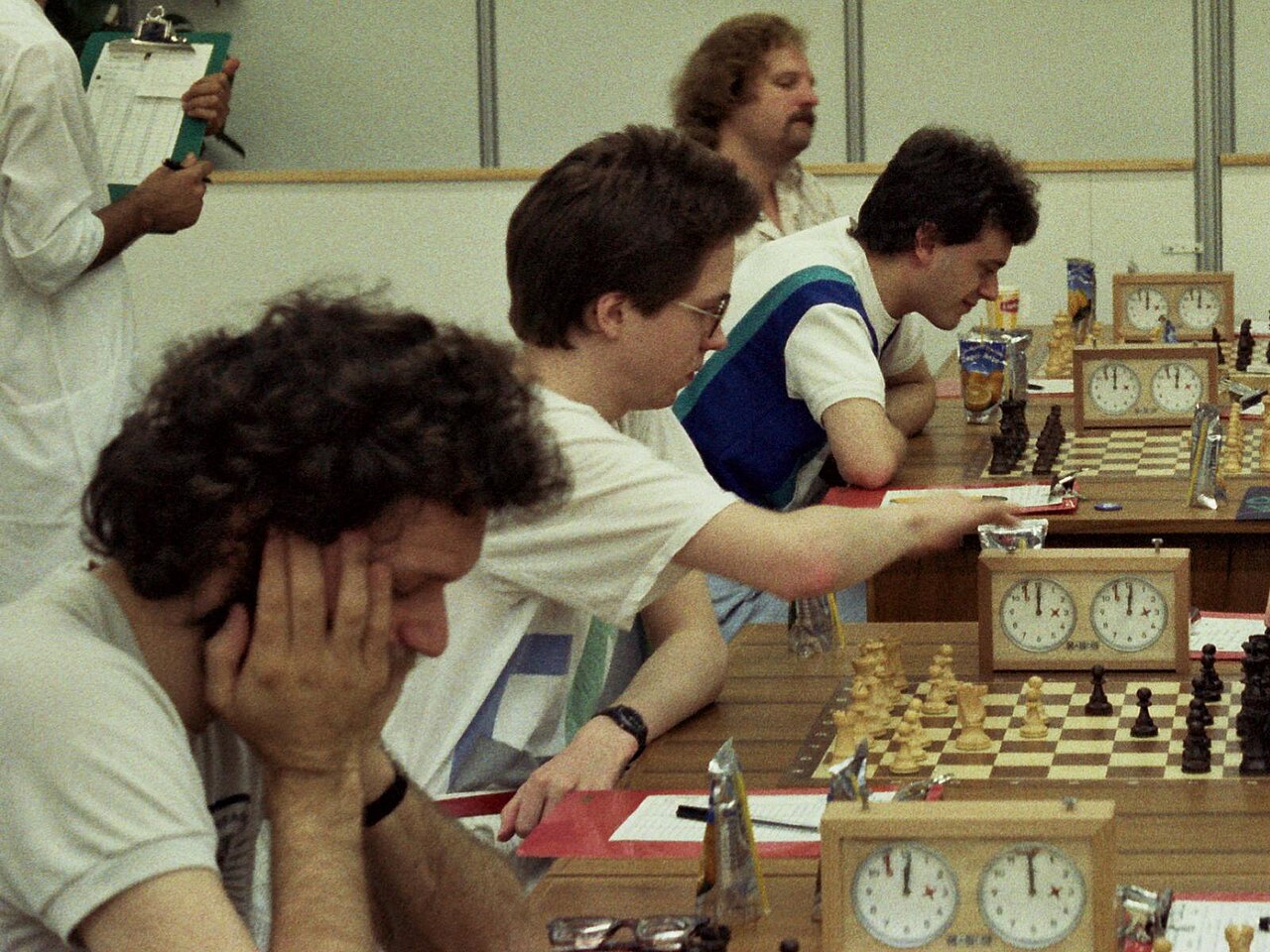
The English team at the 1986 Dubai Chess Olympiad: Jon Speelman, Nigel Short, John Nunn and Tony Miles | Photo: Gerhard Hund via Wikimedia Commons
International results and the Candidates
Speelman compiled a series of notable international tournament results during the 1980s. He shared first place at Dortmund in 1981, then did the same at Hastings in 1983/84. He returned to Hastings to share first again in 1986/87, this time going through the event undefeated. In 1987 he also shared first place at Be'er Sheva, where he scored 8½/11 without losing a game. Results of this kind, together with his rising rating, helped place him securely among the leading grandmasters of the period and provided the platform for his strongest run in the World Championship cycle.
That run began at the 1987 Subotica Interzonal, one of the qualifying tournaments for the Candidates. Speelman shared first place with Gyula Sax and Nigel Short, thereby securing a place in the Candidates. The field included a number of established international stars.
 Nigel David Short is generally regarded as the strongest British grandmaster of the 20th century. Born on June 1st 1965 he started out as a chess prodigy, first attracting media attention by beating Viktor Korchnoi and Tigran Petrosian in simultaneous exhibitions at the age of ten and twelve years respectively. At the age of 14 he became the youngest IM in history, breaking Bobby Fischer’s previous record, and at 16 he came second (to Garry Kasparov) at the under 20 World Junior Championship in Dortmund.
In the first round of the Candidates he faced the American grandmaster Yasser Seirawan and won convincingly by 4-1. The quarterfinal brought an all-English match against Nigel Short. Speelman won 3½-1½ and advanced to the semifinals, one of the best individual achievements of his career. There he faced Jan Timman, one of the strongest players of the era. The match was much closer, with Timman eventually prevailing 4½-3½.
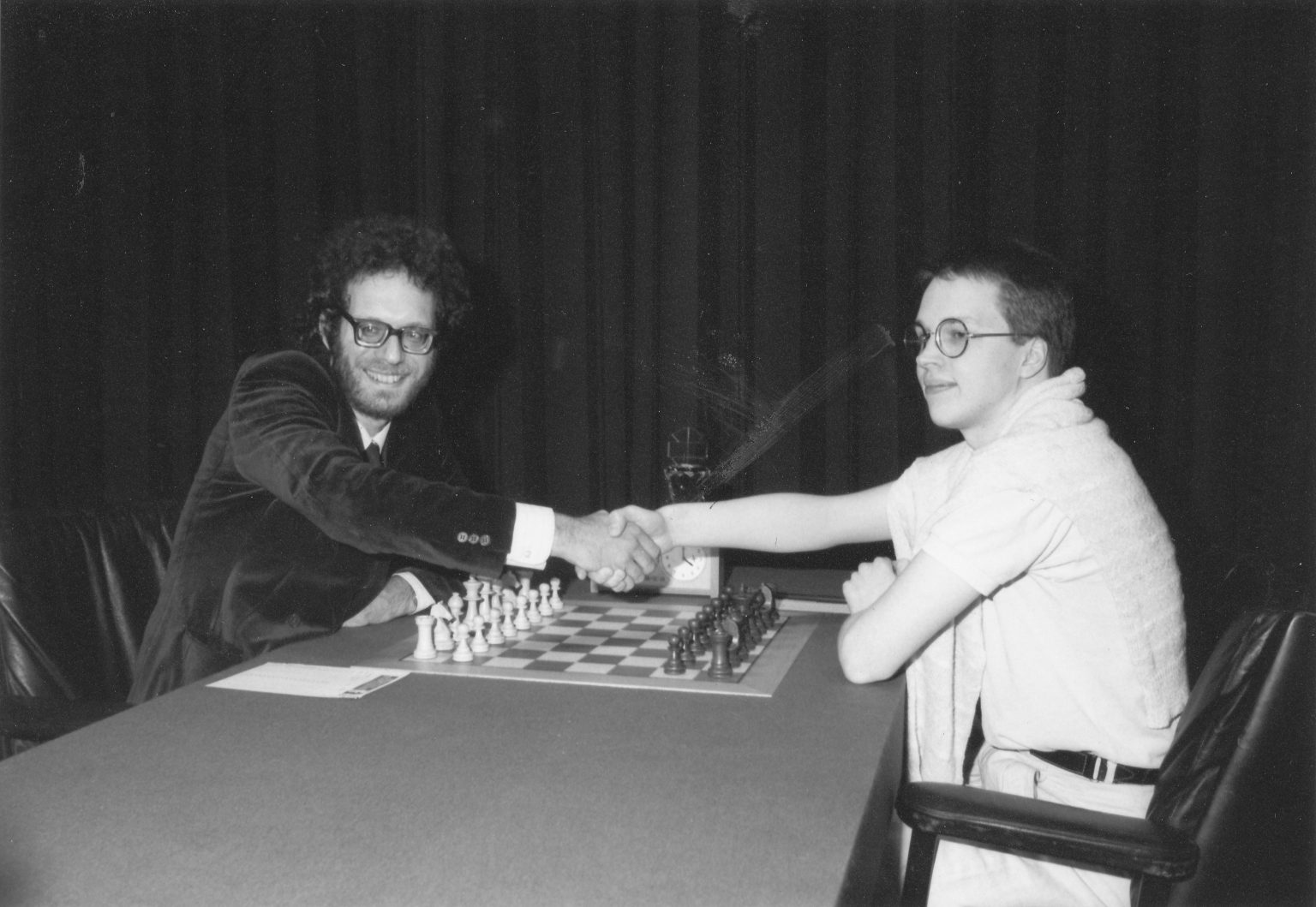
Jon Speelman and Nigel Short during their 1989 Candidates match | Photo: British Chess News
His performance in that cycle also gave him a place in the Candidates of the following World Championship cycle. Once again he met Short, but this time the result was reversed: Short won by 5½-4½.
| Cycle |
Stage |
Opponent |
Place |
Date |
Result |
| 1987–90 |
First round |
Yasser Seirawan |
Saint John, Canada |
January 1988 |
Won 4–1 |
| 1987–90 |
Quarterfinal |
Nigel Short |
London, England |
August 1988 |
Won 3½–1½ |
| 1987–90 |
Semifinal |
Jan Timman |
London, England |
October 1989 |
Lost 3½–4½ |
| 1990–93 |
First round |
Nigel Short |
London, England |
January-February 1991 |
Lost 4½–5½ |
All games - Speelman at the Candidates
Team achievements and work beyond tournament play
Speelman was also a major figure in England's national team for more than two decades. He played in every Chess Olympiad from 1980 through 2006, an unusually long sequence of appearances.
His strongest period with the team coincided with England's best run of Olympiad results: silver medals at Thessaloniki in 1984, Dubai in 1986 and Thessaloniki again in 1988, each time behind the Soviet Union. At Dubai 1986, Speelman scored 7/9 as first reserve, with five wins and four draws, and received an individual silver medal for his performance. Two years later, playing on board two, he scored 8½/12, another of his strongest results in Olympiad competition. He also recorded 8/12 at both Novi Sad 1990 and Moscow 1994.
 In this video course, experts (Pelletier, Marin, Müller and Reeh) examine the games of Viktor Korchnoi. Let them show you which openings Korchnoi chose to play, where his strength in middlegames were, or how he outplayed his opponents in the endgame.
In 1997, he was part of the England team that won the European Team Championship in Pula, alongside Nigel Short, Michael Adams, Matthew Sadler and Julian Hodgson.
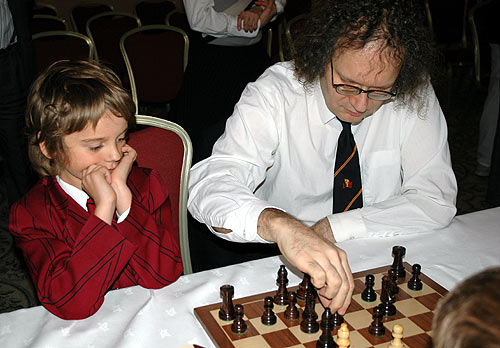
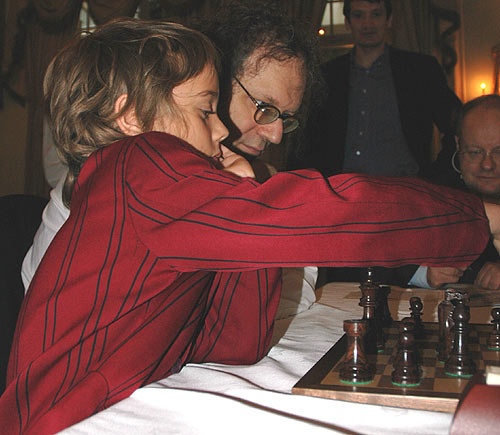
Jon Speelman at a four-hander blitz challenge - with Alexei Shirov and two kids - organised by Gibtelecom in 2005: Shirov/Andreev v. Speelman/Erding (0-1) | Photos: John Saunders
Away from competitive play, Speelman developed a substantial parallel career as a chess writer, commentator and analyst. He has been particularly associated with endgame analysis, and his books include Analysing the Endgame, Endgame Preparation and, as co-author, Batsford Chess Endings. He also wrote extensively for the British press, including work for The Observer and The Independent.
Speelman's analytical reputation has long been one of the defining features of his chess career, complementing a playing style known for unconventional strategic ideas and tactical resourcefulness.
At 70, Speelman's record spans junior success, three British titles, major international tournament victories, two Candidates appearances, repeated Olympiad medals and several decades of work as an author and analyst, making him one of the most significant figures in modern English chess.
Jon Speelman's Agony column
With his usual wit and analytic depth, Jon has been writing regular columns on our news site for a number of years now. In fact, his latest instalment, published a couple of weeks ago was the 243rd. Find below links to a few of his best columns or go over all his pieces on the author's page.
#132: When 3 is greater than 5
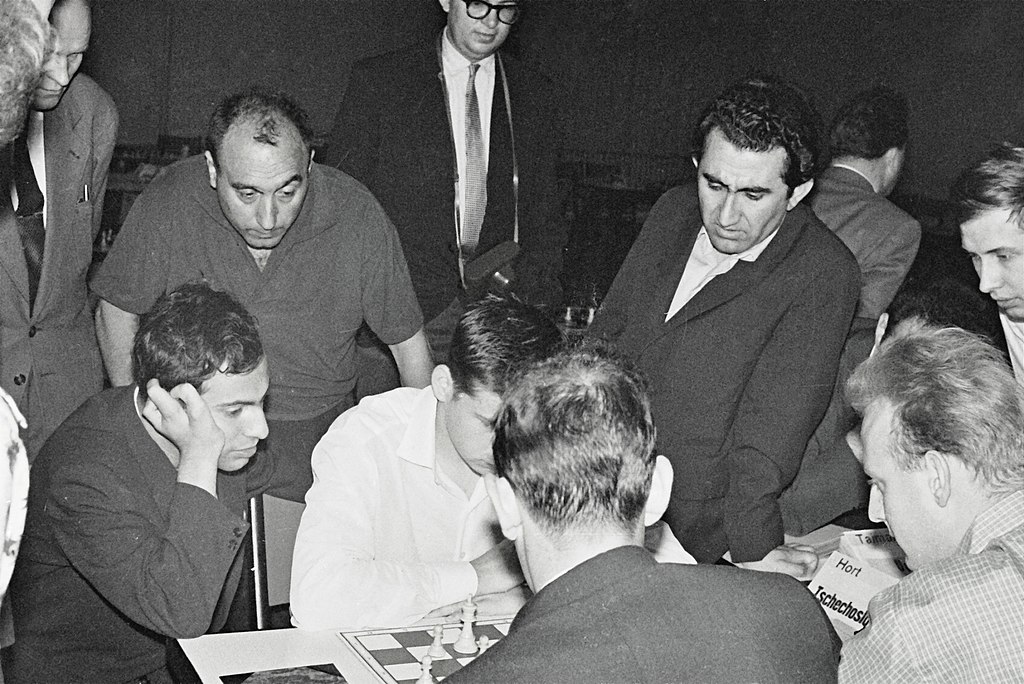 Jon Speelman explores the exchange sacrifice. Speelman shares five illustrative examples to explain in which conditions giving up a rook for a minor piece is a good trade. "As a general rule and in fact (almost all?) of the time you need other pieces on the board for an exchange sacrifice to work".
#147: Overthinking the silence
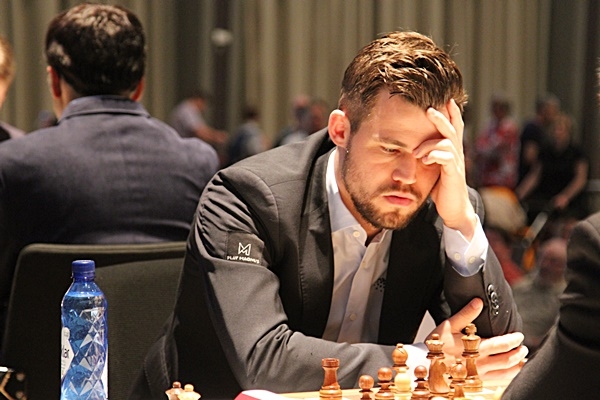 Often times during a chess game you have to make a choice between waiting and initiating concrete action. Star columnist Jon Speelman notes that "this eerie silence before battle is perhaps the most difficult moment psychologically", and goes on to show how even world champion Magnus Carlsen can take a wrong turn from time to time.
#196: Seeing the whole board
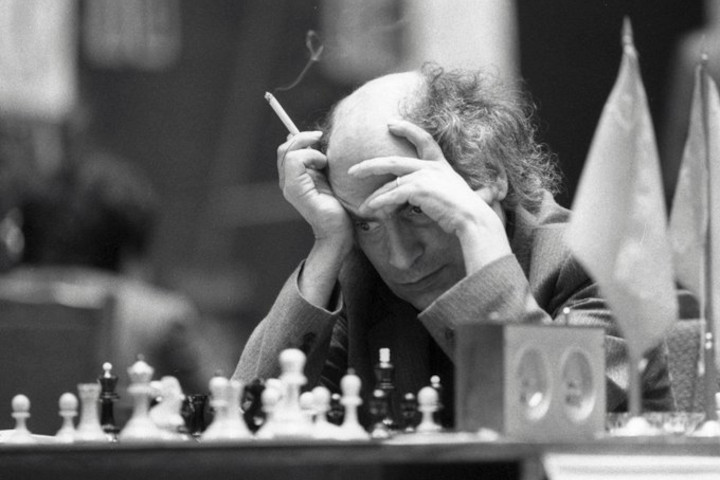 When a strong player looks at a position (in a real game of chess, not a problem) he or she will automatically see it not as a random collection of pieces but as a series of chunks - patterns that are recognisable and have known features. And the patterns will also generate ideas of moves which may be profitable. Curiously, sometimes apparently insignificant changes can be crucial, and today I’m focussing on an instance of this phenomenon.
#215: The search for less than perfection (or when -0.07 > 0.11)
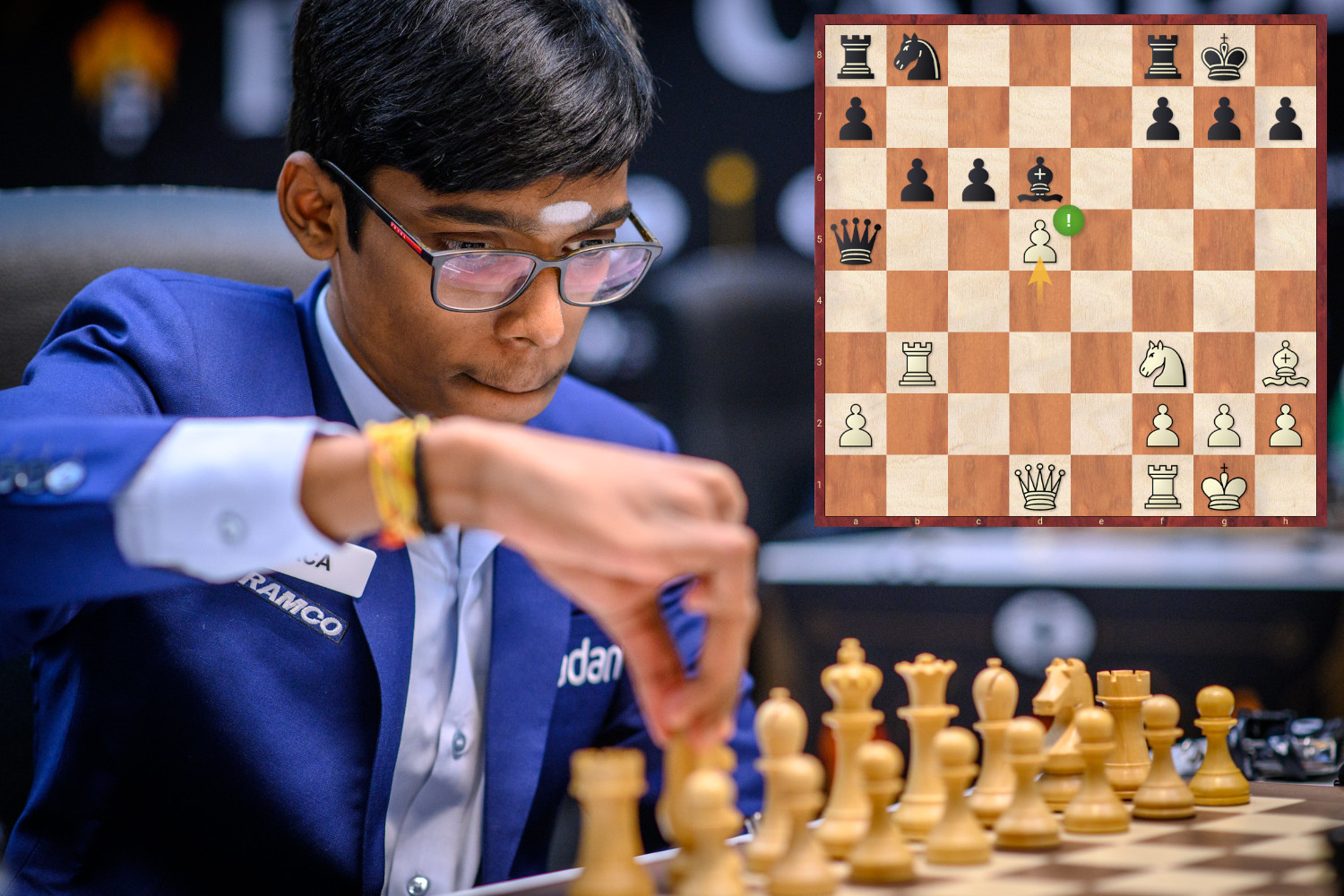 One of the most interesting aspects of the Candidates Tournament was the superb opening preparation, and in particular how they managed to set each other problems which hadn't been foreseen. This is a special skill that involves interacting with the fearsome engines not to find the "best" moves but ones which are almost as strong according to the silicon evaluation - but lower down the food chain!
#237: Battles with Jan
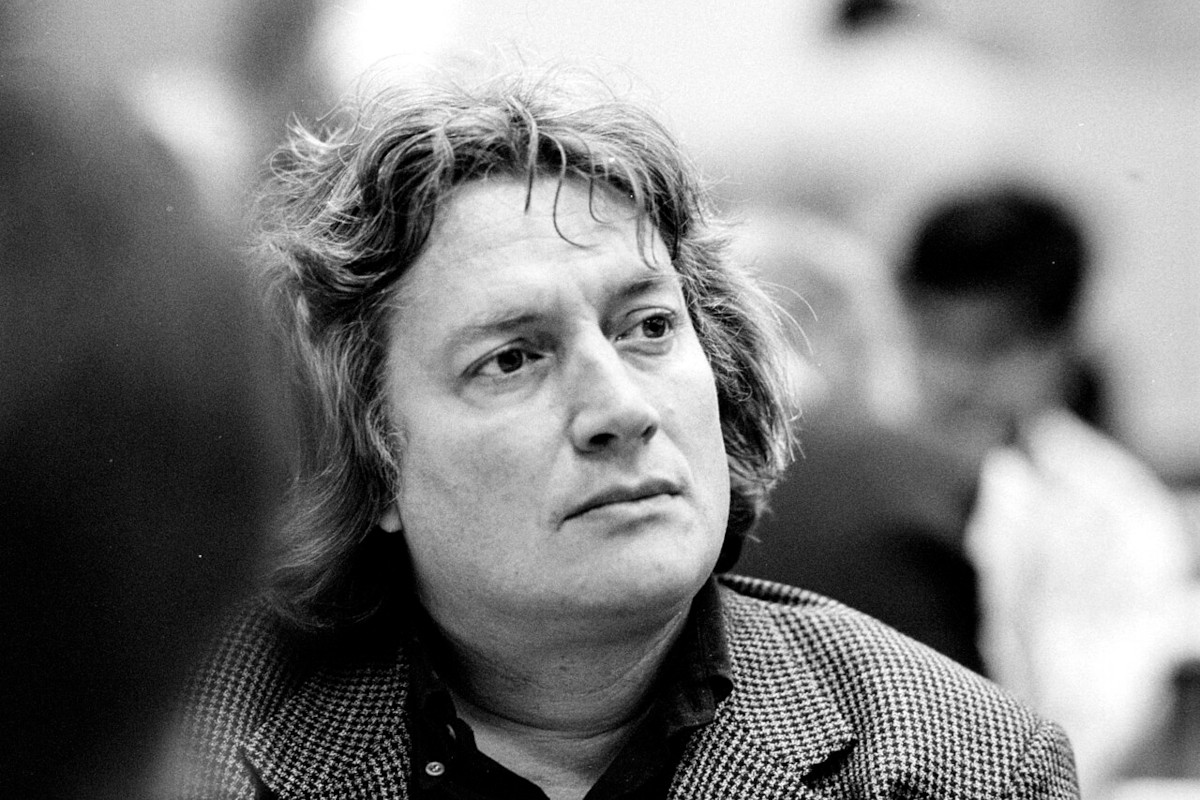 Jon Speelman reflects on the career and personality of Dutch GM Jan Timman following the news of his passing. Speelman recalls their encounters over the board, including games from their 1989 Candidates' match in London. "Away from the board, Jan was always excellent company and I always thought that he was one of the very nicest of the generation just a few years older than me".
In this video course experts examine the games of Bent Larsen. Let them show you which openings Larsen chose, where his strength in middlegames were, how he outplayed his opponents in the endgame & you’ll get a glimpse of his tactical abilities!
Bent Larsen (1935–2010) was the greatest chess player in Danish history, and for a time, the second-strongest player in the Western world behind Bobby Fischer. Between 1954 and 1971, he won the Danish Championship six times, and achieved numerous international tournament victories throughout his career.
Free video sample: Introduction to Bent Larsen by Peter Heine Nielsen
Free video sample: Introduction to the Opening Section




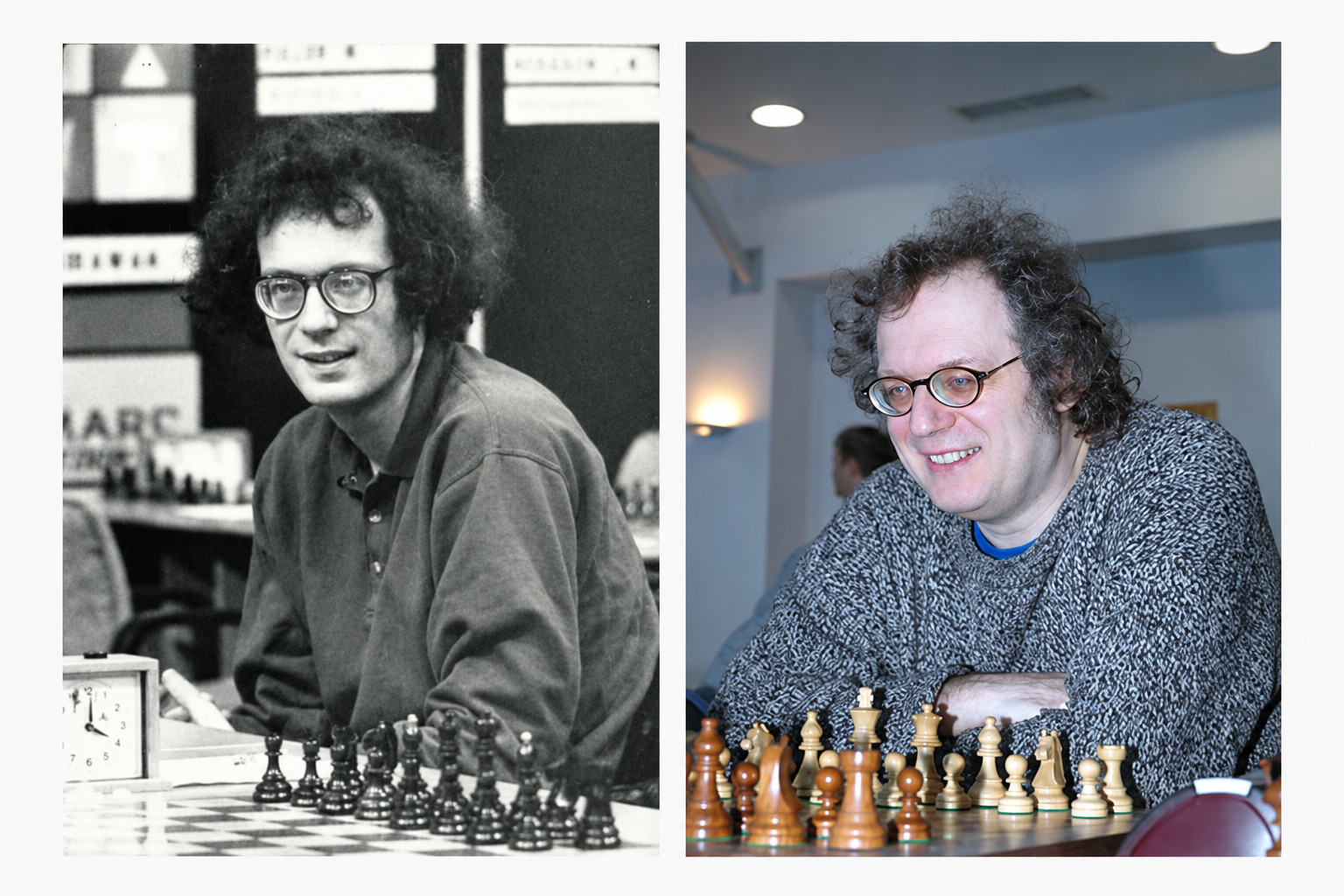












.jpeg)
.jpg)
