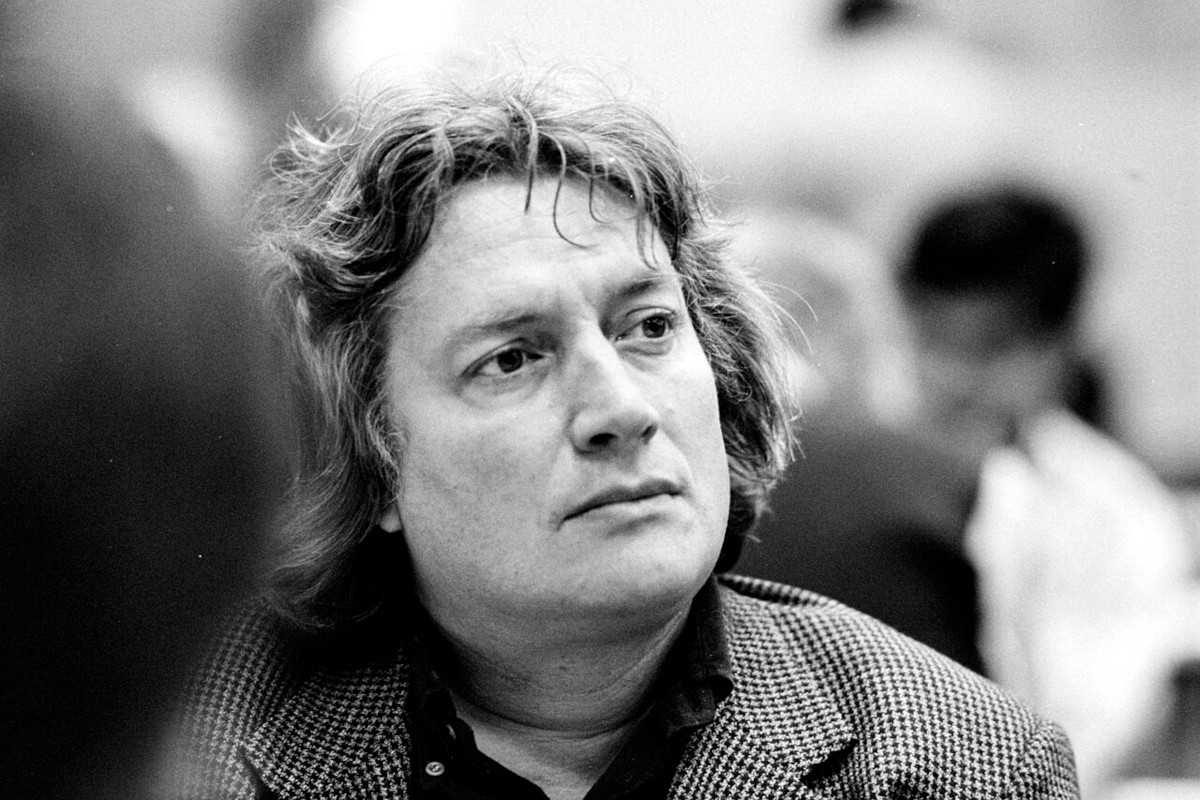
3/10/2026 – In his latest column, Jon Speelman reflects on the career and personality of Dutch GM Jan Timman following the news of his passing. Speelman recalls their encounters over the board, including games from their 1989 Candidates' match in London. "Away from the board, Jan was always excellent company and I always thought that he was one of the very nicest of the generation just a few years older than me". | Pictured: Jan Timman at the 1996 Hoogovens Tournament in Wijk aan Zee | Photo: Fotopersbureau De Boer / Noord-Hollands Archief
new: Fritz 20
Your personal chess trainer. Your toughest opponent. Your strongest ally. FRITZ 20 is more than just a chess engine – it is a training revolution for ambitious players and professionals. Whether you are taking your first steps into the world of serious chess training, or already playing at tournament level, FRITZ 20 will help you train more efficiently, intelligently and individually than ever before.
YOUR PERSONAL CHESS COACH - Whether you’re taking your first steps into the world of club chess, or already playing at a tournament level: with FRITZ, you can train more efficiently, intelligently and with a more personalised approach than ever before. FRITZ is more than just a chess engine – it’s a training revolution! Whether you’re taking your first steps into the world of club chess, or already playing at a tournament level: with FRITZ, you can train more efficiently, intelligently and with a more personalised approach than ever before.
The Hyper-Accelerated Dragon is fast, from the very first moves, your bishop heads to g7, seizes the long diagonal, and turns into the most feared piece on the board.
It rewards players who love initiative and clear attacking plans.
€39.90
One of the very nicest of his generation
[Note that Jon Speelman also looks at the content of the article in video format, here embedded at the end of the article.]
I'm a little late with the column this week because I was at the Bundesliga over the weekend. My team, Munich 1836, came second in the second division South and will now have a playoff with the second team in the North division, Erkenschwick, for a spot in next year's top flight.
I was very sad to hear the news of Jan Timman's death, though I had been forewarned by the (then) editor of New in Chess Dirk Jan ten Gauzendam that Jan had terminal cancer. Over the years, Jan and I did battle many times, bashing each other to a pulp. He had a small plus score, something like 8-6 in decisive games, including the odd rapid and blitz. Interestingly, although he was a renowned theoretician, we both did much better with black. Of those fourteen decisive games, nine were black wins and in our Candidates' match in London 1989 it was three-nil to Black.
Away from the board, Jan was always excellent company and I always thought that he was one of the very nicest of the generation just a few years older than me. I thought that it would be nice if I showed some of our games here, the first of which has definitely never been published. Before I get into the analysis, which is quite minimal in places, here are a few diagrams with some context surrounding them.
This is from the decisive final game in our Candidates' match (game six in the pgn). Jan now played 23...Nxa2+, which was a good move and I think probably a shock to me at the time, though it doesn't really promise Black that much even though he did win later.
A year or two afterwards I visited Jan in his flat in Amsterdam, and he told me how his neighbour had had a label made for a bottle of wine with the position in the diagram on it. He may even have shown me the bottle - but we definitely didn't drink it!
In this video course, experts including Dorian Rogozenco, Mihail Marin, Karsten Müller and Oliver Reeh, examine the games of Boris Spassky. Let them show you which openings Spassky chose to play, where his strength in middlegames were and much more.
This is from Linares (game eight in the pgn). A couple of moves earlier I'd missed a chance to force a draw, but now I had to suffer with the knight against two bishops. In those far-off days, easy access to tablebases was far in the future, but Jan got a printout of the main lines faxed from Holland and did manage to win it.
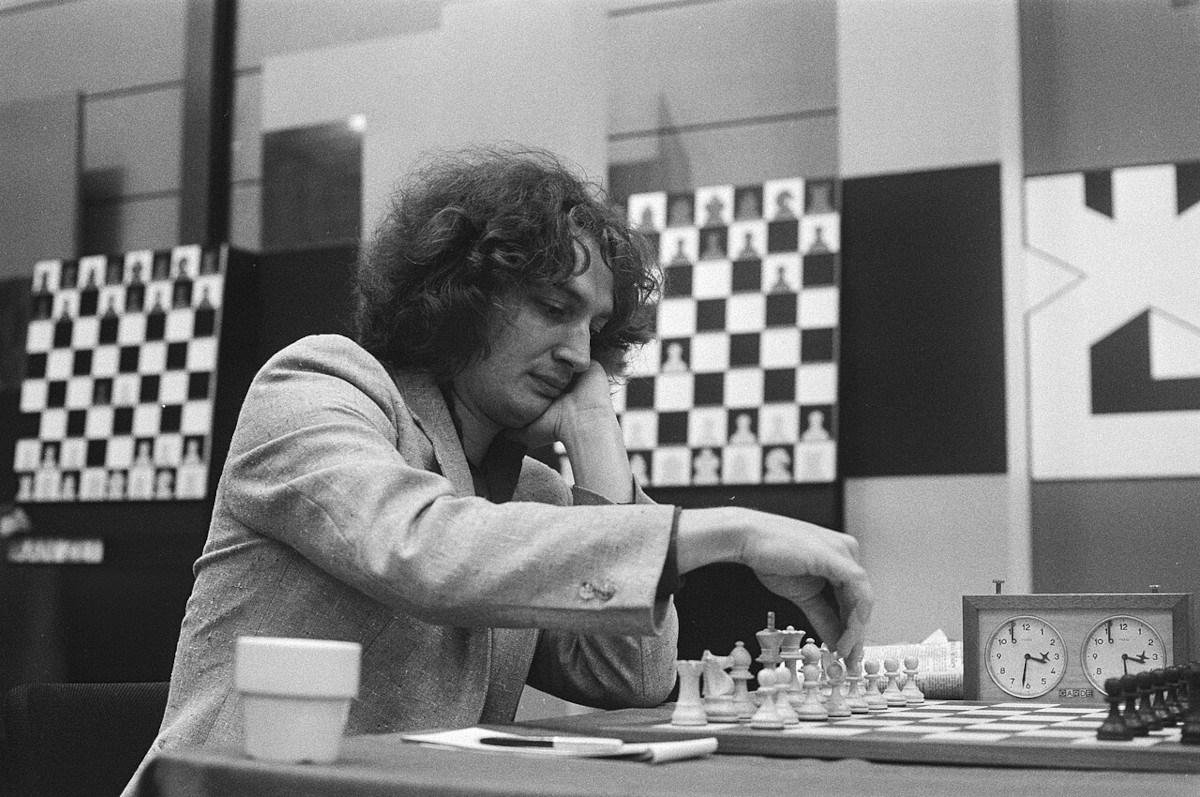
Jan Timman at the 1982 Hoogovens Tournament in Wijk aan Zee | Photo: Rob Croes / Anefo
In two of the games which I won with black, the decisive move was "PN4" on different sides of the board. Of course, I remembered the one above from the Candidates' match (game five in the database). But I had forgotten the next diagram from the Phillips and Drew tournament in London 1982 (game two).
Select an entry from the list to switch between games
In this video course, Grandmaster Ivan Sokolov explores the fascinating world of King’s Indian and Pirc structures with colours reversed, often arising from the French or Sicilian. The King’s Indian Defence is one of the most dynamic openings in chess - and Pirc structures share much of the same DNA. With colours reversed (the King’s Indian Attack), these setups can be just as powerful. What may look modest at first often transforms into highly complex middlegames, where timing, precision, and a deep feel for dynamics make all the difference.
Free video sample: Introduction
Free video sample: Misplaced Pieces
Jonathan SpeelmanJonathan Speelman, born in 1956, studied mathematics but became a professional chess player in 1977. He was a member of the English Olympic team from 1980–2006 and three times British Champion. He played twice in Candidates Tournaments, reaching the semi-final in 1989. He twice seconded a World Championship challenger: Nigel Short and then Viswanathan Anand against Garry Kasparov in London 1993 and New York 1995.
YOUR PERSONAL CHESS COACH - Whether you’re taking your first steps into the world of club chess, or already playing at a tournament level: with FRITZ, you can train more efficiently, intelligently and with a more personalised approach than ever before.
The Nimzo-Indian has stood the test of time for over a century: Still a top choice for elite players today, from Magnus Carlsen to Praggnanandhaa, it remains one of Black's most reliable ways to fight for real chances against 1.d4 2.c4 3.Nc3.
1.c4 e5 2.Nc3 Bb4!? is an opening idea well worth considering. Black immediately threatens to double the pawns on c3 in the style of the Trompowski or Sicilian Grand Prix attack.
Italian Game Powerbase 2026 is a database and contains 8571 top class games from Mega 2026 and the Correspondence Database 2026, of which 479 are annotated.
Videos: Nico Zwirs discusses the Sicilian with 2…e6 3.d4 cxd4 4.Qxd4 Nc6 5.Qe3 Nf6 6.Nc3. Mihail Marin examines Sindarov’s 6.Ne5 in the Queen’s Pawn Defence. Plus the ‘Lucky bag’ featuring 41 analyses by Berg, Ftacnik, Gupta and many others.
If you're looking for a dynamic alternative to the Slav, Queen's Gambit Declined, or other mainstream systems, the Chigorin Defence offers exactly what modern tournament players need.
€34.90
We use cookies and comparable technologies to provide certain functions, to improve the user experience and to offer interest-oriented content. Depending on their intended use, analysis cookies and marketing cookies may be used in addition to technically required cookies. Here you can make detailed settings or revoke your consent (if necessary partially) with effect for the future. Further information can be found in our data protection declaration.
Pop-up for detailed settings
We use cookies and comparable technologies to provide certain functions, to improve the user experience and to offer interest-oriented content. Depending on their intended use, cookies may be used in addition to technically required cookies, analysis cookies and marketing cookies. You can decide which cookies to use by selecting the appropriate options below. Please note that your selection may affect the functionality of the service. Further information can be found in our privacy policy.
Technically required cookies
Technically required cookies: so that you can navigate and use the basic functions and store preferences.
Analysis Cookies
To help us determine how visitors interact with our website to improve the user experience.
Marketing-Cookies
To help us offer and evaluate relevant content and interesting and appropriate advertisement.