Aravindh and Maghsoodloo score, climb to shared second place
The Masters section of the Prague Chess Festival concluded with Nodirbek Abdusattorov securing overall victory after drawing his final-round game against Hans Niemann. The result gave the Uzbek grandmaster 6 points from 9 games and made him the first player to win the Prague Masters twice in the history of the event, which is now in its eighth edition.
Abdusattorov entered the last round with a half-point lead over Jorden van Foreest and a full-point advantage over David Navara. With that margin, a draw in the final round was sufficient to secure at least a tie for first place, and the game against Niemann ended without incident. Abdusattorov completed the tournament as the only undefeated player, with three wins and six draws to his name.
 This video course features the ins-and-outs of the possible setups Black can choose. You’ll learn the key concepts and strategies needed to add this fantastic opening to your repertoire. An easy-to-learn and yet venomous weapon.
The results on the remaining boards reshaped the final standings behind the champion. Both Van Foreest and Navara lost their games with the black pieces on Friday. Van Foreest was defeated by Parham Maghsoodloo after playing a bold novelty in the opening, while Navara lost to Aravindh Chithambaram in a hard-fought struggle. These outcomes allowed Maghsoodloo and Aravindh to catch Van Foreest in shared second place. All three players finished with 5/9 points, a full point behind Abdusattorov.

Jorden van Foreest | Photo: Petr Vrabec / Prague Chess Festival
Abdusattorov's success in Prague continues an impressive sequence of results in classical chess. Earlier in the year, he won the Tata Steel Masters in Wijk aan Zee with a score of 9/13. Even before that, in early December, he triumphed at the London Chess Classic, also undefeated, with an incredible 7½/9. The Prague victory therefore represents his third consecutive win in a major classical tournament.
Despite this run of results, Abdusattorov will not be among the participants in the upcoming Candidates Tournament, making him one of the strongest players outside the eight-player field for the second cycle in a row. Nevertheless, his victories in Wijk aan Zee and Prague place him in a strong position in the FIDE Circuit 2026–27, where he has built an early lead after winning the two strongest tournaments held so far this year.
In Prague, Abdusattorov's performance gave him a TPR of 2831, slightly lower than the 2862 TPR he achieved at Tata Steel. The event also brought him a rating gain of 9.3 points, lifting him to fourth place on the live rating list with 2780.3 Elo. That figure leaves him less than three points short of his peak rating of 2783, which he reached in October 2024.
Among the three players who shared second place on 5/9, the most disappointed is likely Van Foreest. The Dutch GM had led the tournament until round seven after an impressive start in which he won four of his first five games. Even so, his overall performance continues a strong beginning to the year, which has already seen him rise to world number 14 in the live rankings, ahead of players such as Gukesh Dommaraju, Ian Nepomniachtchi and Maxime Vachier-Lagrave.
Maghsoodloo's tournament developed in a relatively steady manner. After losing his opening game against Navara, the Iranian GM recovered with two victories and six draws in the remaining rounds, a run that ultimately secured him a place among the runners-up.
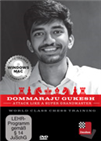 In this Fritztrainer: “Attack like a Super GM” with Gukesh we touch upon all aspects of his play, with special emphasis on how you can become a better attacking player.
Aravindh's tournament followed a more dramatic trajectory. The 2025 champion struggled at the start, losing three of his first five games, but recovered strongly by scoring three wins in the final four rounds. The only draw in that stretch came in round seven against Nodirbek Yakubboev, when Aravindh allowed a completely winning position to slip into a draw.
Two players who had particularly difficult tournaments were top seed Vincent Keymer and the reigning world champion Gukesh. Keymer finished with 4/9 points and lost 13.9 rating points, while Gukesh scored 3½/9 and lost 13 rating points.
The world champion entered the final round in sole last place but improved his situation by defeating David Anton, which allowed him to finish in shared last place (with Anton) while recovering part of the rating he had lost earlier in the tournament.
Gukesh Dommaraju obtained a convincing victory in the final round | Photo: Petr Vrabec / Prague Chess Festival
Maghsoodloo 1-0 Van Foreest
 In this video course, Grandmaster Ivan Sokolov explores the fascinating world of Dutch and Grünfelkd structures with colours reversed.
In this video course, Grandmaster Ivan Sokolov explores one of the most intriguing and under-examined areas of modern chess: reversed opening systems, focusing on the Reversed Grünfeld and the Reversed Dutch. At first glance, these two systems seem unrelated. However, they share a common strategic challenge: the value of tempi, structure, and psychology when familiar openings are played with colours reversed. Drawing on his long professional experience, Sokolov explains why these positions are far more subtle than they appear and why traditional engine evaluations often fail to capture their true complexity.
Free sample video: Introduction
Free sample video: Larsen’s b4 Plan vs Reversed Stonewall Setups: Larsen - Spassky
Parham Maghsoodloo during the opening phase of his round-seven game | Photo: Petr Vrabec / Prague Chess Festival
Aravindh 1-0 Navara
 Instead of forcing you to memorise endless lines, Raja focuses on clear plans, typical ideas, and attacking motifs that you can apply in your own games without delay. A short, focused, and practical repertoire.
Grandmaster Harshit Raja, India’s 69th GM, has created a practical and powerful 1.e4 repertoire - perfect for players who want to play aggressively without drowning in opening theory. Whether you’re playing online or over-the-board, this course gives you solid attacking weapons that are easy to learn, fun to play, and difficult for opponents to face.
Free sample video: Introduction
Free sample video: Scandinavian Defence
Aravindh Chithambaram | Photo: Nils Rohde / ChessBase
Round 9 results
Final standings
All games
Links