Korchnoi flees the Soviet Union
The news on 27 July 1976 caused a sensation not only in the chess world. Soviet grandmaster Viktor Korchnoi, at the time the second-best chess player in the world, had used a stay in the Netherlands to leave the USSR. For those born later, this may sound like a strange piece of news from a long-gone era, but at that time citizens of the USSR and of its likewise communist satellite states were forbidden to leave their country without the express permission of the authorities, especially if they wished to do so permanently.
These so-called "republic fugitives" were pursued and punished with great severity by the authorities of their communist homelands, as were their families and relatives. Some were even murdered.
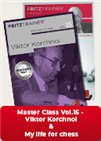 In this video course, experts (Pelletier, Marin, Müller and Reeh) examine the games of Viktor Korchnoi. Let them show you which openings Korchnoi chose to play, where his strength in middlegames were, or how he outplayed his opponents in the endgame.
In chess, there had been a number of strong grandmasters who, in one way or another, had left their communist homelands out of conviction. Prominent names included Pal Benko, Ludek Pachmann, Gennadi Sosonko, Boris Gulko and Igor Ivanov. The least the authorities of their home countries did against their former citizens was to impose a consistent boycott against them. If they took part in a tournament, no player from the countries of the then so-called Eastern Bloc would participate.

Photo by Fred Grinberg / Sputnik
Viktor Korchnoi and the young Anatoly Karpov were numbers two and three in the FIDE world rankings in 1974/75, behind Bobby Fischer, who after winning the World Championship in Reykjavík in 1972 had more or less disappeared and, as it turned out, would not play another official chess game for the next 20 years.
In 1974, Karpov and Korchnoi played the Candidates Final in Moscow. Karpov won and thus became the World Championship challenger. In 1975, however, the match against Fischer did not take place because the American did not appear.
During and after the Candidates Final, Korchnoi felt disadvantaged and humiliated by the Soviet sports authorities and the Russian media. He was also "under observation" because he had criticised the USSR authorities in an interview. For a time, he was not allowed to take part in tournaments abroad. Korchnoi decided to flee the Soviet Union.
When Korchnoi was eventually allowed to take part in foreign tournaments again, he gradually moved part of his chess library, photographs, letters and important documents out of the USSR. But he kept his plan to flee the USSR secret even from his family members, his son Igor and his wife Bella.
At the beginning of 1976, Korchnoi played in Hastings. There he handed over some of his personal belongings for safekeeping to Gennadi Sosonko, whom he knew well from the Soviet Union and trusted. For his escape, however, he had chosen a different place.
At the beginning of July, Korchnoi travelled to Amsterdam for the IBM tournament, a traditional event held there for the sixteenth time. At the end of the tournament, Korchnoi shared first place with Anthony Miles.
At the closing ceremony, the two joint winners sat together, and in a confidential conversation Korchnoi asked Miles how to write "political asylum" in English.
After the closing ceremony, Korchnoi travelled to an agreed simultaneous exhibition in The Hague, and then disappeared with the help of Dutch friends - Walter Mooij and Janco Knossen. Mooij and Korchnoi had known each other since 1968, and whenever Korchnoi played in the Netherlands, the two would meet. When Korchnoi was planning his escape in the Netherlands, he asked his Dutch friend whether he would help him - a potentially dangerous undertaking. After the simul in The Hague, Korchnoi was actually supposed to go to the Soviet embassy to report on the tournament. Instead, he was picked up by Mooij and hid at his home. The next morning, Mooij contacted Janco Cnossen, the head of the local immigration authority. Korchnoi applied for asylum.
Meanwhile, the Soviets had already noticed Korchnoi's absence and were looking for him, in order to bring their grandmaster back into the custody of the USSR, by force if necessary - after all, he was one of the best players in the world. To be on the safe side, Korchnoi initially hid alternately with Mooij and Cnossen, until the Dutch authorities found another refuge for the prominent fugitive.
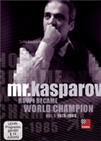 Garry Kasparov's rise to the top was meteoric and at his very first attempt he managed to become World Champion, the youngest of all time. In over six hours of video, he gives a first hand account of crucial events from recent chess history, you can improve your chess understanding and enjoy explanations and comments from a unique and outstanding personality on and off the chess board.
Korchnoi did comply with a request from the Soviet embassy to meet the authorities in the Netherlands so that they could try to persuade him to return to the Soviet Union. Korchnoi was accompanied by Dutch officials to ensure that he did not "get lost" in the embassy.
The Dutch authorities rejected Korchnoi's application for political asylum, but at least granted him the right to stay in the Netherlands.
The Soviet authorities were quite surprised by Korchnoi's flight, since Korchnoi's family was still in the USSR, and needed some time for their first reaction. The first to report Korchnoi’s flight was the official Soviet news agency TASS. The chess player Korchnoi, TASS announced, was a vain and envious person, and his attempt to obtain asylum in the West was a cheap sensation. His pathological ambition was greater than his ability.
Twenty days after the flight, the Soviet Chess Federation also issued an official statement along similar lines. Two weeks later came a sharply worded open letter, signed by 31 Soviet players, in which they strongly condemned Korchnoi's actions. An excerpt:
The despicable act of the chess player Viktor Korchnoi, who betrayed his homeland, can only fill us with a feeling of total indignation and contempt. Korchnoi, who chose the path of slander typical of dissidents, is now trying to make moves in the dirty political game and draw attention to himself, in order to raise his value among followers of cheap sensations. […] Having asked the Dutch police for protection from an invented persecution, Korchnoi now wants to elevate his petty personal grievances to the rank of an international problem.
(Quoted from Viktor Korchnoi's My Life for Chess)
The letter had been drafted by Viktor Baturinsky and Yuri Averbakh, and the players were "encouraged" to sign it in the name of the Soviet authorities.
Of course, the pressure exerted by the authorities on the leading Soviet players was great, but nevertheless not every Soviet top player signed this open letter. Mikhail Botvinnik, David Bronstein and Boris Spassky did not sign it - Spassky was already living in France. Anatoly Karpov published his own open letter with similar content.
By contrast, Korchnoi received many congratulations from the West, including a telegram from Bobby Fischer:
Congratulations on the right chess move! My best wishes for your new life!
(Quoted from Viktor Korchnoi's My Life for Chess)
Knowing the fate of other dissidents and fugitives, Korchnoi was extremely distrustful. He knew that the arm of the Soviet KGB reached everywhere, and in his autobiography he cites cases in which fugitives were even kidnapped by the KGB and taken back to the USSR, where they were beaten up. In other cases, family members were harassed.
At this time, Korchnoi was invited by Yves Kraushaar to give simultaneous exhibitions in Switzerland, where he met Petra Leeuwerik, whom he later married after divorcing his wife Bella. Petra Leeuwerik originally came from Leipzig and was a convinced anti-communist. After the war, during a visit to Austria, she had been abducted by the Russians and sent to the notorious labour camp in Vorkuta, Siberia. Leeuwerik had made herself suspicious to the Russians in the German Democratic Republic through her activities in a Catholic student movement. She was not released until 1955, as part of Konrad Adenauer's initiative.
Viktor Korchnoi and Petra Leeuwerik
The very energetic and capable woman helped Korchnoi find his way in the new surroundings and gave him the support he needed to continue his career.
Korchnoi initially continued to live in the Netherlands, where Joop van Oosterom, the head of Volmac and a major chess patron, supported him. He then spent some time in Germany. His painful memories from the siege of his home city of Leningrad by the German Wehrmacht during the Second World War, however, prevented him from wanting to live permanently in Germany. Eventually, Switzerland became Korchnoi's second home.
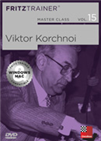 In this video course, experts (Pelletier, Marin, Müller and Reeh) examine the games of Viktor Korchnoi. Let them show you which openings Korchnoi chose to play, where his strength in middlegames were, or how he outplayed his opponents in the endgame.
After Korchnoi's flight and the propaganda campaigns that followed, the Soviet Union reacted as it always did with refugees from sport: with a boycott. Wherever Korchnoi played, no player from the Eastern Bloc took part. There was one competition, however, in which the Soviets could not boycott Korchnoi - the contests for the World Championship. In the 1976-78 World Championship cycle, Korchnoi defeated all his Soviet opponents in the Candidates matches and eventually became the challenger to world champion Karpov. The match became a bitter psychological war that held the world's attention for weeks.
Before the match began, the Soviet authorities targeted Korchnoi's family in the USSR. Korchnoi's son Igor received a call-up order for military service. The Soviet military was known for very harsh treatment of recruits. Igor refused to serve and tried to flee the Soviet Union. The attempt failed, and he was sent to prison for two years.
The 1978 World Championship match was still played to six wins. By the middle of the match, Karpov led 4-1 in decisive games. In the 27th game, he increased his lead to 5-2. But then Korchnoi won three games in a row. The contest became tense once again. Karpov then won the 32nd game, his sixth victory, thereby defending his title.
In 1981, the match was repeated in Merano. By then, however, the balance of strength had changed. Karpov won comfortably, 6-2.
The Eastern Bloc boycott of Korchnoi lasted until 1983. That year, Korchnoi was due to play a Candidates match in Denver, United States, against the rising star Garry Kasparov. In anticipation of the forthcoming Western boycott of the 1984 Olympic Games in Moscow, the Soviet sports authorities forbade Kasparov from travelling to the US. Korchnoi won by forfeit. Kasparov's mentor Heydar Aliyev, for a long time the KGB chief in Azerbaijan and later a member of the Politburo, intervened and arranged for the match with Korchnoi to be replayed. In return, the boycott against Korchnoi was lifted, among other things. The match then took place in London. Kasparov won and later became world champion at the second attempt.
Korchnoi continued to play successfully in major tournaments for many years and, in the period before online chess, was the player who had played the most games in the world. To this day, he remains the player with the most classical tournament games in history.
After a stroke, he spent his final years in a wheelchair. He died in 2016.
In this video course, experts (Pelletier, Marin, Müller and Reeh) examine the games of Viktor Korchnoi. Let them show you which openings Korchnoi chose to play, where his strength in middlegames were, or how he outplayed his opponents in the endgame.
Links