


The now 14-part series "Understanding Middlegame Strategies" by Dutch chess grandmaster and author Ivan Sokolov deals with various aspects of middlegame strategy. The first volumes discuss topics that are independent of specific openings, such as dynamic pawns or the practical middlegame. The later volumes deal with positions that arise from frequently played opening systems. The focus is not on the theory of these openings, but on understanding the middlegame positions and the strategies that result from them.
In the first part of my series, I discussed the "general" courses.
In this instalment, I would like to present three courses that deal with position types from my opening repertoire: the Sicilian, the French and the King’s Indian.
Note:
Do not confuse these courses with opening FritzTrainers. Although some theoretical variations are also discussed here, the courses do not offer a complete repertoire for White or Black. To obtain a solid theoretical basis for these openings, you can supplement them, for example, with these courses:

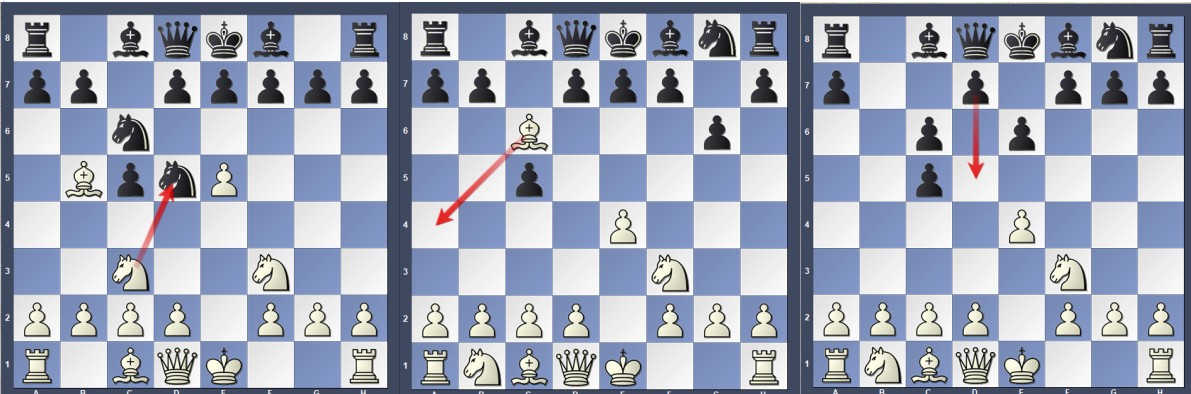
As Sokolov explains in the introduction, the first part of the course, on Rossolimo structures, deals with these three position types after 1.e4 c5 2.Nf3 Nc6 3.Bb5 and then either 3…Nf6, 3…g6 or 3…e6:
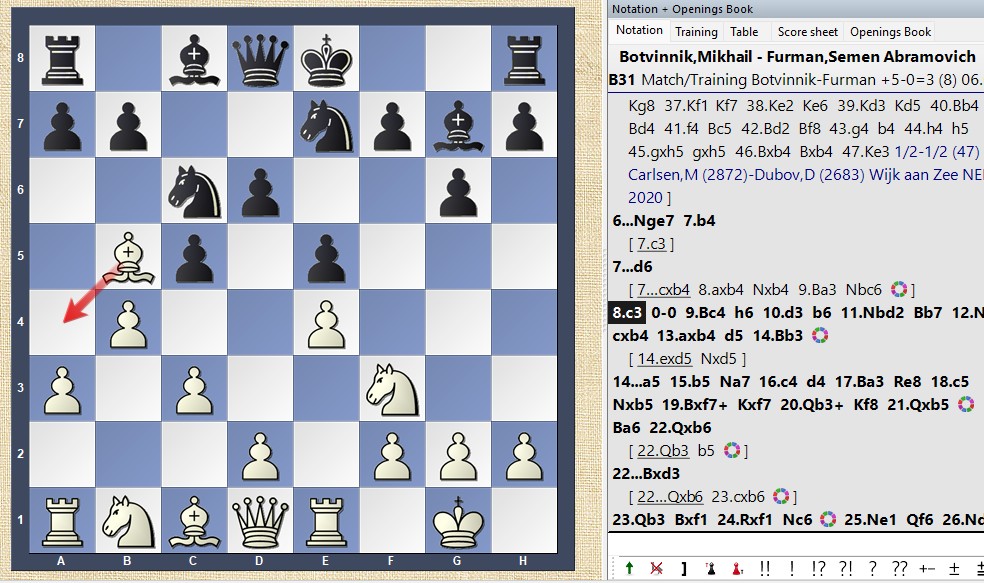
Before discussing these positions and their strategic features, the author shows two historical games by Mikhail Botvinnik in which positions arise that are very reminiscent of Italian or Spanish structures, for example:
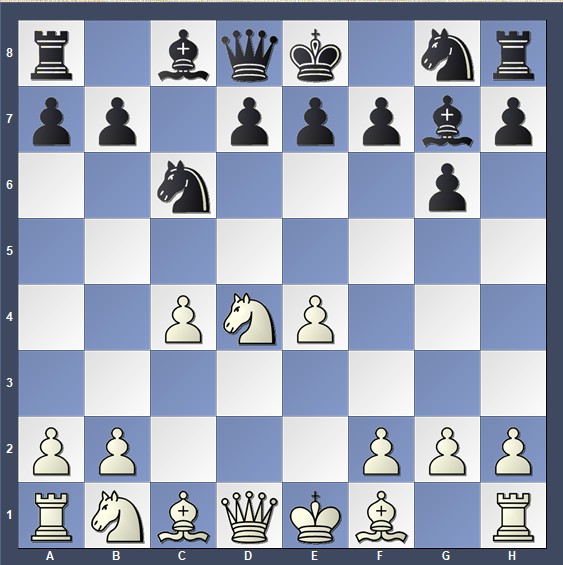
In the second part of the course, the starting position of a very frequently played position from the "Maroczy Bind" structure is the topic, for example after 1.e4 c5 2.Nf3 Nc6 3.d4 cxd4 4.Nxd4 g6 5.c4 Bg7. This or similar positions can also arise, for instance, from the King's Indian or the Symmetrical Variation of the English Opening.
The course is supplemented by 15 test exercises in the interactive FritzTrainer format, as well as databases with analyses and further examples.
Note: I discuss volumes 9 and 11, on the French Tarrasch and the King's Indian, in abbreviated form, since the basic structure of the courses does not change significantly.
The course looks at the Tarrasch Variation of the French Defence (1.e4 e6 2.d4 d5 3.Nd2) from Black's point of view, and can be understood as a "strategic repertoire recommendation" for Black. At its centre is the position after 3…c5 4.exd5 exd5 (or 4.Nf3 Nc6 5.exd5 exd5), in which Black plays with the isolated queen's pawn.
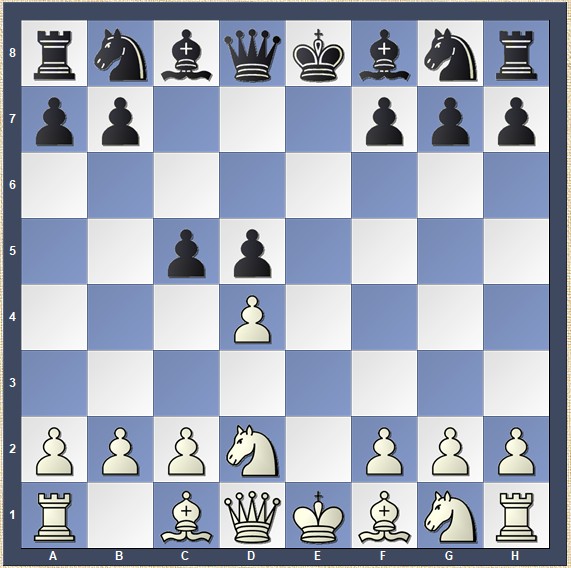
Viktor Korchnoi was a great advocate of this variation, so the author also discusses some of his games. As a bonus, two other typical French positions are also discussed, namely those after 1.e4 e6 2.d4 d5 3.Nc3 Nf6 (4.Bg5 dxe4 and 4.e5 Nfd7 5.f4 c5) and the Advance Variation after 1.e4 e6 2.d4 d5 3.e5 c5.
Of course, this does not yet make for a complete repertoire, but it does make the course a good strategic supplement for Black. For fans of the French Winawer Variation (3.Nc3 Bb4), Sokolov also offers this course:
In this course, Sokolov describes strategies in King's Indian positions in which White occupies the centre with e4, that is, structures from the Classical Variation with Nf3, the Saemisch setup (f3) and similar systems:
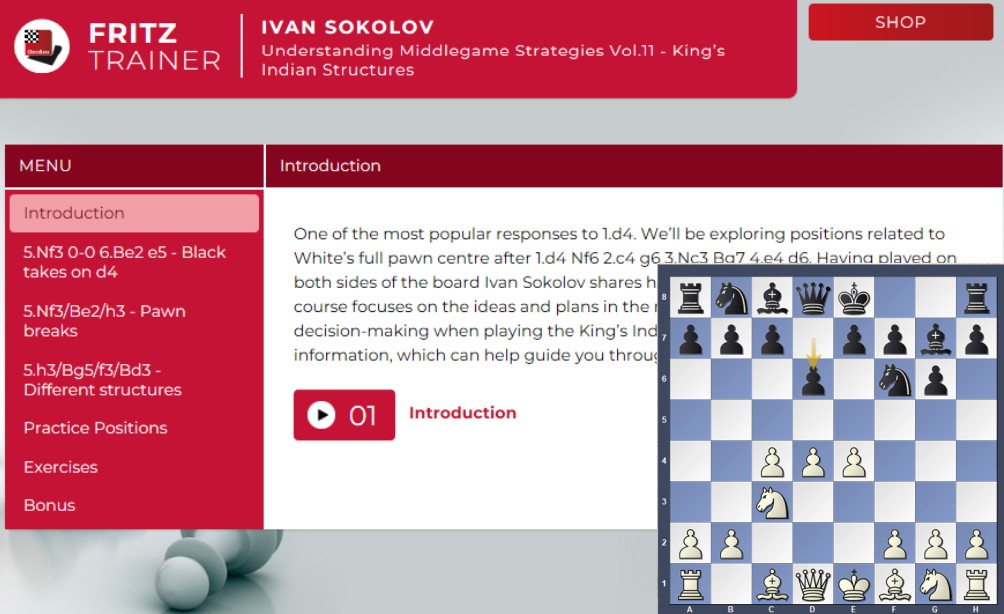
The exercises in this course come in a separate database and in interactive format without video:
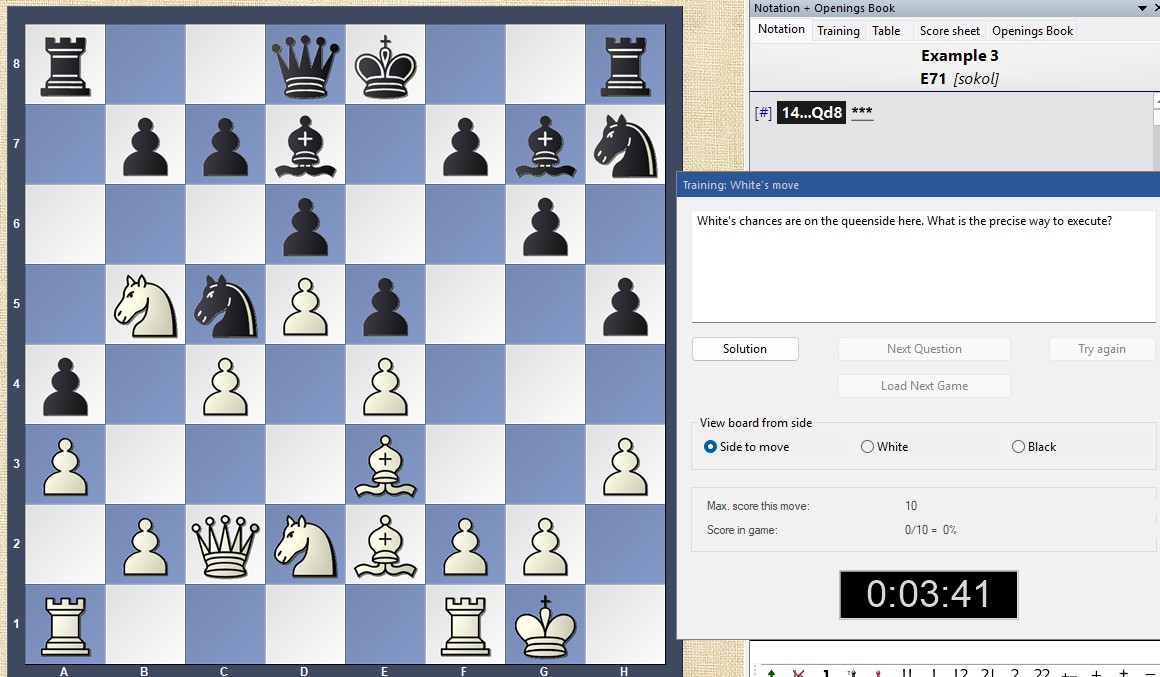
With these video courses, we get extensive and well-founded training material on specific positions from "our" opening repertoire, presented skilfully and very engagingly by Sokolov. As amateurs, we should concentrate more on the strategic features instead of dealing only with theory. Sokolov can help us to improve these abilities!
Windows or macOS?
Until now, I have used ChessBase products on Windows computers, and occasionally also the browser-based "web apps" and the mobile ChessBase app on smartphone and tablet. Since I recently bought my first MacBook, I took the opportunity to install these FritzTrainers in the Apple version and to share my experiences as a MacOS beginner with you.
FritzTrainers released from mid-2019 onwards are also offered in the download version for Apple Macintosh computers. Anyone who bought the course as a DVD can register the activation number in the shop as a download. After that, the Mac OS X version is also available as a download alongside the Windows version, for example:
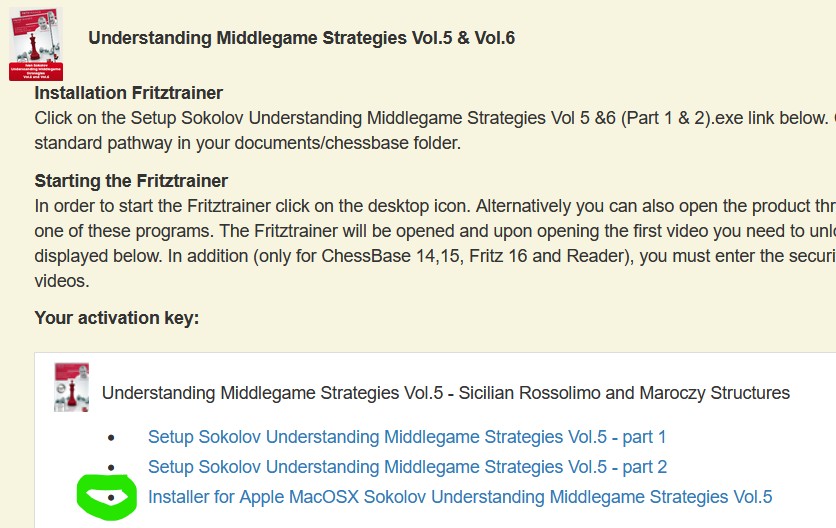
The downloaded file can simply be opened in two steps and then, if required, dragged into the Applications folder:
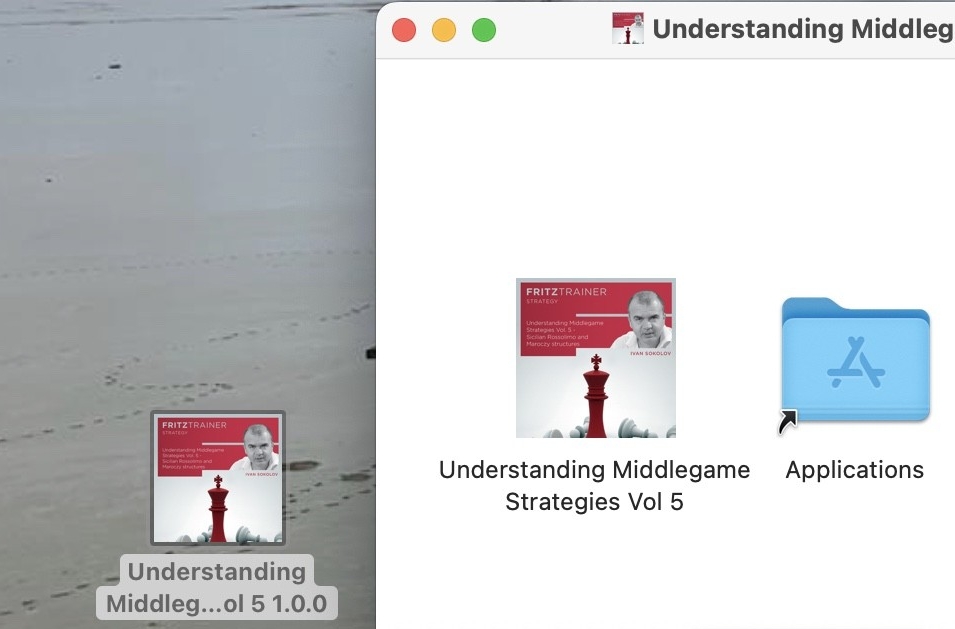
After activating the serial number...
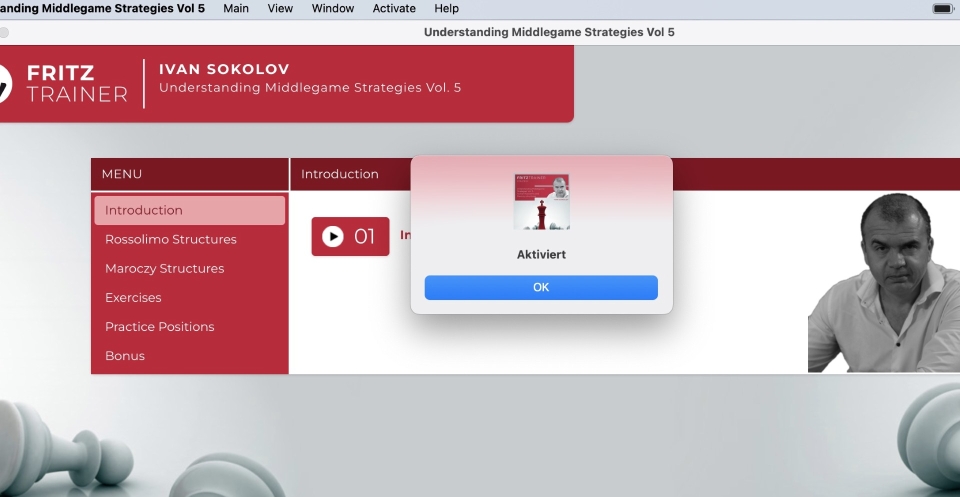
… the videos and databases can be launched:
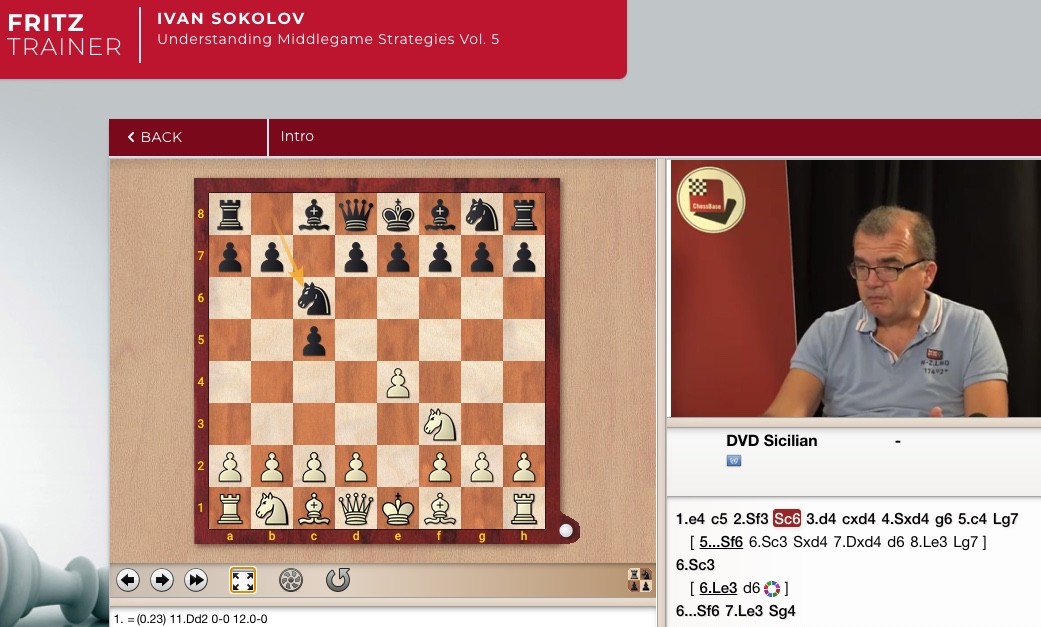
The functions correspond to the FritzTrainer app installed under Windows. Unlike the browser-based web app or ChessBase Books versions, which are only available online, the locally installed apps can also be used offline. However, I still prefer to use the FritzTrainers with ChessBase, Fritz or the ChessBase Reader, since this gives direct access to my own databases, PowerBooks and engines.
 Ivan Sokolov is a Dutch chess grandmaster and author of popular chess books. He was Yugoslav Champion in 1988 and Dutch Champion in 1995 and 1998. He has belonged to the elite players for more than two decades and has beaten many of the strongest players in the world.
More products by the author are available in the ChessBase Shop