.jpeg)

The now 14-part series Understanding Middlegame Strategies by Dutch grandmaster and author Ivan Sokolov explores a wide range of middlegame themes. The first volumes focus on opening-independent topics such as dynamic pawns and practical middlegame play. These are the volumes I would like to present in this article.
The later volumes deal with positions arising from popular opening systems such as the Maroczy Bind in the Sicilian Defence, the Tarrasch Variation of the French Defence, or the Catalan Opening. The focus is not on opening theory, but on understanding the resulting middlegame positions and the strategic ideas that arise from them.
Notes on the Understanding Middlegame Strategies Series as a whole
It was clearly never the author's intention to create an “encyclopaedia of middlegame strategy”. Neither the topics covered in the individual courses nor the chapters within those courses follow a rigid structure, nor do they aim to cover every aspect of middlegame play.
Volume 1 begins with Dynamic Pawns, followed by Volume 2 on Practical Play. With Volume 3, The Hedgehog, Sokolov turns to a specific opening structure, only to return to pawn-related themes in Volume 4, Dynamic Pawn Structures.
At first glance, this may seem somewhat unsystematic, but it offers several advantages. The courses do not build on one another. As a result, there is no need to purchase the entire series; instead, players can choose the volumes that are most relevant to their interests. For example, one might start with Volume 2, Practical Play, then move on to an opening-related course such as Volume 6, Structures in the Ruy Lopez, before returning to Volumes 1 or 4 to study dynamic pawn play.
Throughout the series, Ivan Sokolov impresses with a wealth of fascinating and highly instructive examples, which he presents with great clarity, expertise and an engaging style.
The topic of the first volume is Dynamic Pawns. Sokolov divides the course into four chapters:
In Chapter 1, I found the following example particularly fascinating. The position after Black's 13th move appears equal and, at first glance, not especially exciting.
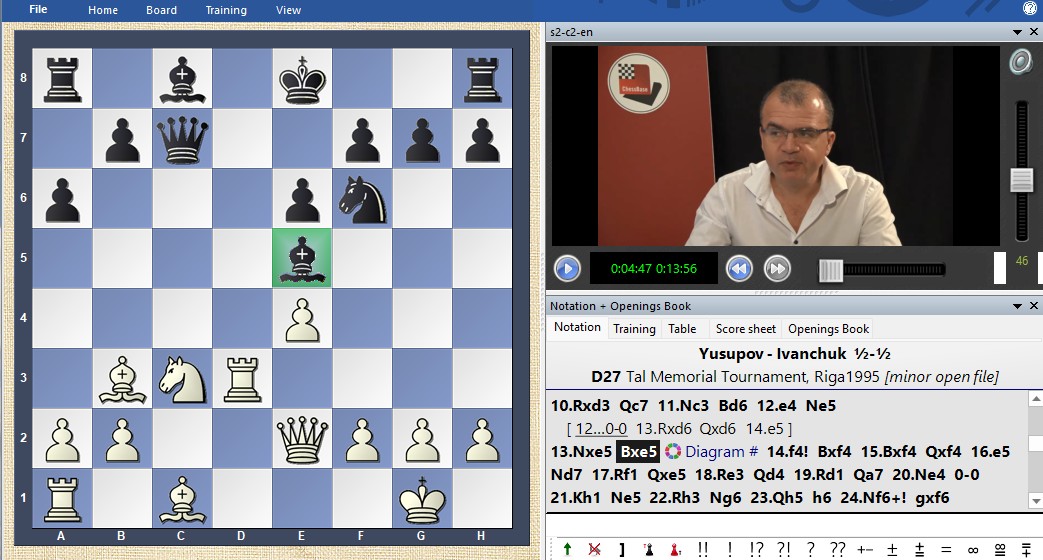
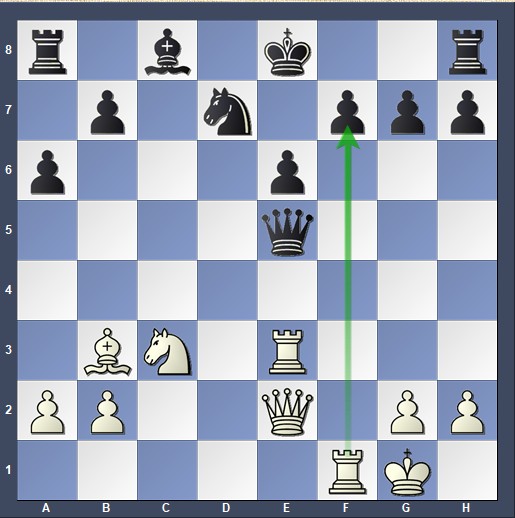
However, Artur Yusupov had the uncastled black king firmly in his sights and found a double pawn sacrifice that completely transformed the position. Just five moves later, all of White’s pieces are actively directed against the black king, who never had the time to reach safety.
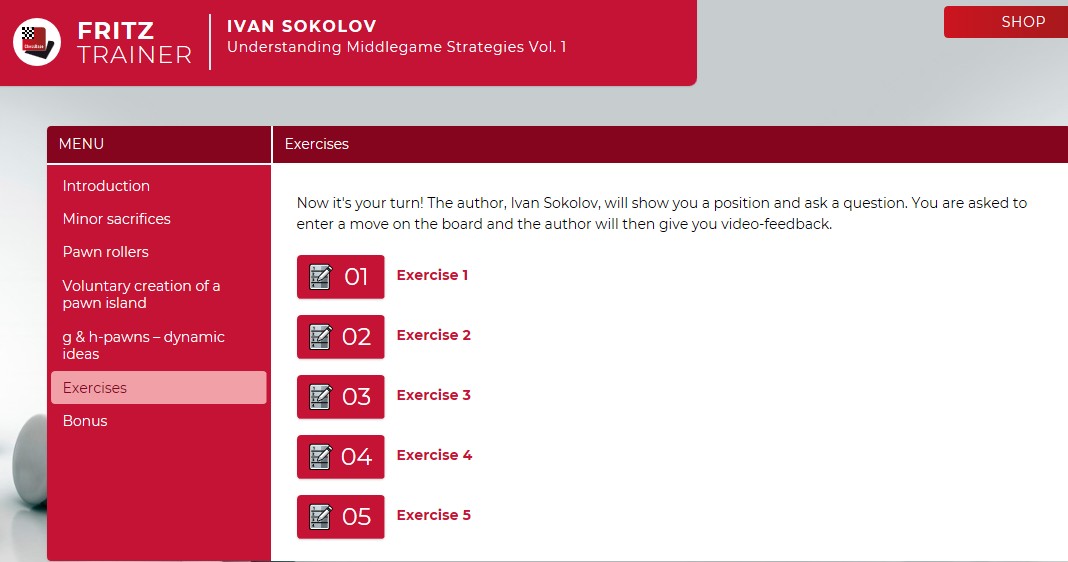
After the four main chapters, the course concludes with a number of practical training positions in the interactive FritzTrainer format, all of which are directly related to the themes discussed in the preceding chapters.
Here is an example. Can you find White's continuation in this position?
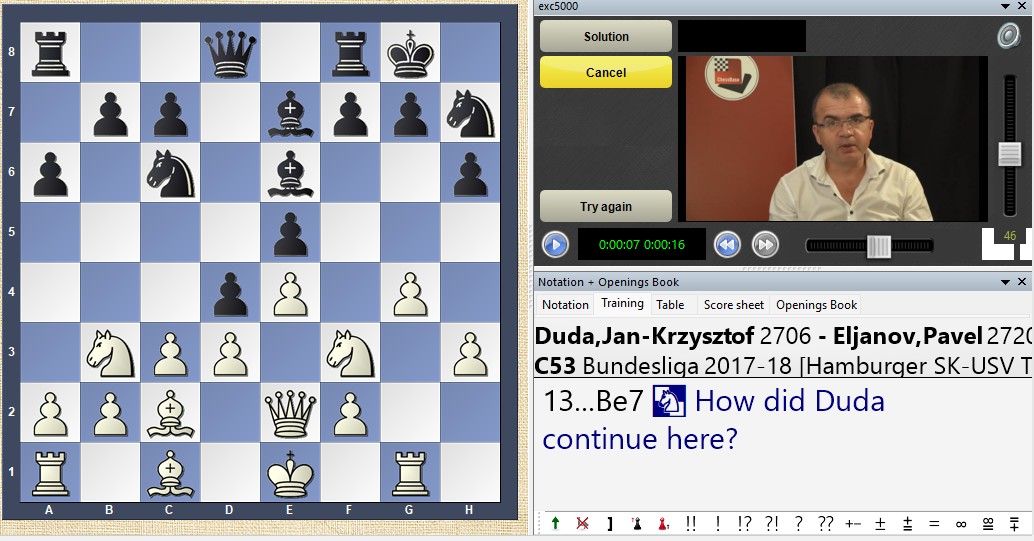
A small hint: the key theme here is rolling pawns!
In this volume, Sokolov aims to show how we can improve our ability to make the right decisions in middlegame positions. At the same time, the course seeks to deepen the reader’s overall understanding of middlegame strategy.
Like the first volume, this course is divided into four main chapters:
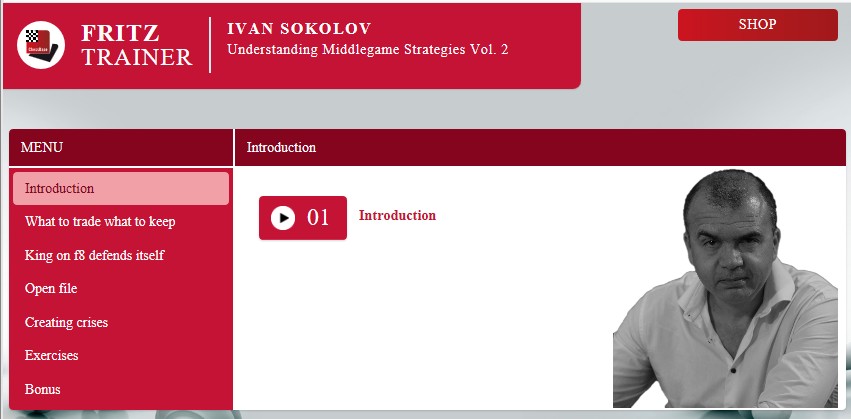
Here is a highly instructive example from the first chapter:
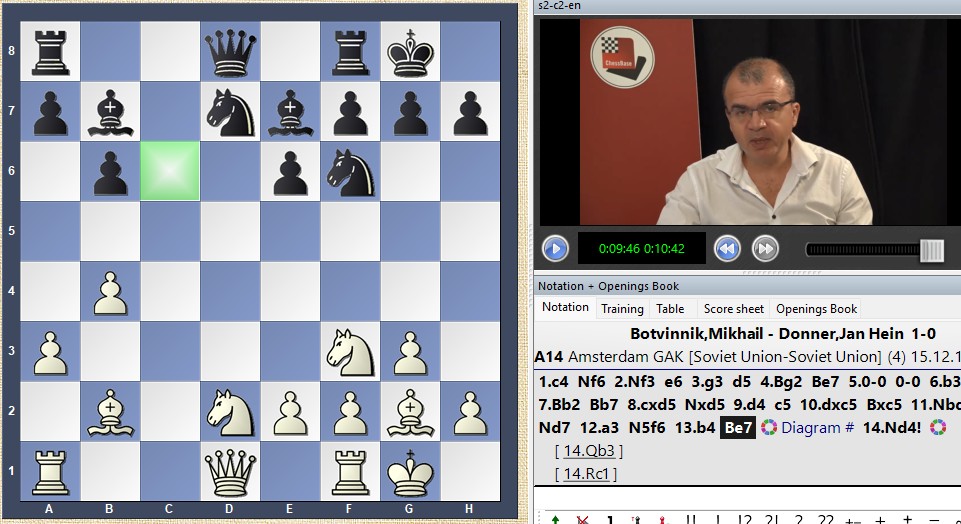
At first glance, the position looks rather quiet and balanced. Like many players, I would probably have chosen a move such as Rc1 or Qb3 here and, at best, gone on to achieve a draw. As Sokolov explains in detail, however, Botvinnik found the correct plan by playing 14.Nd4!, initiating the key exchange. After the light-squared bishops are traded, the white knight occupies the outpost on c6, supported by White’s b-pawn.
Like the first volume, this course also includes a number of interactive test positions based on the strategic themes covered in the lessons.
As Sokolov explains, this video course is designed to significantly improve the viewer’s handling of dynamic pawn structures. The main topics covered are:
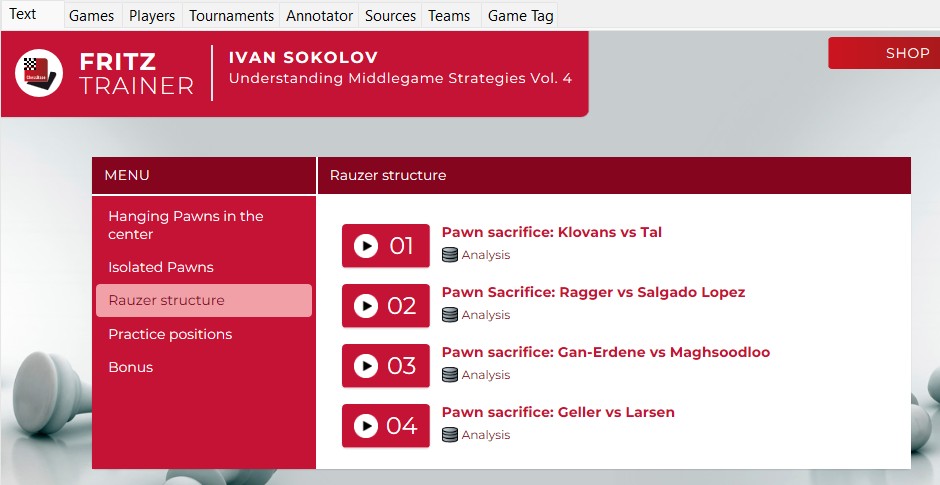
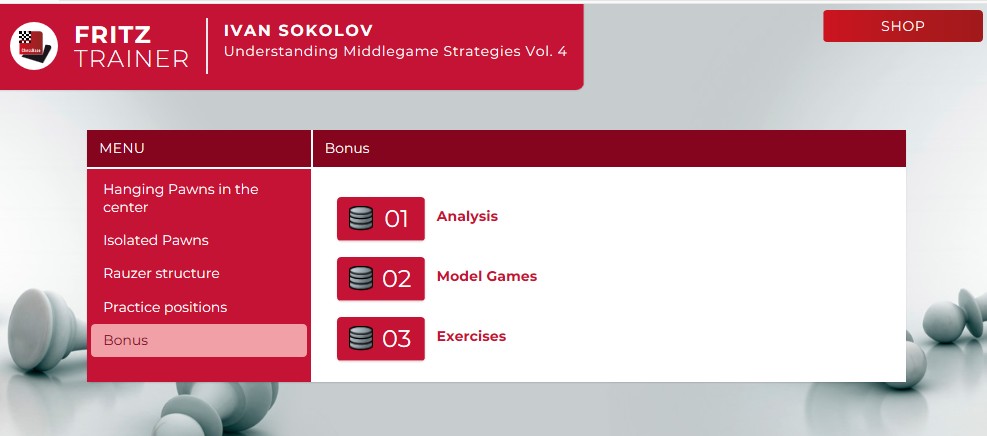
The transition from general strategic themes to the highly specific Richter–Rauzer structure in the Sicilian Defence came as something of a surprise to me and felt a little abrupt. However, Sokolov more than makes up for this by providing additional databases of model games as well as a large number of interactive training exercises.
Conclusion
If one can overlook the somewhat unsystematic arrangement of the courses and topics, the Understanding Middlegame Strategies series offers a wealth of high-quality training material. Ivan Sokolov presents the content with great expertise, clarity and a very engaging, likeable style, making these video courses both instructive and enjoyable to study.
 Ivan Sokolov is a Dutch grandmaster and the author of several popular chess books. He won the Yugoslav Championship in 1988 and the Dutch Championship in both 1995 and 1998. For more than two decades, he has been among the world's elite players and has scored victories against many of the strongest grandmasters in the game.