Bukhara, Samarkand, Tashkent
The German-Dutch rivalry is legendary. Often, merely recalling it is enough for both sides to bring out stories that the other would probably tell rather differently.
In that sense, our travel group was a small European experiment: nine Dutch, five Germans and one Italian. From 21 to 29 September, we travelled through Uzbekistan – along the old Silk Road from Bukhara via Samarkand to Tashkent. The trip was organised and accompanied by Ardjan Langedijk, a chess player and owner of Central Asia Tours in Heemstede, a travel company specialising in Central Asia. We wanted to discover a country that was unfamiliar to most of us, get to know its people and culture and, of course, experience the Chess Olympiad.
The fact that Germany and the Netherlands faced each other twice in sporting contests during our trip added a nice touch. In football, the match ended peacefully at 1-1. In chess, things were ultimately a little less diplomatic.
Bukhara - like a film set
 Master your middlegame with the complete strategy series – now available as a bundle at a reduced price. Take your chance to save and improve!
Master your middlegame with the complete strategy series – now available as a bundle at a reduced price. Take your chance to save and improve!
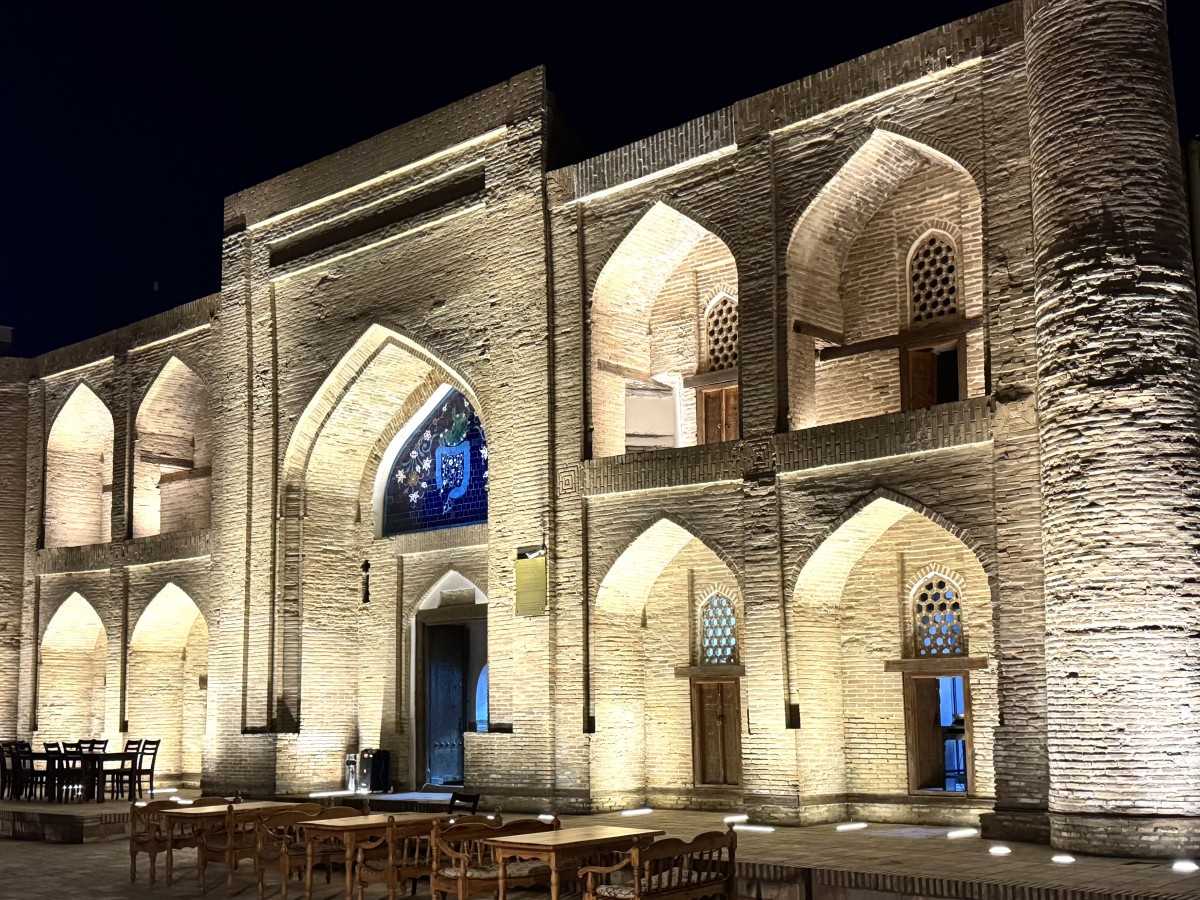
After the overnight flight via Istanbul, we landed in Bukhara in the morning. A little sleep had to suffice, and then we headed out. During our very first walk around the city, we had a feeling that would return again and again over the following days: is this really real - or are we walking through a film set?
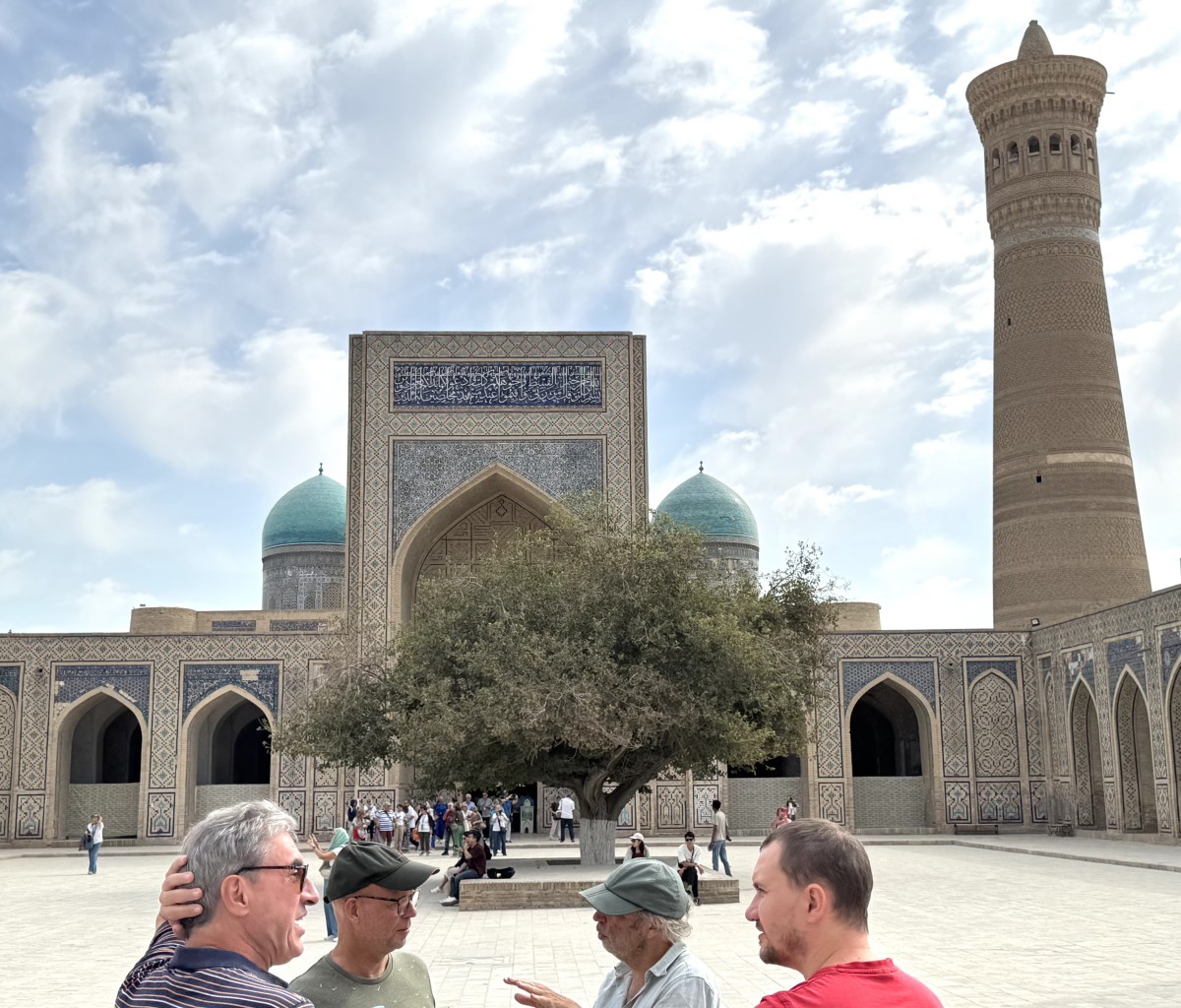
The Kalon Mosque
Mosques and madrasas, sand-coloured walls and bright blue domes, narrow alleyways and small courtyards in between. We saw the roughly thousand-year-old Samanid Mausoleum, the imposing Kalon Mosque and, of course, Lyabi-Hauz, the square around the old pond, a place where one does not merely want to look around, but simply to stay.
There we also came across an old acquaintance - Nasreddin Hodja. From Turkey through the Balkans and Central Asia to India, stories are told of his tricks and wisdom. In Bukhara, he sits as a bronze figure on his donkey beside the Nadir Divan-Begi Madrasa and is one of the most photographed residents of the city.
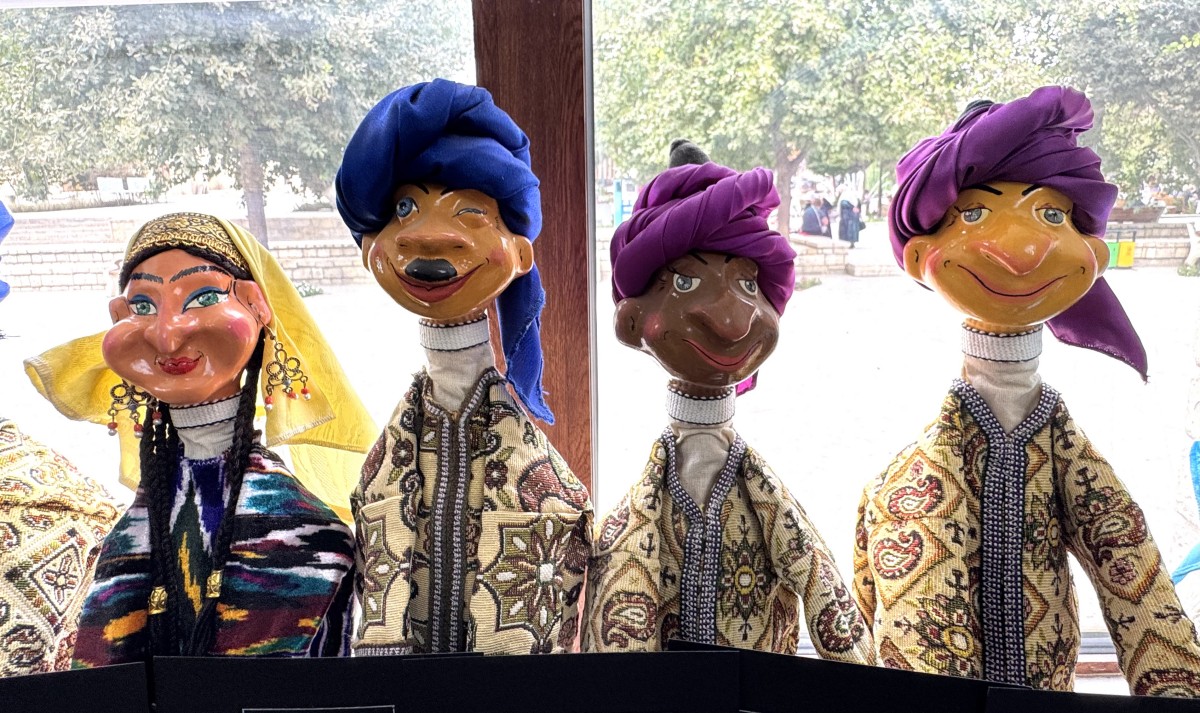
Nasreddin Hodja
In the late afternoon, the courtyard of the madrasa was transformed into a catwalk. Music, traditional dances and a fashion show featuring colourful Uzbek garments against the historic backdrop – our welcome to Uzbekistan could hardly have been more impressive.
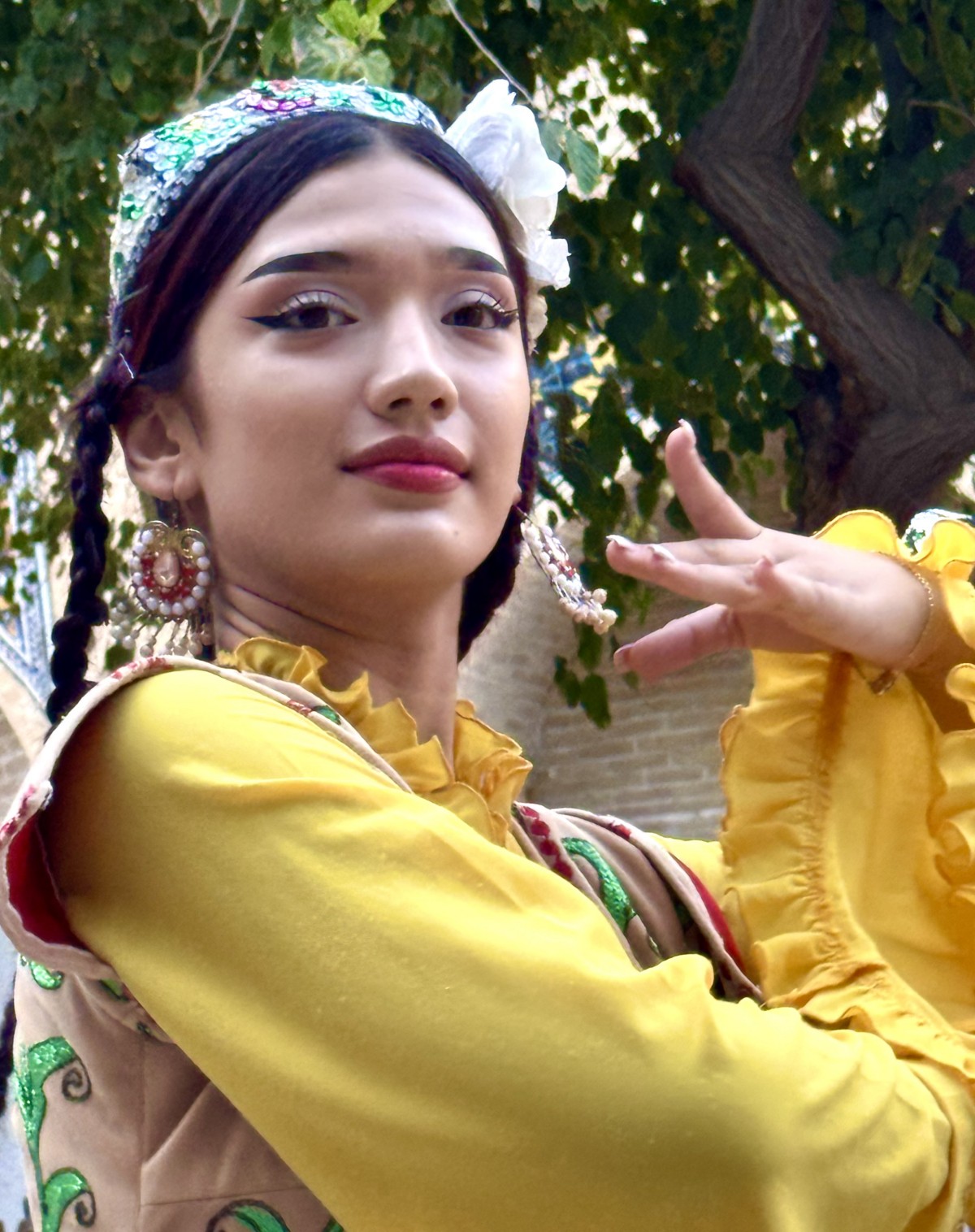
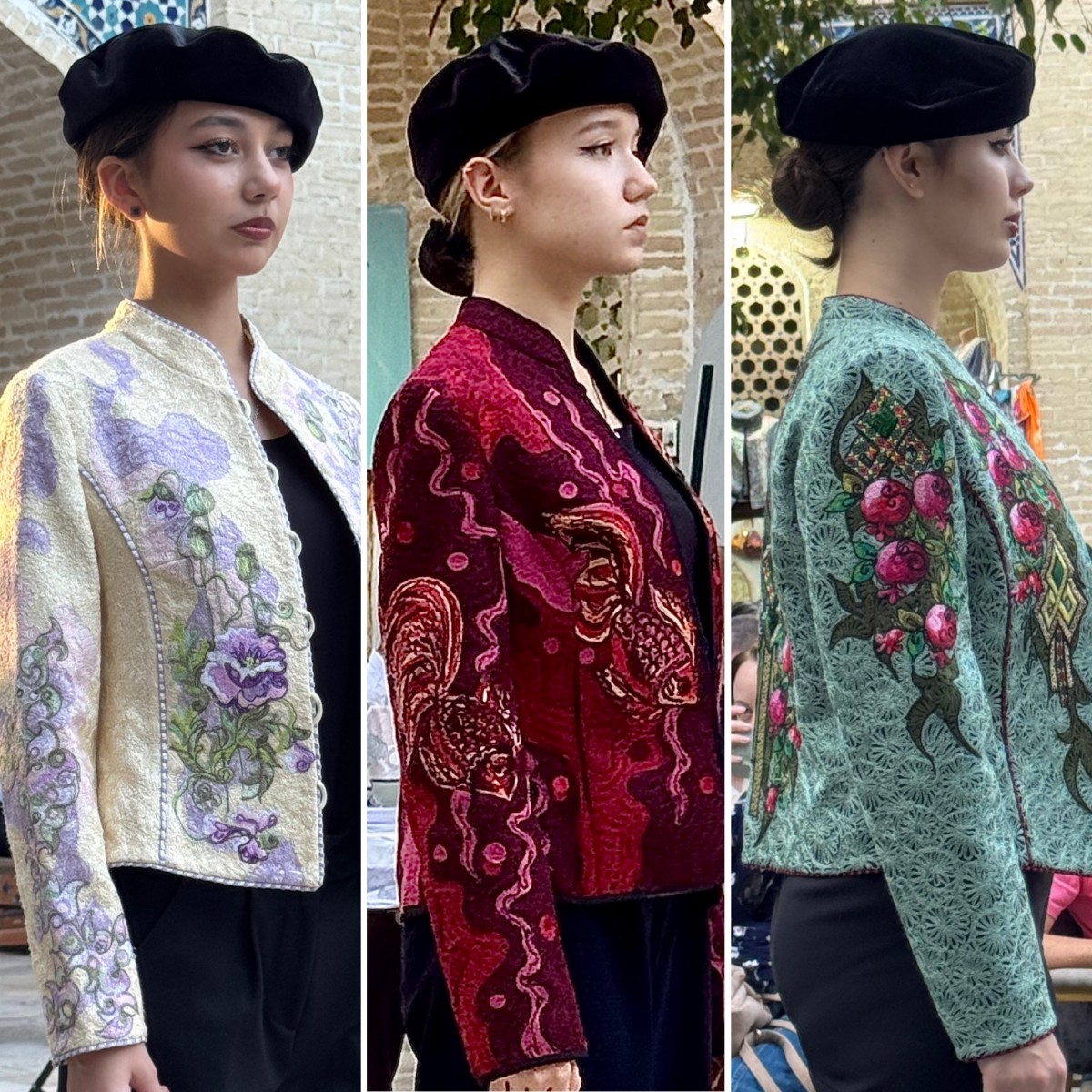
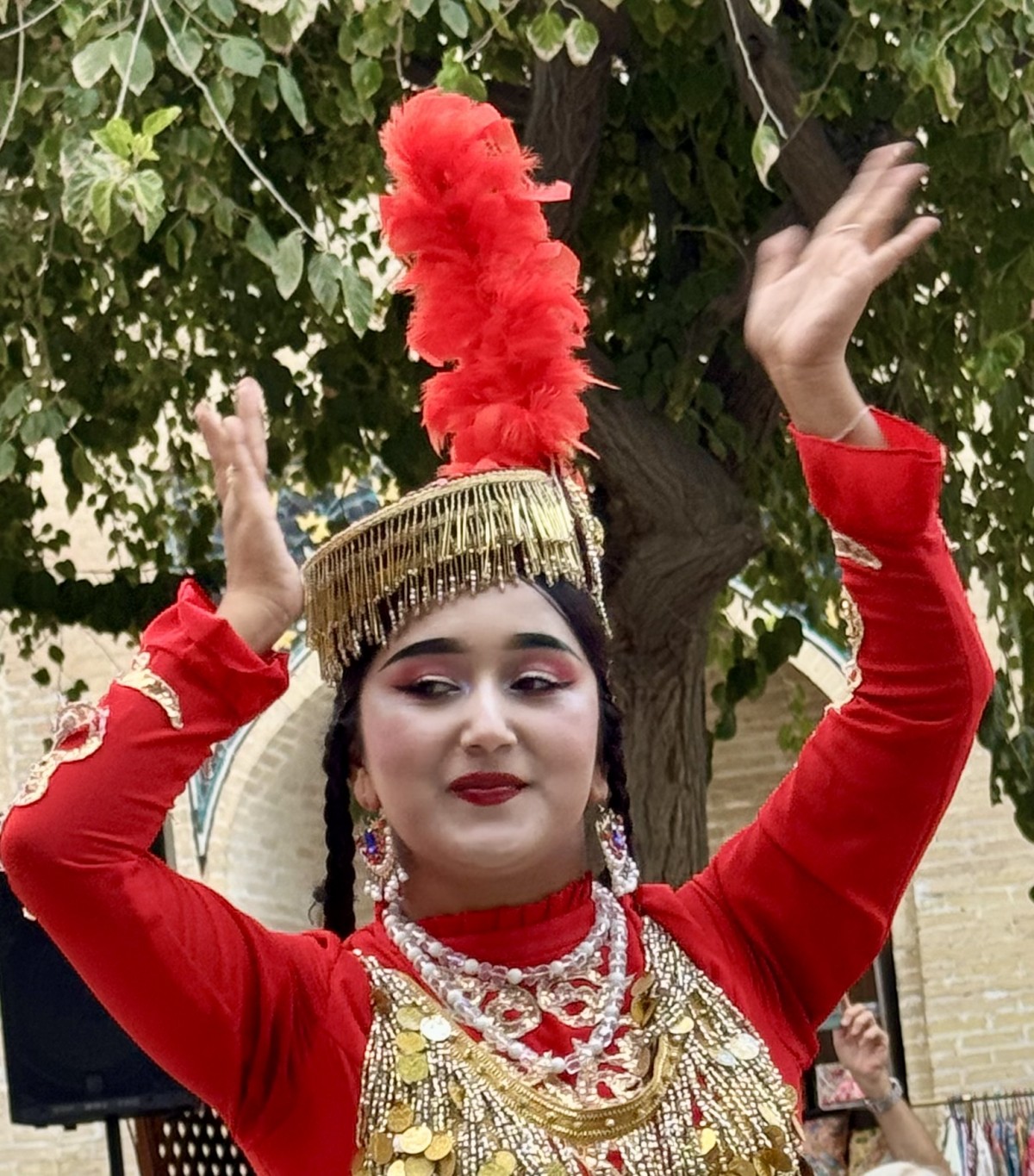
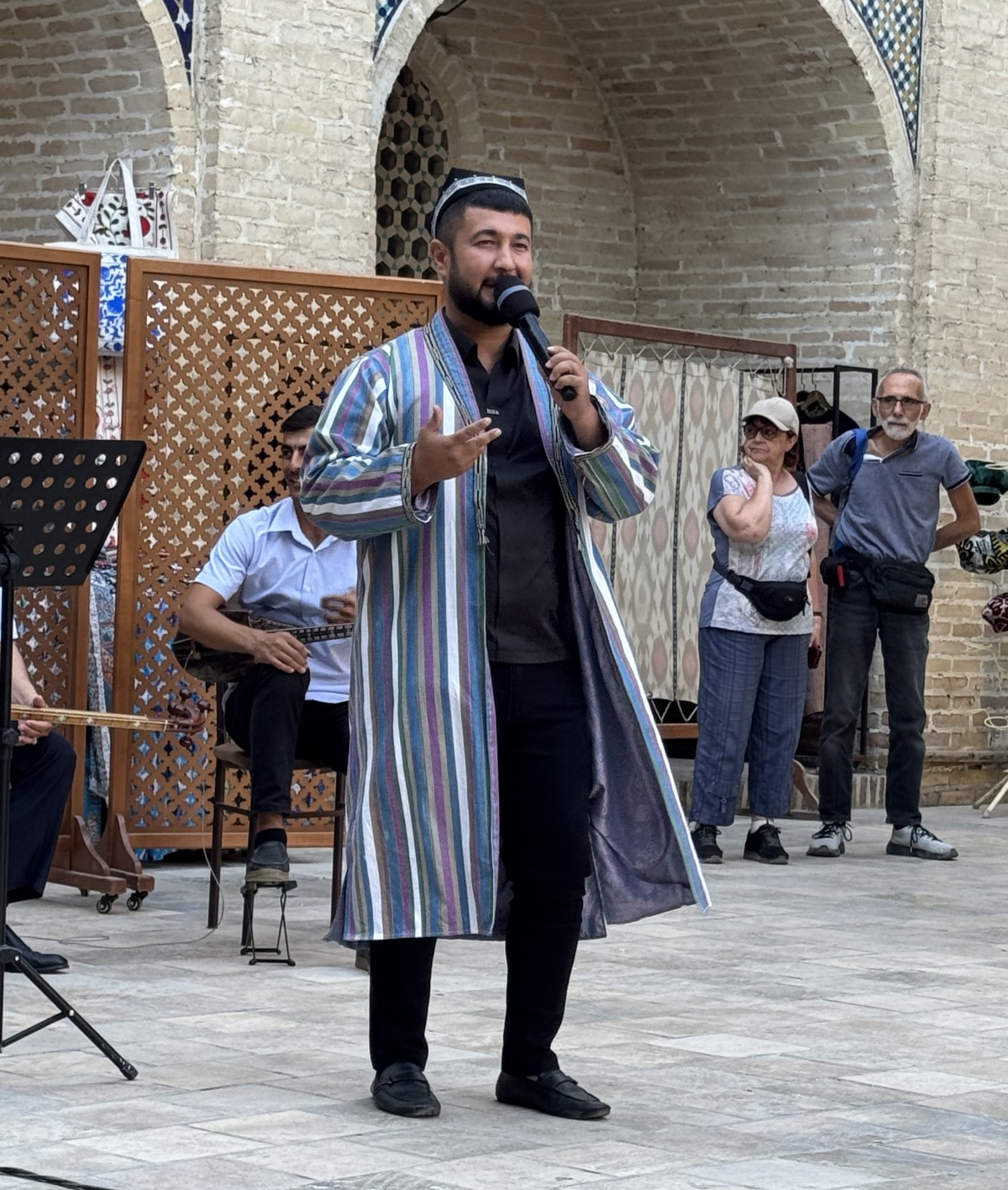
Musical accompaniment to the fashion show
 The continuous stream of new ideas in the Sicilian makes 1..c5 the most popular answer to 1.e4. On this DVD I do give an introduction to the most important Sicilian systems.
But we were not only cultural tourists. We are also chess players.
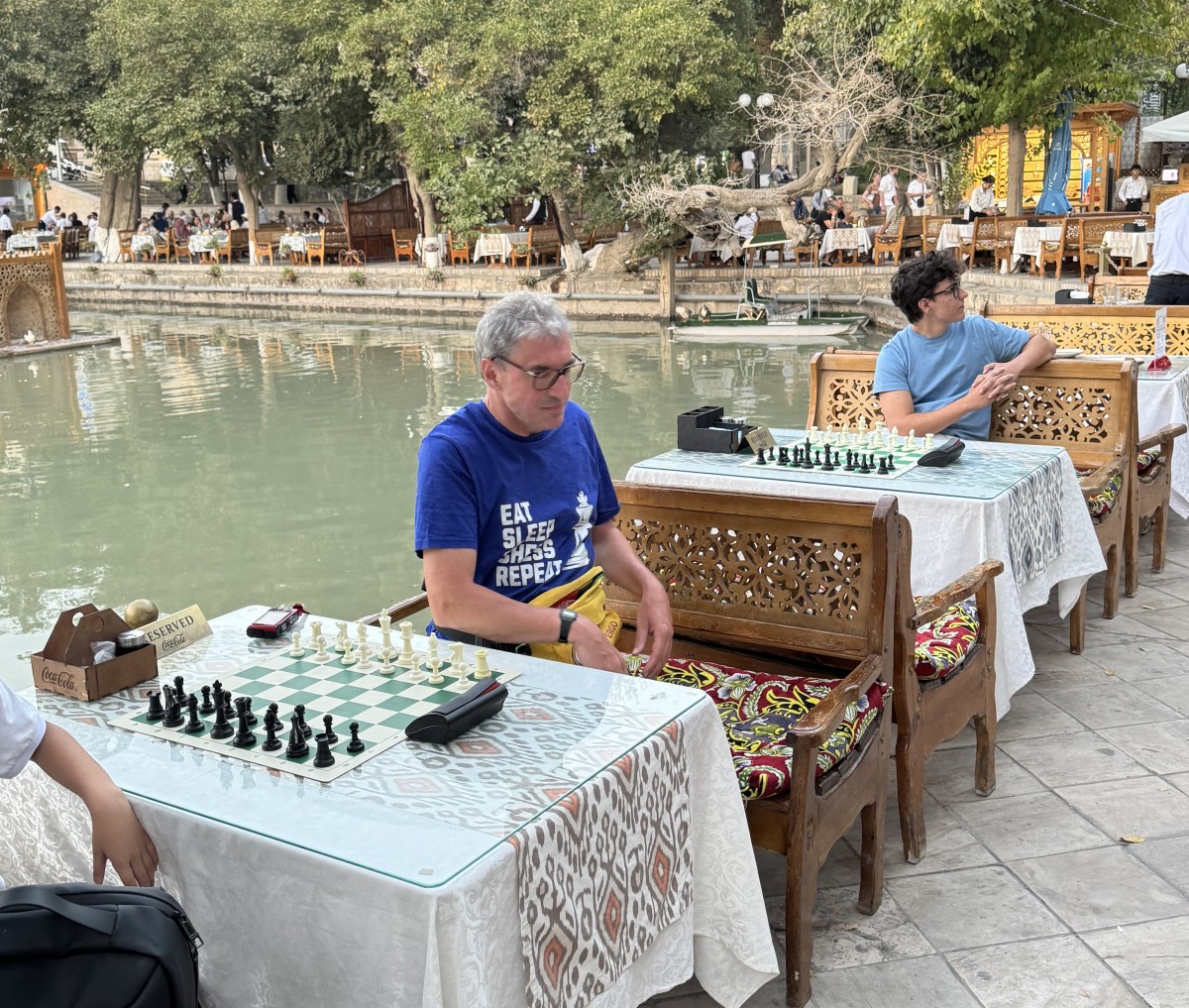
Chess match at Lyabi-Hauz Square
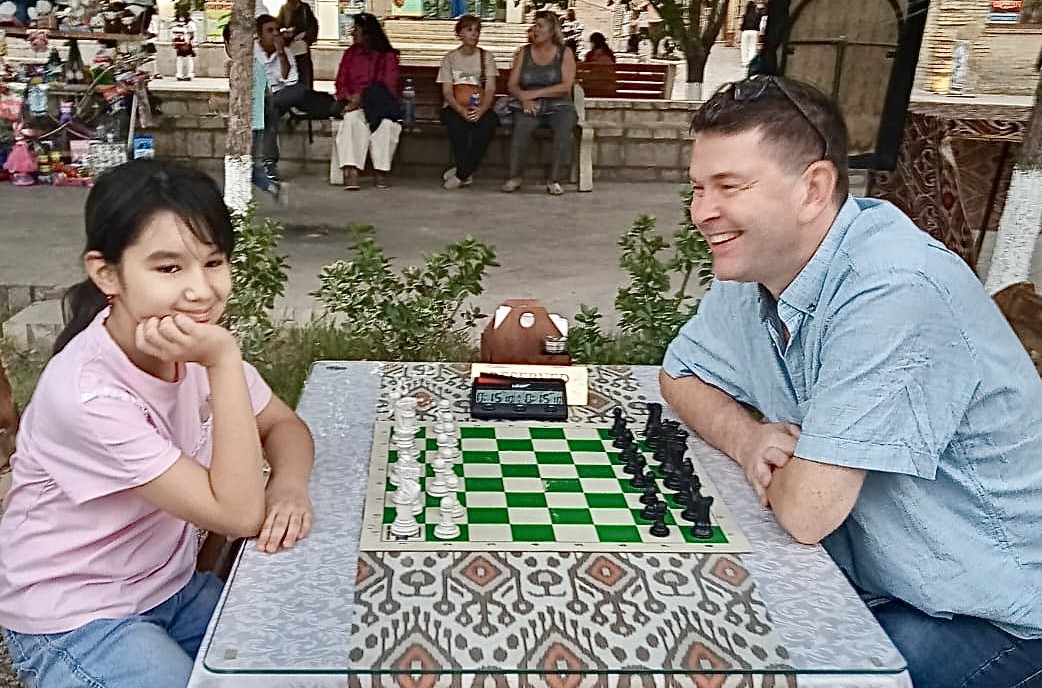
Peter, right, from the Netherlands against one of Uzbekistan's young female talents
.jpg)
Right: Jan
.jpeg)
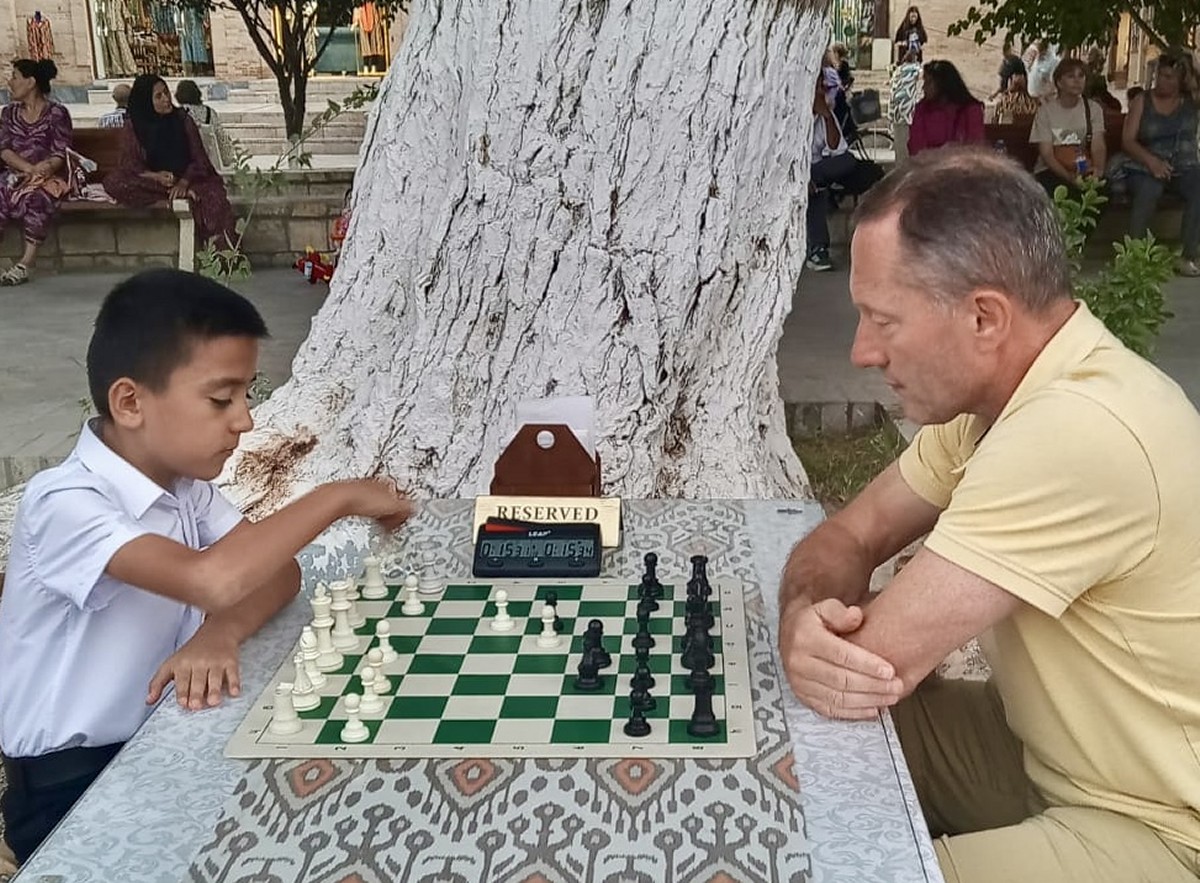
Paul from the Netherlands plays with the black pieces.
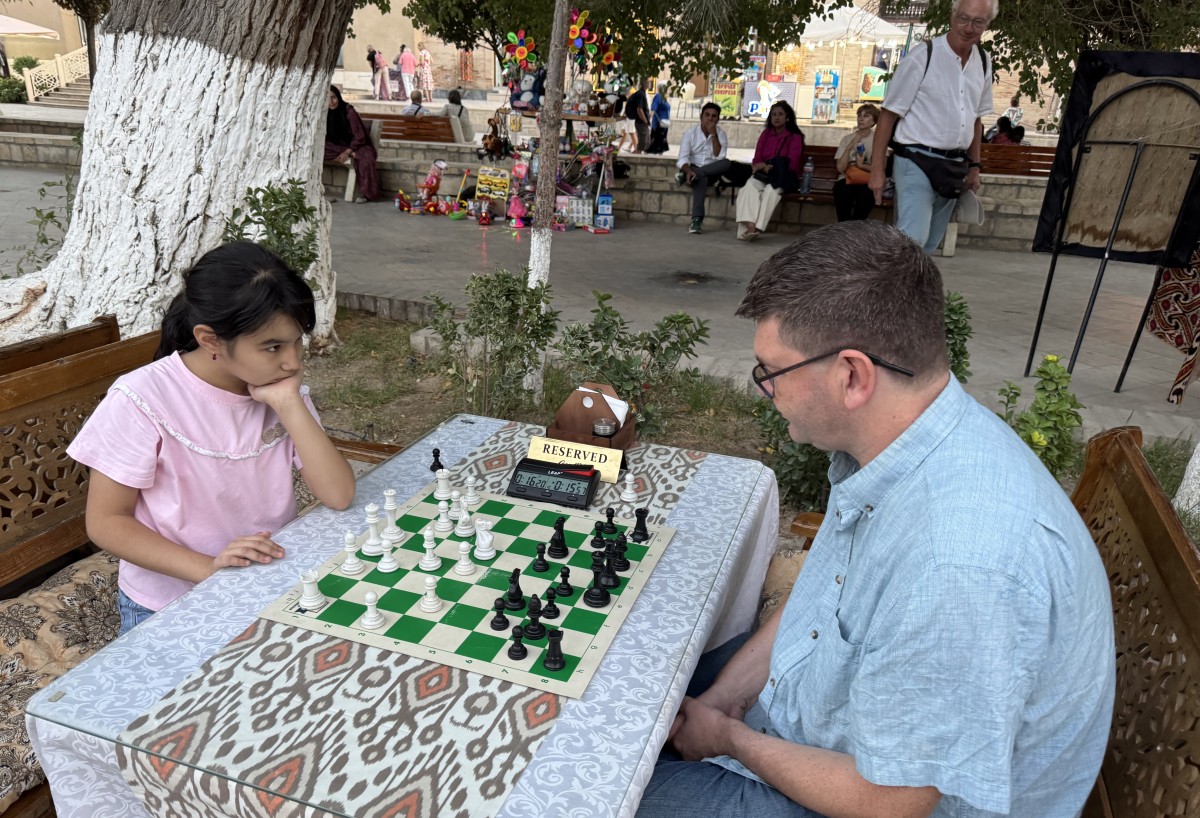
Peter against the Uzbek U10 champion
And so our first test at the boards awaited us: a team match against a selection of young Uzbek players. In the end, we won a closely contested match 15-12 - and came away with one clear lesson: it is better not to underestimate Uzbek talent.
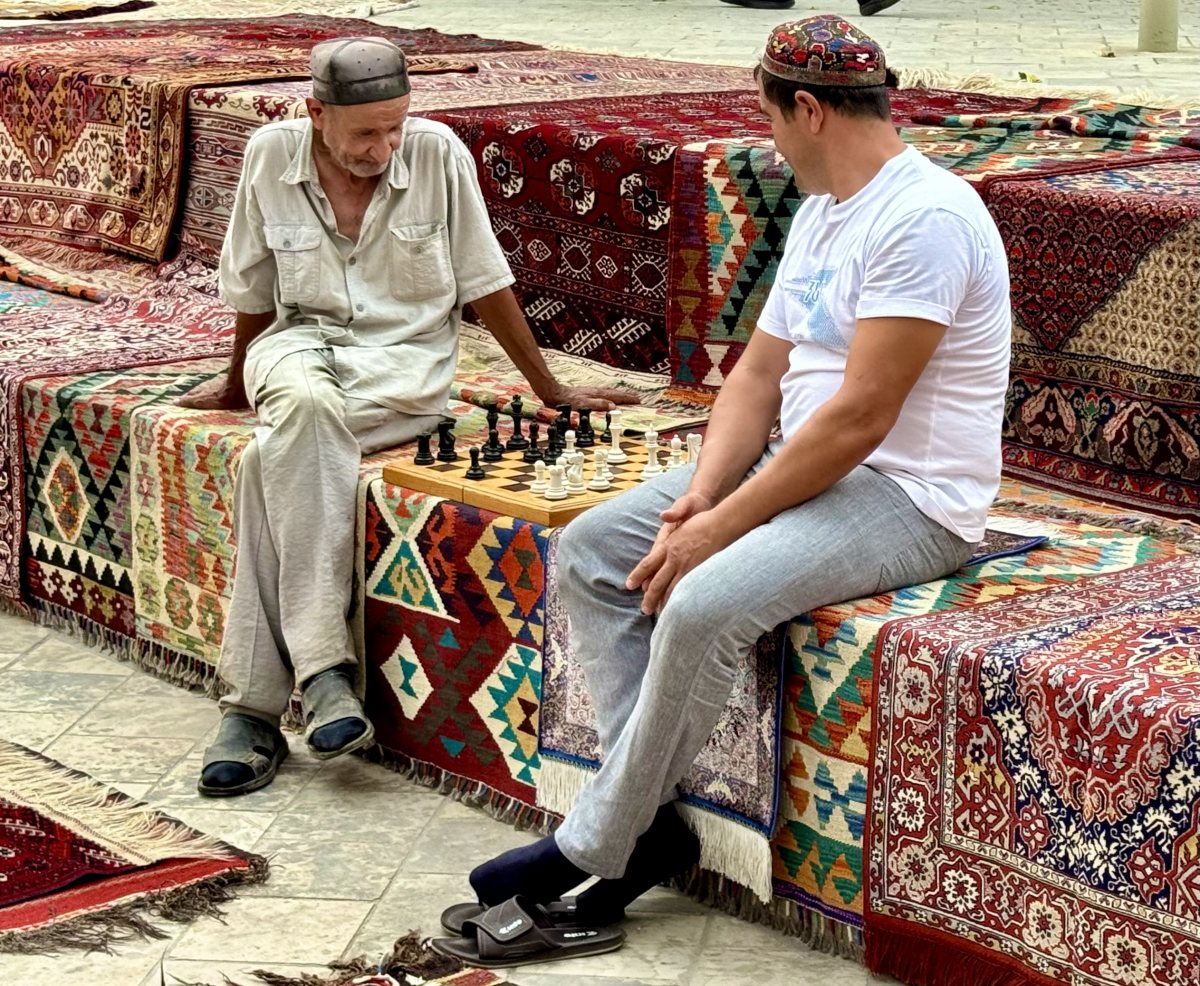
Carpet dealer playing chess
Samarkand - culture in the morning, chess in the afternoon
 Let us learn together how to find the best spot for the queen in the early middle�game, how to navigate this piece around the board, how to time the queen attack, how to decide whether to exchange it or not, and much more!
The next morning, we travelled by bus to Samarkand. The name alone conjures up images. Of caravans, silk and tales from the Arabian Nights. And some of that quickly became reality: at Siyob Bazaar, the air was filled with the scent of spices, piles of nuts and fruit rose from the stalls - and there were the famous round Samarkand flatbreads with their intricate patterns.
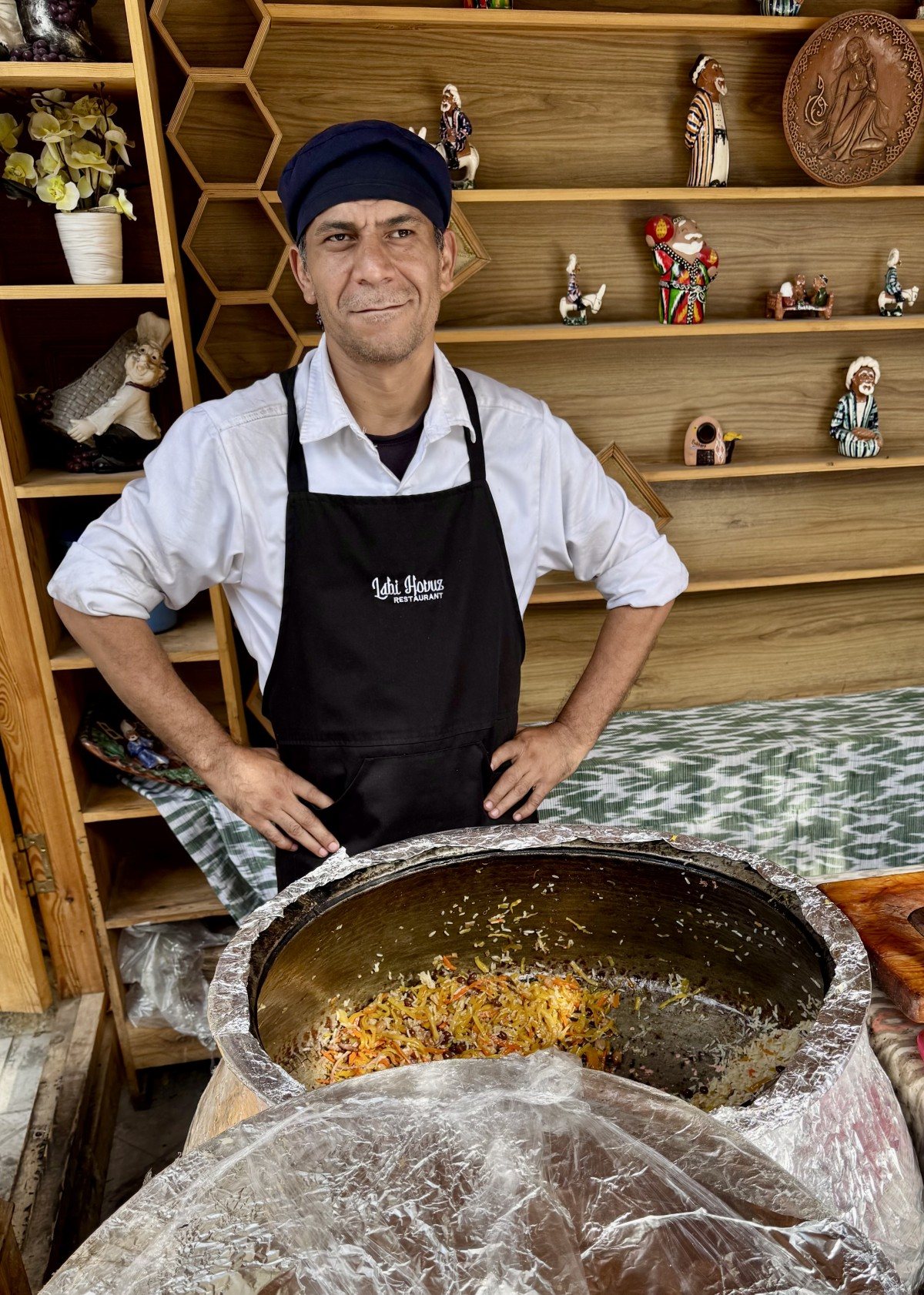
The national dish, plov, is served here
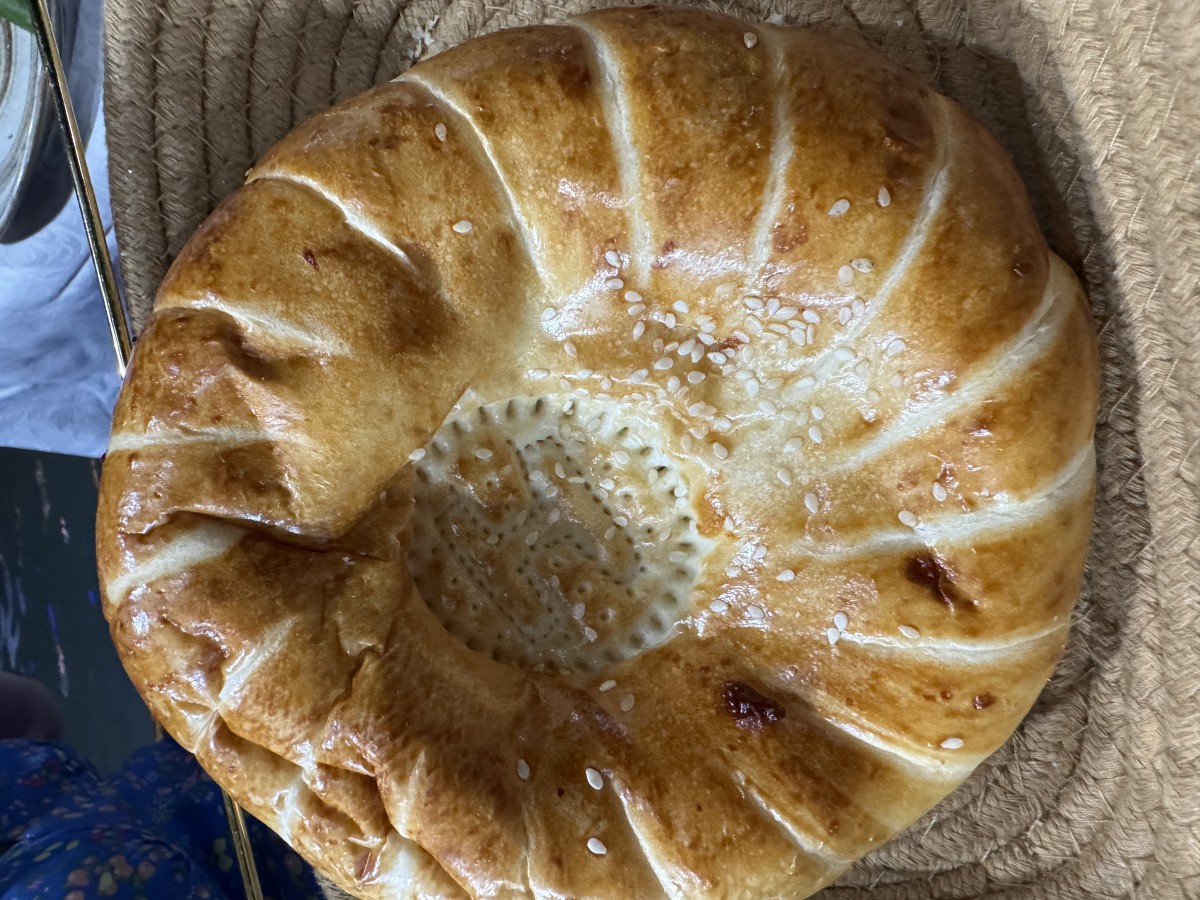
A flatbread with the typical bread stamp
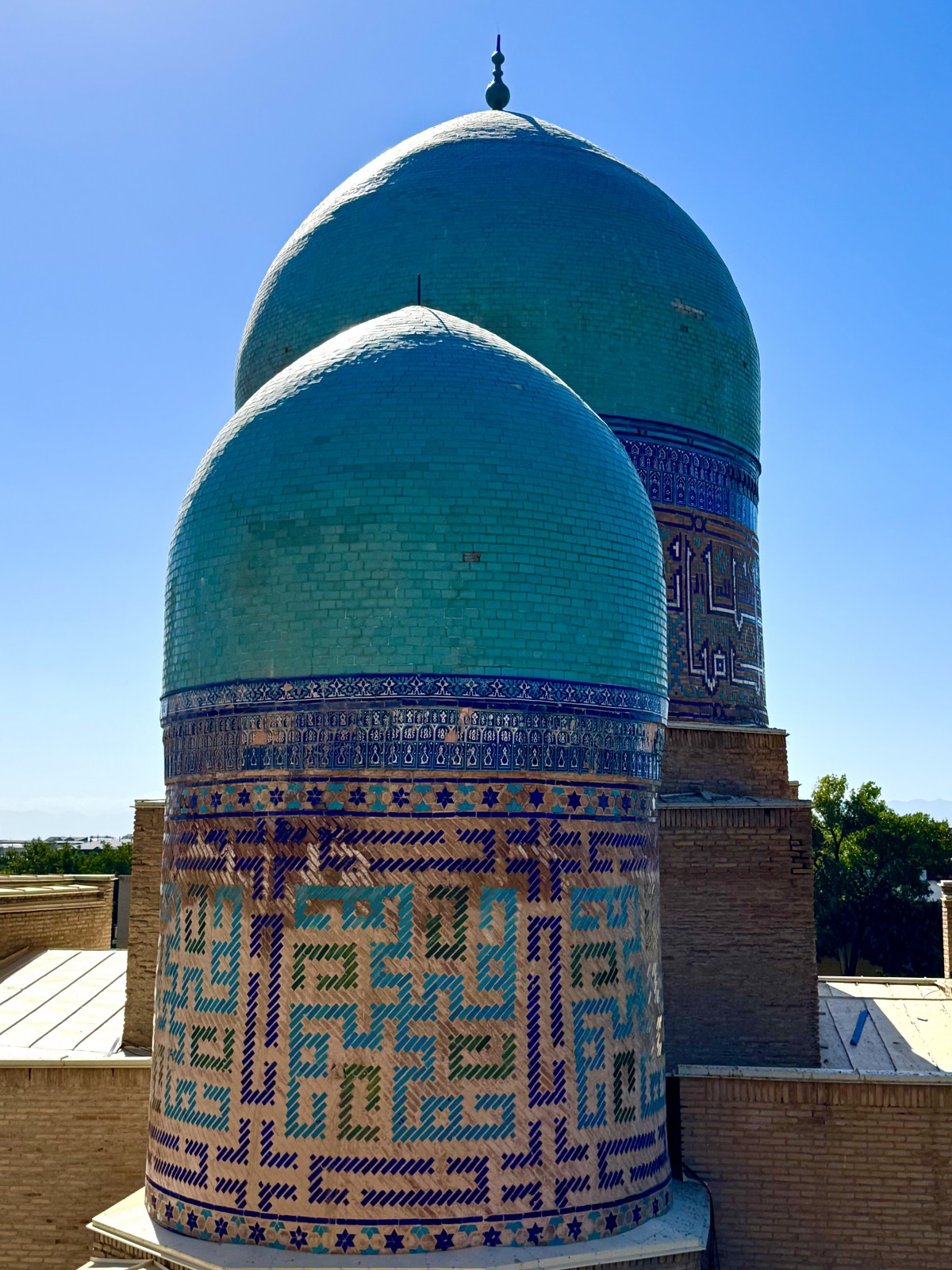
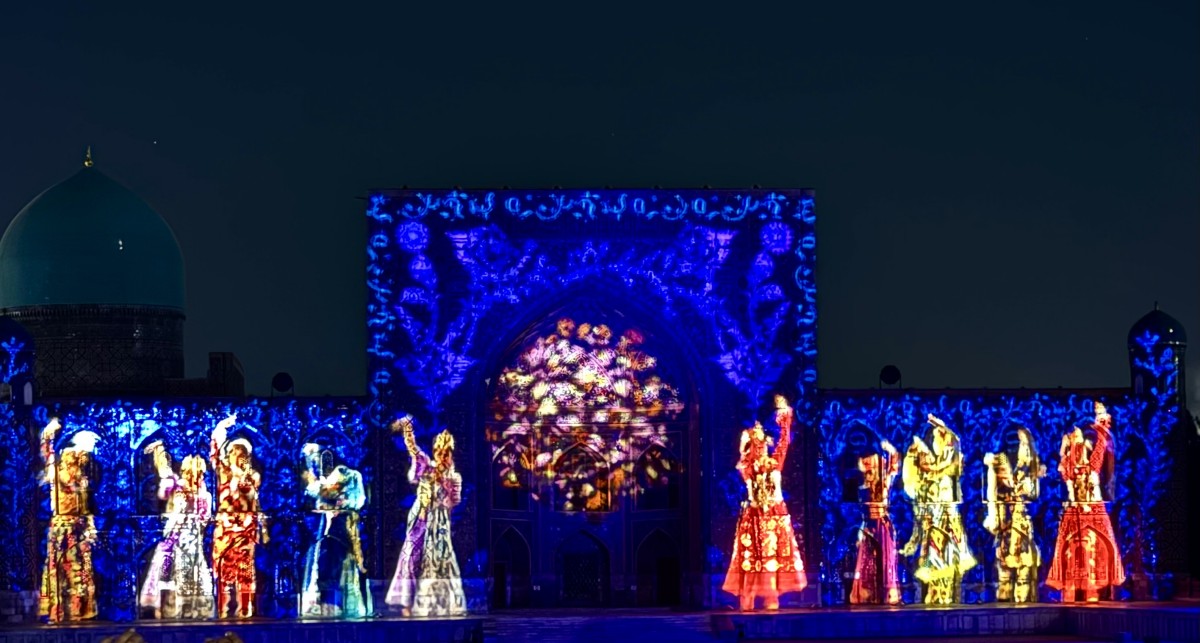
And then there was Registan! You know the square from pictures. But it only reveals its full impact when you are standing yourself between the three monumental madrasas, the historic elite centres of learning.
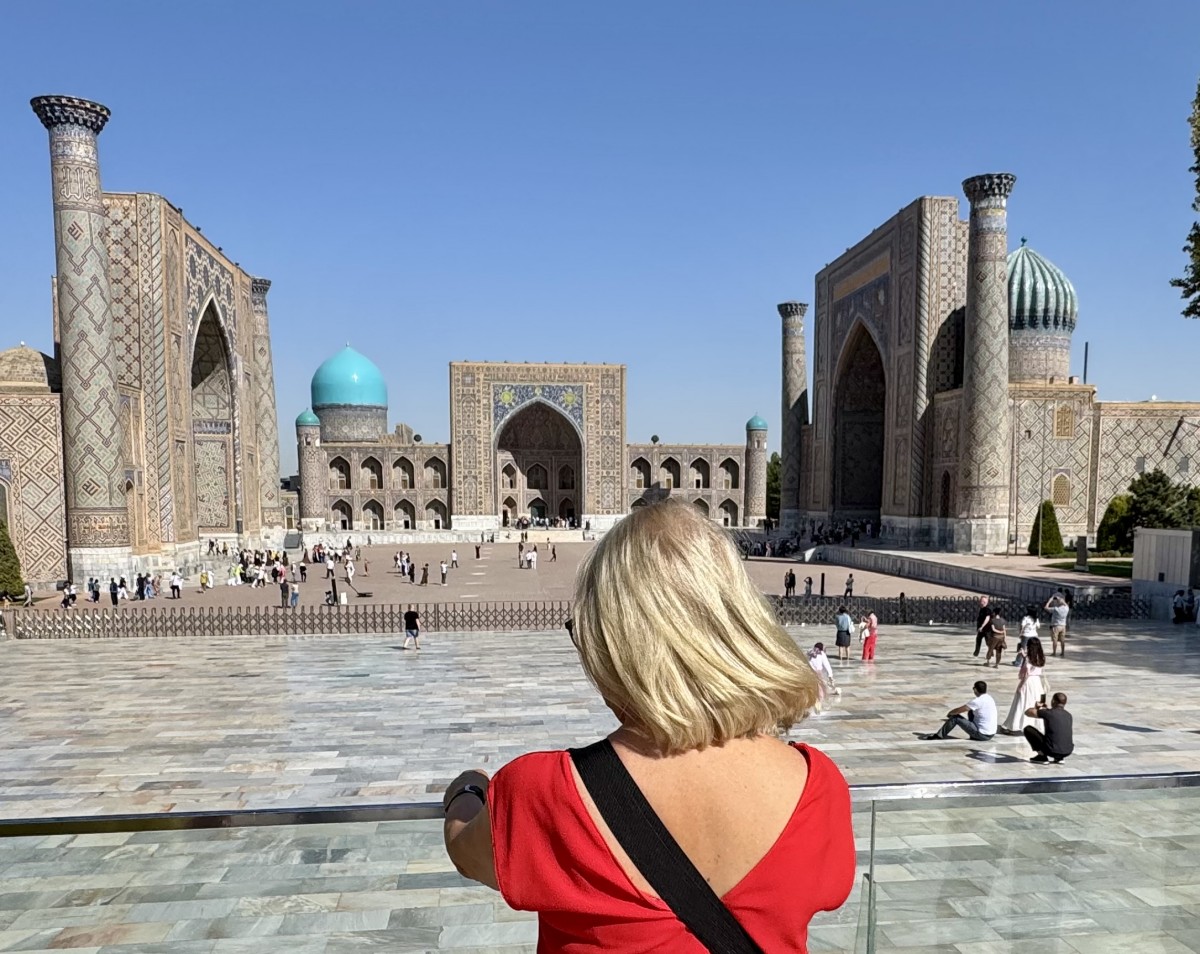
Registan with its three madrasas
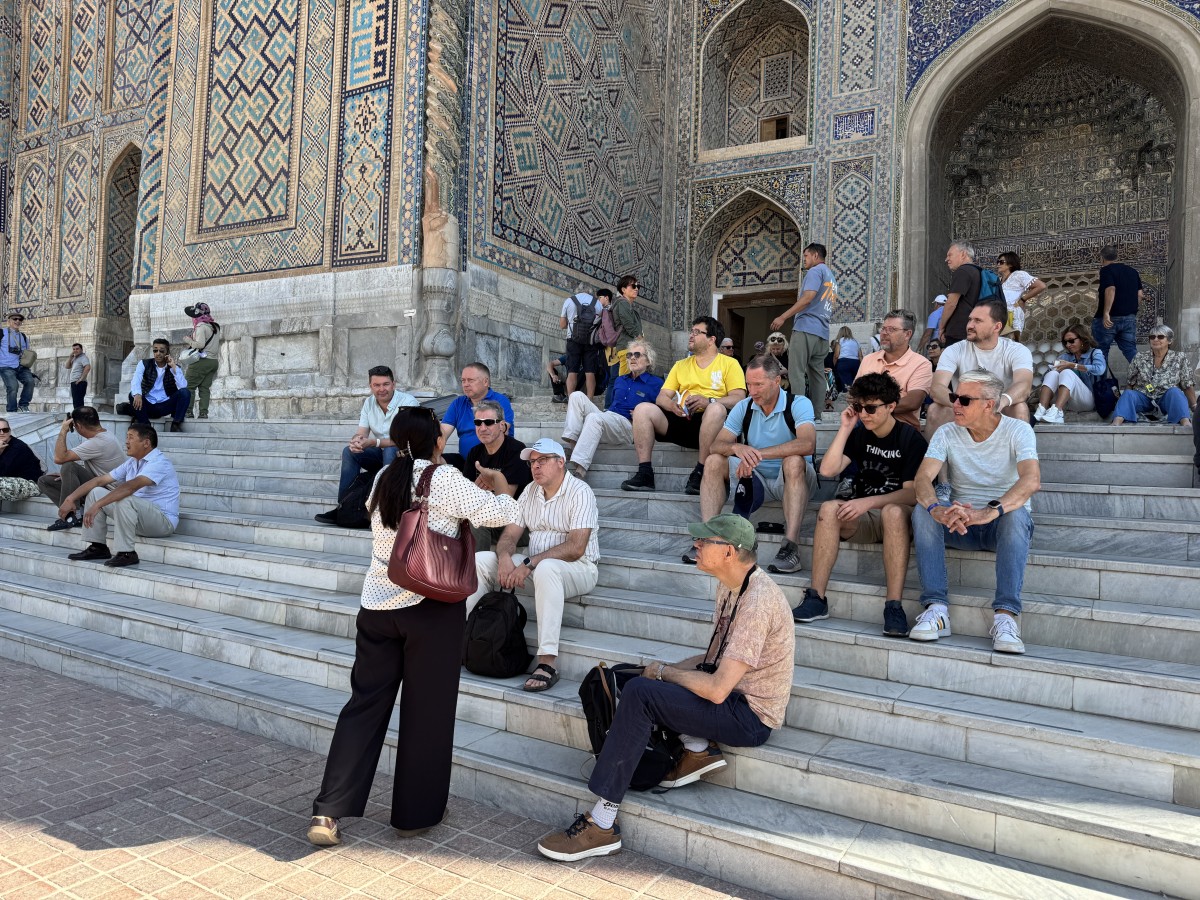
The travel group
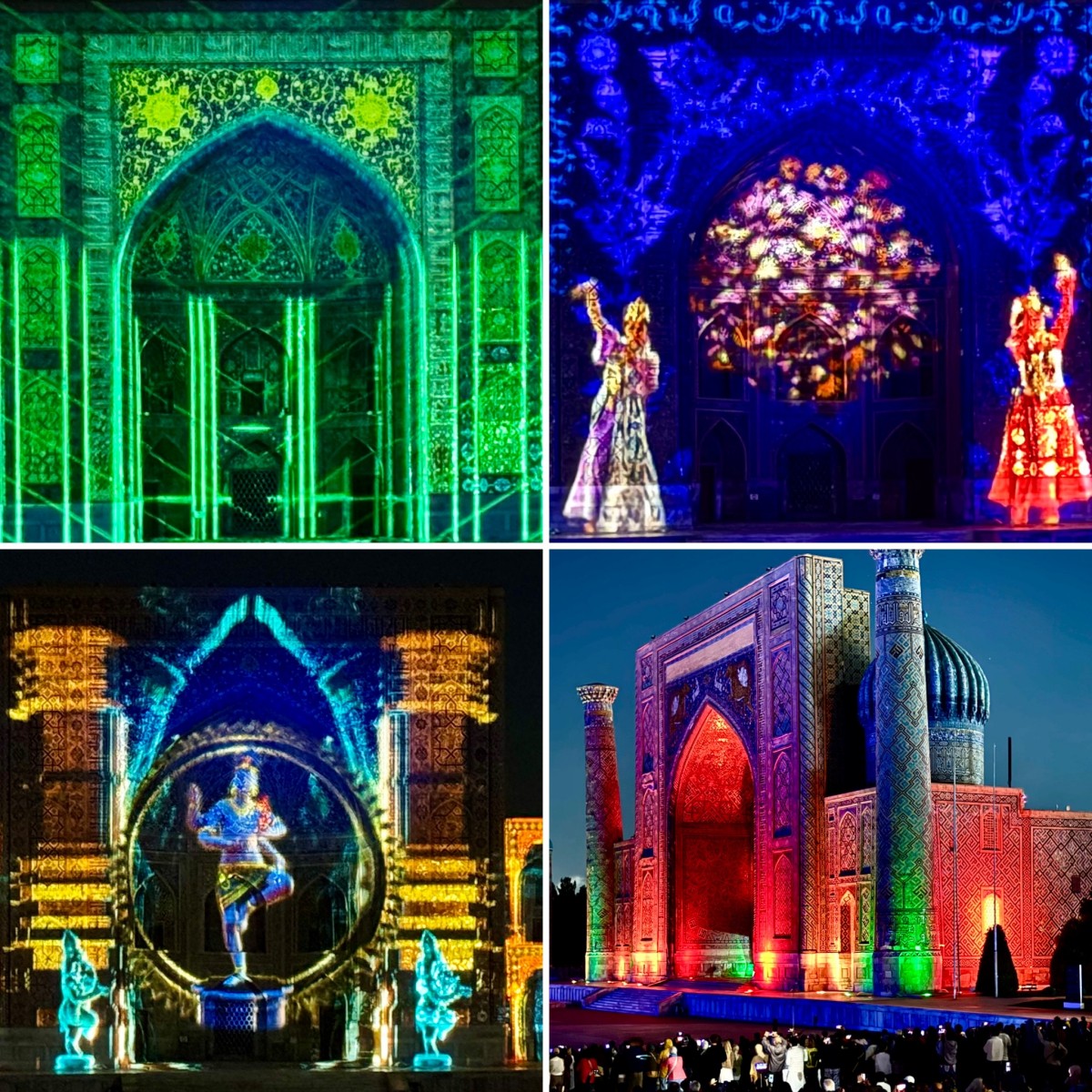
A laser show in the evening
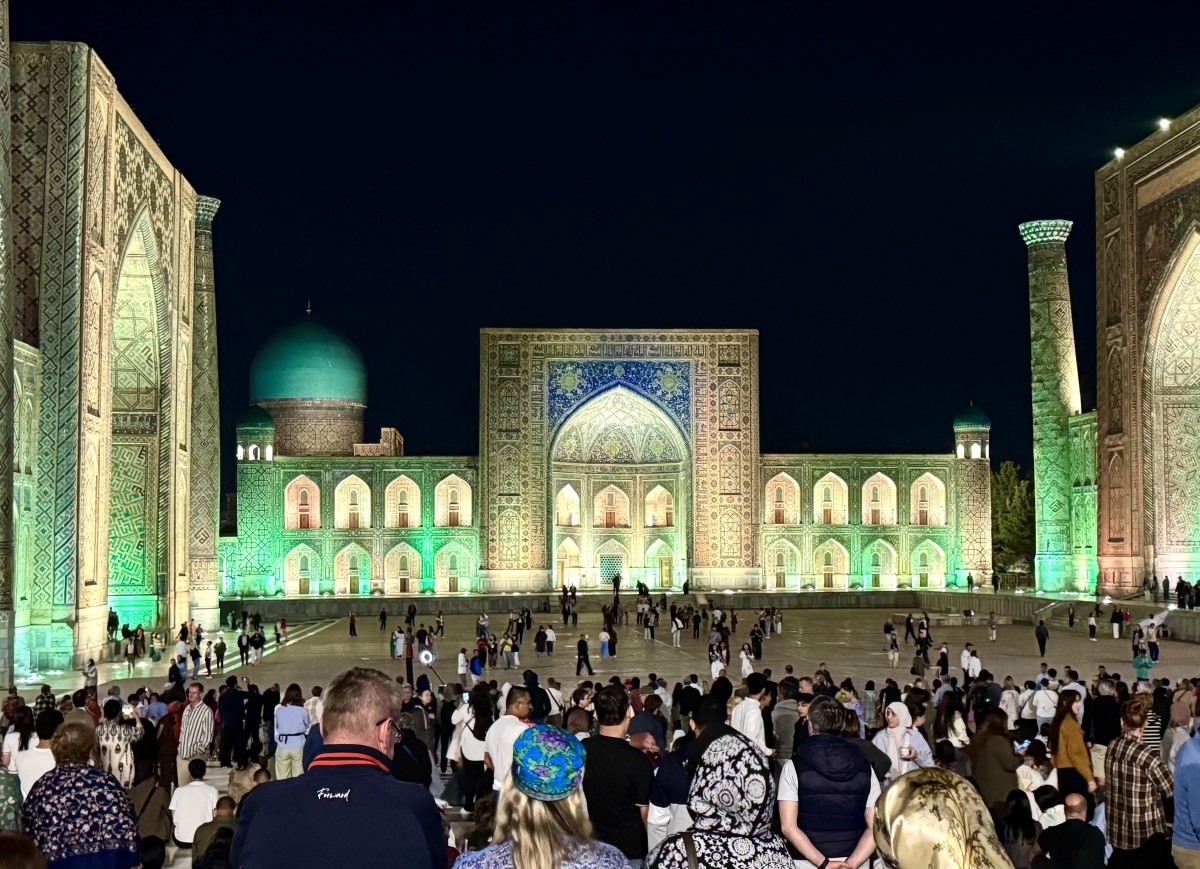
Laser show at Registan
Our days in Samarkand soon settled into a pleasant rhythm: culture in the morning, chess in the afternoon. Then we headed out to the Olympiad at the Expo venue. A day ticket cost 20 dollars - and gave us the wonderful opportunity to watch the world's elite from close range.
 In this insightful video course, Grandmaster David Navara shares practical advice on when to calculate deeply in a position — and just as importantly, when not to.
In this insightful video course, Grandmaster David Navara shares practical advice on when to calculate deeply in a position — and just as importantly, when not to.
Free sample video: Introduction
Free sample video: Invisible moves
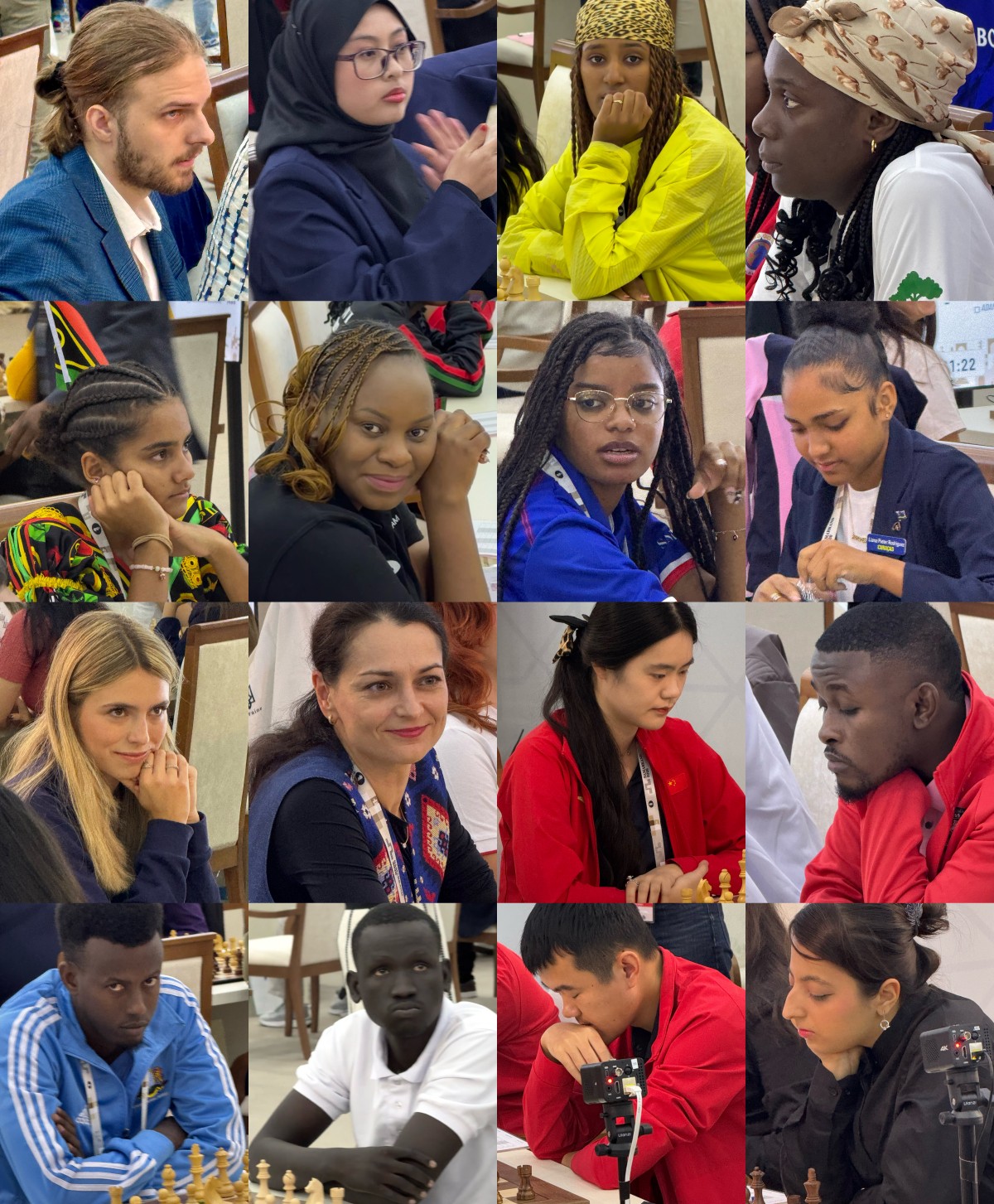
Chess faces
In its own way, the huge playing hall was no less impressive than Registan. Hundreds of players, professionals and amateurs from more than 200 countries - the Olympiad gives them all a face. We experienced that peculiar mixture of absolute silence at the boards and international chatter outside the playing hall, and suddenly we were no longer watching a livestream from home as we had just a few days earlier, but right in the middle of it all.
Tashkent - a trip underground
Even before the final round, it was time to say goodbye to Samarkand. We continued by train to Tashkent - and into a very different Uzbek reality.
After the devastating earthquake of 1966, large parts of the capital were rebuilt. Wide streets, spacious squares, monumental buildings and plenty of greenery characterise the city.
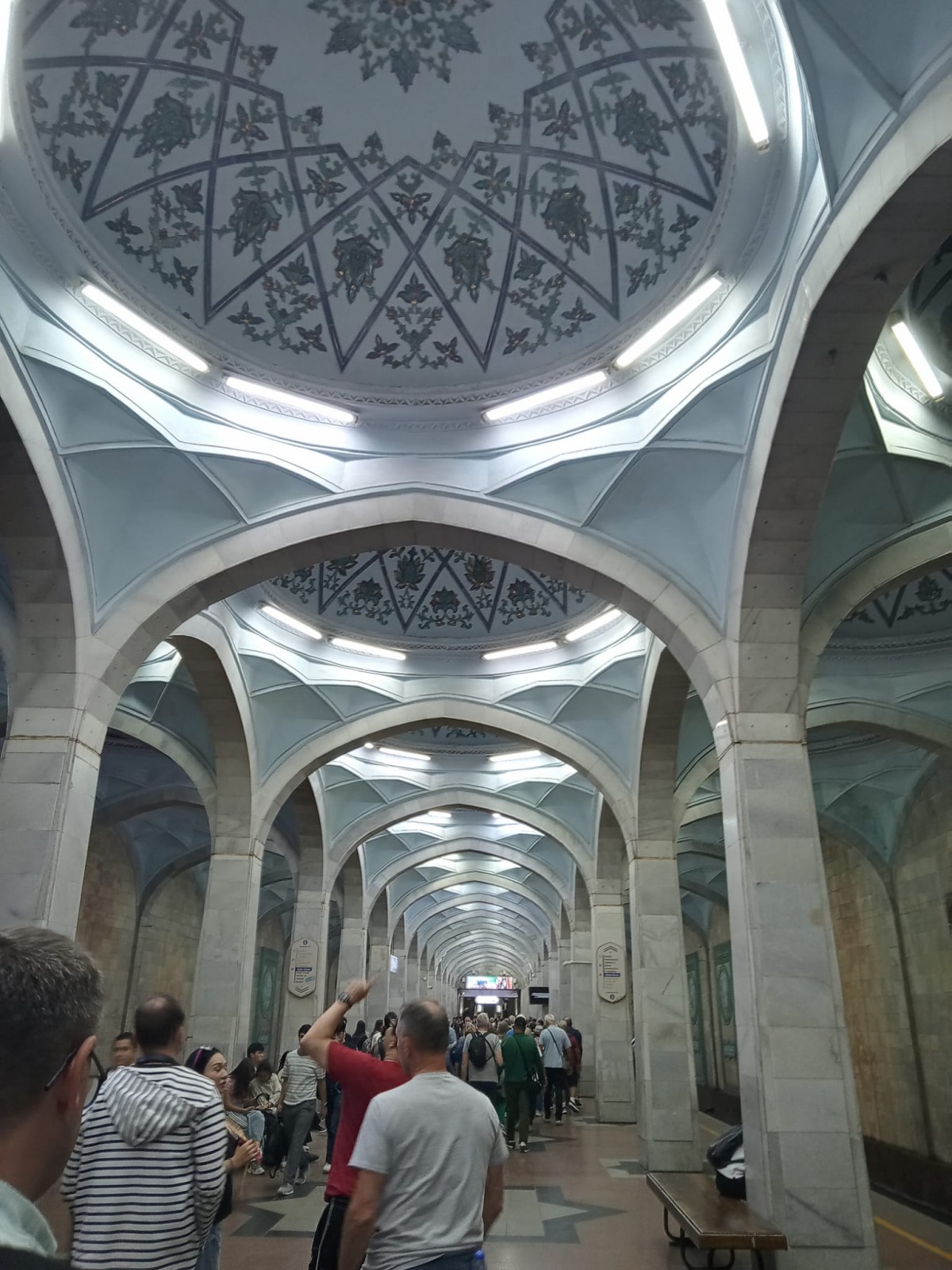
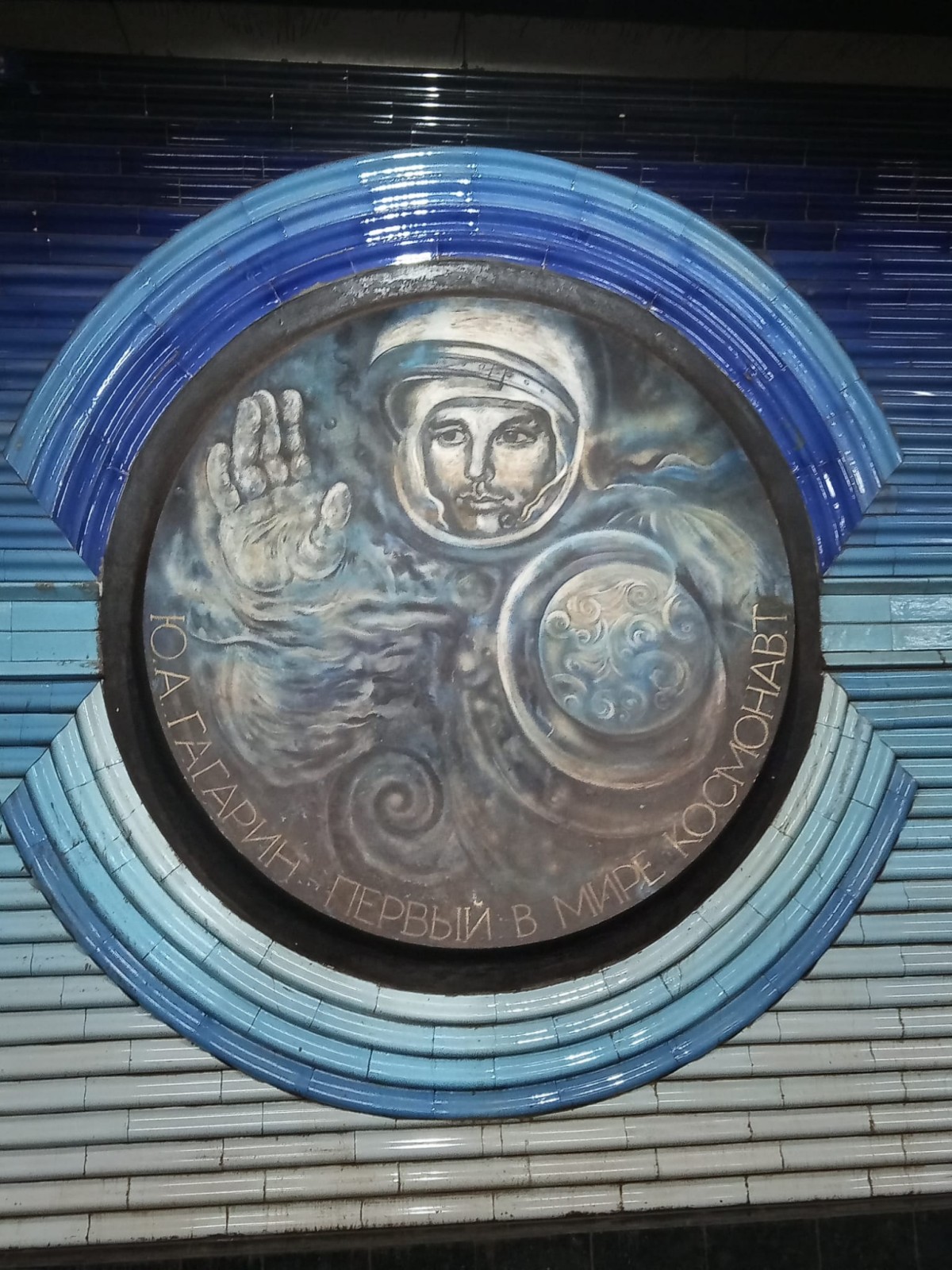
One of its attractions, however, lies underground. So we took the metro. What elsewhere is simply public transport is also a small architectural tour in Tashkent. Kosmonavtlar station particularly stayed in our memories - an underground homage to Soviet space travel and its cosmonauts.
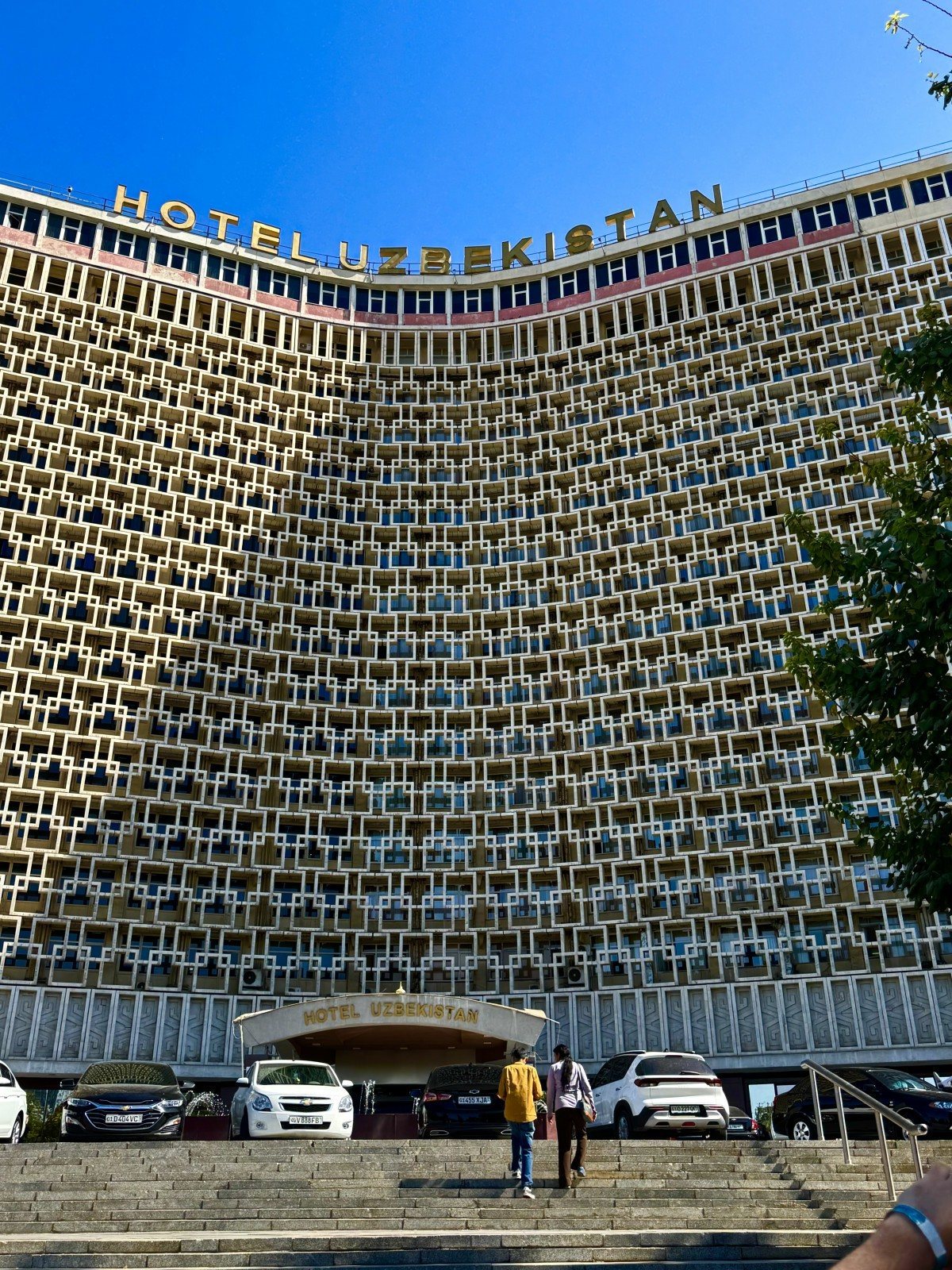
Back above ground, we stopped by the famous Hotel Uzbekistan. We did not content ourselves with its striking façade, but simply walked into its grand lobby as well.
Of all pairings, Germany against the Netherlands
On Sunday afternoon, however, Tashkent passed by outside the bus windows somewhat unnoticed for a while. Inside, our attention was focused elsewhere.
Almost everyone was staring at their phones.
The final round of the Olympiad was under way in Samarkand. And as if someone making the pairings had thought specifically of our travel group, one of the decisive matches was: Germany against the Netherlands.
For the German side, bronze was at stake. Matthias Bluebaum defeated Jorden van Foreest. And when Frederik Svane and Loek van Wely shook hands agreeing a draw at around half past five, it was confirmed: Germany had won bronze!
So the five Germans had a little more reason to celebrate that afternoon than the nine Dutch. Never mind. We were still sitting on the same bus, travelling together through Tashkent, and had long since discovered that both sides got along perfectly well even when, for once, more than honour was at stake in a chess match.
Four out of four - and a medal for zero out of zero
On Monday, it was our turn again.
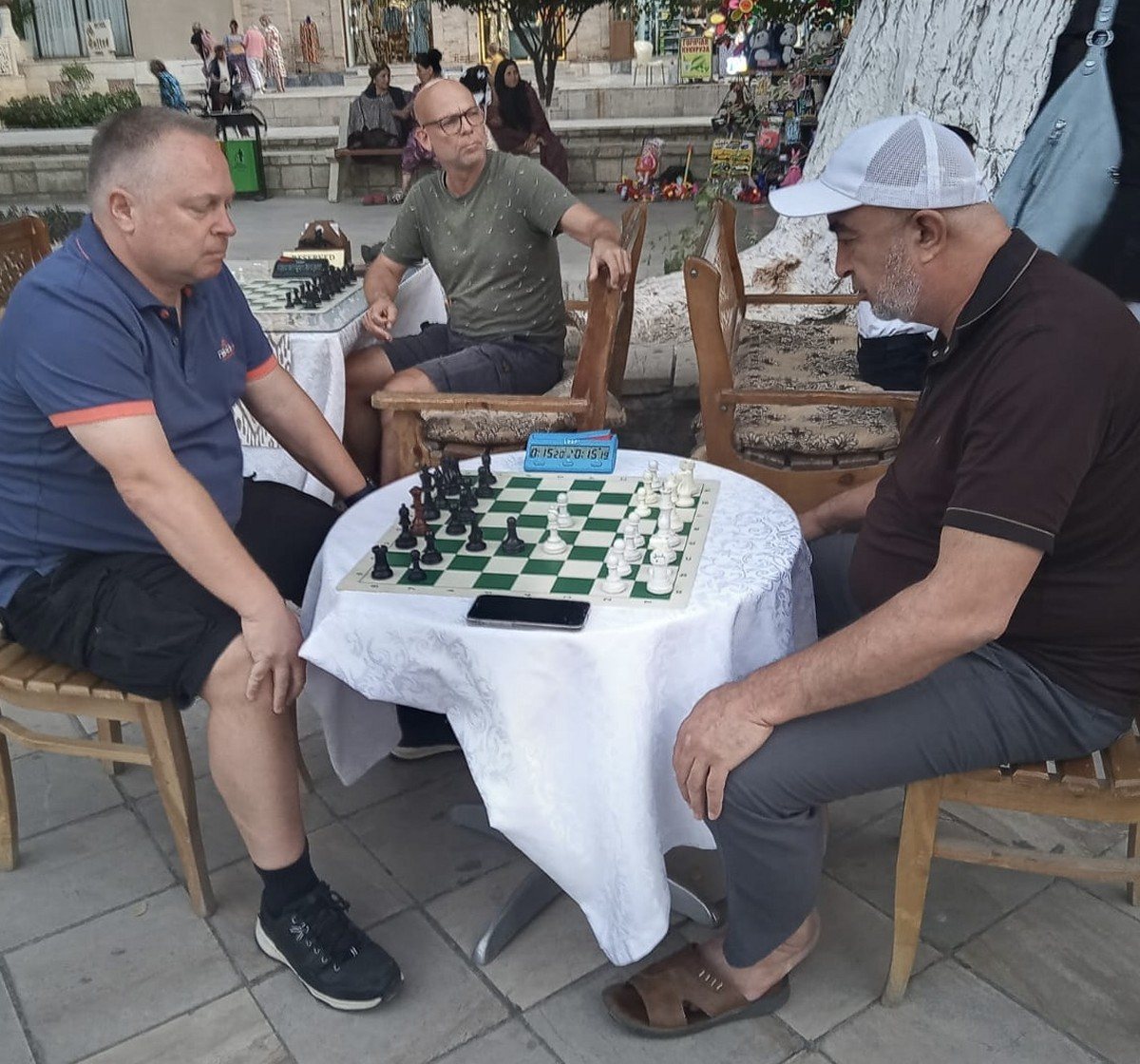
At the Olympic Museum, we faced a young Uzbek team for the second time. Once again, we managed to win, but only one player had a perfect record after both matches: Yuri! Four points from four games, one hundred per cent.
 This DVD focuses on several types of material imbalances, such as Rook vs 2 Pieces, Queen vs 2 Rooks, and Queen vs Pieces.
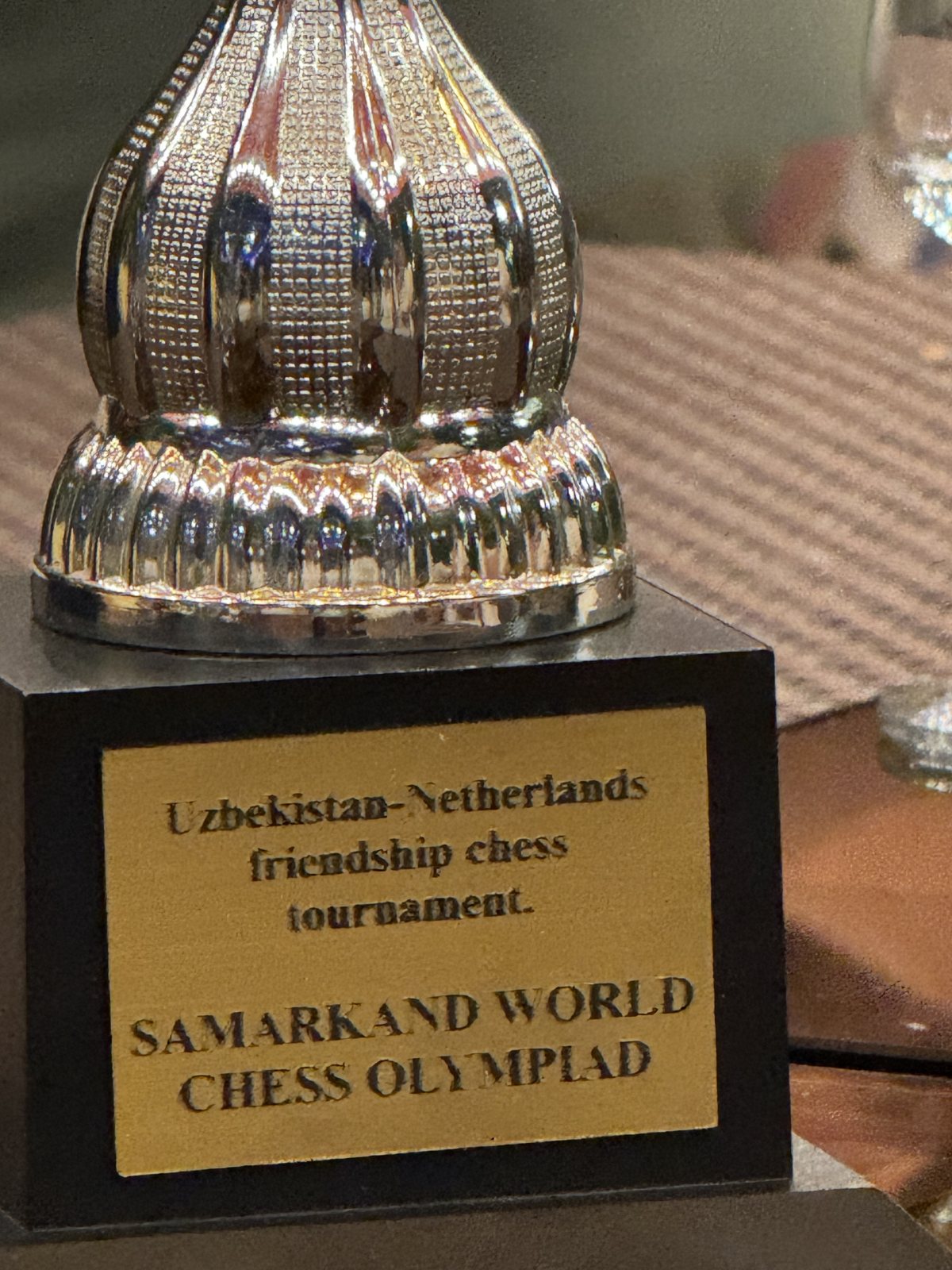
That earned him a trophy - imposing, heavy and ideally suited to forcing a fresh calculation of the permitted luggage allowance for the journey home.
%2C%20Giulio%20(rechts)%20und%20Monika%20(links).jpeg)
The awards ceremony
The trophy did contain one small inaccuracy, however: in gold lettering, the match was immortalised as "Uzbekistan - Netherlands". The rest of us Europeans from Germany and Italy took it in good humour.
And then there was still a bronze medal to award. Several players were tied for third place in the individual standings, but there was only one medal.
What to do? Ardjan found a Solomonic solution - and presented it to Monika.
She was the only non-chess player in our group. For eight days, she had endured opening variations, game analyses, results and probably more chess conversations than anyone without a personal interest in 64 squares could reasonably be expected to tolerate. The good spirit of our group received the medal.
Perhaps it was the nicest awards ceremony of the entire trip.
The chess world - a place for good people
At the farewell dinner that followed at Café Olympia, the wonderful Uzbek cuisine was served once again.
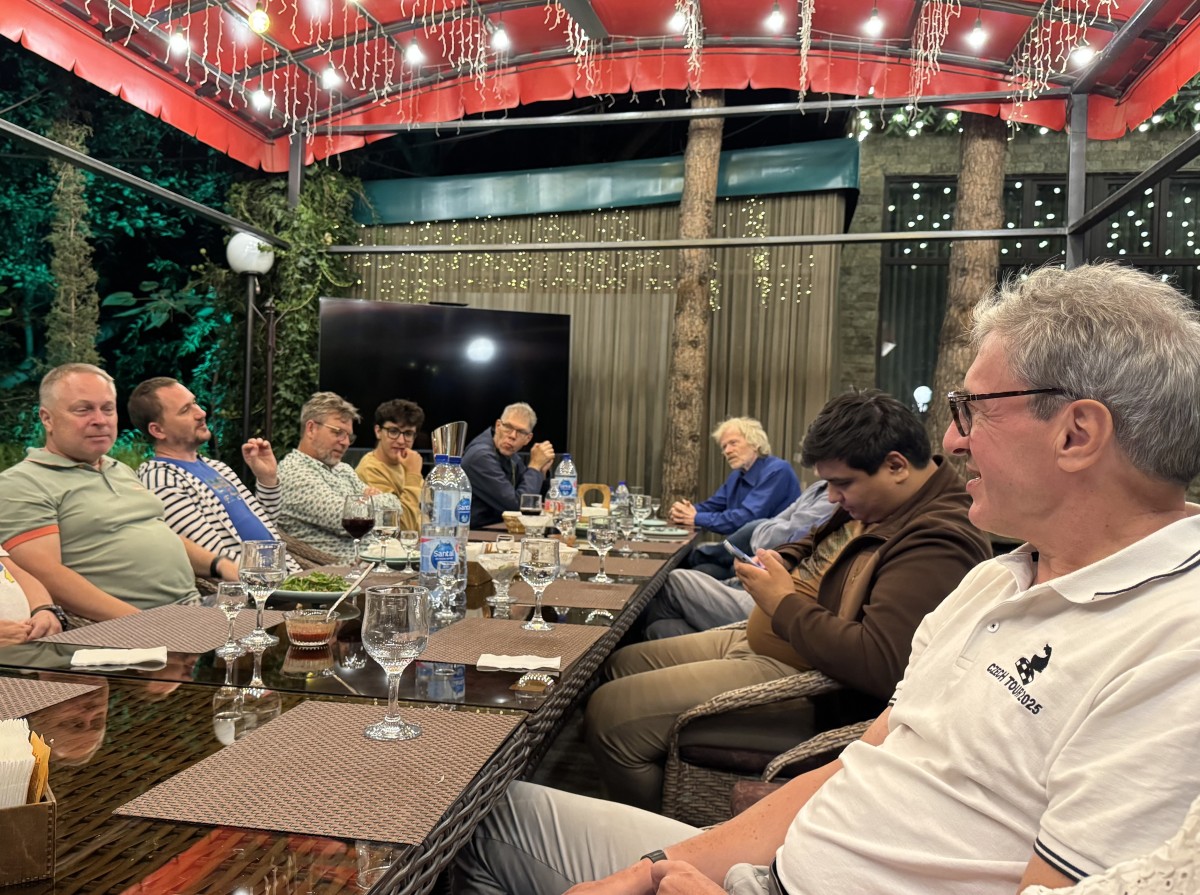
And there was a surprise cake, because one member of the group had a very personal reason to celebrate that evening: Michael turned 60! By then, at the latest, it became clear how quickly time can pass, how quickly eight days can go by. And sometimes it is only on the journey home that you realise how much of a trip actually stays with you.

A birthday surprise
John was almost home again when he wrote to the group: "The laughter, the stimulating conversations, the constant sense of wonder and the boundless freedom made this trip an unforgettable experience".
Yuri felt similarly: "Perhaps we will see each other again one day. After all, the chess world is not so large; it is a place for good people".
Fifteen people had spent eight days together in Bukhara, Samarkand and Tashkent. The fact that everything fitted together so wonderfully was due in no small part to Ardjan. He had combined culture and chess perfectly. Much could be planned and organised. What grew out of it could not.
In the end, there was certainly no trace of the much-cited German-Dutch rivalry. Instead, something else had genuinely emerged.
Something that needs no grand concluding statement. One from an old film will do. In Casablanca, Humphrey Bogart says: "I think this is the beginning of a beautiful friendship".
A line that could just as well have been spoken in Bukhara, Samarkand or Tashkent.
Links


















.png)