The first blindfold simultaneous exhibition at Simpson's in 100 years!
Simpson's in the Strand, also known as "The Grand Divan", is one of London's most traditional restaurants and chess cafés. Opened in 1828, the restaurant was the meeting place for the best British chess players and soon also attracted the best players from around the world, who tested their strength and explored the game together in countless casual games. It was also here, in 1851, that the most famous chess game of all was played, the "Immortal Game" between Adolf Anderssen and Lionel Kieseritzky. Among the special feats of the great masters was blindfold play, in which they played against one or more weaker opponents without looking at the board, virtually blind - and usually won.
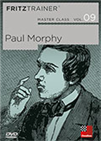 Learn about one of the greatest geniuses in the history of chess! Paul Morphy's career (1837-1884) lasted only a few years and yet he managed to defeat the best chess players of his time.
The blindfold player here is Paul Morphy
By the end of the 19th century, Simpson's had already lost importance as a meeting place for chess players after they had been pushed into a room on the upper floor.
Since 1904, the establishment has been located at 100 Strand, on the edge of Covent Garden and in the heart of London's theatre district. After being remodelled in the 1920s, it developed into a busy luxury restaurant. For a time after the Second World War, it was the only restaurant in England to have been awarded a Michelin star.
Chess enthusiasts in England have repeatedly tried to revive Simpson's great chess tradition. In 1980, the final of the club championship was held here. In 2003, there was a tournament in honour of Howard Staunton.
In recent decades, Simpson's passed through the hands of several owners, was renovated in 2017, but had to close in 2020 because of economic difficulties. At the end of last year, however, the establishment was reopened under the management of the Savoy Hotel group and the well-known restaurateur Jeremy King.
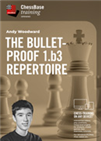 This compact course is designed specifically for practical play. Instead of overwhelming you with endless theory, it focuses on the critical lines, typical plans, and recurring tactical ideas.
Looking for an opening that gets your opponents thinking on move one? Grandmaster Andy Woodward has relied on 1.b3 for years in blitz and bullet, using it to defeat strong masters and grandmasters who underestimated its hidden venom. While many players dismiss the opening as harmless, they often find themselves caught in unfamiliar positions, tactical traps, and uncomfortable middlegames. This compact course is designed specifically for practical play. Instead of overwhelming you with endless theory, it focuses on the critical lines, typical plans, and recurring tactical ideas that matter most when the clock is ticking.
Free video sample: Introduction
Free video sample: King's Indian Setup
Jeremy King is aware of Simpson's importance for chess and wants to continue cultivating this tradition. To that end, he has enlisted the help of his friend Jason Kouchak. The musician and chess enthusiast is now, fittingly, the director of chess and music at Simpson's-in-the-Strand.
Jeremy King and Jason Kouchak recently created a "chess menu", with the following courses:
- Starter – a simultaneous exhibition with GM Stuart Conquest
- Main course – GM Luke McShane plays blindfold chess
- Dessert – jazz chess (Freestyle Chess with jazz music)
Luke McShane's appearance was the first time in 100 years that a chess player once again gave a blindfold exhibition at Simpson's.
The opponents of the two grandmasters were all members of staff from the new Simpson’s project, together with their children. Jeremy King and Jason Kouchak played as the consulting team "JK" and put up the longest resistance against Luke McShane.
With this event, King and Kouchak want to recall the great masters of the 19th century who all played chess here: Wilhelm Steinitz, Paul Morphy, Adolf Anderssen, Emanuel Lasker and Johannes Zukertort.
With many thanks to Jason Kouchak for information and photos.
Simpson's in the Strand: The Home of Chess...
In this video course experts examine the games of Steinitz. Let them show you which openings Steinitz chose, where his strength in middlegames were, how he outplayed his opponents in the endgame & you’ll get a glimpse of his tactical abilities!
Williams Steinitz, 1st World Chess Champion (1886-1894) The match between William Steinitz and Johannes Zukertort in 1886 was the first chess match for the ‘World Chess Championship’. Steinitz won, and has since been considered the first official world champion in chess history.
Free video sample: The Steinitzian method of restriction
Free video sample: Strategy Introduction