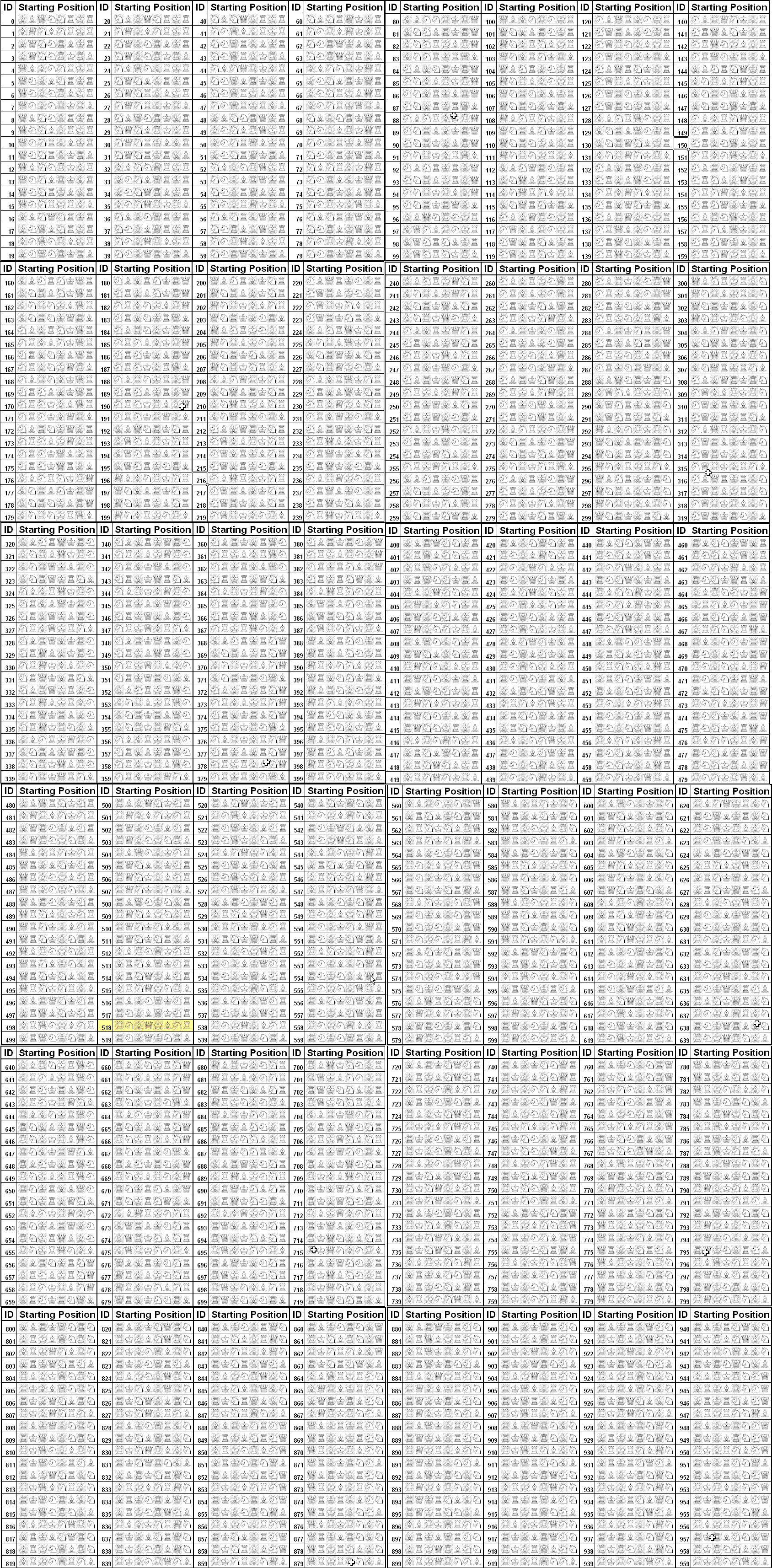
8/19/2026 – As you have noticed, this form of chess is becoming increasingly popular. Everyone seems to like it, sponsors are lining up to stage high-prize tournaments, even World Championships. In this series we look back at the origin of Fischer-Random, Chess960 or Freestyle, as it is now called, and discuss the reasons for its popularity. In the end we will propose some modifications to the rules and how the game should be played. Stay tuned.
new: ChessBase Magazine 225
Chess Festival Prague 2025 with analyses by Aravindh, Giri, Gurel, Navara and others. ‘Special’: 27 highly entertaining miniatures. Opening videos by Werle, King and Ris. 10 opening articles with new repertoire ideas and much more. ChessBase Magazine offers first-class training material for club players and professionals! World-class players analyse their brilliant games and explain the ideas behind the moves. Opening specialists present the latest trends in opening theory and exciting ideas for your repertoire. Master trainers in tactics, strategy and endgames show you the tricks and techniques you need to be a successful tournament player! Available as a direct download (incl. booklet as pdf file) or booklet with download key by post. Included in delivery: ChessBase Magazine #225 as “ChessBase Book” for iPad, tablet, Mac etc.!
YOUR PERSONAL CHESS COACH - Whether you’re taking your first steps into the world of club chess, or already playing at a tournament level: with FRITZ, you can train more efficiently, intelligently and with a more personalised approach than ever before. FRITZ is more than just a chess engine – it’s a training revolution! Whether you’re taking your first steps into the world of club chess, or already playing at a tournament level: with FRITZ, you can train more efficiently, intelligently and with a more personalised approach than ever before.
YOUR PERSONAL CHESS COACH - Whether you’re taking your first steps into the world of club chess, or already playing at a tournament level: with FRITZ, you can train more efficiently, intelligently and with a more personalised approach than ever before.
€159.80
€99.90
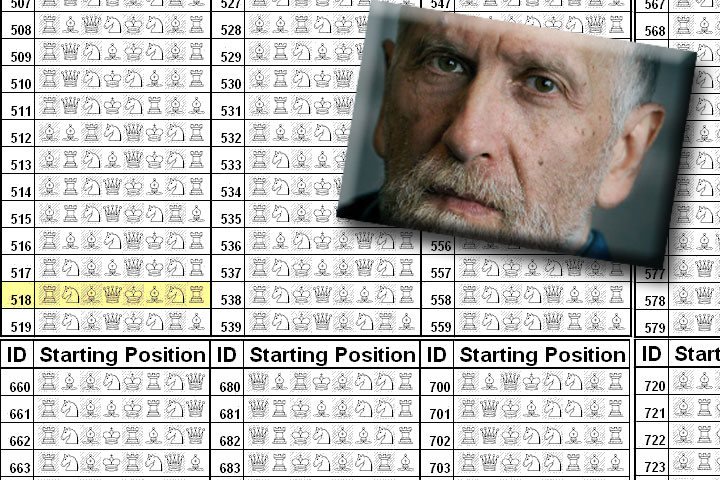
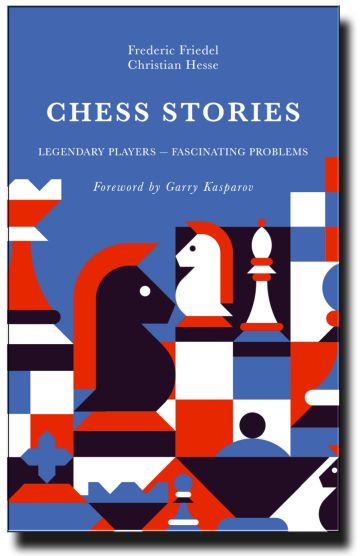
In the book Chess Stories, by Prof. Christian Hesse and me, one of the chapters is about my contact with Bobby Fischer. I tell about how the American chess legend contacted me a couple of decades ago, when he was planning a return to chess. The Kindle eBook version is incidentally available for Rs.799 ($9.47 or €8.98).
Bobby wanted to stage a "Fischer-Random Chess" match, using a form of chess he had invented some years earlier. He proceeded to describe the rules to me in detail: in the starting position the pawns are placed in their usual positions on the second and seventh ranks. The pieces are placed randomly on the first and eighth rank, with black pieces mirroring the white pieces. The kings must be between the rooks, and the bishops on different coloured squares.
We spent many evenings discussing this (and many other things described in the book), in hour-long phone conversations. "Old chess", as Bobby called it, consisted largely in memorizing opening variations and springing surprises on your opponent. His goal was to "restore creativity and talent" to the game. From the very first move players "must think instead of remember." They have to apply general chess principles, work out strategies, calculate the consequences of their moves.
The original reason for Bobby's calls was that he knew I was close friends with Viswanathan Anand and that the World Champion was often in my house. He wanted to challenge Anand to a match in Fischer-Random, and was consulting me, as co-founder of ChessBase and editor of the company's news page. ChessBase, he thought, would be the ideal sponsor and organizer of the event. The match would be worth about two million dollars, he thought. But I had to tell him that ChessBase would not be able to sponsor it. My advice: you have to announce your intention, issue a challenge, and wait until some random sponsor reaches out to you. I even wrote a possible press release for him, describing the rules of Fischer-Random, why it was important for it to replace the regular game, and the rules of the match.
In the early 1990s Fischer visited the Polgar family in Budapest and worked on the rules of Fischer-Random with them and Pal Benkö. Above he is seen starting a game against Zsuzsa.
I invited Bobby to come to Hamburg, where we could do a story together for Der Spiegel, Europe's premium news outlet. But it was a bit dangerous: his recent public violently antisemitic interviews could have led to his arrest in Germany. In the end, nothing came of his plan, no sponsor was found.
Discussion of the rules
We continued discussing Fischer-Random, or "New Chess," as he liked to refer to it. In my conversations with Bobby, I agreed with him that openings theory was a real problem: "Imagine a world championship in a few years from now," I said. "The two players reel off the first 28 moves in just a few minutes — and then one of them plays a novelty. His opponent thinks for an hour and then resigns the game! He congratulates his opponent for the wonderful winning move." Bobby liked this, it was exactly what he was thinking.
We had some differences regarding the rules of Fischer-Random. The main was my objection to castling, which I said needed to be dropped from the game. "That way you can explain the rules to someone and start playing in one minute. With the castling rules you take a month to master exactly how it works." Bobby thought I was was exaggerating, and insisted that castling was needed for "dynamic" (and other) reasons. But I suspect it was needed to differentiate Fischer-Random from an earlier variant known as Shuffle Chess, which was played in the late 18th century. That did not have castling or insist on opposite coloured bishops.
Garry's idea
I discussed Fischer Random with Garry Kasparov. He came up with the following suggestion: we select ten interesting and exciting positions to be used in tournaments and allow players to prepare in advance. Immediately before the start of each round, the audience in the hall (or on the Internet) selects one of these ten positions for all games. This provides spectator participation, which is never a bad thing. Players have done some basic preparation for all ten positions — they do not have to start the game with a long think about "can I move the c-pawn?" And commentators can come prepared as well.
I discussed the ten-position idea with Bobby. He found it quite interesting, and we spoke for maybe half an hour, discussing all kinds of details. But then he said: "It is quite a good idea, Frederic. When did you come up with it?" I confessed it was not me but Kasparov, and the tide immediately turned. "No, there's a trick. He has preparation for special positions or something." And that was the end of discussion of "Kasparov10" chess with Bobby.
Chess960
Fischer-Random was introduced to Germany by Hans-Walter Schmitt, chairman of the Frankfurt Chess Tigers e.V., who staged a number of rapid chess events in Mainz. Hans-Walter looked for a new name, and in a brainstorming session, we came up with "Chess960". The explanation was that with the Fischer rules there are 960 possible starting positions. Initially Bobby was upset: "They believe my image is so bad that they have given it another name?" Later he admitted he liked "Chess960" and often referred to it as that. Main thing was that the variant was being used. In a radio interview he said:
I didn't invent Fischer-Random chess to destroy chess. I invented Fischer-Random chess to keep chess going. Because I consider the old chess is dying, it really is dead. A lot of people come up with other rules of chess-type games, with 10×8 boards, new pieces, and all kinds of things. I'm really not interested in that. I want to keep the old chess flavor. I want to keep the old chess game. But just by making a change so that the starting positions are mixed, it's not degenerated down to memorization and prearrangement like it is today.
Listen to Magnus Carlsen explain Fischer Random Chess:
Frederic FriedelEditor-in-Chief emeritus of the ChessBase News page. Studied Philosophy and Linguistics at the University of Hamburg and Oxford, graduating with a thesis on speech act theory and moral language. He started a university career but switched to science journalism, producing documentaries for German TV. In 1986 he co-founded ChessBase.
8/8/2026 – Shreyas Royal has taken the sole lead at the British Chess Championship after seven rounds in Coventry. The 17-year-old followed a draw against Svyatoslav Bazakutsa with consecutive wins over Bodhana Sivanandan and top seed Luke McShane to reach 6/7. Bazakutsa is among five players half a point behind. Royal will face nine-time British champion Michael Adams in Saturday's penultimate round. | Photo: Yury Krylov
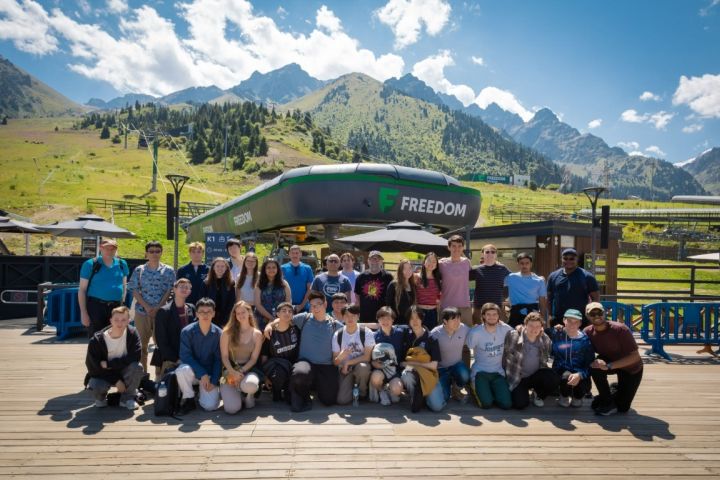
8/8/2026 – Day four of the FIDE World University Team Championship Finals began away from the chessboard, as participants traded the playing hall for the mountains surrounding Almaty. Before the start of the quarterfinals, players had an opportunity to visit Shymbulak, one of the city’s best-known mountain destinations. After three intense days of group-stage competition, the morning excursion gave the students a chance to experience another side of Almaty and spend time together before returning to the tournament venue for the start of the knockout stage. A few hours later, attention turned firmly back to chess.
The Elephant Gambit (1.e4.e5 2.Nf3 d5!?) has never really been given the attention it deserves. It is a very useful surprise weapon. Let us list the advantages of playing this particular opening: 1) Shock value 2) It is very aggressive. Black can take over the initiative early. 3) Many tricky lines 4) Unorthodox. Black is basically taking the game to the opponent as early as move two. Not many openings do that! It's a perfect opening for young players and club players to adopt. Let Andrew Martin select a repertoire for you on this 60 mins, which, if used with discretion, will rack up the points. I am sure that you will enjoy this unusual tour of the Elephant Gambit.
@genem, what accounts circa 1974 that Fischer realized he could not compete with players like Karpov? I have not heard this before, only speculation. Most opinions I have seen thought Fischer would win in '75.
genem 8/21/2026 09:25
No doubt that professional chess players sometimes suffer under the never-ending need to study openings, such as during the late evenings for their next opponent, after a long day game. World Chess Championship participants must start preparing for their specific opponent months in advance, with hired helpers. No wonder chess960 has an appeal. Perhaps Magnus Carlson would still be defending his World Champ title if he did not have to face these months of esoteric training every two years. After bobby Fischer took the title from Boris Spassky in 1972, Fischer wanted a rest away from constant study of chess openings. We've seen accounts of how Fischer realized, circa 1974, that he could no longer compete against players like Anatoly Karpov who were fully booked up on all the latest opening variations.
For spectators of professional chess, it would be grand to see how the chess openings for a new start setup would evolve. For instance, consider how different a wise opening tree would be if both of White's knights started on squares of the same shade, say on Light squares: this would mean Black's knights both start on Dark squares. Currently Ng1-f3 is easily "opposed" by Black's Nb8-c6, partly because both White and Black have a knight which starts on a dark square.
So there is a friction between [A] us spectators wanting to see new opening trees developed through grandmaster competitions, versus [B] grandmasters not wanting to be burdened with the necessary homework and memorization for a second start position.
mtm57 8/21/2026 06:26
Fabulous
lajosarpad 8/21/2026 09:11
Chess960 theory would inevitably develop applying a more generalist approach to the start of the game, so opening theory would look like "you can open diagonals with pawns for your bishops or move knights towards the center" rather than "1.e4 c5 2. Nf3 ...". So we would still have opening theory which would comprise in learning principles, as memorizing lines would become almost useless. So we would still have theory, but we would not see the opening battles between players whom were thinking what they want to do exactly before the game, as the shuffling of the starting position would reduce the reward of the effort of preparation and there would not be lifelong learned information to be used in the opening.
Frits Fritschy 8/20/2026 10:59
Good point, arzi. Also, top players didn't just learn from opening and endgame books, but also from playing over and analyzing thousands of games by other past and present top players. The structures in these games emanate from a single starting position. With random starting positions, you lose much of these structures, which makes studying old 'freestyle' games much harder. How can you train without structure?
arzi 8/20/2026 06:26
Frederic:"I think the main reason why Freestyle is so popular with strong players (apart from the easy-money aspect) is that you do not have to spend days and weeks preparing for a tournament. You have a good lunch and saunter over to the playing venue."
If a player does not need to prepare for an upcoming game but can instead go eat or get "drunk", it means their playing skills will not improve at all any more. Playing ability develops because a player seeks ways to improve their knowledge of openings and endgame skills; however, these aspects diminish further when the player does not "need" to think about their opening in his/her upcoming game. Why not make the game such that the player doesn't have to worry about their endgame skills either? We’ll include a die so that skill can be replaced by a greater element of luck. This way, there would also be no need to prepare opening theory or other technical aspects for the upcoming game.
All those side variants are fun for a while, but after some time, they become boring too. Is it worth scrapping the old game format for that reason and switching to a new and "fun" one?
Frederic 8/19/2026 11:46
@Fritz Fritschy: "By the way, do you see much growth in 'freestyle' chess for lower level (<2500?) chess players? I know it just as a pastime thing for the last club night before christmas." In my twenties, when I was a avid club player, we loved Checkless Chess. The variant takes ten seconds to explain: checks are illegal, unless it's checkmate. It's a very entertaining game, where the king becomes an attacking piece which can immobilize a large cluster of enemy pieces. I will write about it and other variants in a coming article.
Frits Fritschy 8/19/2026 10:03
Yes, Frederic, as what I wrote: tiredness is a factor. But at what cost? If you don't have much of an idea anyway of what's happening in a top level game, you may have some fun looking at the red moves of your engine's evaluation. But if you are a chess lover, no matter your strength, you lose much of your connection with the game. Opening theory and its evolution gives you a base to understand what's going on. You lose that with 'freestyle' chess.
By the way, do you see much growth in 'freestyle' chess for lower level (<2500?) chess players? I know it just as a pastime thing for the last club night before christmas.
Frederic 8/19/2026 05:19
@Frits Fritschy: I agree with much of what you say. I think that database and engine preparation have led to more daring play. Instead of abandoning an idea because checking all its consequences is way too time-consuming, one click will give you a full tactical evaluation and you can very quickly decide whether to abandon it or study it further.
Also: I think the main reason why Freestyle is so popular with strong players (apart from the easy-money aspect) is that you do not have to spend days and weeks preparing for a tournament. You have a good lunch and saunter over to the playing venue.
Frits Fritschy 8/18/2026 11:57
The strange thing is that computers and preparation are often supposed to be the cause of a presumed high draw rate, where actually from about 1980 on, when engines and databases started to play an ever increasing role, the draw rate at top level went down to 50% to stay stable there. See for instance https://en.chessbase.com/post/has-the-number-of-draws-in-chess-increased and https://www.randalolson.com/2014/05/24/a-data-driven-exploration-of-the-evolution-of-chess-match-lengths-and-outcomes/. Although the latter called the clear decrease after 1980 'a small dip' that could well be just noise. In that same article, he also finds that games are getting longer.
So, since 1980 people play more daring and interesting chess because of engine preparation shows that they can, and they are fighting harder (longer games) because knowledge has become more easily available.
The main reasons that 'freestyle' is so popular among top players may well be boredom and tiredness on one hand, and access to some easy (no prep necessary) money on the other.
fgkdjlkag 8/18/2026 05:28
Selecting 10 positions per year is a terrible idea. What is the point of players spending hours analysing and memorising reams of opening theory that will be for nothing after the year is over?
Chess is not dead. That's why Magnus has not played in a world championship in many years, but has consistently played in the chess960 world championship. It's also why Kramnik, Seirawan, Fischer, Capablanca, Bronstein, etc, have their own variants.
arzi 8/18/2026 12:47
lajosarpad:"Chess is not dead".
I am glad I am not the only one who thinks chess isn't dead. I get tired of reading posts arguing that chess should be changed into a different format because the game has become boring or there are too many draws. The real problem is the intense fear of losing, which drives a desire for quick, risk-free draws. Players also fear a drop in their rating, which could affect their eligibility for lucrative invitational tournaments. A single draw can lower a player's rating, even if they go on to win the tournament. I recall a World Championship candidate withdrawing from a tournament because his rating was dropping, despite having already scored 4 points out of 5. It is an absurd system.
lajosarpad 8/18/2026 10:58
Chess is not dead. It's a great game and while I'm interested in chess, I have little interest in Chess960. I have no idea what is "freestyle" in a random position the players did not choose and have to adapt to. Nevertheless, it gains traction nowadays mostly because of a former world champion being interested in it and a big sponsor investing money into it. Yet, in chess tournaments we see fighting, good games, when fighting, good players are playing each-other. In Chess960 the situation is the same. Eventually we'll see lots of draws.
arzi 8/18/2026 06:23
The "Soviets" made a comeback—despite Bobby's wishes—when Karpov was awarded the title without playing. Which prospect terrified Bobby more: losing the title to the Soviets without playing, or potentially losing it by playing?
GreenKlaser 8/17/2026 09:54
Bobby had no problem with memorization when he was the best at it. After he won the title, his motivation dropped and he did not want to let "the Russians" get it back.
arzi 8/17/2026 12:13
Chess is not dead; rather, there is a desire to give the name "Chess" to a new variant. If people want to play the new variant, they should use the variant's specific name—such as "Freestyle Chess." This is somewhat akin to claiming that American football is football, even though it bears a greater resemblance to handball.
YOUR PERSONAL CHESS COACH - Whether you’re taking your first steps into the world of club chess, or already playing at a tournament level: with FRITZ, you can train more efficiently, intelligently and with a more personalised approach than ever before.
YOUR PERSONAL CHESS COACH - Whether you’re taking your first steps into the world of club chess, or already playing at a tournament level: with FRITZ, you can train more efficiently, intelligently and with a more personalised approach than ever before.
While tactics decide the game in concrete moments, strategy guides the entire battle. Understanding how to improve your pieces, create weaknesses, execute maneuvers, and steer the game toward favorable structures is what defines strong players.
The Italian Four Knights is the ideal choice. It combines the solid foundation of classical openings like the Ruy Lopez or the Italian Game with an active, initiative-driven style of play.
IM Andrew Martin shows why this 19th-century opening weapon still is a fantastic choice for club players. The Evans produces exciting chess and teaches the art of attack.
The major part of the material on which the Petroff Defence Powerbook 2026 is based comes from the engine room of playchess.com: 357 000 games. This imposing number is supplemented by another 17 000 from Mega and from correspondence chess.
€9.90
We use cookies and comparable technologies to provide certain functions, to improve the user experience and to offer interest-oriented content. Depending on their intended use, analysis cookies and marketing cookies may be used in addition to technically required cookies. Here you can make detailed settings or revoke your consent (if necessary partially) with effect for the future. Further information can be found in our data protection declaration.
Pop-up for detailed settings
We use cookies and comparable technologies to provide certain functions, to improve the user experience and to offer interest-oriented content. Depending on their intended use, cookies may be used in addition to technically required cookies, analysis cookies and marketing cookies. You can decide which cookies to use by selecting the appropriate options below. Please note that your selection may affect the functionality of the service. Further information can be found in our privacy policy.
Technically required cookies
Technically required cookies: so that you can navigate and use the basic functions and store preferences.
Analysis Cookies
To help us determine how visitors interact with our website to improve the user experience.
Marketing-Cookies
To help us offer and evaluate relevant content and interesting and appropriate advertisement.









 In the book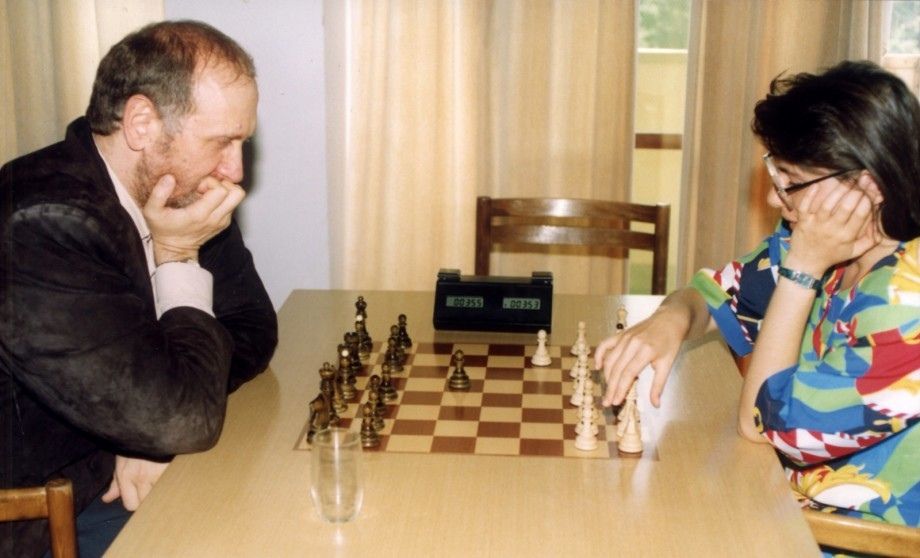




.jpeg)