So's third Sinquefield Cup title!
Wesley So won the Sinquefield Cup for a third time in his career after beating Praggnanandhaa Rameshbabu in rapid and blitz tiebreaks. The two players finished the classical tournament tied for first on 5½/9 points, and the title was eventually decided in an Armageddon game after both rapid encounters ended drawn.
So thus became the first player to win the Sinquefield Cup in consecutive editions. He also joined Fabiano Caruana as the most successful player in the event's history, with both having collected three titles across the 13 editions played so far.
 The Hyper-Accelerated dragon is fast, from the very first moves, your bishop heads to g7, seizes the long diagonal, and turns into the most feared piece on the board.
It rewards players who love initiative and clear attacking plans.
The Hyper-Accelerated dragon is fast, from the very first moves, your bishop heads to g7, seizes the long diagonal, and turns into the most feared piece on the board.
It rewards players who love initiative and clear attacking plans.
This two-volume course presents a complete repertoire for Black after 1.e4 c5 2.Nf3 g6 - the Hyper-Accelerated Dragon. In recent years, this dynamic line has grown significantly in popularity, with several of the world’s top players adding it to their repertoires.
This variation has two main advantages for black, he does not have to face the Rossolimo or Moscower Variation after 3.Bb5 and in many lines he can play d5 in one go and save a tempo. This first volume covers the Open Sicilian with both the razor sharp lines from the dragon and the positional Maroczy Bind.
Free video sample: Introduction
Free video sample: 6.Be3 Qb6 Introduction
The two co-leaders reached 5½ points in different ways. So won his games in rounds two and three and drew his other seven encounters, while Pragg scored three wins, five draws and one loss, which came against Vincent Keymer in round three. After his second victory, So finished the classical section with six consecutive draws. The three playoff draws extended So's run to nine consecutive draws following his victories in rounds two and three.
So gained 7.7 rating points in Saint Louis and moved up to fifth place in the live world rankings, overtaking Keymer. Pragg gained 9.7 points and climbed four places to eighth.
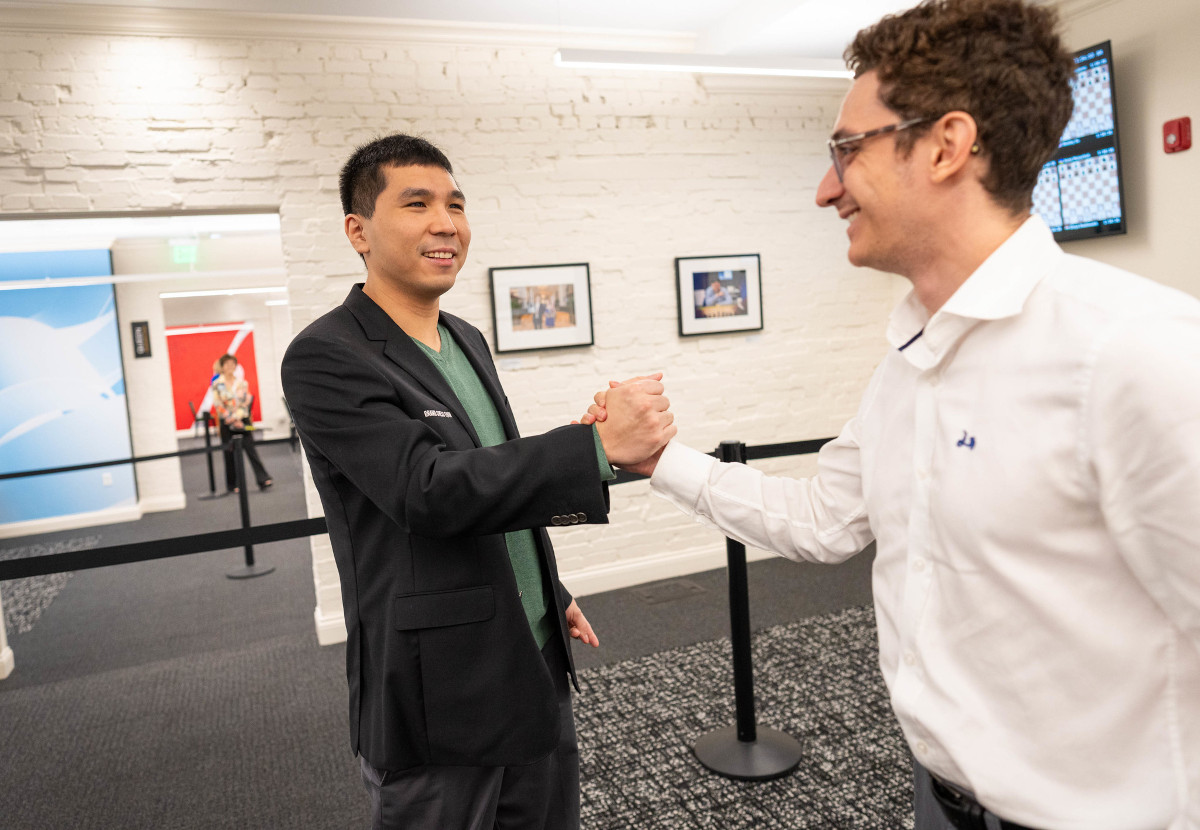
The two players who have won the Sinquefield Cup three times so far - Wesley So and Fabiano Caruana | Photo: Lennart Ootes
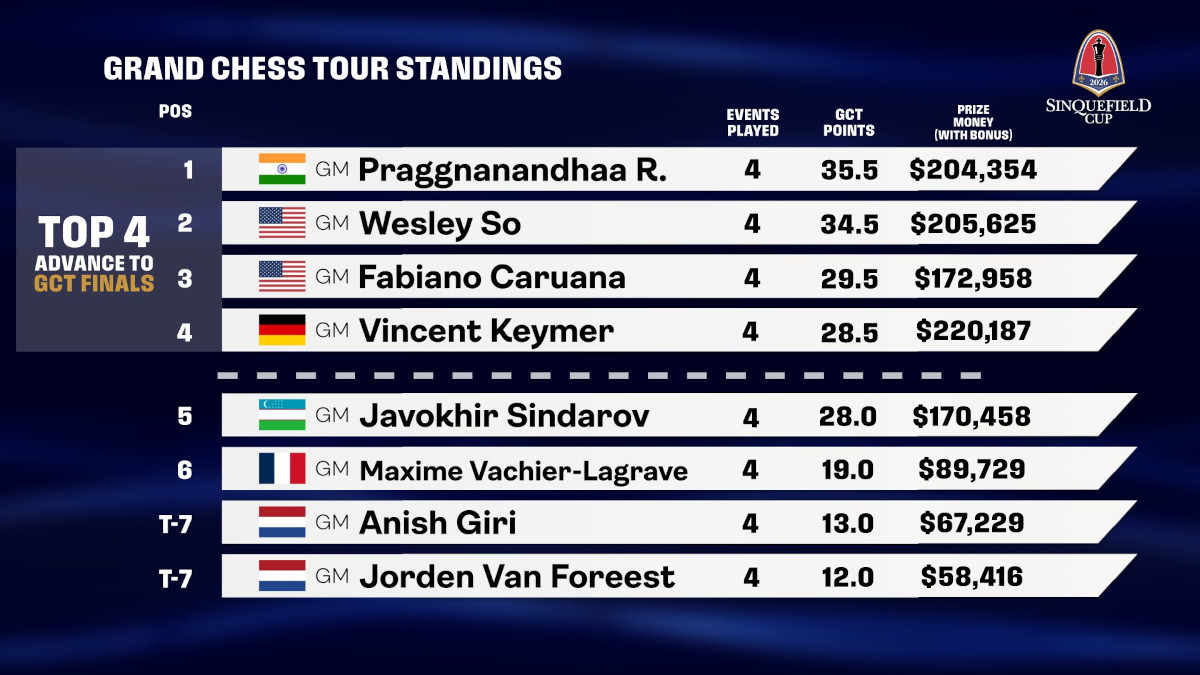
Keymer and Sindarov finished tied for third on 5/9, half a point behind the leaders. Their result also settled the final qualifying place for the Grand Chess Tour Finals. Keymer had entered the tournament half a point ahead of Sindarov in the overall GCT standings - thus, since they finished level in Saint Louis, the German GM retained fourth place.
Pragg finished first in the overall Grand Chess Tour standings, ahead of Caruana in second and So in third, with Keymer taking the fourth and final qualifying spot. Despite finishing fourth overall, Keymer has earned the largest prize purse on the tour so far. He is one of three players, alongside Pragg and Caruana, to have collected more than US$200,000 before the GCT Finals begin on Saturday.
Round nine
All five games in the final round ended peacefully. Levon Aronian and Sam Sevian drew after only 16 moves, while Fabiano Caruana and Maxime Vachier-Lagrave split the point after 40 moves in a game that remained balanced throughout.
Jorden van Foreest, who had a rought time in the event, losing all five of his games with the black pieces, tried the King's Gambit against Keymer. It was the first time Keymer faced the opening in an over-the-board game, and he found himself considerably behind on the clock in the middlegame. Despite some inaccuracies from both sides, neither player managed to take control and the game ended drawn after 39 moves.
 With the moves d4-Nf3-e3-Bd3 White aims for simple piece development and to slowly build up a devastating attack on the kingside!
One of the simplest openings for White to learn, and one of the most frustrating ones for Black to face! With the moves d4-Nf3-e3-Bd3 White aims for simple piece development and to slowly build up a devastating attack on the kingside!
Free sample video: Introduction
Free sample video: e4-e5 attacking ideas
So and Pragg both had white in their final-round games and adopted relatively cautious approaches. So simplified against Javokhir Sindarov when the opportunity arose, while Pragg did likewise against Anish Giri. Both draws left them on 5½/9 and ensured that a playoff would be required to decide the title.
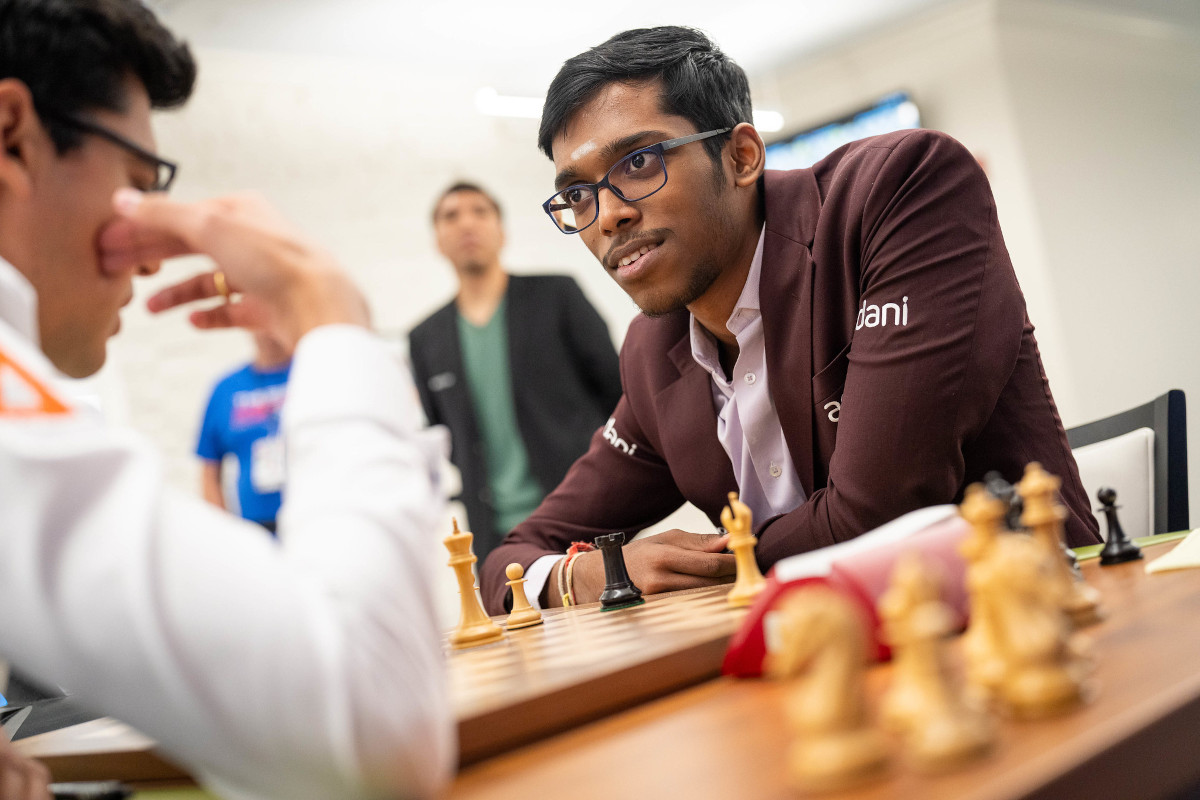
Praggnanandhaa Rameshbabu came from winning the Saint Louis Rapid & Blitz, and gained 9.7 rating points in the Sinquefield Cup | Photo: Lennart Ootes
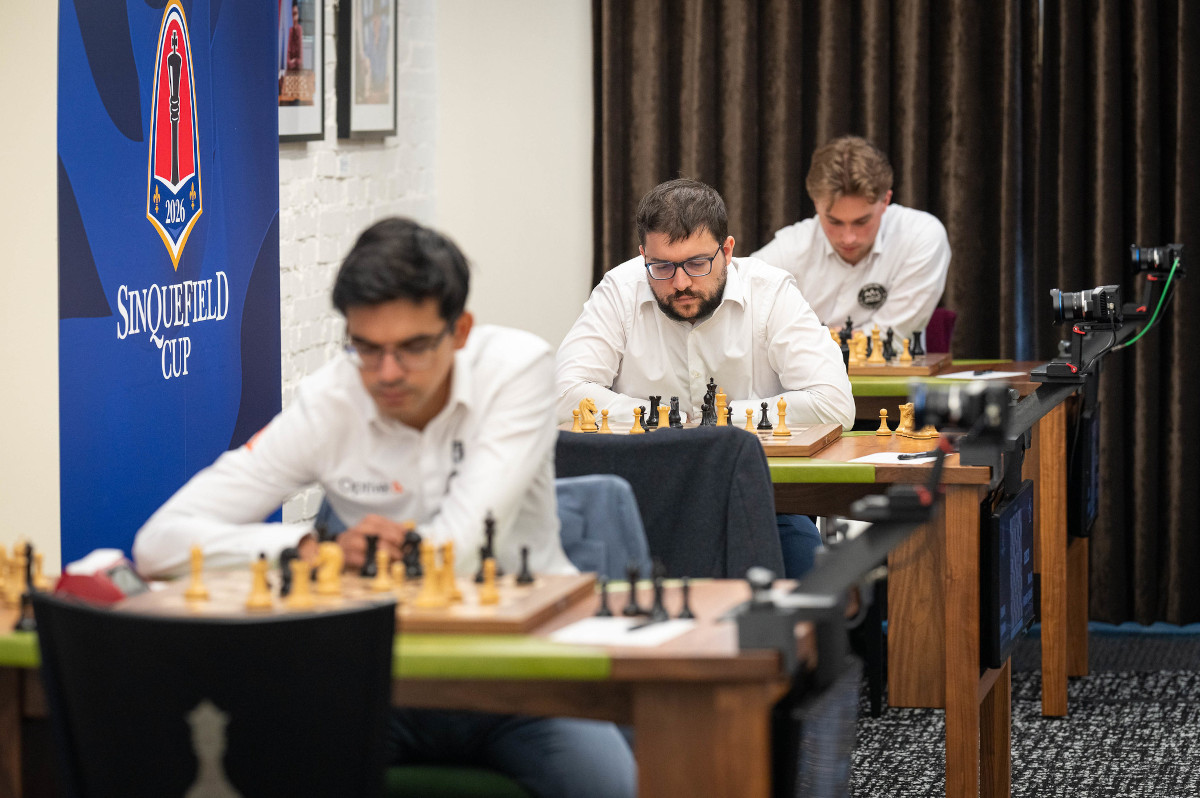
Elite grandmasters Anish Giri, Maxime Vachier-Lagrave and Vincent Keymer during round nine | Photo: Lennart Ootes
Final standings
So prevails in Armageddon
The tiebreak began with two rapid games at a time control of 10 minutes plus a 5-second increment. So had white in the first and entered a Queen's Gambit Declined featuring sharp-looking theoretical lines. Pragg remembered the necessary continuations accurately, and the game quickly simplified to a 21-move draw.
Pragg took a more ambitious approach with White in the second rapid game, including an early g-pawn advance that he would have been less likely to choose in a classical encounter.
 The Trompowsky is especially suited for faster time controls as you don‘t have to memorise endless lines of theory, and you push your opponent out of their comfort zone after your second move.
Nowadays, the list of requirements for an opening repertoire is long: being sound and sustainable; not requiring much memorisation; offering great attacking chances; making your opponent think early on etc… The time of finding a minimal advantage from the opening has passed, and we are better off with a more practical approach - simply understanding the position better than our opponent does. The Repertoire for White 1.d4 ... 2.Bg5! from IM Robert Ris answers all these requirements!
Free video sample: Introduction
Free video sample: 1.d4 Nf6 2.Bg5 e6 3.e4 Be7/d5/c5
The game nevertheless ended abruptly when the players repeated moves three times, producing another draw after 24 moves.
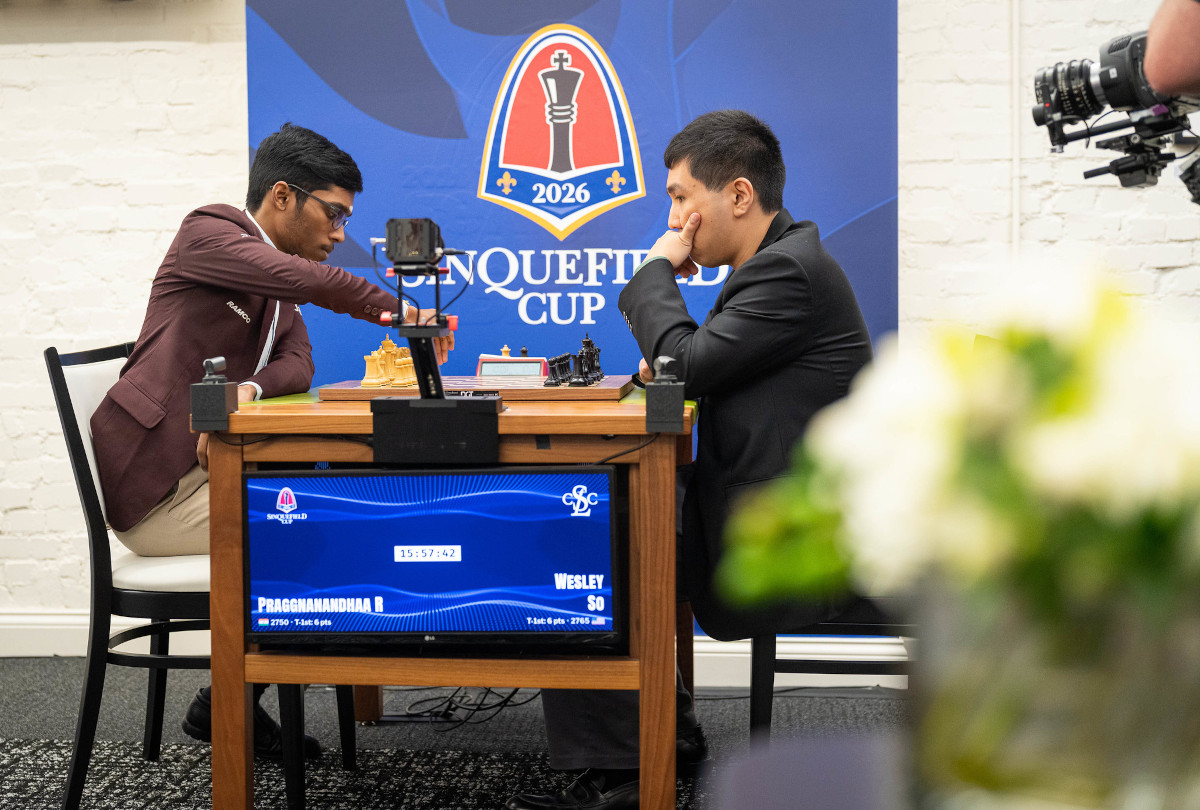
Praggnanandhaa Rameshbabu playing white against Wesley So | Photo: Lennart Ootes
The title was therefore decided in Armageddon. Pragg won the drawing of lots and chose to play with the white pieces, receiving 5 minutes against So's 4. A 2-second increment would only begin from move 61, while Black had draw odds.
Pragg obtained the more pleasant position from an English Opening and was able to put pressure on So's hanging pawns on the c- and d-files. So's position deteriorated further after 24...Nf8?, when White could exploit a pin along the d-file.
After 25.Nge4 Nxe4 26.Bxe4 Rcd7 27.Bxd5 Qc7?, the strong 28.Ne4 would have preserved a large advantage for Pragg, but he instead chose 28.e4 and allowed So to reduce the pressure.
White remained in the driver's seat, however, and later reached a major-piece ending with an extra pawn, as Pragg regained a clear advantage. The Indian GM's biggest miss came with 45.Rc5? instead of the formidable 45.h6!, which would have allowed him to activate his king while keeping Black tied to the defence of the h7-pawn.
 Become a master of chess strategy – get Robert Ris’s complete bundle now at a special price!
Become a master of chess strategy – get Robert Ris’s complete bundle now at a special price!After the text move, Pragg still had an extra pawn, but the game simplified into an objectively drawn rook ending with two pawns against one. So defended accurately and secured the draw he needed to win the tournament.
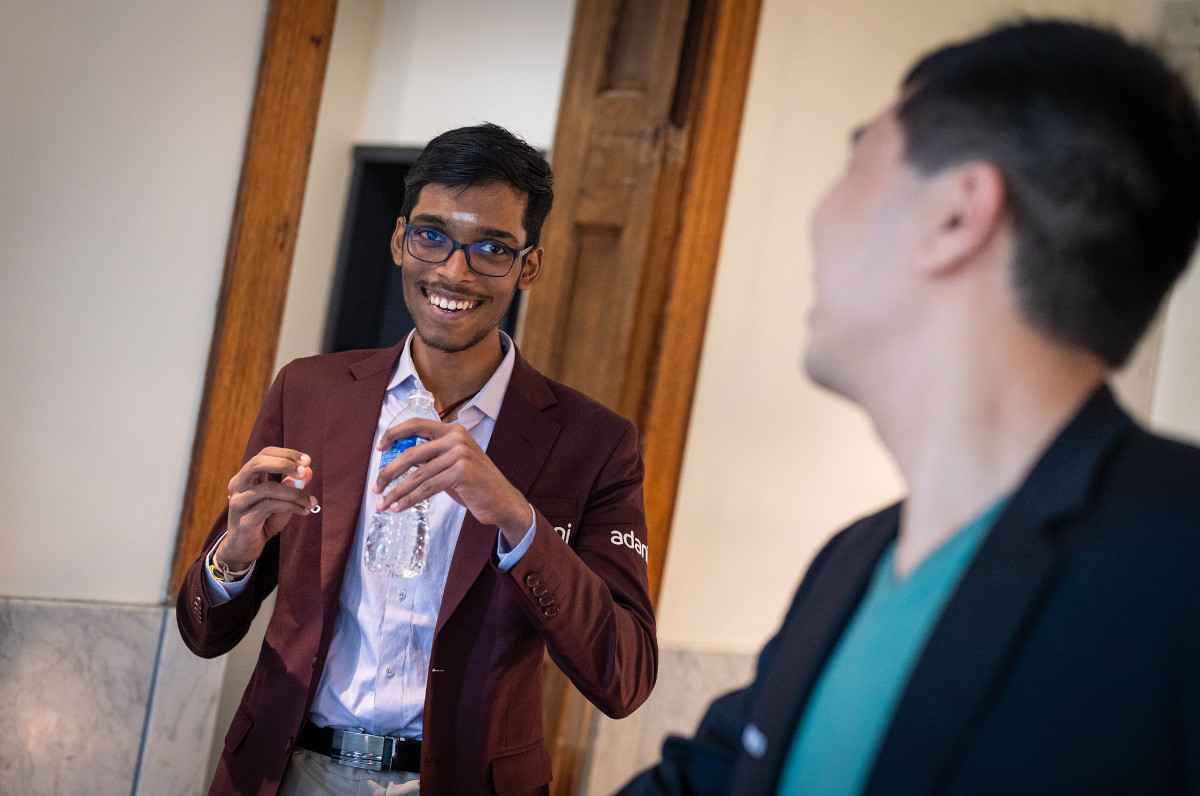
Two of the most courteous players in the elite circuit - So told Pragg right after drawing the Armageddon game, jokingly: "You can't win all tournaments!" | Photo: Lennart Ootes
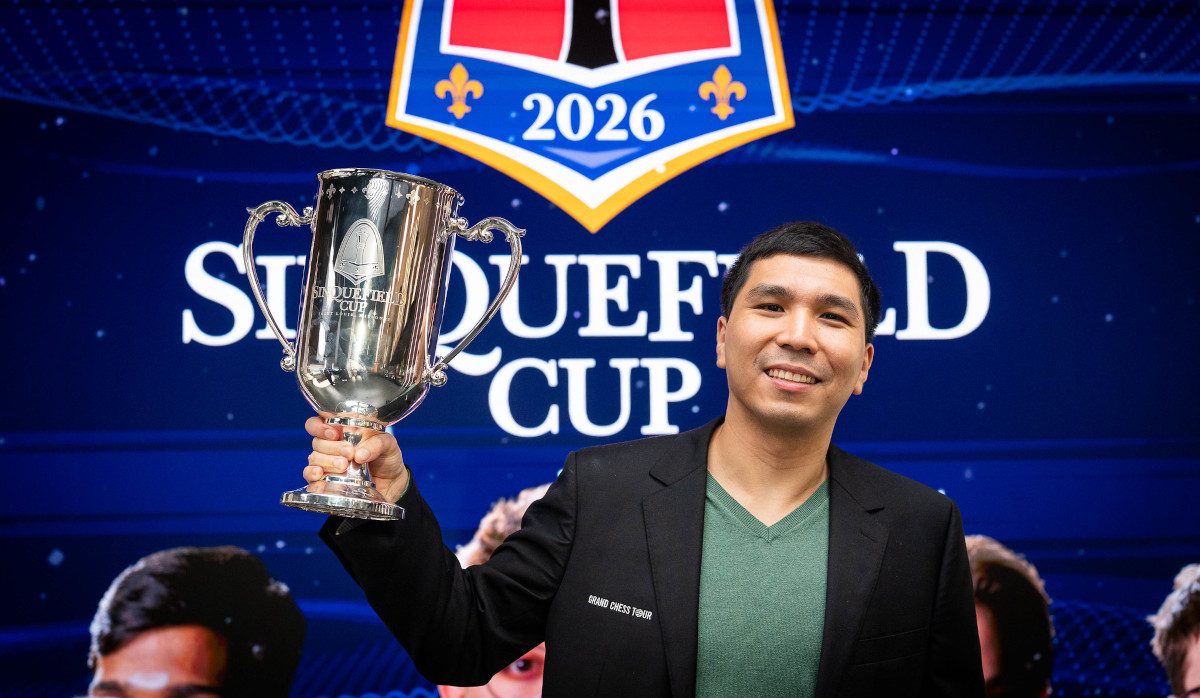
Three-time Sinquefield Cup champion Wesley So | Photo: Lennart Ootes
All games - Playoffs
All games - Classical
Links




.jpeg)