
Editor-in-Chief emeritus of the ChessBase News page. Studied Philosophy and Linguistics at the University of Hamburg and Oxford, graduating with a thesis on speech act theory and moral language. He started a university career but switched to science journalism, producing documentaries for German TV. In 1986 he co-founded ChessBase.
1/7/2026 – In the final sections of our Christmas Puzzle Week we brought you a variety of famous and less well-known puzzles. Among them a mate problem that solves itself – literally. And one that looks deceptively simple, but requires a very subtle strategy to find the win. In no less than 46 moves! Can computers solve it?
1/1/2026 – Did you enjoy our Christmas puzzles? They were computer-resistant, which meant you could not simply ask a chess engine to solve them for you. Today we bring you a first batch of solutions – and reveal for the first time the solution to the decades-old problem of a game starting 1.e4 and ending on move five with knight takes rook mate. The solutions to the remaining problems will appear shortly.
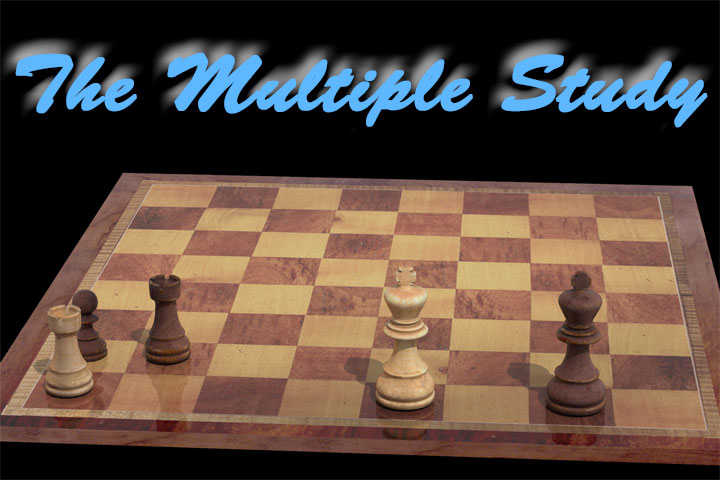
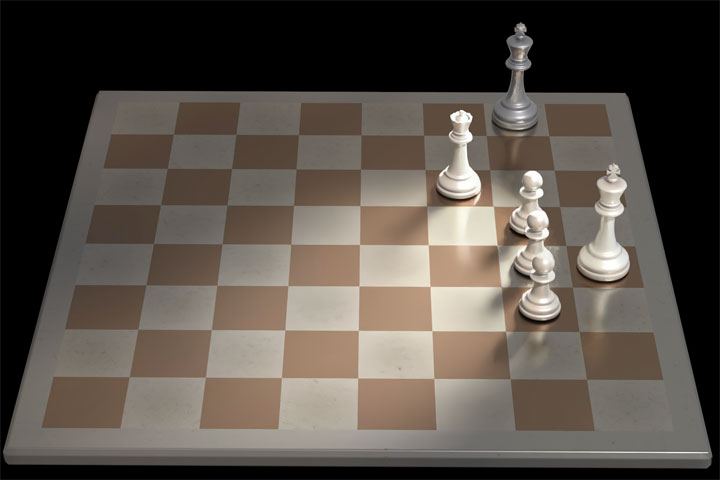
12/31/2025 – Take a look at this relatively simple position. Can you figure out how White can win? And how many moves it will require to overcome Black's most resolute defence? You won't believe it. To relax we bring you the arguably easiest chess study ever composed, and other entertaining puzzles, many from the out-of-the-box legend Karl Fabel.
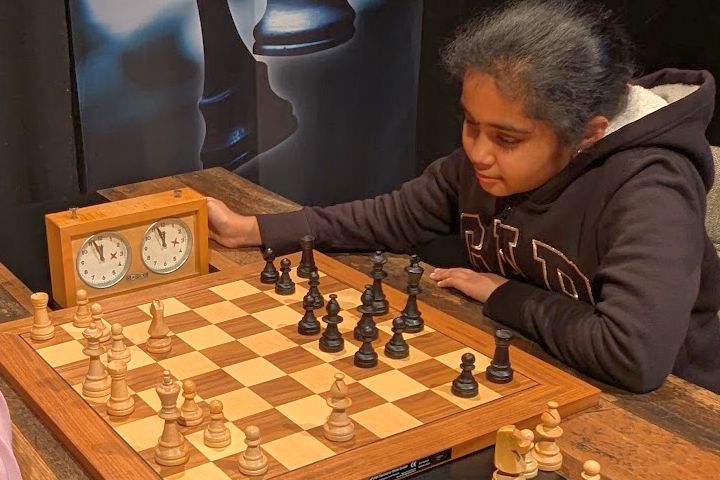
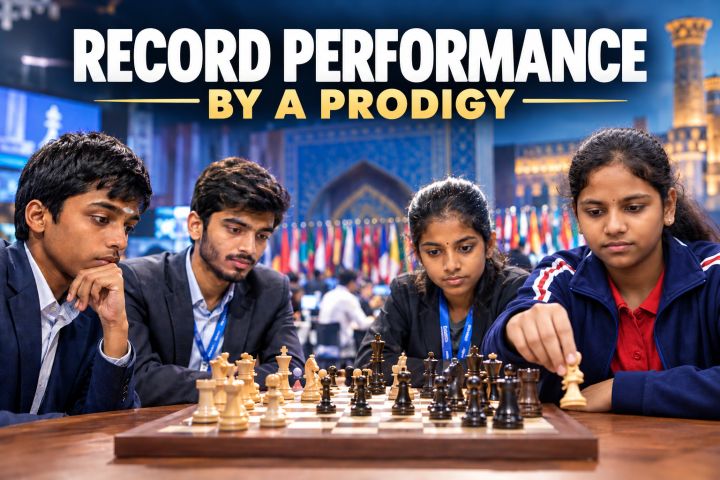
12/30/2025 – In August 2019 I spent a week in France, at the training camp I had organized (together with ChessBase India) for young Indian super talents. Former world champion Vladimir Kramnik did the chess training, while I pestered the kids with logic puzzles. Most did not involve chess, but some did. Here are a couple for you.
12/3/2025 – Ed Schröder, pioneer of chess engine programming, has in his retirement turned his attention to a new and very exciting project: to extract games from a database collection that are especially aggressive – that are short and have daring sacrifices and king attacks. He shows us the kinds of result you can get. Best of all: you can download the utility and use it on your databases.
12/2/2025 – Ed Schröder is a pioneer in chess programming. In the 1990s his program Rebel won a number of World Championships in computer chess, and always had a special place in the community, due to its playing style. In 2003 he retired from competitive computer chess, only releasing freeware versions of Rebel. Now Ed has come out of retirement and is undertaking some interesting new projects – like extracting the most interesting games from historical databases. And he is sharing them with us.
12/29/2025 – In rotary problems the board is rotated by 180° for a second position with a different solution. It is usually pawns that make a different when you turn the board around. Or the king/queen positions, or castling is involved. Can one devise problems where these factors do not play a role? Yes one can, as our expert for out-of-the-box problems, Werner Keym, proves.
12/27/2025 – There are chess puzzles which only consist of a line of text, asking you to construct a position or a game that it describes. Some can be awesomely difficult, like the puzzle we first posted 41 years ago. Two world champions were not able to solve it. We tell you about that, and present a new ones, not quite as tough, for you to solve.
10/27/2025 – Did you solve the endgame puzzles we gave you last week? In the position shown, White had to move his rook to one of nine squares. But only moving it to e6 retained the win. How come? Today we give you the full solutions of all the four problems, in video explanations and on a replay board with engine assistance. It's a good way to master such tricky endgame situations.
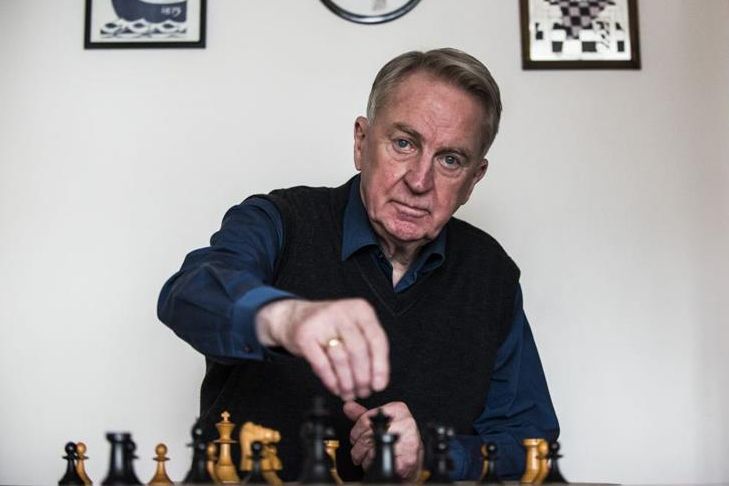
10/22/2025 – Did you find the only move in this very famous study, composed almost exactly a century ago, that allows White to draw? It looks like the stupidest move one could make – move the king to a square that takes it further away from the black pawn and blocks the promotion of his own pawn. Problem expert Werner Keym selected six studies in similar style for you to solve. Here, today, are the solutions.
10/20/2025 – Can you imagine writing about rising chess stars who are up to 86 years younger than you? The indefatigable Leonard Barden, who at 96 still fills his weekly London Guardian column, has been keenly following the youngest talents, players between ten and sixteen playing at GM levels. If you want to keep up-to-date on some mind-boggling developments in the game, it is definitely advisable to put Fridays on your schedule to read what Barden has to say.
10/17/2025 – Take a look at this position. In order to have any winning chances, White must clearly move his rook. There are nine squares it can safely occupy, but only one retains the win. Can you find it? Today we have four problems that will challenge your endgame skills. Try to solve them by moving pieces on our interactive diagrams. The video solutions will be provided in a week.
10/13/2025 – Pierre de Fermat (1601–1665) was a French mathematician who made pioneering contributions to analytic geometry, calculus, optics, and probability. He is best known for Fermat's Last Theorem, which famously remained unproven for over three centuries. Then, thirty years ago (in 1995), the mathematician Andrew Wiles published the comprehensive proof. In his book "Chess Stories" mathematician Prof Christian Hesse, told us how he applied Fermat's final conjecture to chess.
10/8/2025 – You may have seen it before. In this very famous position, composed almost exactly a century ago, it is White to play and draw. Which do you think is the stupidest move White could make. Right, that is the solution – it is the only move that saves the game. Problem expert Werner Keym illustrates this in a book which he has made available, as an eBook, to everyone, free of charge. Here are some excerpts to give you a taste. You can play them out on the diagrams we provide.
10/6/2025 – The rule limits the rating gap used when evaluating game results. From October 1st FIDE dropped the 400 point rule for players rated above 2650. This makes it harder for top players to gain points by playing against much weaker opponents (called "farming"), and easier to lose points when not beating them. Leading chess statistician and FIDe consultant Jeff Sonas tells us why, and what the rule change implies.
9/30/2025 – In the boxing ring, he learned what it means to pick yourself up again and again and draw new strength from setbacks. On 7 October, former world boxing champion Wladimir Klitschko will tell us about his life, the current situation in Ukraine and resilience in times of crisis. Vladimir is an old friend who visited ChessBase a number of times, together with his brother Vitaly. We look forward to seeing him again.
9/23/2025 – The legendary world champion and political activist has issued a warning regarding the current media crackdown in the US, comparing it to the early days of Putin's rule in Russia. Kasparov appeared for an interview with CNN's Anderson Cooper, and on MSNBC with Jen Psaki. You can read his article and watch the videos of his eloquent admonitions here.
9/15/2025 – Seventy years ago, on September 8, 1955, a column appeared in the Manchester Guardian, about a Russian teenager, Boris Spassky. It was written by a budding young chess master from Croydon. Leonard Barden went on to become one of Britain's strongest chess players – and a columnist who has set a Guinness World Record. | Photo John Saunders
FIDE World Cup 2025 with analyses by Adams, Bluebaum, Donchenko, Shankland, Wei Yi and many more. Opening videos by Blohberger, King and Marin. 11 exciting opening articles with new repertoire ideas and much more.
GM Blohberger presents a complete two-part repertoire for Black: practical, clear, and flexible – instead of endless theory, you’ll get straightforward concepts and strategies that are easy to learn and apply.
Opening videos: Sipke Ernst brings the Ulvestad Variation up to date + Part II of ‘Mikhalchishin's Miniatures’. Special: Jan Werle shows highlights from the FIDE Grand Swiss 2025 in the video. ‘Lucky bag’ with 40 analyses by Ganguly, Illingworth et al.
FIDE World Cup 2025 with analyses by Adams, Bluebaum, Donchenko, Shankland, Wei Yi and many more. Opening videos by Blohberger, King and Marin. 11 exciting opening articles with new repertoire ideas and much more.
GM Blohberger presents a complete two-part repertoire for Black: practical, clear, and flexible – instead of endless theory, you’ll get straightforward concepts and strategies that are easy to learn and apply.
Opening videos: Sipke Ernst brings the Ulvestad Variation up to date + Part II of ‘Mikhalchishin's Miniatures’. Special: Jan Werle shows highlights from the FIDE Grand Swiss 2025 in the video. ‘Lucky bag’ with 40 analyses by Ganguly, Illingworth et al.
€14.90
We use cookies and comparable technologies to provide certain functions, to improve the user experience and to offer interest-oriented content. Depending on their intended use, analysis cookies and marketing cookies may be used in addition to technically required cookies. Here you can make detailed settings or revoke your consent (if necessary partially) with effect for the future. Further information can be found in our data protection declaration.
Pop-up for detailed settings
We use cookies and comparable technologies to provide certain functions, to improve the user experience and to offer interest-oriented content. Depending on their intended use, cookies may be used in addition to technically required cookies, analysis cookies and marketing cookies. You can decide which cookies to use by selecting the appropriate options below. Please note that your selection may affect the functionality of the service. Further information can be found in our privacy policy.
Technically required cookies
Technically required cookies: so that you can navigate and use the basic functions and store preferences.
Analysis Cookies
To help us determine how visitors interact with our website to improve the user experience.
Marketing-Cookies
To help us offer and evaluate relevant content and interesting and appropriate advertisement.