As a fledgling student at University I did a bit of programming – on a Zuse mainframe, originally designed by Konrad Ernst Otto Zuse, who is regarded as the inventor and father of the modern computer. The machine was as powerful as the electronics in my microwave oven, and programming was done in Fortran and other prehistoric languages you have never heard of. Programs were stored on punched tape, which I actually learnt to read. At the time I would tell people – students from other faculties, friends and aquaintances – what a "computer" was: It's like a giant electric calculator, but you can give it instructions in advance on what to calculate. That's called "programming".
Cray-1 – the eight million dollar super-computer
After my studies I became a science journalist for German television. I retained my interest for computers, and at the beginning of the 1980s was comissioned to do a report on the fastest computer in the world, the Cray-1, located in the Max Planck Institute for Astrophysics in Garching, near Munich, Germany. This is what it looked like:
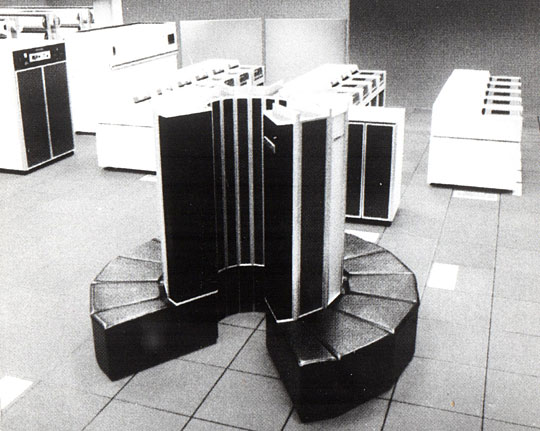
The Max Planck Cray-1. The storage banks in the background could each hold three gigabyte!
This super-computer had been developed by CDC engineer Seymour Cray, and took four years to build. It cost $8 million, plus a million for storage disks. Over the years Cray Research sold over eighty Cray-1s, making it one of the most successful supercomputers in history. I was absolutely thrilled to see the Max Planck super-machine, and my six-minute piece on it for German TV was positively effusive.
The Cray learns chess
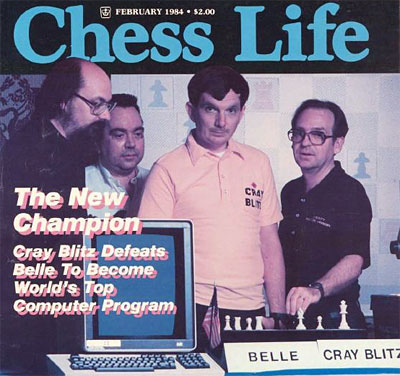
In 1980 Robert Hyatt and Albert Gower (on the right in the Chess Live cover) developed a chess program that ran on the Cray-1. They called it "Cray Blitz", and it participated in computer chess events, winning several ACM tournaments and two consecutive World Computer Chess Championships. They took over from Ken Thompson and Joe Condon (left) who previously held the title with their dedicated hardware machine Belle.
At the time I devised some simple positions to determine whether the chess programs could understand the "wrong bishop" endgame – a bishop and a pawn trying to win against a lone king, with the pawn on the edge of the board and the bishop not controling the promotion square. Cray Blitz solved them, and that seemed as if the programmers had implemented special knowledge of this very deep endgame. But then I discovered that the program was actually solving my tests with pure brute force.
How fast was the Cray-1?
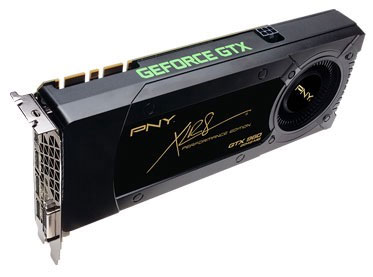 Ten years ago I wanted to check how the Cray-1 compared to the machines that were available at the time. It was expedient that my good friend John Nunn had just bought his son Michael a mid-range graphics card for his 18th birthday.
John worked it out for me: “The Cray-1 could do 130 Megaflops [million floating point operations per second]. The NVidia Graphics card in Michael’s computer can do 2258 Gigaflops. So it is about 17,000 times as powerful by this measure.”
Seventeen thousand times more powerful? A card you could hold in the palm of your hand, which costs just around $300?
So what are things like today, how much faster have computers become in the last decade? Off-the-shelf machines are now anywhere from 60,000 to 100,000 times faster than the 1980 Cray-1. High-end smartphones easily push past 1 TeraFLOP (1 million MegaFLOPS) of computational power. The Cray-1 consumed over 100 kilowatts of power and required a massive Freon-based cooling system. The smartphone in your pocket runs on a tiny battery and requires only a few watts. Still it leaves the old Cray in the dust when handling complex processing.
The Cray-1 vs. Modern Supercomputers
That is impressive. But comparing the Cray-1 to a modern supercomputer is beyond normal human comprehension. Whereas advanced Crays could in the end reach 160 Megaflops, the fastest Exascale supercomputer system today achieves a sustained performance of 2.2 Exaflops. That is 2.2 x 10¹⁸ or 2,200,000,000,000,000,000 operations per second. That makes it over 13 billion times faster than the Cray-1. In other words: what took the Cray-1 an entire year of non-stop calculations to solve can be processed by an exascale system in less than three milliseconds.
How is that possible? Modern supercomputers use massive parallelism. Instead of relying on one blazing-fast core, they link together up to 10,000 separate computing nodes. Each individual node contains multi-core CPUs bundled with specialized Graphics Processing Units. This allows millions of computing tasks to run simultaneously.
The cost of computing
When adjusted for modern inflation, the 1980 Cray-1's $8 million price tag is the equivalent of roughly $35 million today. That sum would buy only a small fraction of a current-day supercomputer. The US Department of Energy's supercomputers cost roughly $600 million. They cost 17 times more than the inflation-adjusted cost of a Cray-1.
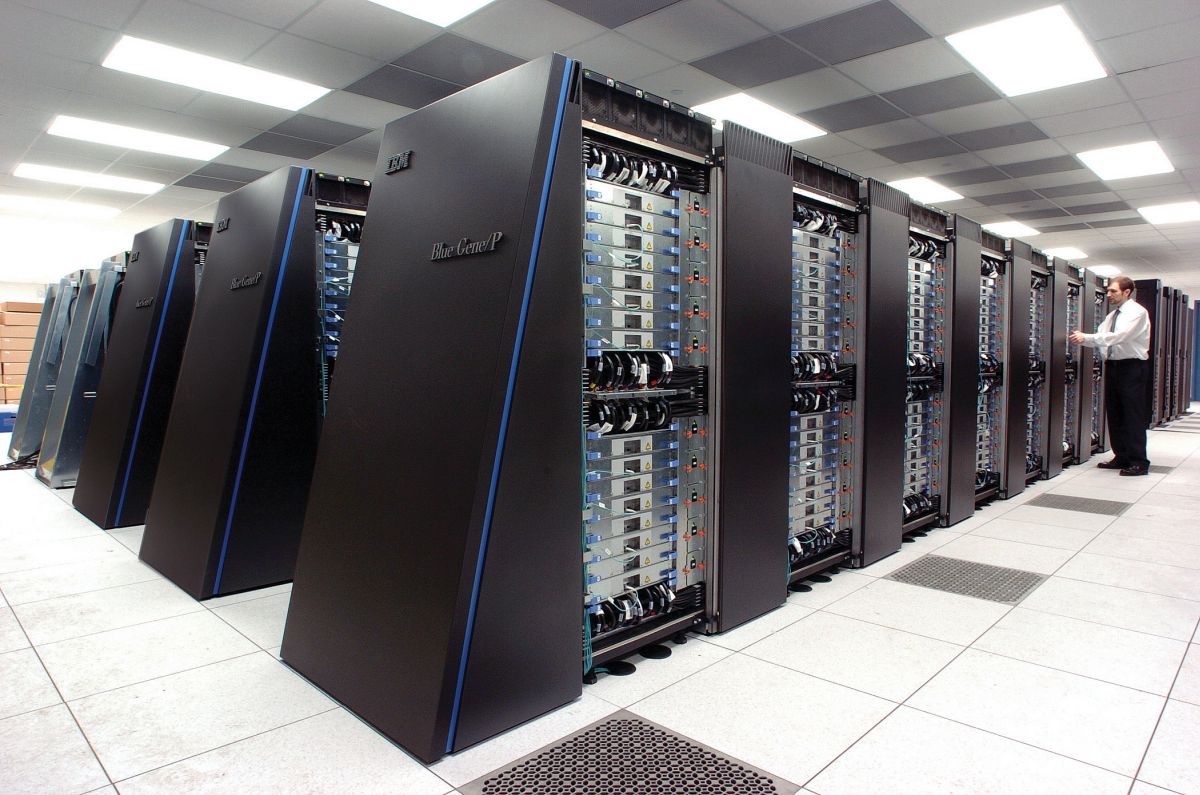
The energy consumption of 115 kilowatts required to run the Cray-1 resulted in a monthly electricity bill of around $200,000, in modern terms. Today's supercomputer systems require 20 Megawatts of continuous power. That translates to an hourly electricity cost of $4,000, or a staggering $40 million annually.
Commercial AI Mega-Clusters
Modern AI projects push costs into the stratosphere. Data centers can contain hundreds of thousands of specialized AI chips, and training a state-of-the-art AI model can cost over $1 billion in compute time alone. That is just part of the $200 billion in total infrastructure costs.
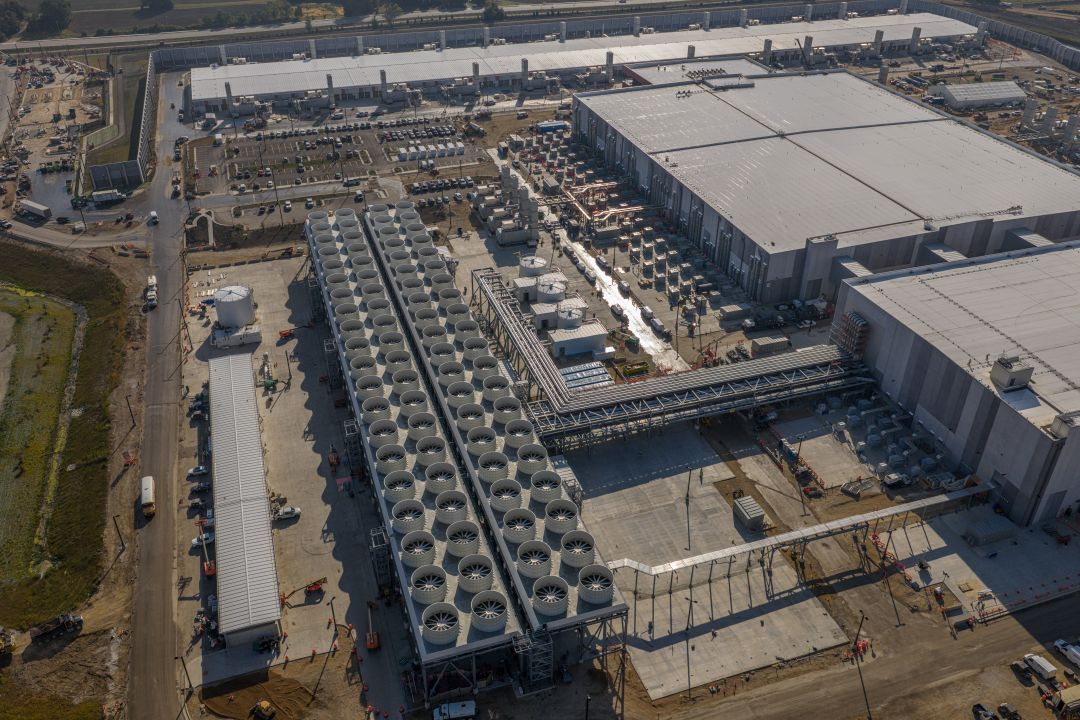
An aerial view of Microsoft’s new AI datacenter campus in Mt Pleasant, Wisconsin – which is essentially a giant computer. It was designed specifically for AI training as well as running large-scale artificial intelligence models and applications. Photo: Microsoft.
And these neural network AI clusters are in a position to do prodigious things. Nine years ago, using state-of-the-art techniques in AI, and running on the hardware available to Google at the time, the program AlphaZero played many millions of times against itself, identifying patterns and adjusting the values as it saw fit. It produced its own concepts and knowledge, using pattern recognition just as humans do, and improving as it learned. And it did this without the need of any external knowledge. All it was given was the rules of the game.
And the result? After nine hours of AI learning AlphaZero was able to beat the strongest chess programs in the world. Not to mention human chess players. It outclassed the World Champion by hundreds of Elo points. Today we could probably tell a exascale supercomputer the rules of chess, just how the pieces move and what the goal is, and it would master the game, to a 4000 Elo level within minutes!
That is how far computer power has come in a single human lifetime (mine). And believe me, things are not slowing down! Chess is just one example of how AI works. Other areas of human endeavour will experience – are already experiencing – the same breath-taking advances. What do you think?




.jpeg)