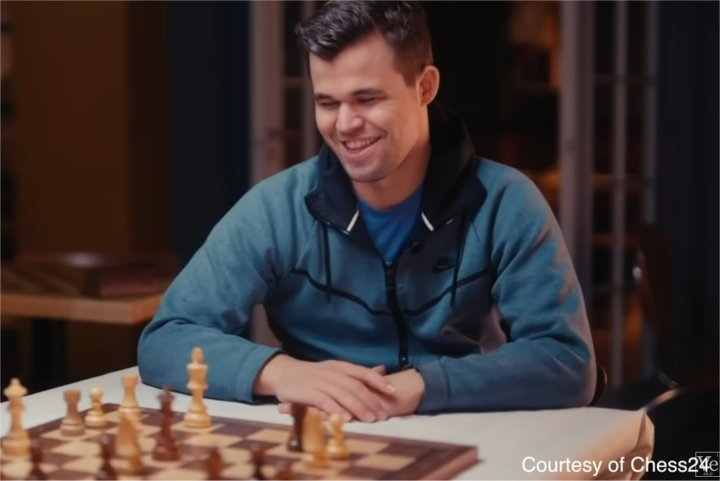
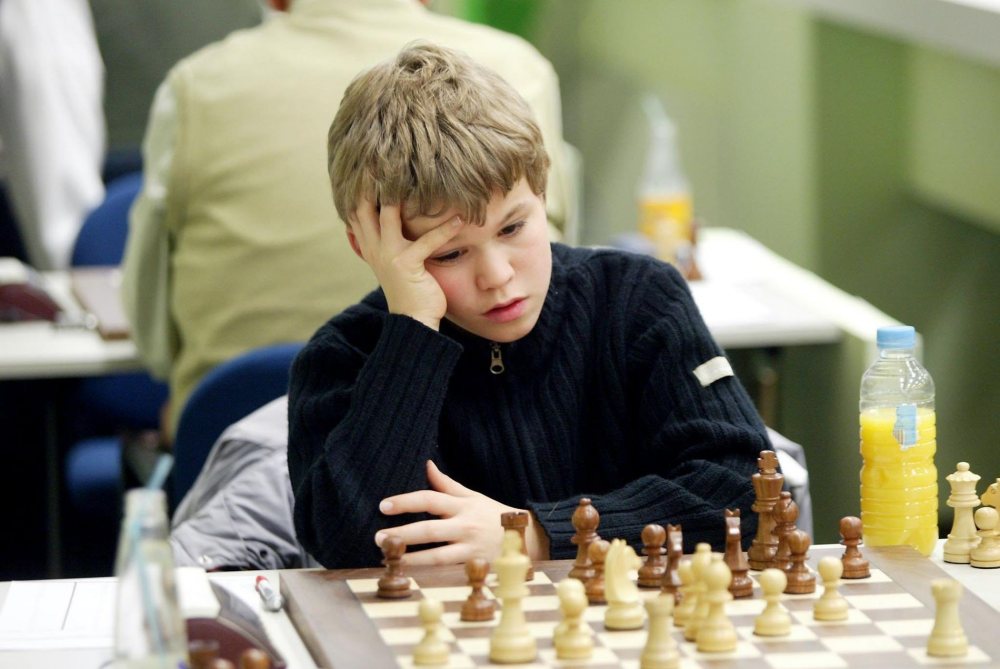
10/8/2026 – How can I improve at chess, increase my Elo rating or become an International Master or Grandmaster? Or, more generally, how can I become an expert in any field? The YouTube channel Veritasium provides some answers. | Photo: Screenshot from the Veritasium video. Here, Veritasium quotes from the video Magnus Carlsen's Mind-Blowing Memory, published by Chess24
new: ChessBase Magazine 225
Chess Festival Prague 2025 with analyses by Aravindh, Giri, Gurel, Navara and others. ‘Special’: 27 highly entertaining miniatures. Opening videos by Werle, King and Ris. 10 opening articles with new repertoire ideas and much more. ChessBase Magazine offers first-class training material for club players and professionals! World-class players analyse their brilliant games and explain the ideas behind the moves. Opening specialists present the latest trends in opening theory and exciting ideas for your repertoire. Master trainers in tactics, strategy and endgames show you the tricks and techniques you need to be a successful tournament player! Available as a direct download (incl. booklet as pdf file) or booklet with download key by post. Included in delivery: ChessBase Magazine #225 as “ChessBase Book” for iPad, tablet, Mac etc.!
YOUR PERSONAL CHESS COACH - Whether you’re taking your first steps into the world of club chess, or already playing at a tournament level: with FRITZ, you can train more efficiently, intelligently and with a more personalised approach than ever before. FRITZ is more than just a chess engine – it’s a training revolution! Whether you’re taking your first steps into the world of club chess, or already playing at a tournament level: with FRITZ, you can train more efficiently, intelligently and with a more personalised approach than ever before.
In this volume, we dive into core aspects of chess technique. Smyslov taught the principle of tactical hierarchy, “checks, double attacks, and unprotected pieces”, and Mikhalchishin demonstrates how this method of calculation is vital.
€34.90
Veritasium is a YouTube channel launched in 2011 by Australian physicist and science journalist Derek Muller. In professionally produced videos, Muller explains scientific phenomena, presents experiments and explores why people often perceive the world differently from the way it actually works. In doing so, he combines scientific studies with interviews, clear examples and surprising experiments.
In an episode on expertise broadcast four years ago, but still relevant today, chess plays a central role. To gain a better understanding of expertise, Muller wants to know why Magnus Carlsen can do what he does - and how he acquired that ability. Pattern recognition, or "chunking", is the central theme here. Over the course of their lives, strong players have played and analysed countless games or solved numerous exercises. As a result, countless patterns are stored in their chess memory, helping them to find the best move intuitively.
But that is not all: Muller lists four prerequisites for expertise and explains them clearly, while also touching on the pitfalls of buying shares and why one should not despair after being rejected in job applications.
In this course, we will learn how to identify passively placed pieces in any given situation and how to improve their health by bringing them into active squares.
1. An environment governed by recognisable rules
In order to learn something, there must be recognisable patterns and regularities. This is the case in chess: certain strategic and tactical patterns occur again and again. Good moves increase the chances of winning, while bad moves can lead to defeat. If one wants to, one can learn from mistakes and losses.
Roulette and other games of chance are different: the outcomes are random, and there is nothing to learn from them.
2. Repetition
Practice makes perfect - tennis players hit thousands of balls, physicists solve numerous problems, and chess players analyse countless games and positions.
3. Fast and clear feedback
In order to learn something, one needs feedback. In chess, this comes from the results of games, from analysing one's own mistakes or from solving tactical exercises. In other fields, this is more difficult. Muller mentions how poorly experts perform at political forecasting, and why investment advisers are often not worth their high fees.
4. Deliberate practice
But experience alone is not enough: when training, one must repeatedly push against the limits of one's own abilities in order to improve. In sports science and psychology, this is called "Deliberate Practice": conscious, systematic practice that is demanding and stretches one's abilities.
In chess, one improves by analysing with stronger players or playing against stronger opponents. This also explains why coaches are so helpful: they recognise problems to which the player is blindsided, and they can select exercises that specifically address weaknesses.
A worthwhile and entertaining video that explains convincingly, and on a scientific basis, what the path to expertise looks like. One still has to walk that path oneself, however.
Let our authors show you how Carlsen tailored his openings to be able to outplay his opponents strategically in the middlegame or to obtain an enduring advantage into the endgame.
Johannes FischerJohannes Fischer was born in 1963 in Hamburg and studied English and German literature in Frankfurt. He now lives as a writer and translator in Nürnberg. He is a FIDE-Master and regularly writes for KARL, a German chess magazine focusing on the links between culture and chess. On his own blog he regularly publishes notes on "Film, Literature and Chess".
8/1/2026 – Magnus Carlsen learnt to play chess at the age of five, although his tournament career began a little later, in late 1999 or early 2000. In the summer of 2000, exactly 26 years ago, Carlsen faced another nine-year-old at the Peer Gynt Open in Gausdal, who would later become at least an international master.
3/11/2025 – Magnus Carlsen representend his team Offerspill last weekend at the end of this year's Norwegian Elite Series and won all the three games he played. However, it was not enough to win the championship. Vålerenga (pictured) became Norwegian team champions ahead of OSS and Offerspill. | Photo: Kaido Kulaots via Facebook
King’s Indian fans who choose the Mar del Plata attack (7...Nc6) against White’s classical system (1.d4 Nf6 2.c4 g6 3.Nc3 Bg7 4.e4 d6 5.Nf3 0-0 6.Be2 e5 7.0-0) usually aim for a complex position with mutual attacks on open wings, requiring long-term strategic planning and tactical sharpness in critical moments. Computers often do not know how to handle the arising complex strategic positions, which suits players who like to think on their own instead of memorizing long variations. However, the fashionable Bayonet Attack (9.b4) interferes with Black’s ideas. After Black’s main move 9...Nh5 the positions opens, the lines get forced and computer analysis is important again. But this DVD offers an antidote against White’s Bayonet Attack, namely 9...a5! This move leads to sound positions with very few concrete lines, in which the focus is on strategy not on tactics. Objectively chances are equal but if Black knows what to do things might quickly become dangerous for White.
YOUR PERSONAL CHESS COACH - Whether you’re taking your first steps into the world of club chess, or already playing at a tournament level: with FRITZ, you can train more efficiently, intelligently and with a more personalised approach than ever before.
The Nimzo-Indian has stood the test of time for over a century: Still a top choice for elite players today, from Magnus Carlsen to Praggnanandhaa, it remains one of Black's most reliable ways to fight for real chances against 1.d4 2.c4 3.Nc3.
1.c4 e5 2.Nc3 Bb4!? is an opening idea well worth considering. Black immediately threatens to double the pawns on c3 in the style of the Trompowski or Sicilian Grand Prix attack.
Italian Game Powerbase 2026 is a database and contains 8571 top class games from Mega 2026 and the Correspondence Database 2026, of which 479 are annotated.
Videos: Nico Zwirs discusses the Sicilian with 2…e6 3.d4 cxd4 4.Qxd4 Nc6 5.Qe3 Nf6 6.Nc3. Mihail Marin examines Sindarov’s 6.Ne5 in the Queen’s Pawn Defence. Plus the ‘Lucky bag’ featuring 41 analyses by Berg, Ftacnik, Gupta and many others.
If you're looking for a dynamic alternative to the Slav, Queen's Gambit Declined, or other mainstream systems, the Chigorin Defence offers exactly what modern tournament players need.
€34.90
We use cookies and comparable technologies to provide certain functions, to improve the user experience and to offer interest-oriented content. Depending on their intended use, analysis cookies and marketing cookies may be used in addition to technically required cookies. Here you can make detailed settings or revoke your consent (if necessary partially) with effect for the future. Further information can be found in our data protection declaration.
Pop-up for detailed settings
We use cookies and comparable technologies to provide certain functions, to improve the user experience and to offer interest-oriented content. Depending on their intended use, cookies may be used in addition to technically required cookies, analysis cookies and marketing cookies. You can decide which cookies to use by selecting the appropriate options below. Please note that your selection may affect the functionality of the service. Further information can be found in our privacy policy.
Technically required cookies
Technically required cookies: so that you can navigate and use the basic functions and store preferences.
Analysis Cookies
To help us determine how visitors interact with our website to improve the user experience.
Marketing-Cookies
To help us offer and evaluate relevant content and interesting and appropriate advertisement.