
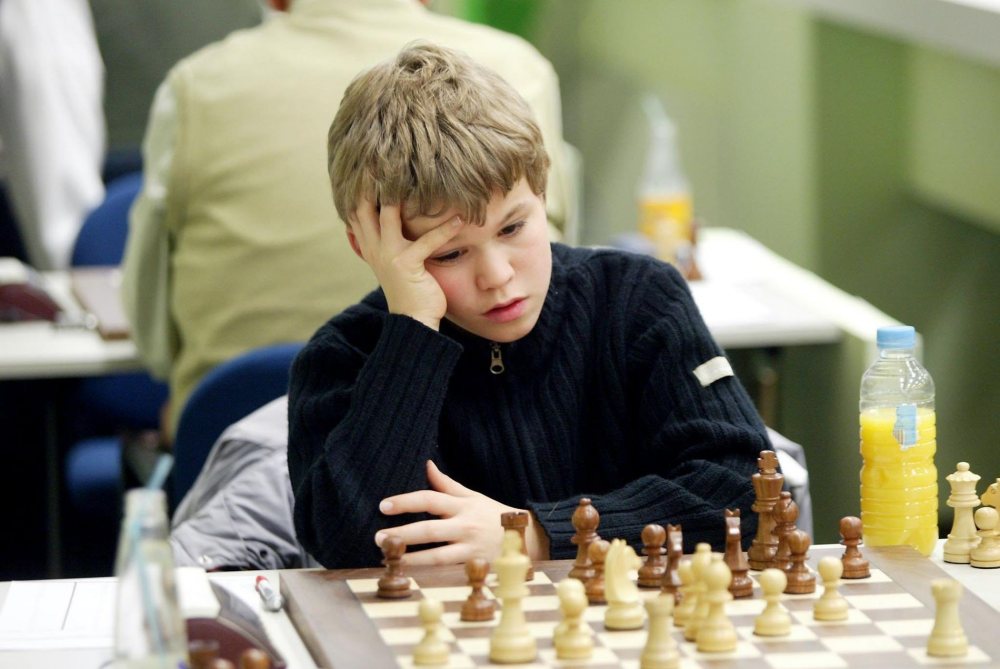

Magnus Carlsen, born on 30 November 1990 in Tønsberg, near Oslo, learned the rules of chess at the age of five, but, as is well known, was not particularly interested in the game. At some point, however, his ambition was awakened and he wanted to beat his older sister Ellen (thank you, Ellen!).
The gifted boy, equipped with a remarkable memory, began to take a closer interest in the game and started playing tournament chess. In the summer of 1999, he took part in the children's group of the Norwegian Championships and already achieved a positive result.
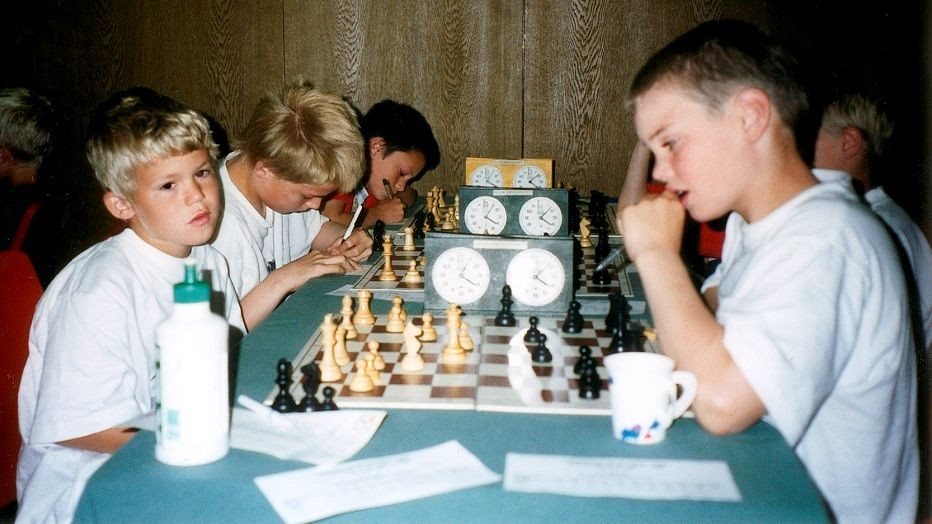
This is how it all began | Photo: Hun on Chess
He evidently enjoyed it, as immediately afterwards he also played in a tournament in Gausdal. In January 2000, Magnus Carlsen, by then nine years old and presumably accompanied by his family, returned to Gausdal and played another tournament. Further tournament appearances followed in the next few weeks, and in the summer of 2000 Carlsen was back in Gausdal, playing in the Peer Gynt Open.
The tournament is named after the fairy-tale hero Peer Gynt, a solitary hunter in the forests of old Norway, who performed various heroic deeds, such as rescuing dairymaids from trolls and such things.
When Magnus Carlsen played in the Peer Gynt Open in Gausdal in 2000, the trolls had all already disappeared. Arnold Eikrem (1932-1996) had also already passed away.
Eikrem came from Trondheim and was a talented chess player in his youth. He then turned to chess journalism and, above all, to the organisation of chess tournaments. Eikrem founded a chess club in Trondheim. From 1957 to 1959, he was elected President of the Norwegian Chess Federation for the first time. He held the office again from 1970 to 1979.
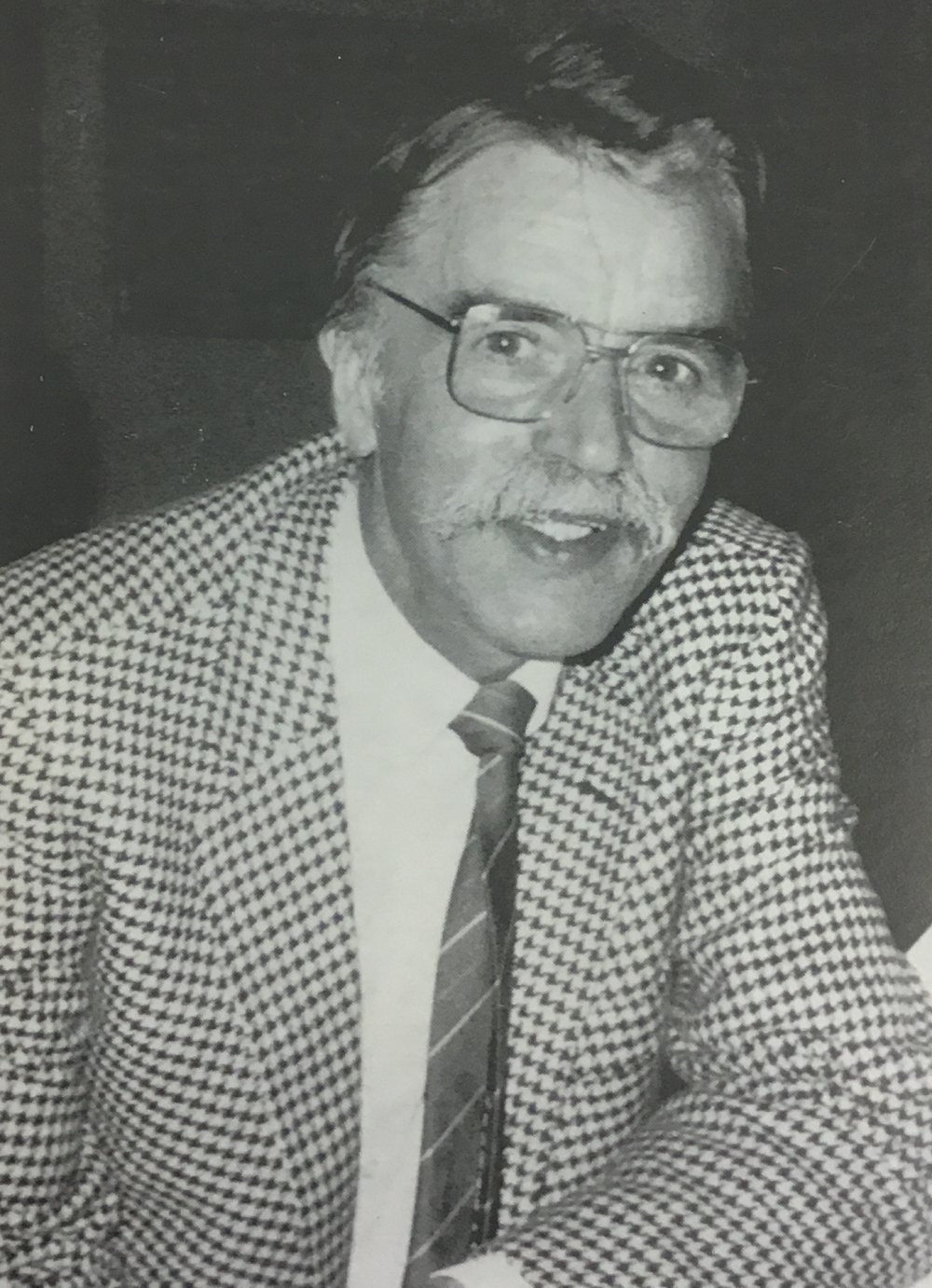
Arnold Eikrem
Eikrem's most important achievement in popularising chess in Norway was the organisation of countless tournaments at the Gausdal Høifjellshotel. Through his numerous tournaments, Eikrem turned the location near the winter sports centre of Lillehammer into a place of pilgrimage not only for European chess enthusiasts.
Between 1970 and the year of his death, 1996, Arnold Eikrem organised 187 tournaments in Gausdal, with titles such as "Arnold Cup", "Troll Masters" and "Peer Gynt Open", as well as further tournaments in other locations in Norway. Arnold Eikrem is the Peer Gynt of Norwegian chess history.
Carlsen, nine years old and with a rating of 904, started in the Peer Gynt Open 2000. In round one, he lost with the black pieces against 24-year old Aksel Brasoy, who, with a rating of 1590, was still stronger.
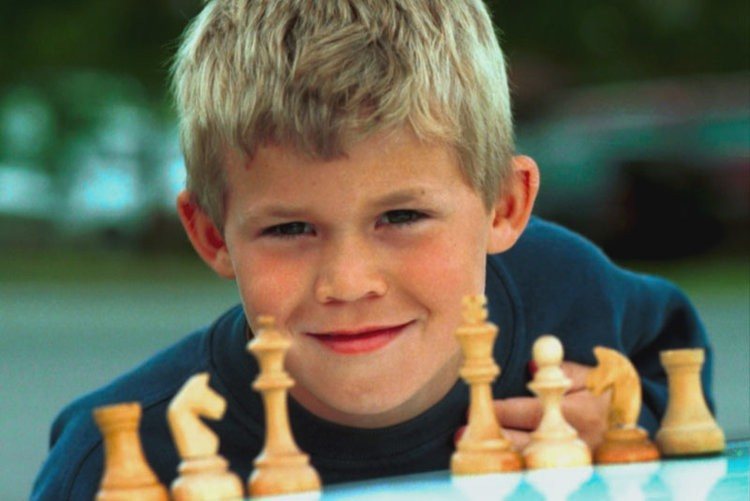
But in the second round, Carlsen was able to make amends. This time he faced a player of the same age, only a few weeks older than himself. His opponent was the likewise nine-year-old Jonathan Carlstedt, who had travelled from Hamburg with his father to earn his first chess spurs in Gausdal. But not against Magnus Carlsen.
And this is how the game between the two nine-year-old children went:
Magnus Carlsen, as is well known, became World Champion and arguably the best player in chess history. Jonathan Carlstedt became an international master, and also works as a chess trainer, author and chess journalist. He took the defeat well.
The Tennis Hotel and the Mecca of Chess in the Nordics...