A seven-game final
Yu Yangyi successfully defended his title at the fifth Chinese Rapid Championship, held in Shaoxing from 2 to 6 November. The second seed defeated 18-year-old Xiao Tong in an Armageddon decider after their final had finished level following four rapid games and two blitz tiebreakers. Xiao, who had previously eliminated Ding Liren, finished runner-up, while Lu Shanglei took third place after defeating Xu Xiangyu in blitz tiebreaks.
The tournament brought together 24 players in a knockout competition, with eight seeded participants receiving byes into the round of 16. Matches consisted of four rapid games, played at 15 minutes plus a 10-second increment, followed by blitz tiebreaks, with 3 minutes plus 2-second increments, when necessary.
 How grandmasters win without fireworks: GM Jan Markos shows you 11 very practical tips from "How to play in a lost position" to "Be patient like Carlsen" that will improve your tournament chess.
Most chess books teach you what to think about. This series teaches you what to actually do when the clock is running and the result is on the line. Compiled from GM Jan Markos's acclaimed "Practical Tips for the Tournament Player" column in ChessBase Magazine, Volume 1 covers the decisions every tournament player faces before the position ever gets complicated: how you use your time, how you handle pressure, and how you think when the stakes are real.
Free Video Sample: How to use your time effectively
The early rounds went largely according to the seedings, but the quarterfinals saw three of the four rating favourites eliminated. Ding lost to Xiao in blitz, Wang Hao was defeated by Xu Xiangyu, and Bu Xiangzhi fell to Lu Shanglei. Yu was the only player among the top four seeds to reach the semifinals.
In Thursday's semis, Yu Yangyi had little trouble overcoming Xu Xiangyu, winning three consecutive rapid games to secure a 3–0 victory. His opponent in the final was Xiao Tong, who had another lengthy encounter against Lu Shanglei. All four rapid games ended in draws, leaving the players to settle matters in blitz. Xiao eventually prevailed 3½–2½, becoming the first player born in the 2000s to reach the final in the tournament's five editions.
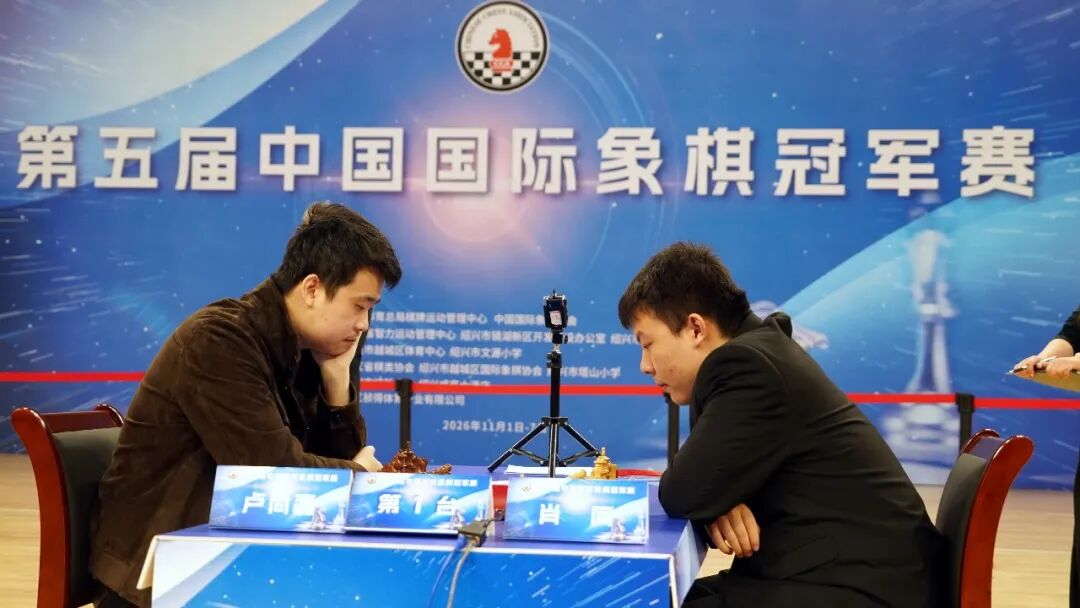
Lu Shanglei (left) was defeated by Xiao Tong in a contested semifinal matchup | Photo: Chinese Chess Association
The title match on Friday began with Xiao taking the lead. Playing black against the defending champion, the 18-year-old scored a win in the opening game. The second encounter was drawn, but Yu struck back with a victory in game three to level the score. A draw in the fourth game left the players tied at 2–2, making blitz tiebreaks necessary.
Yu won the first blitz game, only for Xiao to respond with a victory of his own in the second. The match therefore went to Armageddon, with Yu playing black and enjoying draw odds. The defending champion did not need to rely on that advantage, however, as he went on to win the game outright, delivering checkmate on move 48. The final score was 4–3 in Yu's favour, giving him a second consecutive title.
All games - Yu v. Xiao
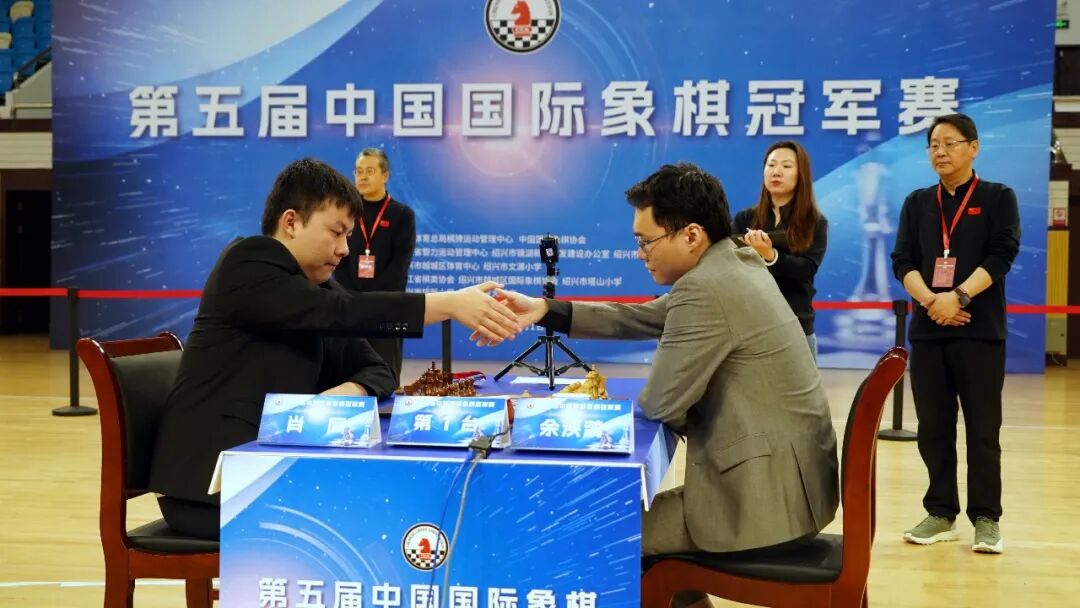
Xiao Tong playing black against eventual tournament winner Yu Yangyi | Photo: Chinese Chess Association
The match for third place between Lu Shanglei and Xu Xiangyu also required tiebreaks. Lu won both blitz games to take third place by a 4–2 overall score. Xu, who had knocked out Wang Hao in the quarterfinals, finished fourth.
 Keep it simple. Stay objective. Watch the clock. Sometimes take the risk. GM Loek van Wely explains the ten principles that decide real games. They aren’t about theory. They’re about what you do at the board when it counts.
Opening theory gets all the attention. But according to GM Loek van Wely, a player who has played in 14 Olympiads, is eight-time Dutch champion, and has decades of experience against Karpov, Kasparov, Anand, and Carlsen, most of what separates strong players from the rest has nothing to do with memorised lines.
Free sample video: Introduction
Free sample video: Don't Bluff the Donkey
For Yu, the result completed a successful title defence after he had survived a difficult quarterfinal encounter against Bai Jinshi. Xiao, meanwhile, finished as runner-up despite entering the knockout stage with a rapid rating of 2476, more than 200 points below Yu's 2679. His run included victories over Zeng Chongsheng, Ding Liren and Lu Shanglei, with all three matches decided in blitz tiebreaks.

Yu Yangyi on the podium | Photo: Chinese Chess Association

A group photo with the finalists, organisers and young chess enthusiasts | Photo: Chinese Chess Association
All games - Main event
Links




.png)













.jpeg)