140 years since the birth of Nimzowitsch
Aaron Nimzowitsch was born on 7 November 1886 in the Latvian capital, Riga. The family name was originally Ņimcovičs in Latvian, meaning roughly "son of the German". In its Germanised form, it was written Niemzowitsch, with the stress on the penultimate syllable. At some point, when a passport was issued, the "e" disappeared and the stress shifted to the first syllable.
At the time of Nimzowitsch's birth, Latvia was a province of the Russian Empire. Aaron Nimzowitsch learned chess at the age of eight from his father, Isaja Abramovich, a wealthy Jewish timber wholesaler who was himself a good chess player. Aaron Nimzowitsch's exceptional talent for chess became apparent very early. His first games were published in a Riga newspaper when he was only nine years old, and were subsequently reprinted in other chess publications. The family later moved to Dvinsk (now Daugavpils), where Nimzowitsch attended a Talmud school.
 On this DVD GMs Rogozenco, Marin, Müller, and IM Reeh present outstanding games, stunning combinations and exemplary endgames by Alekhine. And they invite you to improve your knowledge with the help of video lectures, annotated games and interactive tests

Aaron Nimzowitsch with his sister Tilla and his father Isaja (Schaja) | Photo source: Batgirl on chess.com
In 1903, Nimzowitsch went to Berlin intending to study philosophy. Instead, however, he devoted more of his time to chess and regularly visited the Café Kaiserhof, where Berlin's chess players gathered at the time.
In October 1903, he enrolled in Göttingen to study mathematics and psychology, but returned to Berlin after one semester. In 1906/07, Nimzowitsch was also enrolled in Zurich to study mathematics, though he did not complete that course either. After several successful tournament appearances, Nimzowitsch finally decided to make chess his profession and abandoned his studies for good.
Nimzowitsch played his first tournament in Coburg, where the 14th Congress of the German Chess Federation was held in 1904. Nimzowitsch competed in the main tournament and finished a respectable sixth in a strong field. Tournaments in Vienna and Barmen followed, and he even managed to win an event in Munich. By May 1907, Nimzowitsch was already among the participants in the major international tournament in Ostend. Twenty-nine players competed for almost six weeks, and the 20-year-old Aaron Nimzowitsch was among the leaders. He eventually shared third-fourth place with Jacques Mieses, behind Ossip Bernstein and Akiba Rubinstein. Within three years, Nimzowitsch had reached the world's elite. In August/September 1907, the leading European players gathered in Carlsbad. Nimzowitsch finished a strong joint fourth-fifth, sharing the position with Carl Schlechter. Rubinstein won the tournament.
After that, however, Nimzowitsch disappeared from tournament play for three years. He had withdrawn from several tournaments he had agreed to play in during 1908. During this period, he stayed in Riga. In his biographical notes for a new edition of My System, Jacques Hannak suggested that Nimzowitsch was working on his new strategic ideas. Perhaps, however, his temporary withdrawal had another reason. Nimzowitsch's biographers Per Skjoldager and Jørn Erik Nielsen (Aron Nimzowitsch: On the Road to Chess Mastery, 1886–1924, McFarland, 2012) report that the first signs of tuberculosis may already have appeared in 1908. In later years, repeated references were made to Nimzowitsch suffering from health problems.

Aaron Nimzowitsch (c. 1916) | Photo source: Per Skjoldager and Jørn Erik Nielsen (Aron Nimzowitsch: On the Road to Chess Mastery, 1886–1924, McFarland, 2012)
Nimzowitsch reappeared in 1910 and, until the outbreak of the First World War, played in a number of top tournaments: the Masters tournament at the 17th DSB Congress in Hamburg in 1910 (third place), Carlsbad in 1911 (fifth-sixth), and the tournaments in San Sebastián in 1911 and 1912 (sixth-eighth and second-third respectively). In 1912, Nimzowitsch played in the All-Russian Championship in Vilnius, finishing fourth.
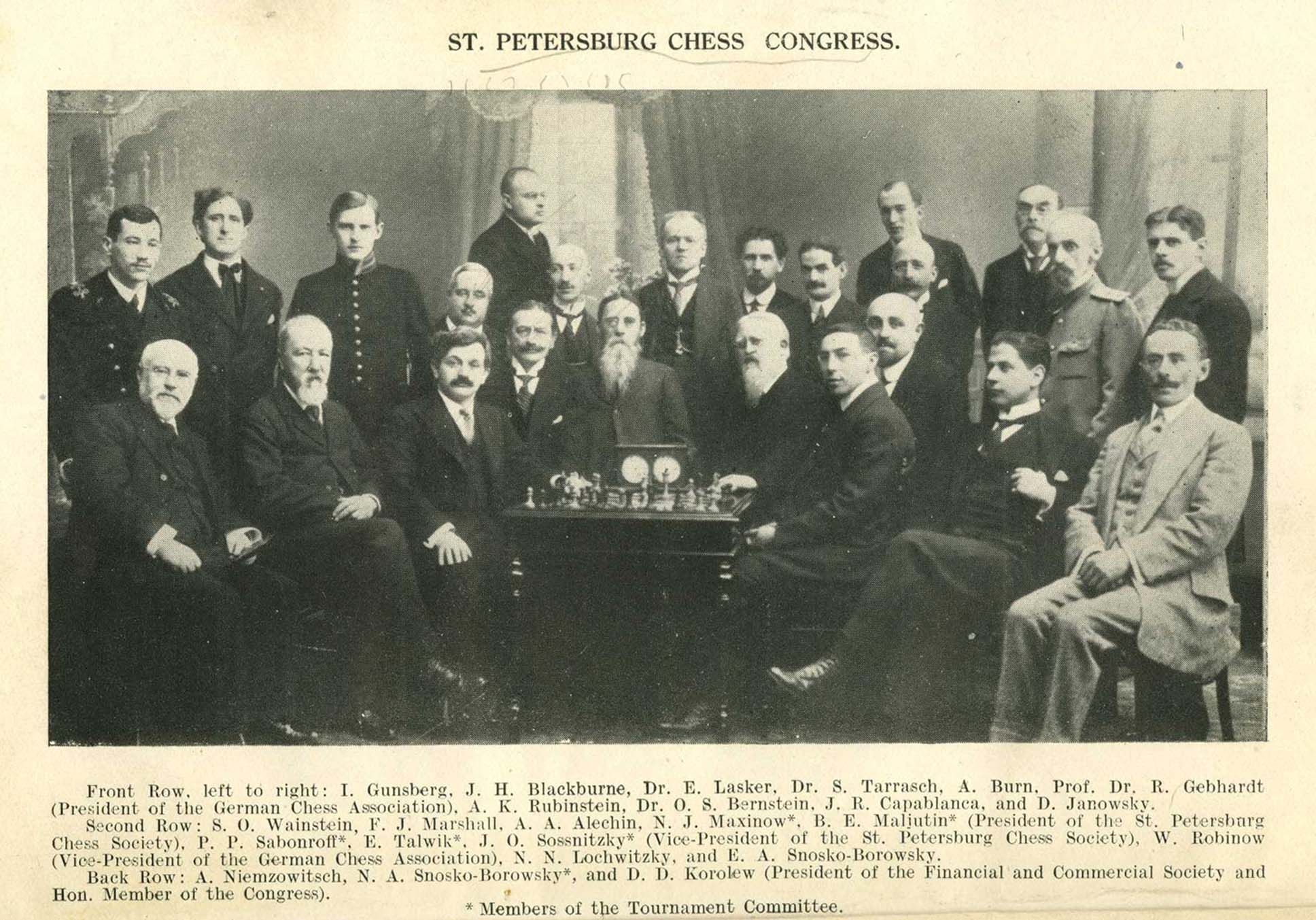
In the qualifying tournament for the great international Masters tournament in Saint Petersburg in 1914, Nimzowitsch shared first place with Alexander Alekhine, who was six years younger. As the playoff also ended without a winner, both players were admitted to the international Masters tournament in April/May 1914. Nimzowitsch finished eighth in the preliminary stage.
 Doesn’t every chess game get decided by mistakes? Absolutely. But most players never truly comprehend that they are making the same kind of mistakes over and over again.
On 1 August 1914, the First World War began, fundamentally changing the political landscape and economic conditions in Europe. Information about Nimzowitsch's life during this period is rather vague. He was probably in Riga when the war began. In 1916, he is said to have been conscripted into the military.
Following the February Revolution of 1917, the Tsar abdicated on 15 March 1917. The subsequent attempt to establish a parliamentary democracy failed in the face of the Communists, who continued the revolution, particularly in rural areas. In the summer of 1917, the last major Russian offensive against the Central Powers failed at the front.
Lenin had returned to Russia in April 1917, led the Bolshevik movement and advocated an end to the war. In November 1917 (October according to the old Julian calendar), the Bolsheviks overthrew the bourgeois government. German troops had occupied Riga in September 1917.
Nimzowitsch, by then apparently discharged from the Russian military, worked for a time as chess editor of the Baltische Zeitung. Afterwards, there was reportedly another attempt to conscript him by force. According to some anecdotes, he avoided this by pretending to be mentally disturbed. It has also been reported, however, that Nimzowitsch may have been in Berlin in 1917 under the name Arnold Nimzowitsch. Perhaps he escaped the military authorities by fleeing. A number of casual games and simultaneous exhibition games played by Nimzowitsch in Riga from 1918 to 1920 have survived.
On 3 March 1918, the new Bolshevik rulers in Russia signed a peace treaty with the German Empire under which Russia was forced to make extensive territorial concessions. Following the Treaty of Versailles, the political balance of power also changed in Eastern Europe, and the Russians now attempted to revise the treaty with the German Empire and regain control of lost territories, including the Baltic region. Between 1918 and 1922, Russia was also ravaged by a civil war that lasted until the founding of the USSR and claimed eight million lives.
In these turbulent times, Nimzowitsch decided to leave his homeland for good. In July 1920, he went to Stockholm and in August played in the Gothenburg Chess Club jubilee tournament (12th out of 14 participants; Réti won ahead of Rubinstein). In October, he took part in the Stockholm Chess Club jubilee tournament (second behind Bogoljubow). In 1921 and 1922, Nimzowitsch played smaller matches and gave several simultaneous exhibitions in Norway and then Denmark. The Copenhagen Chess Association had invited him to Denmark. Nimzowitsch gave lectures and played games against Danish players to promote chess in the country.
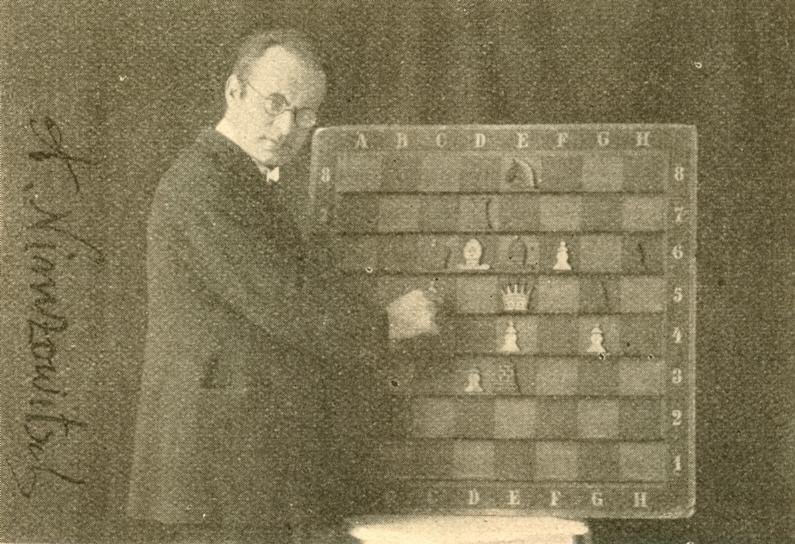
In November 1922, Nimzowitsch moved permanently to Denmark and lived until his death in a room at Øster Farimagsgade 11 (on the second floor) in Copenhagen.
At the beginning of the 1920s, chess life in Europe slowly began to recover and reconnect with the great era before the First World War. Nimzowitsch was a frequent guest at the major tournaments, usually competing near the top and achieving good results. He was even able to win some events. In Carlsbad in 1923, he finished sixth in a field of 18. In Baden-Baden in 1925, he finished ninth out of 21. In Mariánské Lázně in 1925, he won ahead of Rubinstein and Marshall.
At the DSB Congress in Breslau in the summer of 1925, he finished second behind Bogoljubow. He came fourth at the 1926 Semmering tournament, where he scored, among other results, a victory over Alexander Alekhine. Nimzowitsch won the jubilee tournament in Dresden in April 1926, finishing ahead of Alekhine. His game against Johner is perhaps Nimzowitsch's most famous game.
Nimzowitsch also won the jubilee tournament in Hanover in August 1926, this time finishing ahead of Rubinstein.
 This DVD focuses on several types of material imbalances, such as Rook vs 2 Pieces, Queen vs 2 Rooks, and Queen vs Pieces.

The partcipants of the 1926 Hanover tournament. Back row: Friedrich Sämisch, Oskar Hans Antze, Hans Duhm, Walther von Holzhausen. Front row: Aaron Nimzowitsch, Hermann von Gottschall, Jacques Mieses, Akiba Rubinstein.
Nimzowitsch was invited to a tournament in New York in February 1927 and finished third behind Capablanca and Alekhine. The tournament was played over four rounds. Nimzowitsch failed to win a game against Capablanca, but he did manage to defeat Alekhine once.
Back in Europe, he played tournaments in 1927 including Berlin (second place), Kecskemét (winner), Bad Niendorf (winner) and London (winner). In 1928, Nimzowitsch also won the Berlin Chess Society jubilee tournament. At Bad Kissingen, he finished fifth in a world-class field.
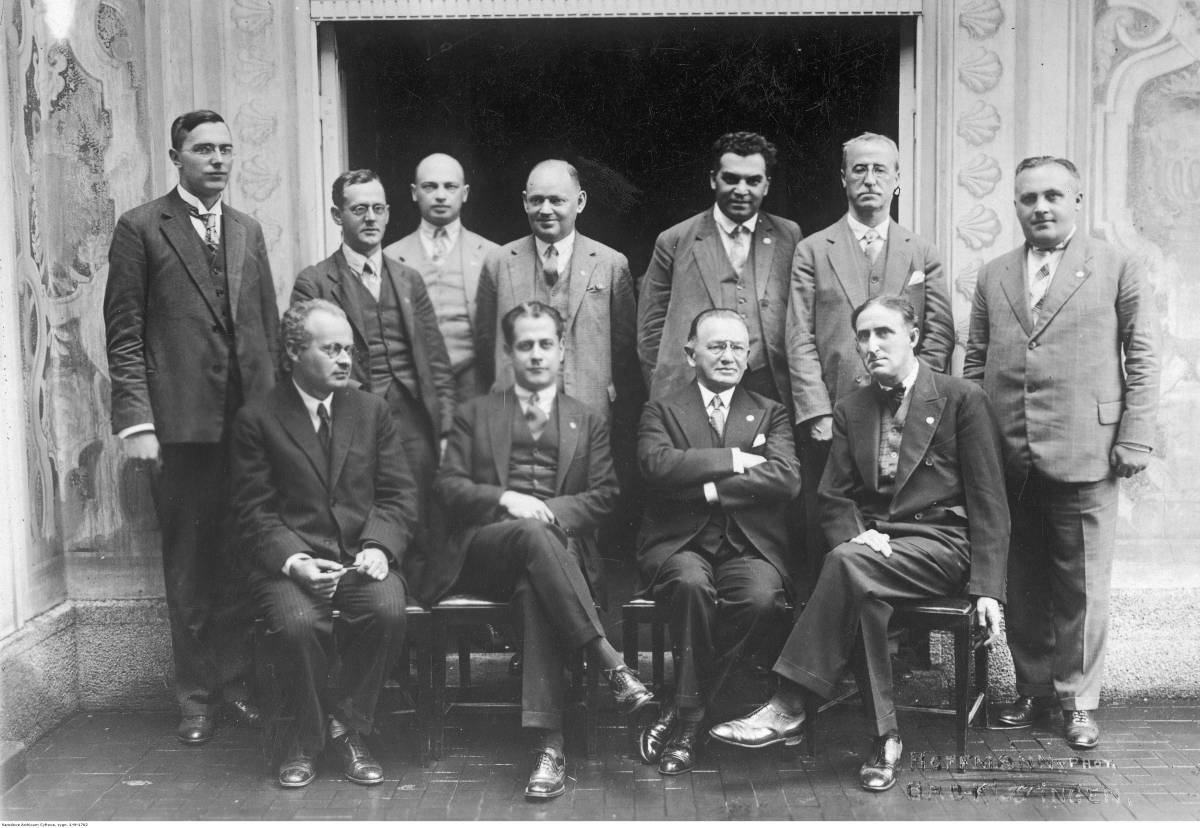
The players in Bad Kissingen | Photo source: Douglas Griffin on X
He finished second behind Capablanca in the Berliner Tageblatt tournament.
In 1929, Nimzowitsch won the new edition of the Carlsbad tournament with an outstanding 15 points from 21 rounds, finishing ahead of Capablanca and many other world-class players. At Alekhine's dominant performance in San Remo in 1930, Nimzowitsch finished second as the "best of the rest".
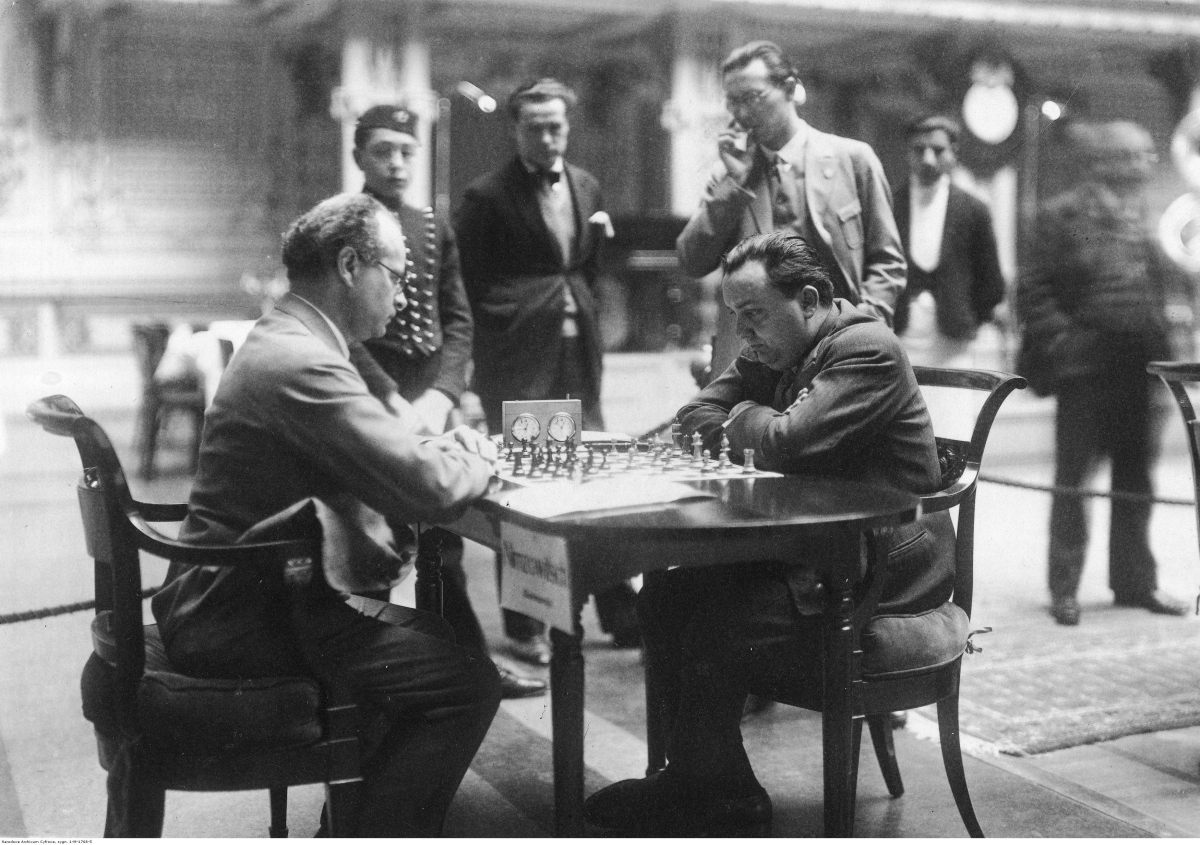
Nimzowitsch v. Grau | Photo: via Douglas Griffin on X
He finished second in Liège and won the Anderssen jubilee tournament in Frankfurt.
In 1931, he won a tournament in Switzerland and finished third in the strong tournament at Bled. No games at all are known from 1932. He then played tournaments and matches in Denmark, and his participation in the 1934 tournament in Zurich (sixth-seventh) effectively marked the end of Aaron Nimzowitsch's international career. In August 1934, he played his final tournament at the Nordic Congress in Copenhagen.
In his retrospectively calculated ratings, Jeff Sonas ranks Aaron Nimzowitsch as world number two behind Akiba Rubinstein in 1913 and as world number three, behind Alekhine and Capablanca, between 1926 and 1931.
The style of his games and Nimzowitsch's behaviour both at and away from the chessboard struck some colleagues and contemporaries as unusual. There are several anecdotes describing his sometimes peculiar behaviour. It was reported, for example, that in Hamburg in 1910, after Köhnlein played 1.e4, Nimzowitsch initially did not react at all. He stared at the board for several minutes, then at his fingers. He then stood up and looked at pictures on the wall before reading a brochure advertising a new chess clock. Eventually, he made a move. In another game, he arrived 45 minutes late but showed no urgency to move, again looked at a few pictures on the wall, then made a move while standing shortly before the default time expired, only to return immediately to the pictures. He also played his next moves quickly in passing and soon nevertheless obtained a winning position.
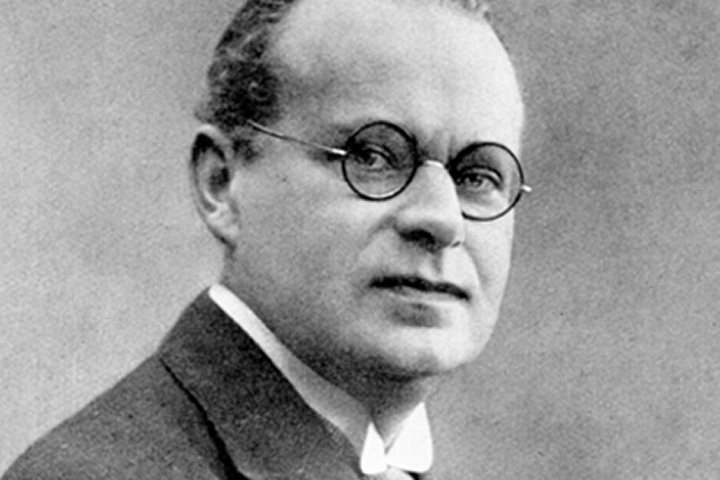
Above all, however, Nimzowitsch tried to ensure that at least at his own board nobody smoked. Burning tobacco leaves and inhaling the smoke was a widespread habit at the beginning of the 20th century, including among chess players. Once one knows that Nimzowitsch suffered from a lung condition, however, his aversion to tobacco smoke becomes understandable, even though his contemporaries did not appreciate it. Nimzowitsch's fragile health may also explain some of his unusual behaviour. At times, he appeared irritable and nervous, probably when his health was poor.
The unorthodox way he conducted his games also irritated the other masters, particularly the highly dogmatic Siegbert Tarrasch. As early as 1913, however, Nimzowitsch had launched a frontal attack on Tarrasch in a characteristically undiplomatic article. Tarrasch subsequently criticised Nimzowitsch's style of play on various occasions and described his openings as "ugly". The two masters never became friends and conducted an intense and public war of words in contributions to chess magazines.
 Smyslov cultivated a clear positional style and even in sharp tactical positions often relied more on his intuition than on concrete calculation of variations. Let our authors introduce you into the world of Vasily Smyslov.

In 1925/26, Nimzowitsch's influential work My System appeared in five instalments as booklets published by Bernhard Kagan, in which he explained the foundations of positional play and his own approach to the game. In August 1928, The Practice of My System followed, with several other writings appearing in between. The books remain interesting in terms of content even today, although they often seem one-sided and, from a modern perspective, exaggerated in style. Nimzowitsch was, however, a chess revolutionary and believed he had to promote his ideas very loudly.
Through his theoretical work and his play, Nimzowitsch had a major influence on opening theory. The Nimzo-Indian Defence, the Nimzowitsch Defence, the Nimzowitsch Variation (also known as the Winawer Variation) of the French Defence, and the opening 1.Nf3 followed by 2.b3 are named after him.
He also enriched middlegame theory with many new ideas, particularly the concept of the blockade. He also dealt extensively with themes such as the bishop pair, prophylaxis, overprotection, centralisation and many other elements of positional play.
Nimzowitsch died in Copenhagen on 16 March 1935 at the age of 48. The cause of death was pneumonia, probably as a consequence of progressive tuberculosis. He was buried at Bispebjerg Cemetery in Copenhagen (grave uL 378). The Danish Chess Federation maintains the grave site.
How grandmasters win without fireworks: GM Jan Markos shows you 11 very practical tips from "How to play in a lost position" to "Be patient like Carlsen" that will improve your tournament chess.
Most chess books teach you what to think about. This series teaches you what to actually do when the clock is running and the result is on the line. Compiled from GM Jan Markos's acclaimed "Practical Tips for the Tournament Player" column in ChessBase Magazine, Volume 1 covers the decisions every tournament player faces before the position ever gets complicated: how you use your time, how you handle pressure, and how you think when the stakes are real.
Free Video Sample: How to use your time effectively




.jpeg)











.jpeg)

