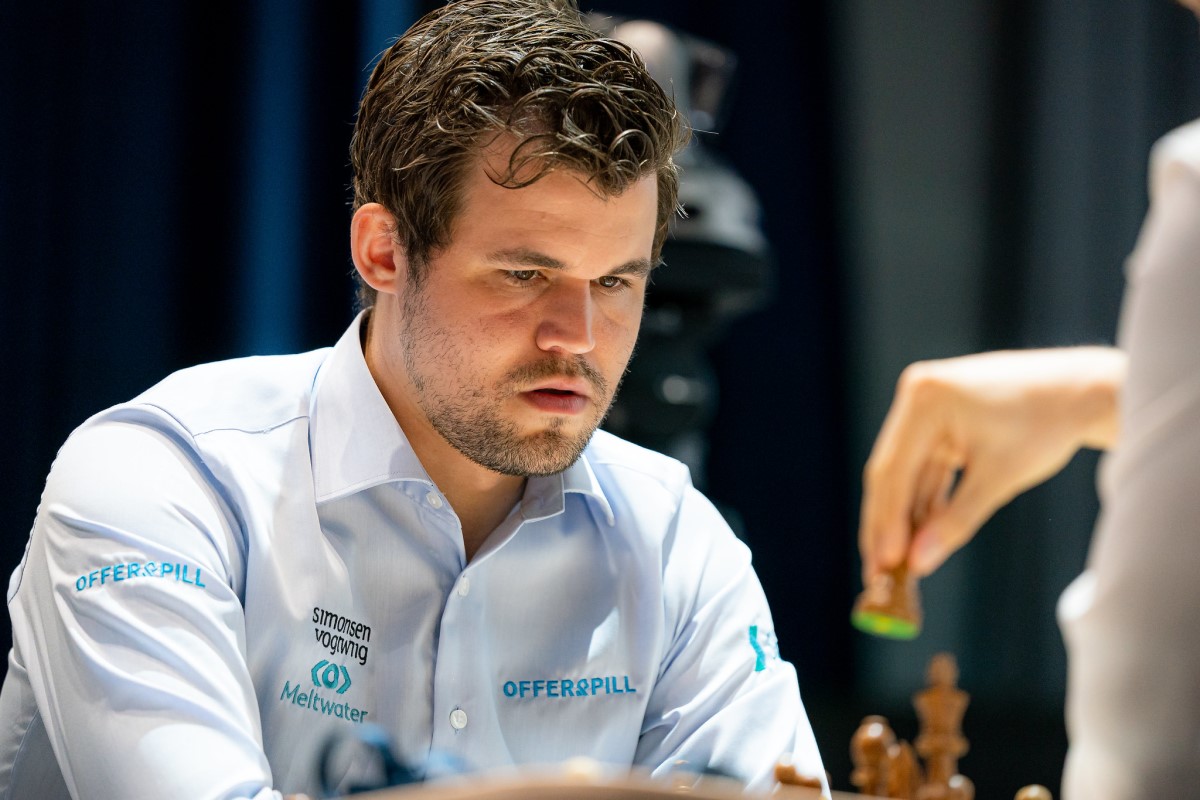
7/18/2021 – In his third column examining who is the best chess player in history — and his 150th overall — Jon Speelman fast forwards to the present champion, Magnus Carlsen. Speelman considers that Carlsen’s greatest strength is in the endgame, and dares to call him the best ever for this stage of the game. | Photo: Anastasiia Korolkova / FIDE World Cup
new: Fritz 20
Your personal chess trainer. Your toughest opponent. Your strongest ally. FRITZ 20 is more than just a chess engine – it is a training revolution for ambitious players and professionals. Whether you are taking your first steps into the world of serious chess training, or already playing at tournament level, FRITZ 20 will help you train more efficiently, intelligently and individually than ever before.
YOUR PERSONAL CHESS COACH - Whether you’re taking your first steps into the world of club chess, or already playing at a tournament level: with FRITZ, you can train more efficiently, intelligently and with a more personalised approach than ever before. FRITZ is more than just a chess engine – it’s a training revolution! Whether you’re taking your first steps into the world of club chess, or already playing at a tournament level: with FRITZ, you can train more efficiently, intelligently and with a more personalised approach than ever before.
[Note that Jon Speelman also looks at the content of the article in video format, here embedded at the end of the article.]
In the previous two columns, my “mirror” examined games by Bobby Fischer, Anatoly Karpov and Garry Kasparov in the hunt for the “best of them all”. Today we fast-forward to the present champion, Magnus Carlsen.
It’s always difficult to evaluate a champion at the time, and possible that we tend to overestimate them until they are supplanted, but Calrsen is surely one of the top five players in history. In the list that Yasser Seirawan sent in comments to the previous columns he put him fourth behind Kasparov, Karpov and Fischer. And when I (inadvertently but serendipitously) sparked off this line of enquiry by suggesting that he is arguably the strongest ever, I don’t think it was totally unreasonable.
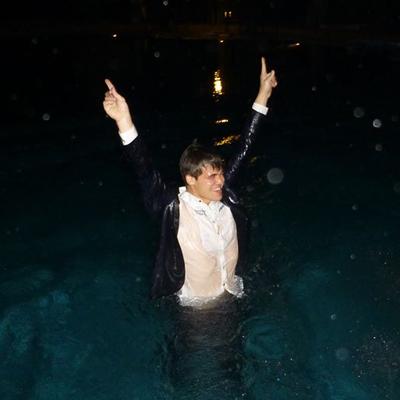
One thing you can say is that while Magnus has won and then kept the world title for eight years now, he hasn’t been utterly convincing, at least at classical chess. In an uninterrupted run of over ten years as the world’s top-rated player, he became champion by defeating Viswanathan Anand in 2013 [celebration pictured], and has since then defended his title against Anand himself, Sergey Karjakin and Fabiano Caruana. The latter two were drawn at classical chess, but Carlsen always had the rapidplay in reserve and batted off both opponents relatively easily.
Let endgame expert Dr Karsten Müller show and explain the finesses of the world champions. Although they had different styles each and every one of them played the endgame exceptionally well, so take the opportunity to enjoy and learn from some of the best endgames in the history of chess.
People make the point that whatever you think about his reign, Bobby Fischer held much more dominance over his rivals than today’s champions — this moreover at a time when he didn’t have the technological aids that modern players do.
Indeed, Carlsen has the use of fantastic computer engines on cutting-edge hardware. But his rivals have tremendous facilities too and this makes it much harder, for example, to establish an advantage in the opening unless you can catch the opponent out.
In addition (depending on your definition — would rated at some stage more than 2725 do?), there are more top class players than ever before, partly because with the explosion of information available over, the internet players develop so much faster. I didn’t become a grandmaster till I was 24. In the modern era, anybody who hasn’t gained the title by his or her late teens is already liable to be considered a late developer.
Carlsen is a universal player who shines in different types of position and at very different time limits. The dominant force in the middle of the last century, Mikhail Botvinnik (world champion on and off from 1948-63), famously disapproved of blitz. Carlsen is superb at 3 minute (and indeed the deadly “slow” 5 minute) chess and recently won his first 30(!) games straight in an online 3-minute arena. But he seems to find this all a bit slow and plays more bullet online, standing supreme among the small coterie of people — I suppose there are a few hundred in the world — who play bullet so well that it looks not like a video game, but well ...chess.
Carlsen during round 2 of this year’s FIDE World Cup | Photo: Eric Rosen
Carlsen is a great tactician, and in a fortnight we’ll examine some “blood pudding” (which is really a type of sausage) to follow this week's main course. But his greatest strength of all is in the endgame, at which he is probably the best ever (I await fury from Capablanca fans, but the great Cuban’s opponents were generally a lot weaker).
He especially likes playing with the two bishops, and I’ve got three examples here this time. One of the advantages of bishops is that it’s normally not hard to arrange BxN if necessary, but bishops can hide from NxB. Carlsen is fantastically adept at this, so much so that you sometimes feel that he is creating extra squares on the board for his prelates. And on a traditional wooden board, you might just about stretch this project to encompass the title above.
Select an entry from the list to switch between games
Scarcely any world champion has managed to captivate chess lovers to the extent Carlsen has. The enormously talented Norwegian hasn't been systematically trained within the structures of a major chess-playing nation such as Russia, the Ukraine or China.
Jonathan SpeelmanJonathan Speelman, born in 1956, studied mathematics but became a professional chess player in 1977. He was a member of the English Olympic team from 1980–2006 and three times British Champion. He played twice in Candidates Tournaments, reaching the semi-final in 1989. He twice seconded a World Championship challenger: Nigel Short and then Viswanathan Anand against Garry Kasparov in London 1993 and New York 1995.
YOUR PERSONAL CHESS COACH - Whether you’re taking your first steps into the world of club chess, or already playing at a tournament level: with FRITZ, you can train more efficiently, intelligently and with a more personalised approach than ever before.
Slav and Semi-Slav Powerbase 2026 is a database and contains a total of 11 766 games from Mega 2026 or the Correspondence Database 2026, of which 1136 are annotated.
For the Slav and Semi-Slav Powerbook 2026 the ratings average was set again at 2400. 2.24 million games from the engine room of playchess.com met this threshold, to which were added over 130 000 games played by humans.
In this volume, we dive into core aspects of chess technique. Smyslov taught the principle of tactical hierarchy, “checks, double attacks, and unprotected pieces”, and Mikhalchishin demonstrates how this method of calculation is vital.
Videos: Nico Zwirs examines two Petroffs from the 2026 Candidates. Robert Ris has a tip against the Caro-Kann Advance Variation with 3…c5. Fiona Sieber reveals a surprise weapon against the Najdorf. ‘Lucky Bag’ with 40 analyses by Ganguly, L'Ami et al.
YOUR PERSONAL CHESS COACH - Whether you’re taking your first steps into the world of club chess, or already playing at a tournament level: with FRITZ, you can train more efficiently, intelligently and with a more personalised approach than ever before.
In this powerful new course, endgame expert Karsten Müller teams up with rising star Leon Mendonca to deliver what truly matters: 10 essential rules that every player must know.
€19.90
We use cookies and comparable technologies to provide certain functions, to improve the user experience and to offer interest-oriented content. Depending on their intended use, analysis cookies and marketing cookies may be used in addition to technically required cookies. Here you can make detailed settings or revoke your consent (if necessary partially) with effect for the future. Further information can be found in our data protection declaration.
Pop-up for detailed settings
We use cookies and comparable technologies to provide certain functions, to improve the user experience and to offer interest-oriented content. Depending on their intended use, cookies may be used in addition to technically required cookies, analysis cookies and marketing cookies. You can decide which cookies to use by selecting the appropriate options below. Please note that your selection may affect the functionality of the service. Further information can be found in our privacy policy.
Technically required cookies
Technically required cookies: so that you can navigate and use the basic functions and store preferences.
Analysis Cookies
To help us determine how visitors interact with our website to improve the user experience.
Marketing-Cookies
To help us offer and evaluate relevant content and interesting and appropriate advertisement.











 It’s always difficult to evaluate a champion at the time, and possible that we tend to overestimate them until they are supplanted, but Calrsen is surely one of the top five players in history. In the list that Yasser Seirawan sent in