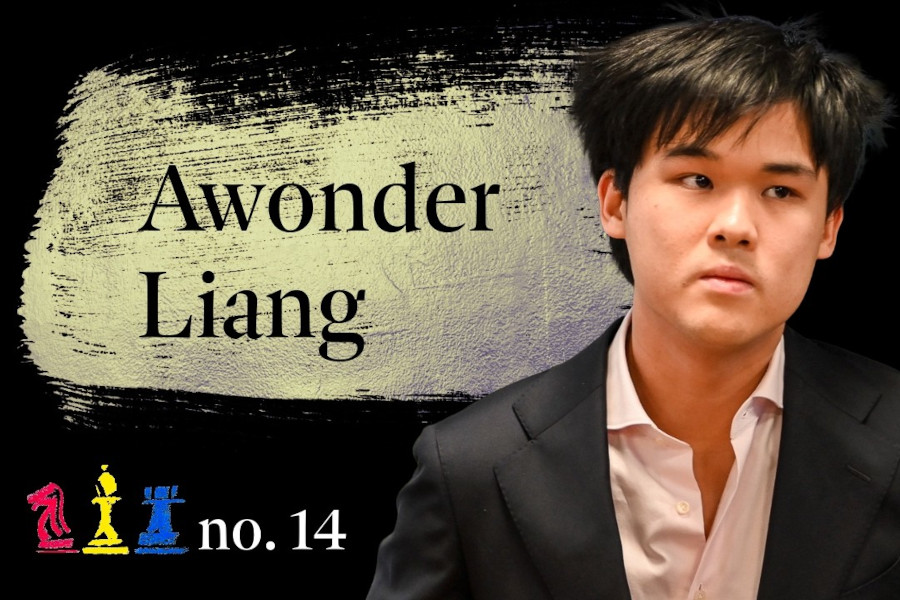
10/10/2026 – Wesley So, Awonder Liang and Jeffery Xiong scored victories with the white pieces in the opening round of the US Championship in Saint Louis, while defending champion Fabiano Caruana drew his game against Levon Aronian in just 17 moves. In the women's tournament, four lower-rated players claimed victories, including Rachael Li, who benefited from a surprising blunder by eight-time champion Irina Krush. | Photo: Crystal Fuller / Saint Louis Chess Club
new: Fritz 20
Your personal chess trainer. Your toughest opponent. Your strongest ally. FRITZ 20 is more than just a chess engine – it is a training revolution for ambitious players and professionals. Whether you are taking your first steps into the world of serious chess training, or already playing at tournament level, FRITZ 20 will help you train more efficiently, intelligently and individually than ever before.
YOUR PERSONAL CHESS COACH - Whether you’re taking your first steps into the world of club chess, or already playing at a tournament level: with FRITZ, you can train more efficiently, intelligently and with a more personalised approach than ever before. FRITZ is more than just a chess engine – it’s a training revolution! Whether you’re taking your first steps into the world of club chess, or already playing at a tournament level: with FRITZ, you can train more efficiently, intelligently and with a more personalised approach than ever before.
FIDE Grand Swiss 2025 with analyses by Giri, Blübaum and many others. Opening videos by Kasimdzhanov, Sokolov and Blohberger. Training columns including ‘The Fortress’, ‘The Trap’, ‘Fundamental Endgame Knowledge’ and much more
€21.90
Open: Three white wins, So scores on his birthday
The 2026 US Chess Championships began on Friday, 9 October, at the Saint Louis Chess Club, with Dr Jeanne Cairns Sinquefield ringing the bell to mark the start of the first round. Three of the six games in the open section ended decisively, with Wesley So, Awonder Liang and Jeffery Xiong all winning with the white pieces.
Three players emerged as early co-leaders of the open section, as Wesley So, Awonder Liang and Jeffery Xiong defeated Sam Shankland, Hans Niemann and Sam Sevian, respectively. All three winners had the white pieces, while the remaining games ended drawn. So was the only higher-rated player to score a win, although his encounter against Shankland was far from straightforward.
The first result of the tournament came relatively quickly. Levon Aronian, the third seed, faced defending champion Fabiano Caruana in a game that lasted 17 moves. Caruana, playing black, tried a new opening idea and soon found a way to force a perpetual check, bringing the encounter to an early conclusion.
In this video course experts examine the games of Bent Larsen. Let them show you which openings Larsen chose, where his strength in middlegames were, how he outplayed his opponents in the endgame & you’ll get a glimpse of his tactical abilities! Bent Larsen (1935–2010) was the greatest chess player in Danish history, and for a time, the second-strongest player in the Western world behind Bobby Fischer. Between 1954 and 1971, he won the Danish Championship six times, and achieved numerous international tournament victories throughout his career.
Free video sample: Introduction to Bent Larsen by Peter Heine Nielsen
Free video sample: Introduction to the Opening Section
The other two drawn games were considerably longer. Abhimanyu Mishra and Ray Robson agreed to split the point on move 35, having reached a rook endgame with four pawns per side. Meanwhile, Grigoriy Oparin and Andy Woodward played until move 45, when they agreed a draw in an ending with opposite-coloured bishops in which Woodward had an extra pawn.
Levon Aronian | Photo: Crystal Fuller
So survives a missed opportunity by Shankland
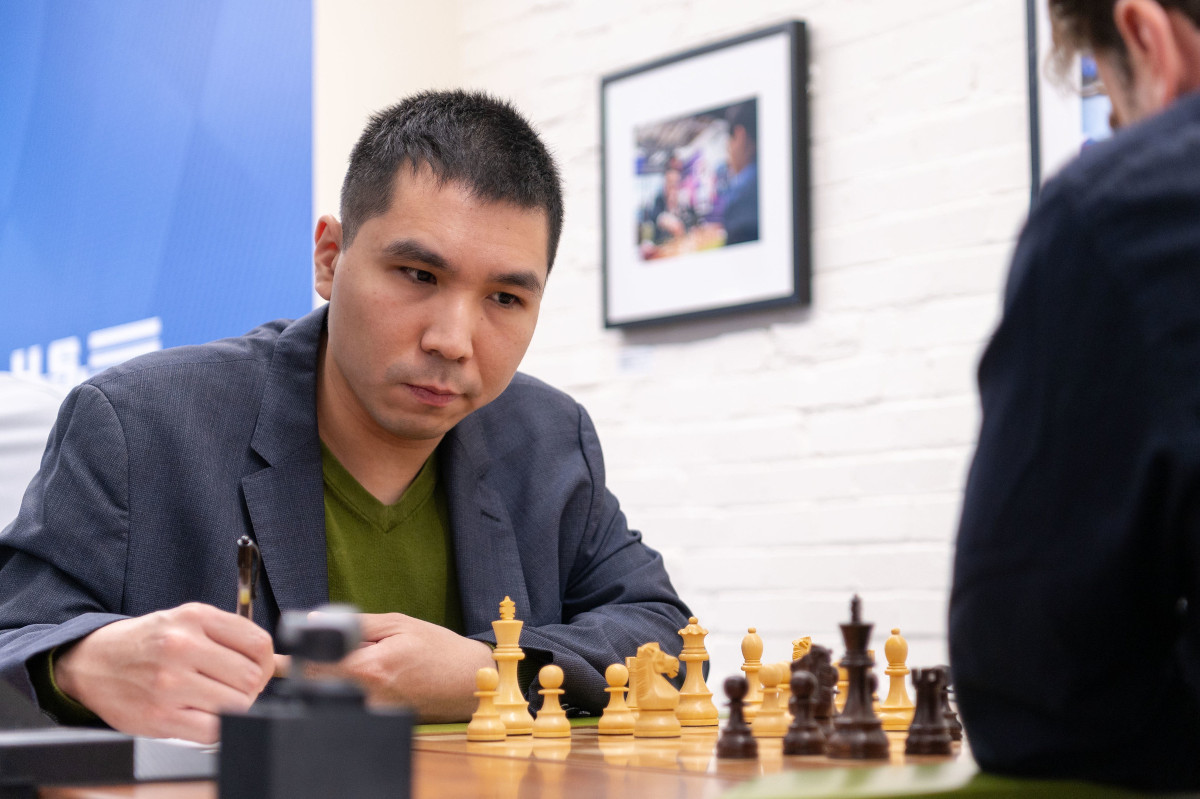
Wesley So, a three-time US champion, began his campaign with an 80-move victory over Sam Shankland. The result provided a fitting birthday present for So, who turned 33 on Friday, although the game could easily have gone the other way.
Playing white, So obtained a clear advantage in a double-edged middlegame. His position offered promising attacking possibilities following his pushing of the pawns on the g and h-files, but the evaluation changed dramatically when he blundered on move 38.
38.Ng3?? (38.Nh6 was correct) allowed 38...Rxe5!, when 39.Rxe5 Qxg4 gives Black a winning attack on the queenside, with the queen, knight and rook (which will infiltrate via f2) ready to win the game expeditiously. However, Shankland failed to find the continuation and played 38...c5? instead, with a close to equal position ensuing.
Despite having missed an opportunity to secure a more convincing advantage earlier, So continued to press. He retained a slight positional edge, and the position was eventually simplified into a rook endgame in which he had an extra pawn. The setup was objectively defensible for Shankland, but maintaining the draw required considerable precision.
While tactics decide the game in concrete moments, strategy guides the entire battle. Understanding how to improve your pieces, create weaknesses, execute maneuvers, and steer the game toward favorable structures is what defines strong players. After exploring the fundamentals of calculation in his first ChessBase course, International Master Kostya Kavutskiy now turns to the other half of chess mastery: positional play.
This course offers a structured and practical introduction to the core elements of positional chess.
So kept posing practical problems, and his persistence eventually paid off. Shankland made a technical error that allowed his opponent to convert the extra pawn into a winning advantage.
Birthday boy Wesley So | Photo: Crystal Fuller
Liang outplays Niemann
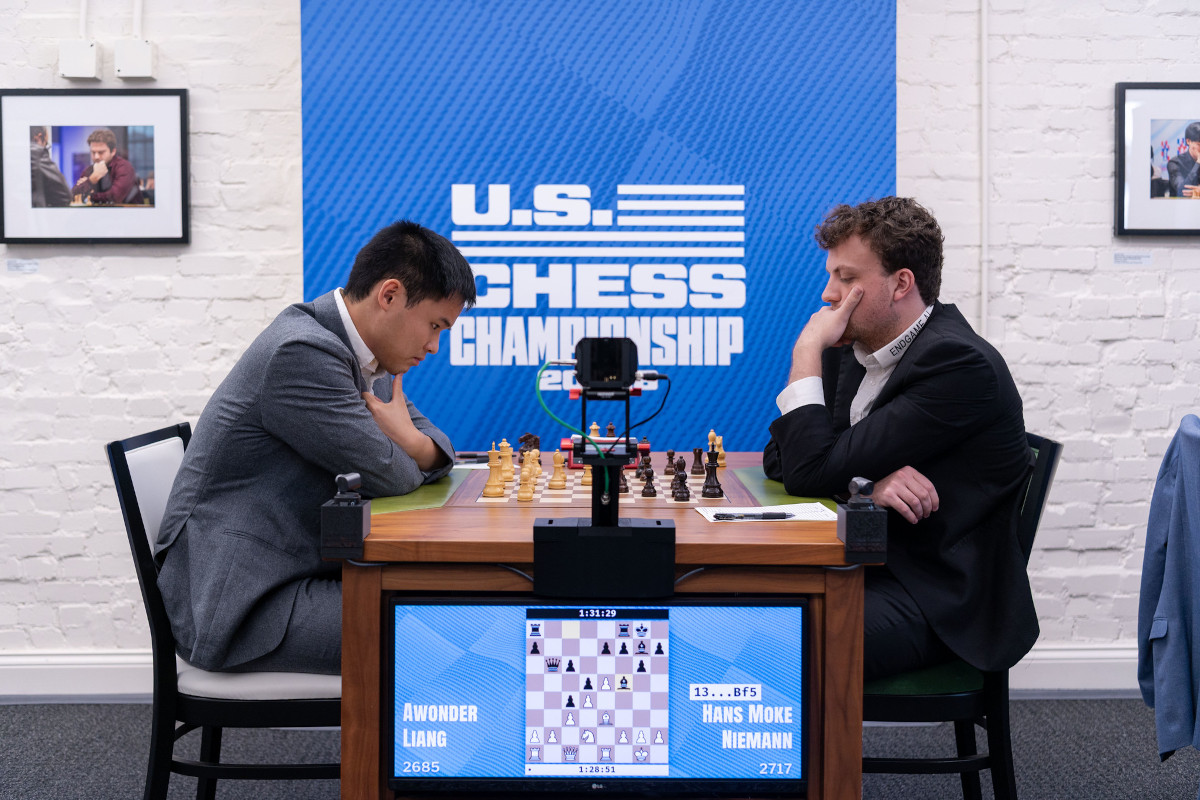
Awonder Liang obtained what might turn out to be a crucial victory against Hans Niemann, his teammate at the recent Chess Olympiad in Samarkand. Playing white, Liang gained the upper hand in the early middlegame and gradually increased his advantage as Niemann struggled to find a satisfactory defensive plan.
A critical moment came on move 19, when Niemann spent almost half an hour considering his options before choosing an imprecise manoeuvre.
Liang responded by improving the coordination of his pieces, centralising his forces and creating threats on both sides of the board.
Once Liang managed to establish a knight on e6, his positional superiority became evident, since the knight dominated several important squares.
The situation was made more difficult for Niemann by his considerable disadvantage on the clock: at one stage, Liang had 41 minutes remaining against his opponent's 14.
Further inaccuracies by Niemann allowed Liang to increase the pressure. With his queen, rook and knight deep inside black position, Liang had a decisive advantage by move 34.
Grandmaster Dr. Karsten Müller, one of the world’s leading endgame experts, guides you step by step through everything you need to know in this second volume. Picture this: you’ve outplayed your opponent move by move, you’re clearly better – and then the endgame slips into a draw, simply because you lacked the crucial theoretical knowledge. That is exactly where this course comes in. Without solid endgame skills, there’s no way forward. Rook endgames are most essential: they occur more often than any other type of endgame, and often make the difference between victory and half a point. If you master them, you’ll confidently convert your advantages into wins!
Free video sample: Introduction
Free video sample: Bodycheck
Niemann resigned in this position.
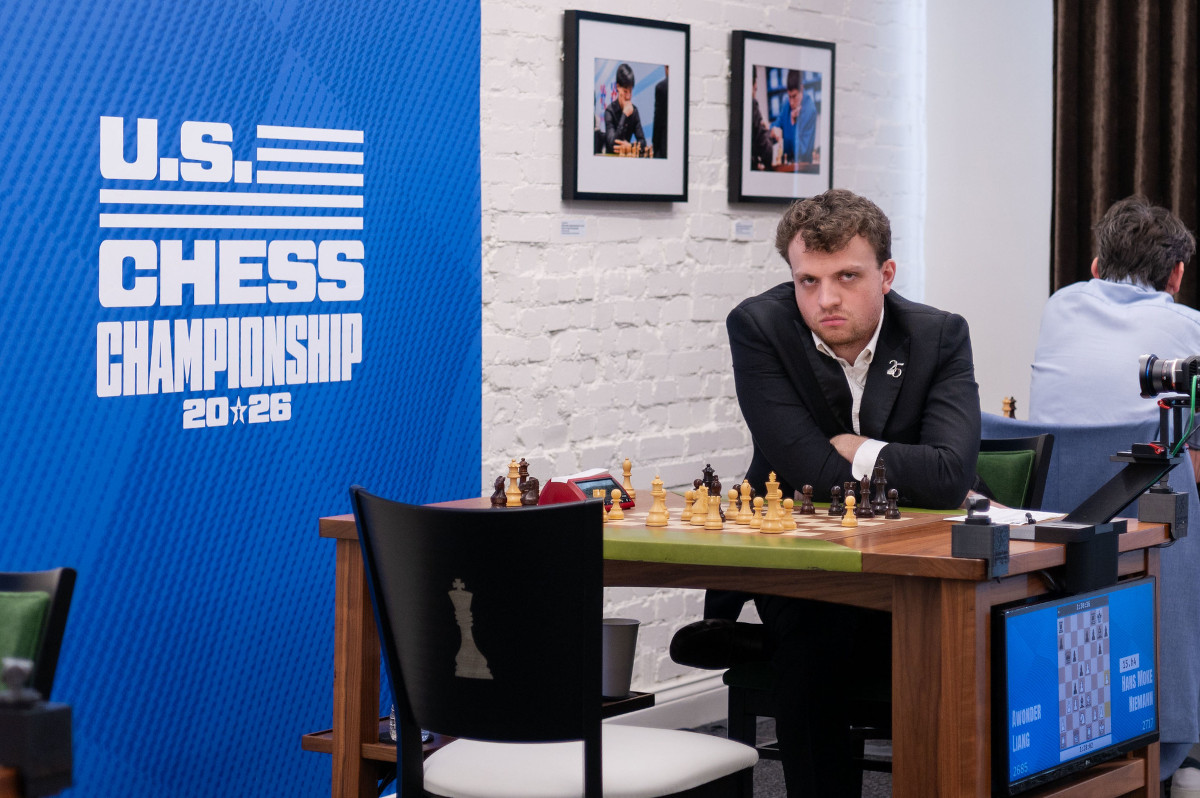
Hans Niemann | Photo: Crystal Fuller
Xiong benefits from Sevian's endgame mistake
The third decisive encounter in the open section was played between Jeffery Xiong and Sam Sevian, two players from the same generation. Both were born in 2000 and are currently 25 years old. Their game began with a Bogo-Indian Defence and remained relatively balanced for most of its duration. Xiong, playing white, maintained a slight initiative throughout, but Sevian appeared to have sufficient defensive resources to keep the position under control.
Following a series of exchanges, the players reached a rook endgame with four pawns against three in Xiong's favour. Despite the material imbalance, the position was objectively drawn, and Sevian initially seemed to be demonstrating the necessary defensive technique.
The critical mistake came only after the rooks had been exchanged. In a king and pawn endgame, Sevian failed to find the continuation that would have maintained the balance.
The result illustrated the demands of technical play, even for consolidated GMs, in apparently simple positions. Sevian had successfully defended a slightly inferior position for much of the game, only to lose the thread in an ending that required precise calculation.
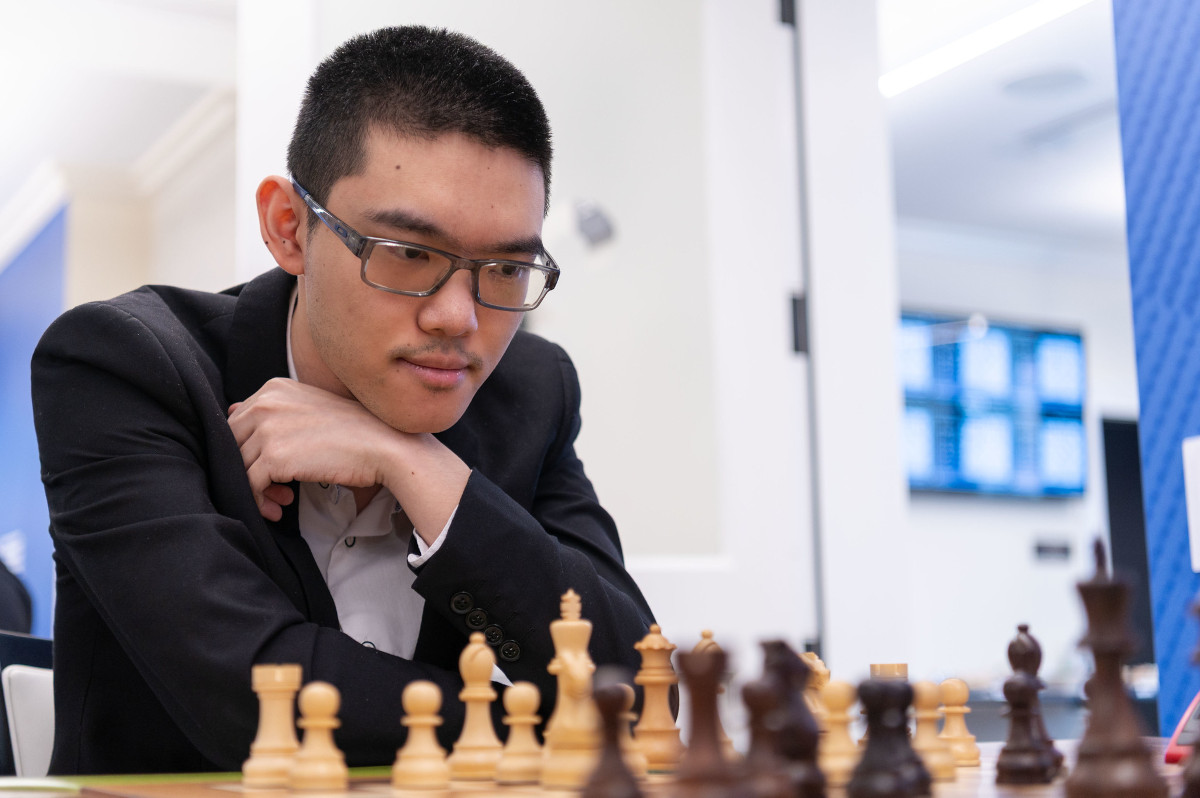
Jeffery Xiong | Photo: Crystal Fuller
Standings after round 1
All games
Women's: Four decisive games
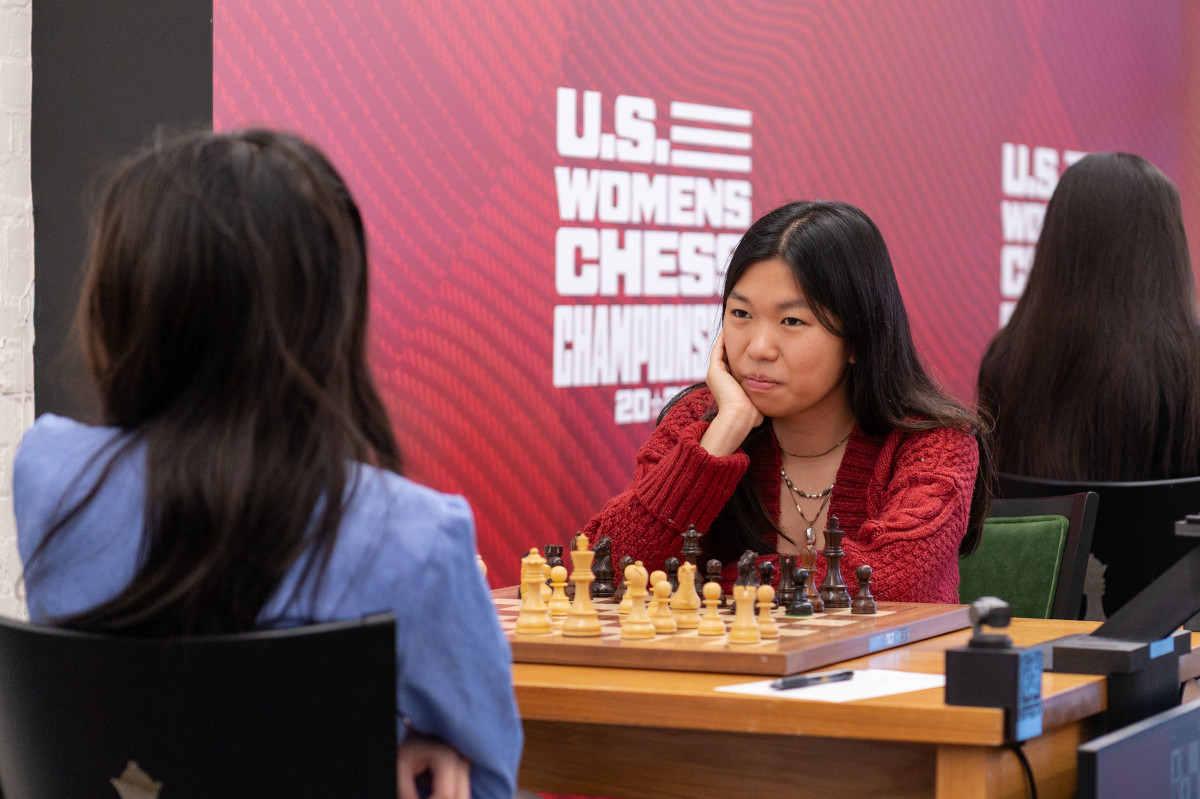
The first round of the women's championship produced four decisive games, with Rachael Li, Anna Zatonskih, Thalia Cervantes and Megan Paragua all collecting full points. Remarkably, each of the four winners was the lower-rated player in her respective encounter.
The main pairing of the day brought together the two highest-rated participants, Alice Lee and defending champion Carissa Yip. Lee had the white pieces and Yip tried the King's Indian Defence. It was Black who obtained the more promising position in the middlegame.
Yip, in fact, built up a clear advantage and had several opportunities to secure a winning position, but failed to find the strongest continuations.
The continuous stream of new ideas in the Sicilian makes 1..c5 the most popular answer to 1.e4. On this DVD I do give an introduction to the most important Sicilian systems.
Lee organised her defence and gradually reduced the pressure. She made the most of the chances offered by her opponent and eventually escaped with a draw.
Two of the decisive encounters were largely decided by sustained positional pressure. Anna Zatonskih, a two-time US women's champion, defeated Rose Atwell after obtaining a favourable position from the black side of a French Defence and steadily increasing her advantage. Megan Paragua followed a similar path against Anna Sargsyan, making effective use of an early positional edge to collect the full point.
The remaining victories were more dramatic. Both Rachael Li and Thalia Cervantes had to recover from clearly inferior positions before their opponents committed decisive errors.
Nazi Paikidze started the event with a draw | Photo: Crystal Fuller
Krush blunders her queen
The most surprising moments of the opening round came in the encounter between Rachael Li and Irina Krush. The experienced grandmaster, playing black, employed the Sicilian Defence and obtained a clear advantage, seemingly putting herself in a strong position to begin the tournament with a victory.
However, Krush had used a considerable amount of time and was approaching the first time control in serious time trouble. By move 30, she had less than one minute remaining on her clock. Under these circumstances, the eight-time US women's champion committed an extraordinary blunder, leaving her queen completely undefended.
Li immediately captured the piece, prompting her opponent's resignation.
Besides in-depth theory and exciting tactical exercises in the Scotch Game, this video course also includes a bonus section on the Scotch Gambit (1.e4 e5 2.Nf3 Nc6 3.d4 cxd4 4.Bc4), a lively variation often leading to very dynamic positions.
During the broadcast, commentator Maurice Ashley recalled a conversation in which Krush had acknowledged that her tendency to struggle under time pressure was an issue she needed to address to achieve more consistent results.
Cervantes finds a decisive counterattack
Another game in which the player with the advantage eventually lost was Tatev Abrahamyan's encounter with Thalia Cervantes. Abrahamyan, playing white, obtained a promising position and appeared to be on course for a favourable result. Her main assets were connected passed pawns on the c- and d-files, which gave her great winning chances. Cervantes, however, retained active possibilities along the semi-open g-file.
As the players approached the time control, Abrahamyan failed to appreciate the tactical dangers facing her king.
Cervantes' attack proved decisive, completing another reversal in a round characterised by several missed opportunities.
Carlos Alberto ColodroCarlos Colodro is a Hispanic Philologist from Bolivia. He works as a freelance translator and writer since 2012. A lot of his work is done in chess-related texts, as the game is one of his biggest interests, along with literature and music.
10/10/2026 – The 2026 US Chess Championships are taking place on 9-21 October at the Saint Louis Chess Club. Each tournament is a 12-player single round-robin with a classical time control. Fabiano Caruana, Wesley So and Levon Aronian are the highest-rated players in the open, while Carissa Yip, Alice Lee and Irina Krush (pictured) head the women's field. | Follow the action live starting at 19.00 CEST (13.00 ET, 22.30 IST) | Photo: Lennart Ootes
9/4/2026 – In a candid interview from January 2026, 2700-level chess prodigy Awonder Liang reflects on his unique journey from a teenage sensation to a serious competitor while balancing a degree in economics and applied math. Liang challenges the notion that elite chess requires sacrificing a normal life, arguing that at the low 2700s, massive gains are still possible through fundamentals and doing what you enjoy. | Photo: <a href="https://www.youtube.com/@Underpromoted">Underpromoted on YouTube</a>
YOUR PERSONAL CHESS COACH - Whether you’re taking your first steps into the world of club chess, or already playing at a tournament level: with FRITZ, you can train more efficiently, intelligently and with a more personalised approach than ever before.
The Nimzo-Indian has stood the test of time for over a century: Still a top choice for elite players today, from Magnus Carlsen to Praggnanandhaa, it remains one of Black's most reliable ways to fight for real chances against 1.d4 2.c4 3.Nc3.
1.c4 e5 2.Nc3 Bb4!? is an opening idea well worth considering. Black immediately threatens to double the pawns on c3 in the style of the Trompowski or Sicilian Grand Prix attack.
Italian Game Powerbase 2026 is a database and contains 8571 top class games from Mega 2026 and the Correspondence Database 2026, of which 479 are annotated.
Videos: Nico Zwirs discusses the Sicilian with 2…e6 3.d4 cxd4 4.Qxd4 Nc6 5.Qe3 Nf6 6.Nc3. Mihail Marin examines Sindarov’s 6.Ne5 in the Queen’s Pawn Defence. Plus the ‘Lucky bag’ featuring 41 analyses by Berg, Ftacnik, Gupta and many others.
If you're looking for a dynamic alternative to the Slav, Queen's Gambit Declined, or other mainstream systems, the Chigorin Defence offers exactly what modern tournament players need.
€34.90
We use cookies and comparable technologies to provide certain functions, to improve the user experience and to offer interest-oriented content. Depending on their intended use, analysis cookies and marketing cookies may be used in addition to technically required cookies. Here you can make detailed settings or revoke your consent (if necessary partially) with effect for the future. Further information can be found in our data protection declaration.
Pop-up for detailed settings
We use cookies and comparable technologies to provide certain functions, to improve the user experience and to offer interest-oriented content. Depending on their intended use, cookies may be used in addition to technically required cookies, analysis cookies and marketing cookies. You can decide which cookies to use by selecting the appropriate options below. Please note that your selection may affect the functionality of the service. Further information can be found in our privacy policy.
Technically required cookies
Technically required cookies: so that you can navigate and use the basic functions and store preferences.
Analysis Cookies
To help us determine how visitors interact with our website to improve the user experience.
Marketing-Cookies
To help us offer and evaluate relevant content and interesting and appropriate advertisement.


















.jpeg)