
It is a pity, really. The Norwegian chess organisers behind the Norway Chess tournaments meant well. They wanted to introduce an exciting new competition format to the world. But they immediately set their sights on the highest possible level: a "Total Chess World Championship". Let us call it, for our German audience, a comprehensive chess world championship. In Germany, we have been somewhat sensitive to terms containing the word "total" ever since 1939. The format even received the blessing of the International Chess Federation because the top two finishers in the series - yes, a series - are supposed to qualify for the Candidates Tournament.
The winner of the series, however, was not to be called Total Chess World Champion - perhaps that sounded a little too much like world domination even for FIDE. Instead, the title would be "World Combined Champion". That sounds a little like skiing, but it does describe the concept, since the basic idea is to combine different disciplines.
We all know that Magnus Carlsen, the great dominant force in chess for the past 15 years, the GOAT (Greatest of All Time), has somewhat lost his enthusiasm for classical chess. It takes a great deal of time, and modern computer-assisted opening preparation also allows players who are clearly weaker in their understanding of the game to keep pace with him for a long time and perhaps even land the occasional "lucky punch". For this reason, Carlsen did not defend his world title and has also become increasingly scarce at tournaments with long time controls. He had still negotiated with FIDE about whether the World Championship format could be changed in the direction now being implemented in the Total Chess World Championship. Carlsen is therefore, in a sense, the guiding spirit behind the idea and probably had some involvement in shaping the tournament as well.
Classical chess is, after all, a rather valuable asset. For almost 200 years, tournament games have been recorded and published. The world's best players have always been great artists and have created genuine works of art with their games, works that contemporaries and later generations could enjoy and learn from. Magnus Carlsen stands very much in that tradition. But the Norwegian is also someone who constantly seeks challenges and loves the thrill of games at short and very short time controls. He has played countless Blitz and Bullet games and is now the world champion in a number of formats. A book entitled "All the Games of Magnus Carlsen" will never exist - it would simply be far too extensive.
The sheer number of top-level games played nowadays, especially in online tournaments, also has some disadvantages. The contemplative aspect is completely lost amid the flood of Blitz and Rapid games. One Rapid or Blitz game is immediately followed by the next. Everything rushes past, and chess fans have no time to engage more deeply with the games, enjoy them and think about them. This effect can already be observed even with classical games. Chess is incredibly popular, and one tournament follows another. Some chess fans feel oversaturated.
And so the top GMs play countless games against one another and by now know each other inside out: their opening repertoires, their strengths and their weaknesses. After the 50th or 100th game against the same opponent, one can perhaps become a little tired and bored.

It was in this situation that the Norwegians launched their Total Chess World Championship - though with a whole series of "birth defects".
The basic idea itself, a mixture of three time-control formats, is probably not particularly convincing. One wonders: what exactly is the point? Is it not enough simply to hold tournaments at one time control or another? There is a classical World Championship, but also a Blitz World Championship and a Rapid World Championship.
In Total Chess, blitz games, rapid games and classical games are played on the same day, and the results are added together according to some formula.
Because playing a genuine classical tournament game alongside blitz and rapid games on the same day would presumably have been too much of a good thing, the time control was cut in half: 45 instead of 90 minutes of base time. But that is an enormous difference for the players. They have some time to think, but not enough for deep calculation. Some players have pointed this out as well. Playing through games at all the different time controls on a single day also appears to overburden and tire the players.
FIDE has already experimented in the past with shorter semi-classical time controls and counts the results towards the classical Elo rating. That is not a good idea! Games with 45 minutes and games with 90 minutes are two very different things. The Total Chess organisers also want to develop a Total Chess rating list. Oh dear, yet another Elo rating. There is already classical Elo, Rapid Elo and Blitz Elo. Is that not enough? Some chess fans already find Rapid and Blitz ratings rather unnecessary.
Next, the Total Chess organisers devised a complicated set of regulations and a scoring system for their tournament. To understand it in full, one really needs to have studied two semesters of chess tournament science. Chess is normally so simple: if you win, you get the point. If you lose, the other player gets the point. If the game is drawn, the point is shared. Simple and good. Everyone understands it immediately, even non-chess players.
The Total Chess World Championship was conceived as a series of three tournaments with 24 players and a final featuring the top four. The chess calendar is already packed with tournaments. Now an entire additional series involving 24 top players is being squeezed into it. Those players will then be unavailable elsewhere. There will be plenty of clashes with other tournaments.
FIDE once ran a Grand Prix series as a qualification route for the Candidates Tournament. There too, more or less the same players met one another over the course of the year. There was also a points system, just as in the Total Chess World Championship. The top two then qualified for the Candidates Tournament. What happened in the FIDE Grand Prix events was that after two or three tournaments only a few players still had a chance of earning one of the qualifying places. The other players then lost interest and no longer wanted to take part. FIDE had to fill the tournaments with players from a reserve list, which distorted the results and devalued the series. In the end, FIDE was right to abandon it.
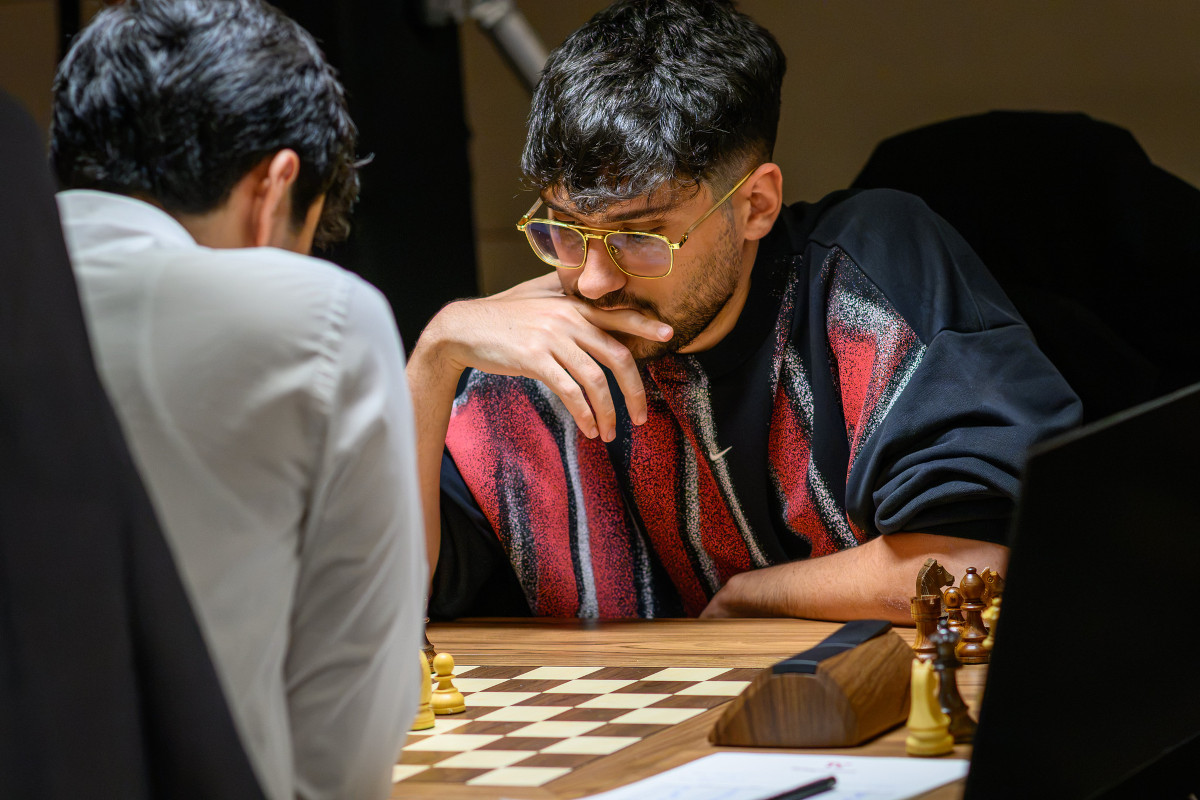
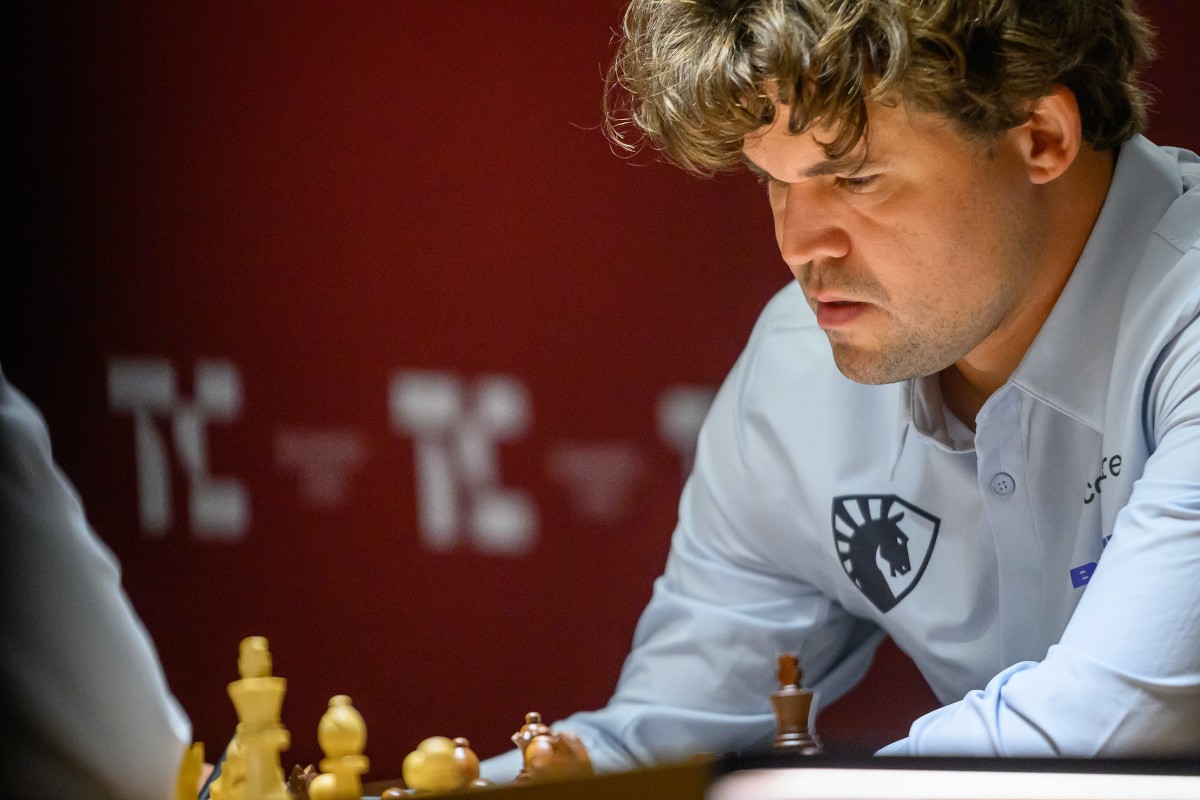
Despite their length, the Total Chess World Championship regulations apparently still contain major loopholes, which Magnus Carlsen has exploited in an unsporting manner, unfortunately that is what one has to call it. The idea is that the players compete in blitz, rapid and semi-classical chess across two matches. Against Bibisara Assaubayeva, Carlsen had already built such a large lead after the blitz and rapid games that he could no longer be caught. He then simply did not show up for the semi-classical game. That is obviously not acceptable and would be completely unthinkable in other sports. Why does Carlsen do this? Unsporting behaviour is not something one normally associates with him.

Normally, Carlsen could simply have played a few token moves in the unnecessary game and agreed a draw, but that was no longer an option for him. Because of his poor results in the semi-classical games during the round-robin part of the event - no wins and one loss - Carlsen had damaged his Elo rating and was in danger not only of falling below 2800, but perhaps even of losing his long-held position as world number one. As mentioned: FIDE rates these shorter long games as genuine classical games. Carlsen, however, seems to have problems with this time control. In any case, he is not as dominant as usual. From Carlsen's point of view, a draw or a loss against Assaubayeva would have been a disaster.
Several other players followed Carlsen's example and also sat out the long games. Of course: if the "boss" does it, the others will do it too.
In Thursday's round, Carlsen then did not play the rapid games against Artemiev. Why now? Carlsen was ahead after the blitz games and had calculated that a win against Artemiev in the semi-classical game (worth 8 points) would be enough to win the match, while also being important for repairing his classical Elo rating. Carlsen later explained that he wanted to save his energy for the longer game as well.
It was a good thing that the Norwegians held a pilot tournament for their Total Chess World Championship series. They can now investigate the causes of the crash and perhaps repair the format. But perhaps it is simply a total write-off.


| Advertising |








.jpeg)