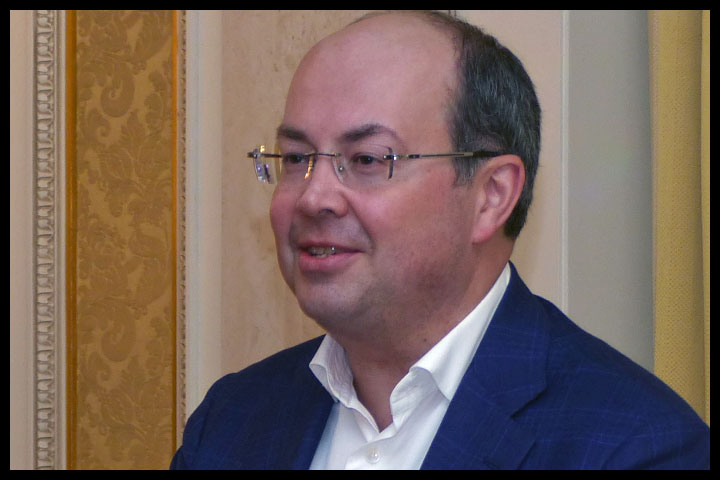
Oleg Skvortsov was a prominent Russian businessman, chess philanthropist, and international tournament organizer. He was widely recognized in the global chess community as one of the game's leading modern patrons, dedicating his personal wealth and passion to financing elite tournaments and developing young talent. Starting in 2014, he financed the annual "Nutcracker" generation matches in Moscow, which pitted the world's top junior prodigies against legendary, established grandmasters.
Oleg also introduced the "Skvortsov Time Control": it consisted of 45 minutes per game with a 10-second increment. He designed it "to balance the deep strategy of classical chess with the entertainment value of rapid chess." It also allowed for two games to be played on the same day. The format gained massive popularity among top grandmasters.
Beyond organizing, Skvortsov was a highly capable player himself, maintaining a strength equivalent to roughly a 2300–2400 Elo rating. He frequently played high-stakes friendly exhibition matches against world champions. Here's one against Anand:
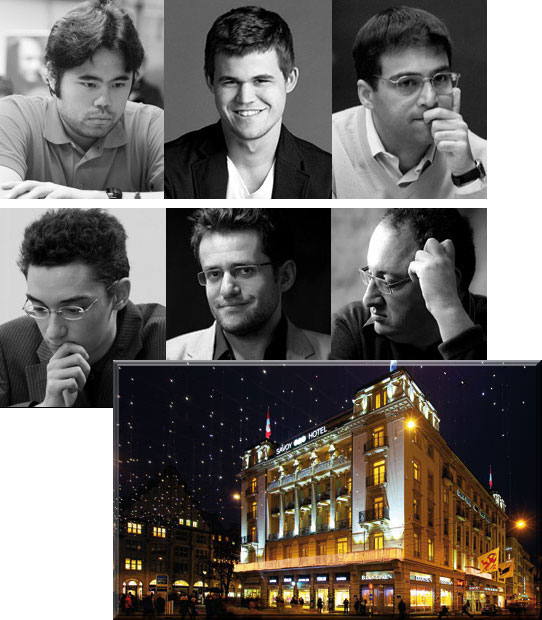 Zurich Chess Challenge
Oleg organized this yearly event from 2012 to 2017. He tried to create a very homely environment for all the top players with world class conditions.
The «Zurich Chess Challenge 2014» was the first encounter between the newly crowned World Champion Magnus Carlsen and the former title holder, Viswanathan Anand – along with four other chess stars: Levon Aronian, Hikaru Nakamura, Fabiano Caruana and Boris Gelfand.
It made history as the first-ever Category 23 super-tournament, boasting an unprecedented average player rating of over 2800.
On a personal note
I attended the Zurich Chess Challenge once a year, from 2013 to 2017, and each time stayed for the entire event. Oleg was very generous in his invitations: I got a nice room in a hotel close to the venue, with all expenses taken care of. I only had to bear the cost of travel from and back to Hamburg. Typically when Oleg found out the train I travelled on took ten hours he insisted on buying me plane tickets for the next time.
I got on extremely well with Oleg. Outside of chess, Skvortsov was a deeply cultured individual who held a PhD in History, leading major research initiatives at the Russian Academy of Sciences. We spent hours sitting around, discussing political affairs. He was an expert on the Cold War, and I learned quite a lot from him. Once after an hour-long discussion I asked him: "Shouldn't you be entertaining the top players, and not waste time with me?" His reply: "They are busy, they are thinking" – planning for the next game.
Oleg was blessed with a fine sense of humour. Once I told him that his surname, Skvortsov, was too difficult to read and to remember. So we playfully started to look for a replacement for it – and came up with some hilarious proposals. In the end he said to me: "Okay, now you must work on Nepomniachtchi!"
Of course we discussed computer chess, and Oleg was amazed to hear that I was one handshake away from the great Alan Turing: I had met Donald Michie, who worked with Turing at Bletchley Park during World War II. And Oleg was even more impressed to learn that we at ChessBase had actually reconstructed Turing's "Paper Machine".
Oleg was a music lover, and when he discovered I was one as well, and knew a lot about classical music, it became a subject we often returned to. He even took me to a couple of chamber concerts, where he recruited the violinists to perform at the chess venue.
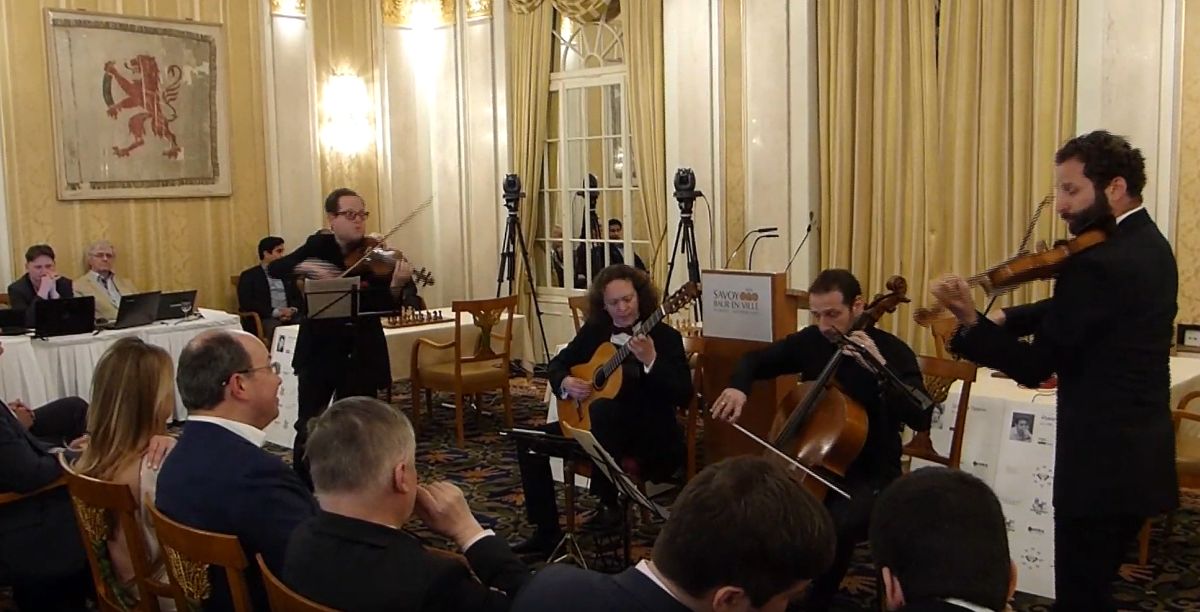
This is one such performance. You can listen to a short bit I recorded here.
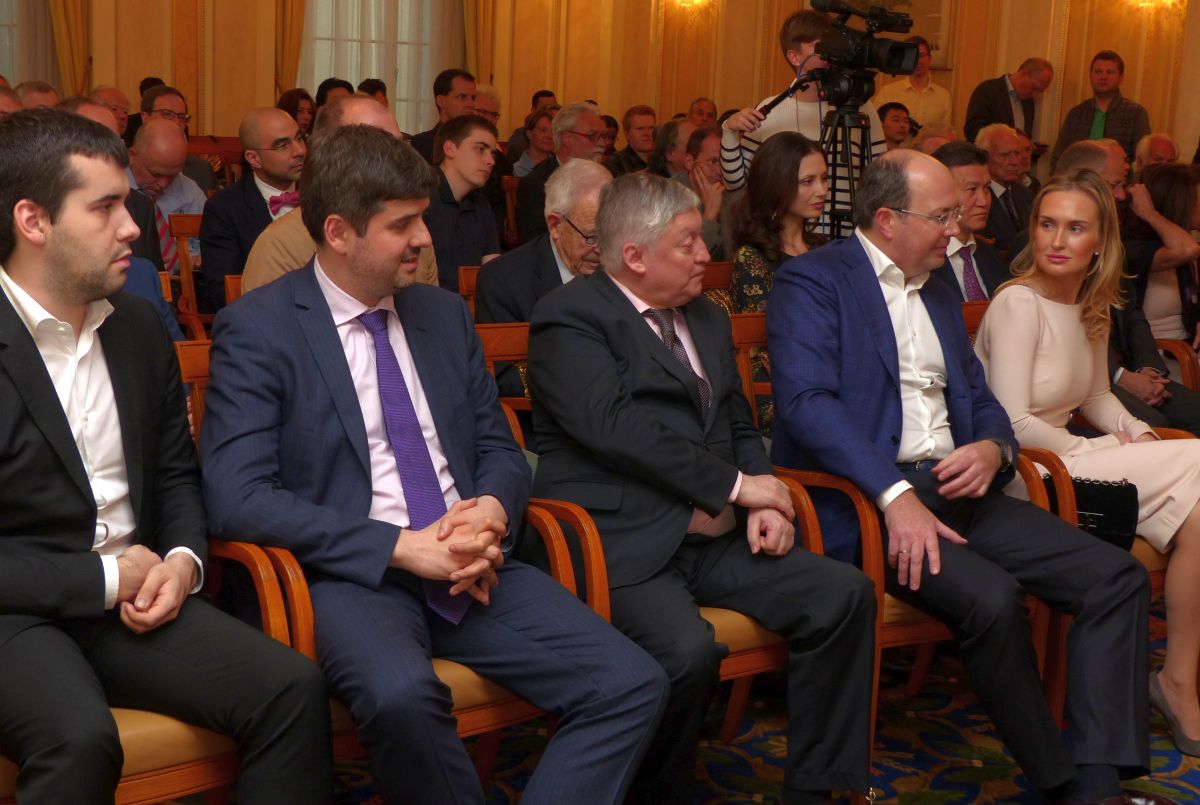
Attending the performance in the picture above are Ian Nepomniachtchi, Peter Svidler, Anatoli Karpov, Oleg Skvortsov and wife Natalia
There were so many pleasant and interesting evenings. I will tell you about one that has me thinking of Oleg twice or thrice a week. He would take me to dinner, and on one occasion, afer the meal, we proceeded to a high-class restaurant where we met a friend, a consumate whiskey expert. And I was given some of the best whiskeys to taste. I learned from the expert which brands were the best, and how you must drink them: you pour a small quantity in a tulip-shaped glass, and add a few drops of room-temperature water, which breaks the surface tension and releases subtle, hidden flavors. It has to be spring water, added a drop at a time, tasting after each drop is added.
I still always have a bottle of Amruth in the house, and a bottle of spring water. And every time I indulge myself with a small glass of that, or another single malt whiskey, correctly prepared, I remember that evening with Oleg and his expert friend.
Oleg, we miss you.