A vital commercial network
The Silk Road is the ancient trade route that connected the cities of the eastern Mediterranean with India and China via Central Asia. It was in fact an entire network of roads along which caravans carried silk, furs, porcelain, works of art, cultural objects and spices westwards through numerous intermediate stops, while gold, silver, precious stones and glass travelled eastwards. Many other goods were transported as well, and at times diseases too, such as the plague in the 14th century.
 In this insightful video course, Grandmaster David Navara shares practical advice on when to calculate deeply in a position — and just as importantly, when not to.
In this insightful video course, Grandmaster David Navara shares practical advice on when to calculate deeply in a position — and just as importantly, when not to.
Free sample video: Introduction
Free sample video: Invisible moves
Historians regard the period between the 2nd century BC and the 14th century AD as the heyday of this trade route. Of course, however, the route had already been used for trade long before that and continued to be used afterwards.
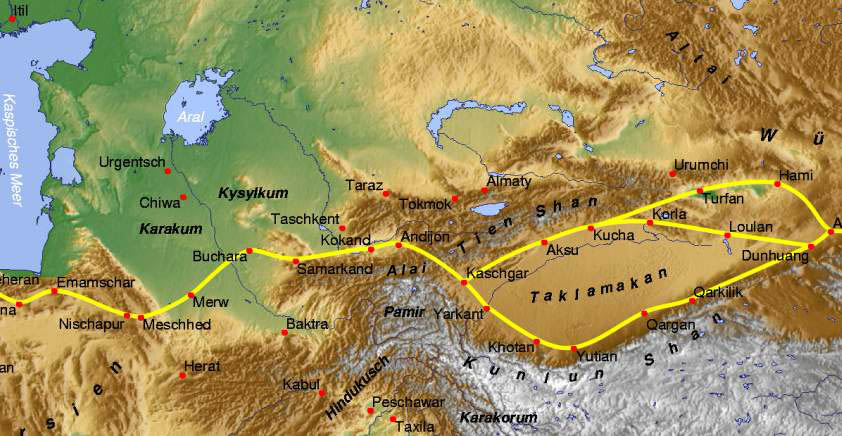
Central Asia during Roman times, with the first Silk Road | Source: Wikimedia Commons
A brief excursion into Uzbek history
The city of Samarkand was an important stopping point along this route. Present-day Samarkand was not built until the 14th century, close to an older city called Afrasiab. This ancient city had already been founded around 750 BC at an oasis on the Zeravshan River. In the ancient Persian Achaemenid Empire (6th to 4th century BC), Afrasiab was the capital of the province of Sogdia. Since the city was favourably situated on the Silk Road and served as a stopping point for merchants, it became very prosperous over time.
The Greeks knew the city as Marakanda, and in 329 BC Alexander the Great conquered this trading centre during his campaigns. In the centuries that followed, Afrasiab came under changing rulers. In AD 712, it was conquered by the Arabs. In 1220, Afrasiab was completely destroyed by the Mongols under Genghis Khan.
In the 14th century, a new city was built a little further south of the old settlement mound of Afrasiab - Samarkand. The Mongol ruler Timur Lenk made Samarkand the capital of his empire in 1369 and transformed it, with many magnificent buildings, into one of the most important metropolises of its time. Around 150,000 people lived there. Alongside trade and commerce, science and the arts were also promoted.
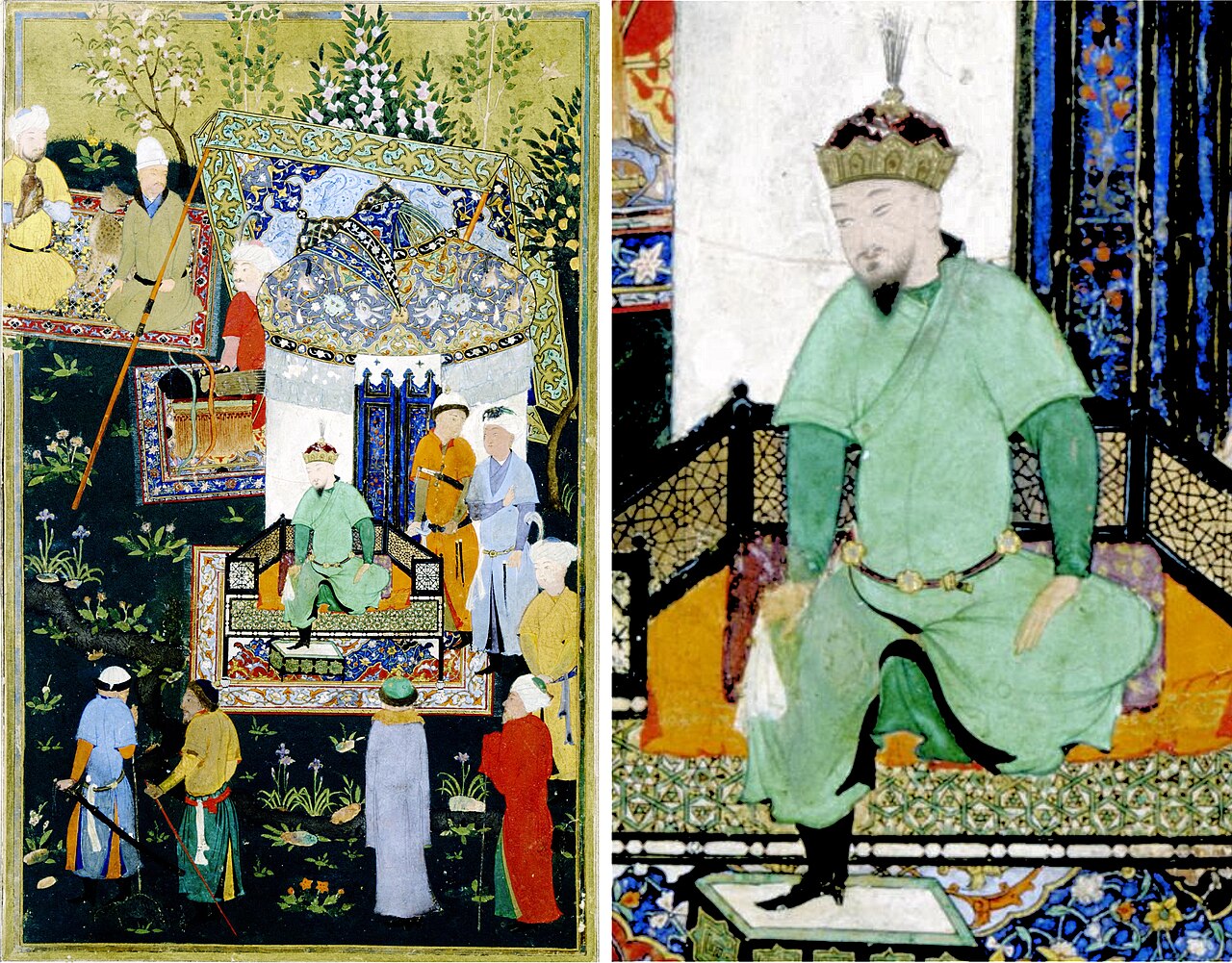
Depiction of Timur granting audience on the occasion of his accession, in the near contemporary Zafarnama (1424-1428), 1467 edition | Author: Attributed to Bihzād (15th century), via Wikimedia Commons
In 1500, the Uzbeks, named after their leader Uzbek Khan, conquered Samarkand. After a turbulent history, the Uzbeks, whose settlement areas were divided among various khanates and emirates, became caught up in the conflict of interests between two colonial powers: Russia and Great Britain. The Russian Empire sought to extend its territory southwards, while the British wanted to secure their colonial empire in India to the north. The Russian Empire gained the upper hand in Central Asia and conquered the khanates and emirates or made them dependent. Eventually, Russia established the "Governor-Generalship of Turkestan".
After the Russian Revolution, the Bolsheviks continued the Tsarist colonial policy and expanded Russian-controlled territory in conflicts against the peoples of Central Asia. The Bolsheviks overthrew the local rulers and established republics modelled on the Soviet system, such as the "Khorezm People's Republic" and the "Bukhara People's Republic". In 1925, the Soviet republics of Central Asia were reorganised, and among them the "Uzbek Soviet Socialist Republic (Uzbek SSR)" was created.
The oldest chess pieces in the world
 In this course, we will learn how to identify passively placed pieces in any given situation and how to improve their health by bringing them into active squares.
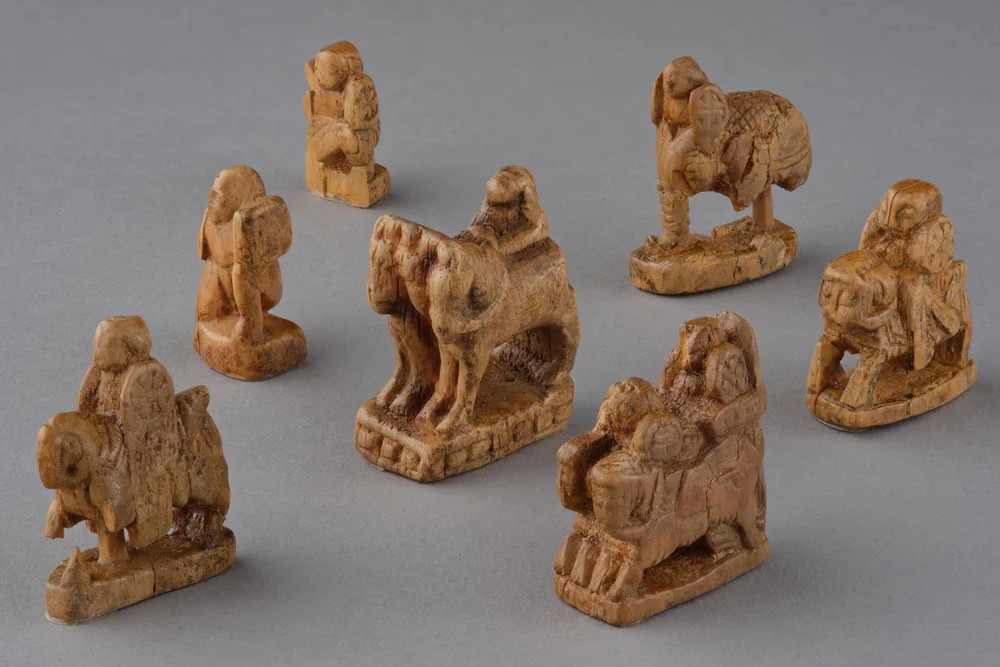
In 1977, archaeologist Yuri Buryakov carried out excavations as part of a major project by the Uzbek Academy of Archaeology in the enormous mound of the destroyed ancient city of Afrasiab near Samarkand. Among other objects, he found seven small ivory figures - a ruler on a chariot, horsemen, an elephant with a soldier and foot soldiers. Since the surfaces of the figures belonging to the set were heavily worn, suggesting that they had often been handled, it seemed likely that the set consisted of chess pieces. This interpretation was also supported by the manner in which the pieces were represented, corresponding to the arrangement found in the Indian game of Chaturanga.
The pieces were found in a layer that also contained, among other things, a coin dating from the year 712, which made it easier to date the figures. The pieces were assigned to the period between the 6th and 8th centuries. Since figurative representations were no longer considered appropriate after the spread of Islam in Persia, the pieces must have been made during the late phase of the Sasanian Empire, and therefore no later than the middle of the 7th century.
The Afrasiab chess pieces are therefore the oldest-known set of chess pieces. They are now kept in the State Museum of Samarkand.
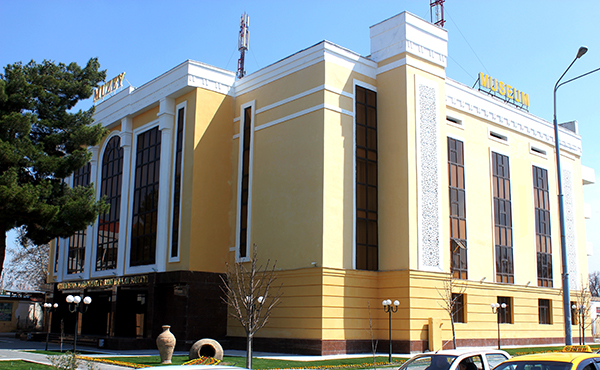
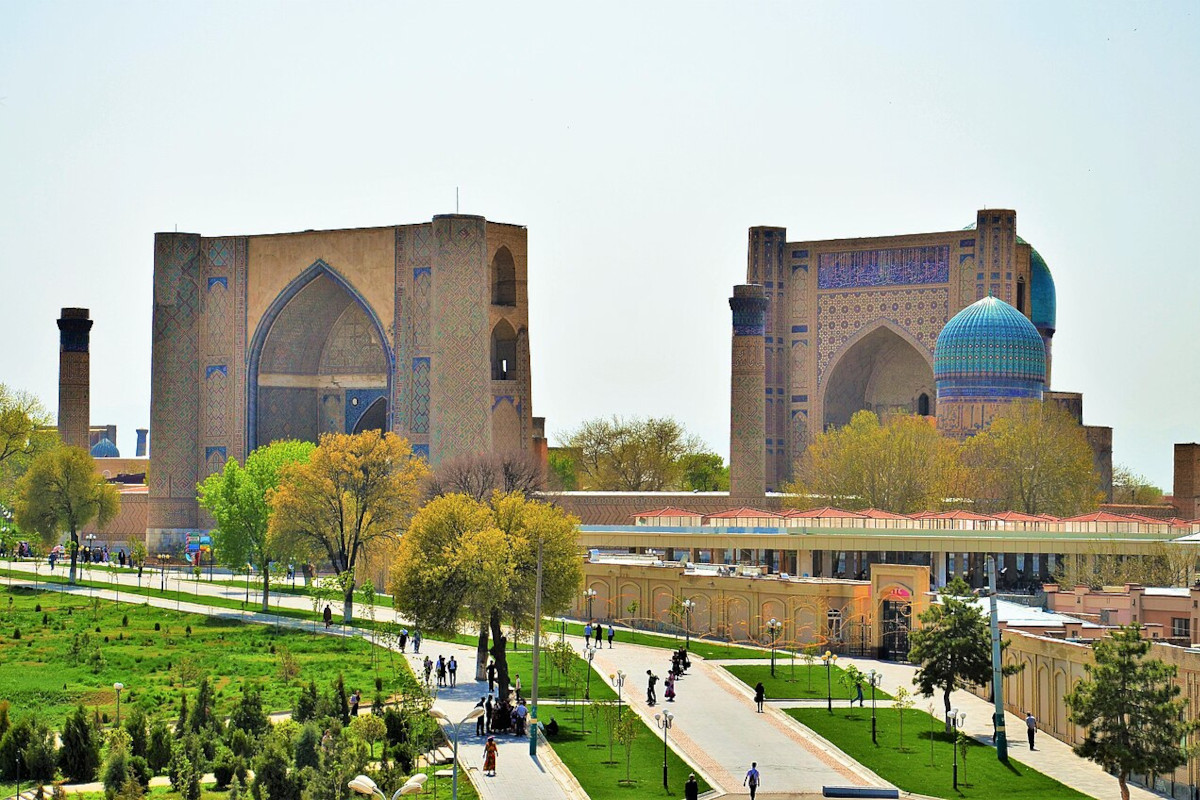
State Museum of Samarkand | Source: Wikimedia Commons
Learn from legends! Get the full Master Class series on the World Champions at a discounted bundle price – only for a limited time.
Learn from legends! Get the full Master Class series on the World Champions at a discounted bundle price – only for a limited time.

















,_1467_edition.jpg)
