At the football World Cup in Canada, the United States and Mexico - with the growing number of participating teams, countries from a single continent will soon no longer be enough as hosts - Norway caused a major surprise on Sunday by eliminating Brazil, one of the title contenders.
The Norwegians had a bit of luck early on - and, in Ørjan Nyland, an excellent goalkeeper - when Brazil failed to convert a penalty in the 12th minute. After that, however, Brazil were by no means the better team. The two sides were roughly evenly matched and waited for counterattacks whenever the other team had the ball. Brazil have a few fine technicians, but Norway have Erling Haaland. On several occasions, Haaland was sent towards the Brazilian goal with a long ball. And once the Norwegian centre-forward gets going, he is basically impossible to stop.
 Let our authors show you how Carlsen tailored his openings to be able to outplay his opponents strategically in the middlegame or to obtain an enduring advantage into the endgame.
Haaland gave his team the lead with a brace. Brazil did manage to pull one back in stoppage time, making it 2-1, but in the end had to accept defeat. It is the first time in 36 years that Brazil have failed to reach the quarterfinals of a World Cup. Norway had beaten Ivory Coast in the round-of-32.
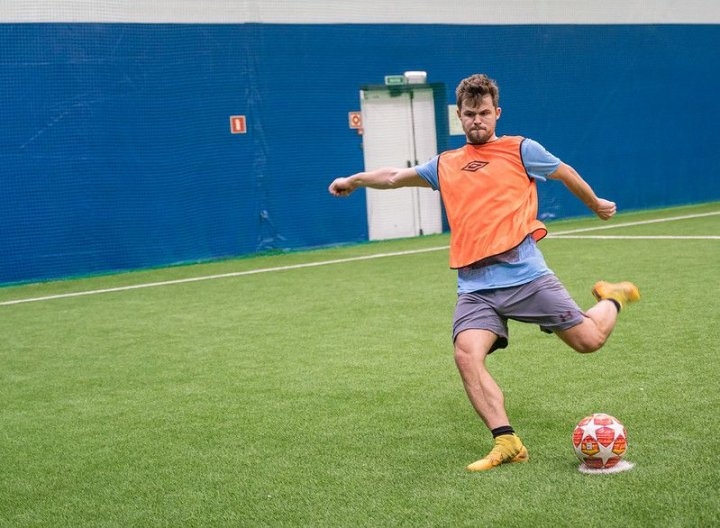
Magnus Carlsen is known to be an enthusiastic and active sports fan, especially of football. He will turn 36 in November, and running no longer comes as easily as it did in earlier years. Carlsen's first grandmaster trainer was Simen Agdestein, who was a professional footballer, played in the English second tier and represented Norway at international level. For a long time, Agdestein was also Norway's strongest chess player - until Carlsen came along.
Carlsen played for a while in the reserve team of a football club in Oslo. Despite all his enjoyment of the game, he did not quite make it as a Norway international. That may also be because the long-time world champion devoted himself very intensively to his primary talent.
Besides these two Norwegian grandmasters, however, there are also two female athletes in Norway with a double talent.
Possession is important
In 2014, Norway hosted the Chess Olympiad amid the country's enthusiasm for the successes of its chess star. The host city was Tromsø (pronounced Trumsa), quite far north in Norway.
ChessBase was there at the time with a small team and reported from the Chess Olympiad with videos, live broadcasts and photo reports. There was close contact with the organisers, who included Tom Robertsen. He arranged accommodation: a pretty house where the ChessBase team - essentially Daniel King, Pascal Lautenschläger and André Schulz - stayed during the Chess Olympiad.
Tromsø is quite hilly, and the accommodation was on one of these hills above the coast. Since there was only a small and barely secured cupboard in the playing hall for storing equipment, we carried our gear down from the hill to the playing hall at Tromsø harbour each morning. After the rounds, we carried everything - several computers, cameras, microphones, tripods, cables, power strips and so on - back again. On the return journey, the hill became a mountain and the climb seemed ever steeper. Sometimes it also got later because interviews still had to be done, but since the sun never really sets in northern Norway in summer, it always remained light. In summer, Tromsø has no evening and no night. In winter, it is the opposite.
 Chess is a concrete game. There is no way around training your calculation skills. Improve your visualization, pattern recognition and learn calculation techniques such as reciprocal thinking with this course.
Calculation is at the heart of practical chess. Every chess concept builds on proper calculation technique. Therefore, all chess players should continuosly train the fundamental techniques, concepts and patterns this course will present. The goal isn't only to teach you to calculate, but to give you the tools and insights to keep improving long after the final lesson.
Free sample video: Introduction
Free sample video: Quiet Moves
On the arduous walk back to the accommodation, we passed a school with a sports field every day. No matter how late it was, some of the chess players were always there after the rounds, playing football with great intensity and commitment. Magnus Carlsen was usually among them. Also, always present were two girls from the Norwegian women's chess team, Edit and Monika Machlik, twins, then 16 years old and the greatest talents in Norwegian women's chess history.
We wondered why the two young women were always allowed to play, even though there was also great interest in the football match among other Olympiad participants. But there was a good reason for it - the ball belonged to the girls.
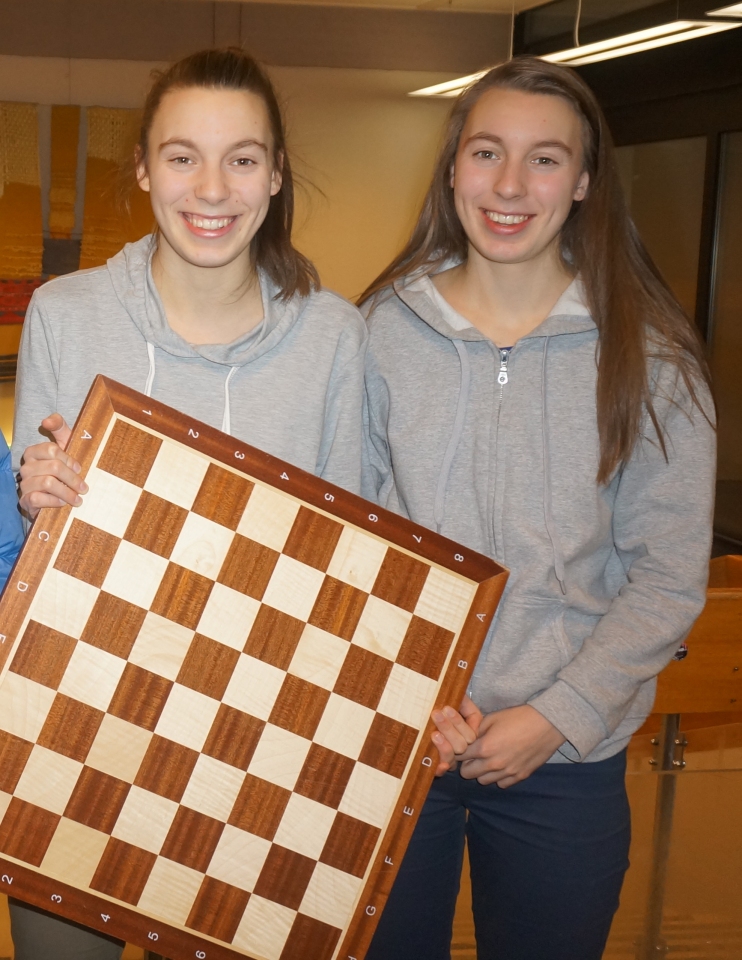
Photo: Anniken Vestby
In fact, the twins were already known to us, as before the Chess Olympiad there had been a visit to ChessBase by the young Norwegian female talents, who had also played a small friendly match against Hamburg players of the same age.
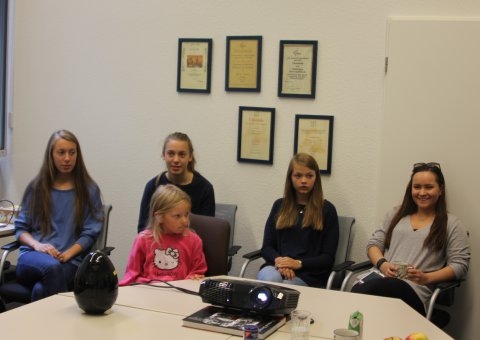
The Machlik sisters (left) visited Hamburg in 2014
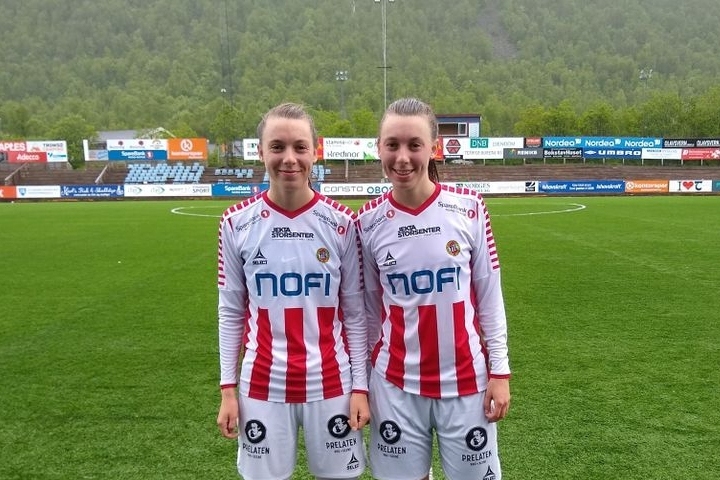
In the following years, the sporting paths of the twin sisters diverged somewhat. Monika concentrated a little more on chess and a little less on football. For Edith, it was the other way round. Monika is currently still number six in the Norwegian women's chess rankings, and was also part of the Norwegian squad at the most recent Chess Olympiad in Budapest. Monika became well known on Norwegian television after commentating live on an exhibition match by Carlsen. In football, she plays for Tromsø Idrettslag in the second division.
 This compact course is designed specifically for practical play. Instead of overwhelming you with endless theory, it focuses on the critical lines, typical plans, and recurring tactical ideas.
Looking for an opening that gets your opponents thinking on move one? Grandmaster Andy Woodward has relied on 1.b3 for years in blitz and bullet, using it to defeat strong masters and grandmasters who underestimated its hidden venom. While many players dismiss the opening as harmless, they often find themselves caught in unfamiliar positions, tactical traps, and uncomfortable middlegames. This compact course is designed specifically for practical play. Instead of overwhelming you with endless theory, it focuses on the critical lines, typical plans, and recurring tactical ideas that matter most when the clock is ticking.
Free video sample: Introduction
Free video sample: King's Indian Setup
Her sister Edit was last part of the Norwegian team at the 2022 Chess Olympiad in India, and then focused more on her football career.
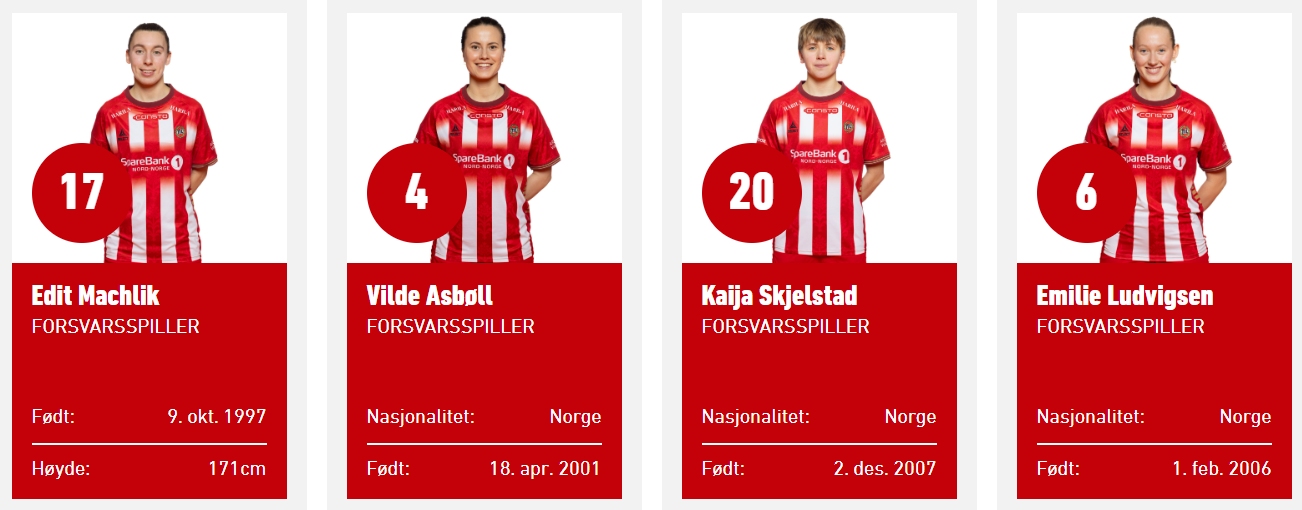
Photo: Tromsø Idrettslag
She also played for Tromsø Idrettslag in the second division, then for Idrettsforeningen Fløya in the first division and, after Tromsø Idrettslag were promoted, returned to her old club. She did not, however, make it into the Norwegian national squad. Edit does not earn her living from football, but as a dentist.
Norway approached the round-of-16 match against Brazil very strategically and had a clear match plan, in which Erling Haaland naturally played an important role. But he is not the only trump card in the Norwegian team. Norway now face England in the quarterfinals on Thursday. However, Kane also plays chess...
In this video course, experts including Dorian Rogozenco, Mihail Marin, Karsten Müller and Oliver Reeh, examine the games of Boris Spassky. Let them show you which openings Spassky chose to play, where his strength in middlegames were and much more.