Press release by FIDE
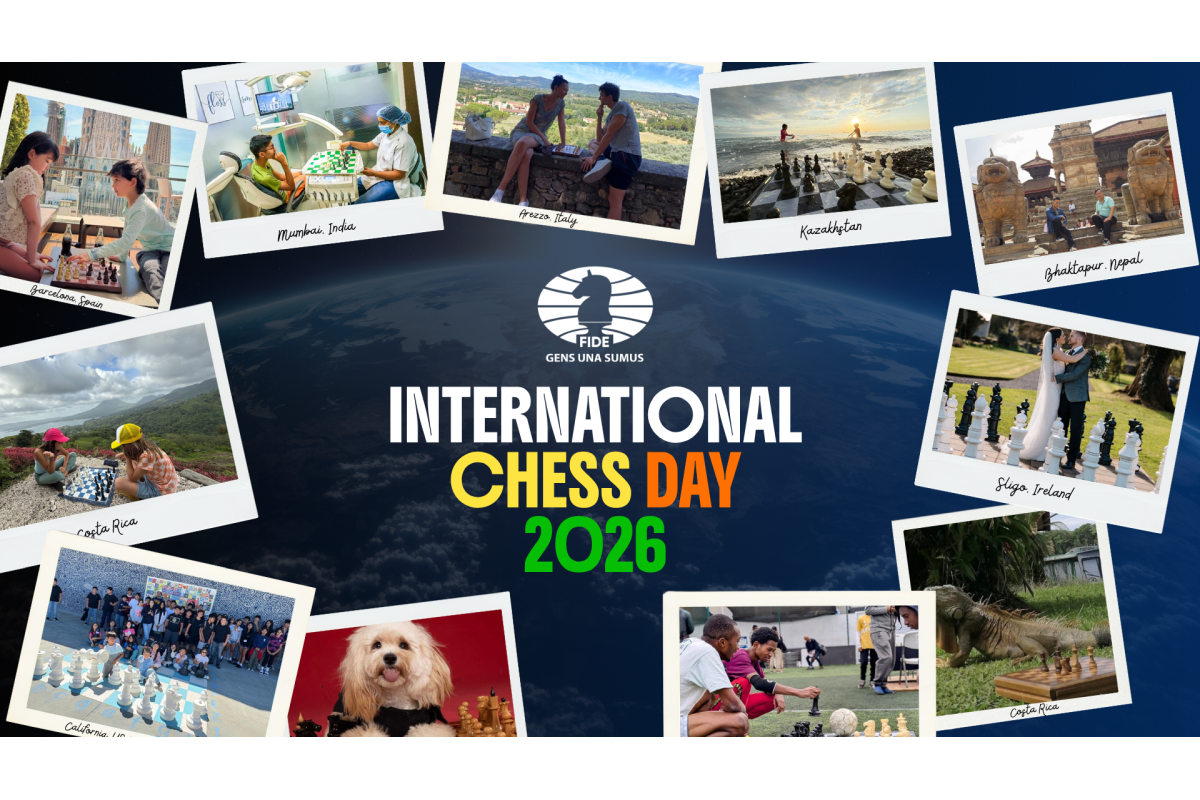
On July 20, the global chess community will come together to celebrate International Chess Day 2026, a day dedicated to the game that connects people across countries, cultures and generations.
This year, FIDE invites players, federations, clubs, schools, organisers and chess fans everywhere to take part. There are many ways to get involved: you could stage a game in an unusual location, run an inclusive community event, or join the live-streamed global conversation about chess and social change.
No event is too large or too small. Every game played, every person welcomed, and every story shared helps demonstrate chess' unique ability to unite, inspire and create positive change.
Take chess beyond the board with Creative Chess
 This compact course is designed specifically for practical play. Instead of overwhelming you with endless theory, it focuses on the critical lines, typical plans, and recurring tactical ideas.
Looking for an opening that gets your opponents thinking on move one? Grandmaster Andy Woodward has relied on 1.b3 for years in blitz and bullet, using it to defeat strong masters and grandmasters who underestimated its hidden venom. While many players dismiss the opening as harmless, they often find themselves caught in unfamiliar positions, tactical traps, and uncomfortable middlegames. This compact course is designed specifically for practical play. Instead of overwhelming you with endless theory, it focuses on the critical lines, typical plans, and recurring tactical ideas that matter most when the clock is ticking.
Free video sample: Introduction
Free video sample: King's Indian Setup
FIDE once again invites the global chess community to celebrate International Chess Day by taking part in Creative Chess, a challenge to promote the game in the most imaginative way possible.
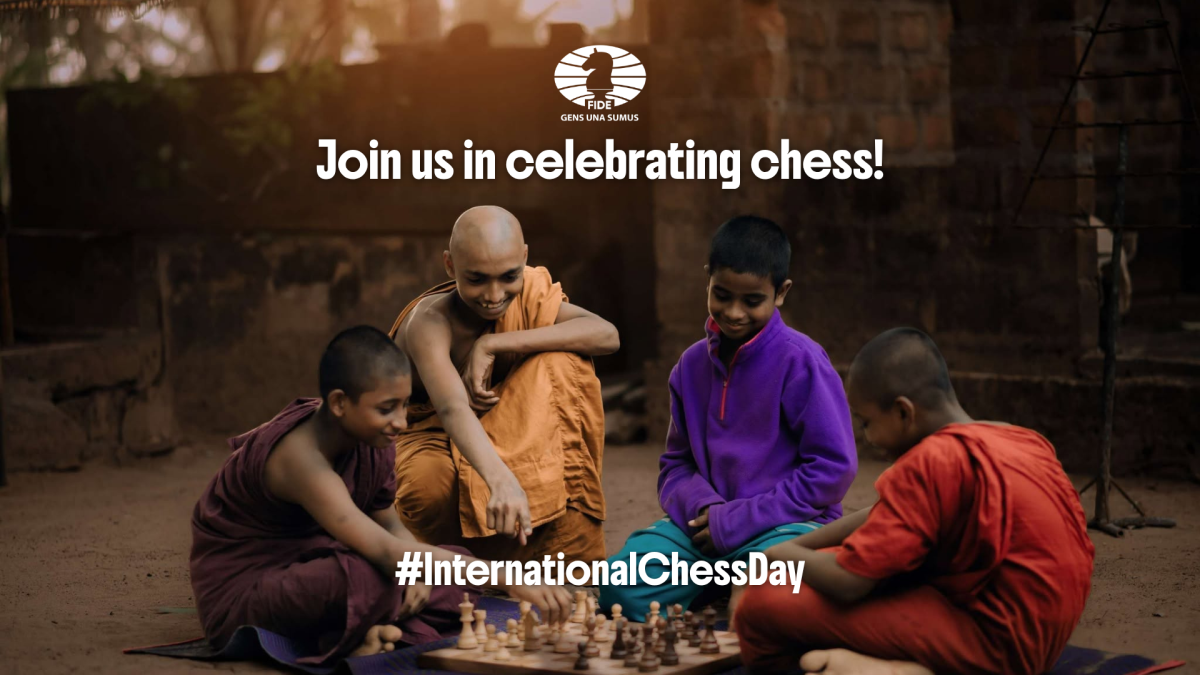
The idea is simple: set up a chess game in the most unusual, meaningful or symbolic place you can think of. It could be on a mountaintop, underwater, beside a famous local landmark or anywhere else that captures the imagination.
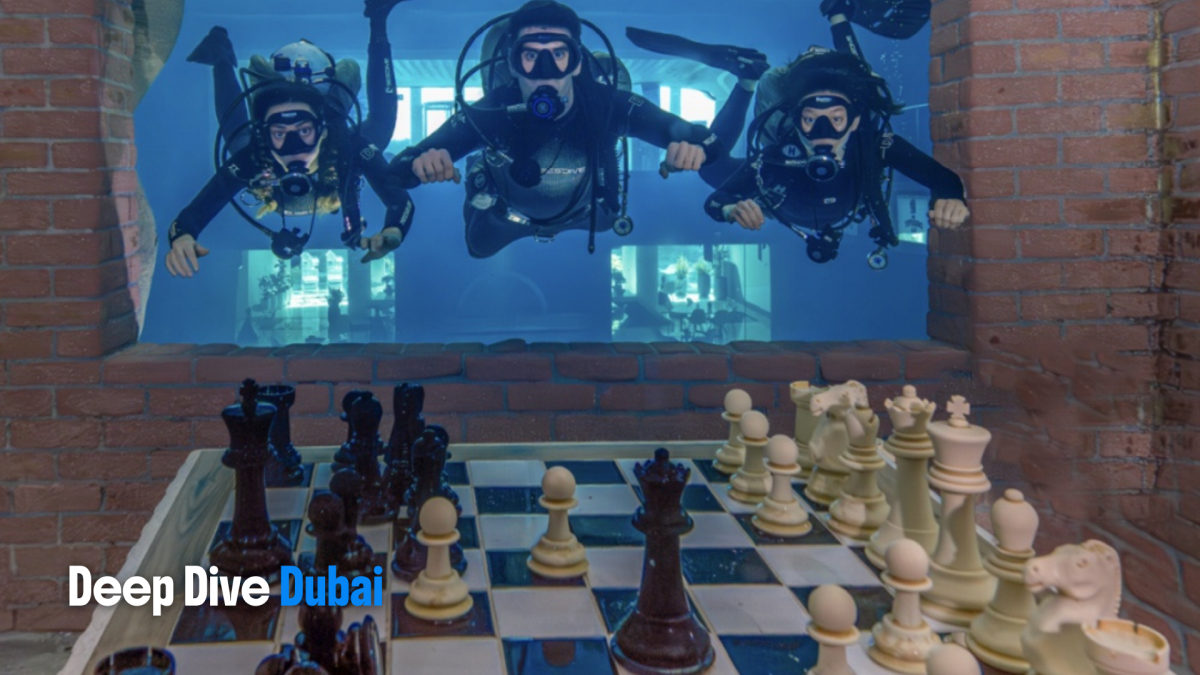
Last year's challenge produced a wonderful outpouring of creativity from around the world. Submissions included a rooftop game beneath the Sagrada Família in Barcelona, chessboards on the slopes of volcanoes in Costa Rica, a submerged set in the world's deepest pool in Dubai and games played across the streets, trains and temples of Mumbai. Players, families, schools and even a few pets joined the celebration, all united by one game.
To participate, organize your creative chess game or moment in the days leading up to and around International Chess Day. Share your photos or videos on social media using #InternationalChessDay and tag FIDE.
The most original and inspiring submissions may be featured across FIDE's official social media channels. The board may have 64 squares, but the world of chess is boundless. Where will you take the game?
Celebrate participation and inclusion with FIDE WOM
The FIDE Commission for Women's Chess (WOM) invites federations, clubs, schools, academies and organisers worldwide to mark International Chess Day by creating opportunities that encourage equal participation throughout the chess community.
Activities can take many forms: a tournament, simultaneous exhibition, workshop, lecture, introductory lesson, school programme or informal community gathering. Organisers are encouraged to design welcoming events that bring people together, introduce new participants to chess, and highlight the contributions of women and girls to the game.
Every initiative counts. A small club activity can be just as meaningful as a large international event when it creates a supportive space in which more people feel encouraged to play, learn, organize and lead.
 This DVD focuses on several types of material imbalances, such as Rook vs 2 Pieces, Queen vs 2 Rooks, and Queen vs Pieces.
How to participate
Organize an event around International Chess Day and share photos, videos and highlights on social media. Tag the FIDE Commission for Women's Chess and use #InternationalChessDayWOM so that activities from across the world can be brought together as part of the global celebration.
After the event, organisers are invited to submit a short report accompanied by two or three photographs to project coordinator Anna Kantane at anna.kantane@gmail.com.
Together, these events will showcase the remarkable work taking place within chess communities worldwide, while inspiring greater participation and creating new opportunities through the game.
Join the global discussion: Chess as a Force for Social Change
As part of the International Chess Day celebrations, the FIDE Social Commission will host a special interactive panel discussion exploring how chess can serve as a practical tool for rehabilitation, protection, inclusion and development.
Titled "Chess as Social Value: From the Chessboard to Society", the 60-minute live discussion will bring together policymakers, researchers, programme leaders and practitioners who are using chess to create tangible change in communities around the world.
Rather than focusing on chess solely as a sport, the conversation will examine what the game makes possible: in prisons, refugee communities, schools, social programmes, government institutions and research environments. Through concrete examples drawn from the speakers' direct experience, the panel will demonstrate how chess can build confidence, encourage positive behaviour, support education and create opportunities for people in vulnerable or underserved communities.
 Chess is a concrete game. There is no way around training your calculation skills. Improve your visualization, pattern recognition and learn calculation techniques such as reciprocal thinking with this course.
Calculation is at the heart of practical chess. Every chess concept builds on proper calculation technique. Therefore, all chess players should continuosly train the fundamental techniques, concepts and patterns this course will present. The goal isn't only to teach you to calculate, but to give you the tools and insights to keep improving long after the final lesson.
Free sample video: Introduction
Free sample video: Quiet Moves
The discussion will feature nine speakers representing a wide range of international projects and professional backgrounds:
- Dana Reizniece, Deputy Chair of the FIDE Management Board and former Minister of Finance and Minister of Economics of Latvia
- Mikhail Korenman, leader of the Chess for Freedom project, United States
- Lasma Kokorevica, representative of the Latvian prison administration
- Anastasia Sorokina, Chair of the FIDE Commission for Women's Chess and leader of the FIDE Chess for Protection project, Australia
- Susan Namangale, Global Director of The Gift of Chess, Malawi
- Russell Makofsky, founder of The Gift of Chess
- Antonio Porter, Director of Programs at the Cook County Department of Corrections
- Prabitha Urwyler, Swiss Chess Federation board member responsible for Social Chess
- Hans Alther, prison chess educator and practitioner
Structured around a series of guiding questions, the session will invite the speakers to share practical lessons, measurable outcomes and personal experiences from their work. Audience members will also have an opportunity to submit questions and take part in the discussion.
- Date: Monday, July 20, 2026
- Time: 15:00 CEST
- Duration: One hour
- Format: Online panel discussion and live global broadcast
Whether you organize an event, stage a game somewhere unexpected, join the online discussion or simply play with someone new, be part of International Chess Day 2026. On July 20, let us show the world not only where chess can be played, but also where chess can lead.
In this video course experts examine the games of Bent Larsen. Let them show you which openings Larsen chose, where his strength in middlegames were, how he outplayed his opponents in the endgame & you’ll get a glimpse of his tactical abilities!
Bent Larsen (1935–2010) was the greatest chess player in Danish history, and for a time, the second-strongest player in the Western world behind Bobby Fischer. Between 1954 and 1971, he won the Danish Championship six times, and achieved numerous international tournament victories throughout his career.
Free video sample: Introduction to Bent Larsen by Peter Heine Nielsen
Free video sample: Introduction to the Opening Section