




By René Mandelbaum
The months flew by, but the idea remained. Some research revealed that each country may nominate five teams for the tournament if that country runs a league competition.
That might explain the relatively weak teams from smaller countries, but not the relatively weak teams from Germany.
Unlike in football or handball, in chess it is possible to play for clubs in different countries at the same time. Cristiano Ronaldo cannot play one weekend in the Spanish league, the next in the Swedish league and then in the German league. In chess, however, this is an important source of income for second-tier professionals. The financial backers of German Bundesliga clubs apparently have less interest in paying their professionals to play in the European Club Cup. That could explain why the German teams tend to field amateur players. At least, that is how this correspondent pieced things together.
An enquiry with the sporting director then revealed that Bundesliga clubs have to confirm by the beginning of August whether they want to take part. If they do not, other clubs can apply.
That is how SK Weisse Dame Hamburg, a team from the Landesliga, the fourth tier, came to receive a place in the event.
Things then had to move very quickly, as there was only one week left until the registration deadline.
Would the first-team players be able to get time off work? Who had the time, the inclination and the money? Would it fit around university? Could two days off school be arranged? For students? For teachers?
These hurdles could be overcome. Not all of the first-team players were available, but seven motivated players were quickly found (the matches are played over six boards, so taking a reserve player seemed sensible).
The entry fee was transferred and flights were booked. Since the event had been advertised with the very attractive Medun hotel complex in Herceg Novi (Montenegro), three of our players also decided to bring their wives/girlfriends (and children).
Two weeks before the tournament began, one of our players wrote in the WhatsApp group that he had read on the tournament website that the venue had changed.
We only received official information about this a few days before travelling. That was somewhat surprising. Suddenly the venue was in Budva. It is only 45 km from the original venue, but the drive was said to take 1 hour and 15 minutes, including a ferry crossing.
"Nothing we can do about it - somehow everything will work out". The reviews of the new hotel complex were not particularly good, however, if the relevant online review sites were to be believed.
On Friday, 23 October, half of our team landed in Dubrovnik at around 4 p.m., one of the recommended airports. Dubrovnik is in neighbouring Croatia.
Players from all over the world were arriving at the airport and were then directed onto a coach. Even though there must already have been 50 people on board, it did not leave.
Another flight had been delayed, so we waited for 90 minutes. Then the journey finally began. At least for 15 minutes. We then reached the border with Montenegro. Unlike Croatia, Montenegro is not part of the Schengen Area. We stood there waiting for a good two hours, closer to three. Then everyone on the coach had to get out, present their passport individually to the border officer and cross the border on foot.
Eventually we were able to get back on the coach and continue. At around 11 p.m. we reached the hotel complex. Those had been seven rather unpleasant hours.
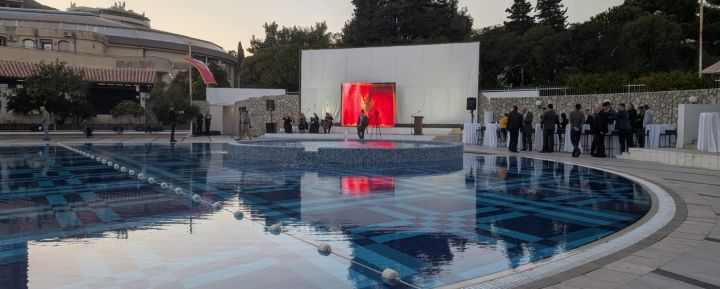
Fortunately, the other half of the team had flown via Podgorica Airport. That is already in Montenegro, which avoids the congestion at the border. The opening ceremony, however, was described by the other half of the team as very disappointing. Very few participants attended and there was little atmosphere. There was a speech in the local language with English subtitles and a short performance by a musical group.
The next disappointment was the rooms. We had originally booked suites in a four-star hotel for no less than €99 per person in a double room. Had our accommodation been booked through an online portal, it would have cost only half as much.
There was no hot water and the condition of the rooms was dreadful. They were draughty, cold and not very clean.
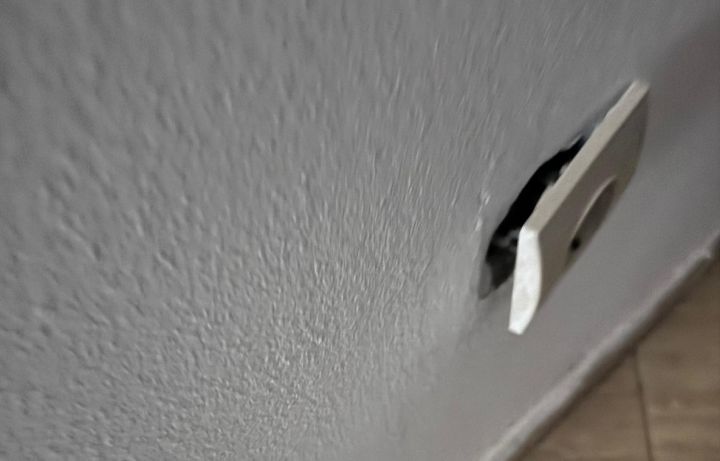
The hotel complex has several different blocks, as we discovered during a late-night exchange with chess friends from other clubs. We had ended up in the worst one. Complaining at reception achieved nothing: "Contact the organiser".
So we slept in our jackets and without showering. The following morning we were moved to other blocks. The rooms were clean and the water was hot. But we had imagined a suite in a four-star hotel to be somewhat differently.
The family room promised to one of our players, however, did not exist. Nor did a baby's crib. He then moved to a completely different hotel. Whether he will ever get his money back from the organiser is unknown.
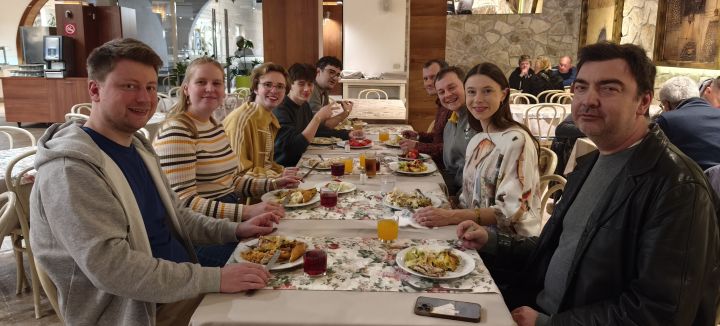
The food, however, was acceptable. Suddenly finding yourself in the buffet queue behind a chess legend such as Vishy Ivanchuk partially made up for the trouble.
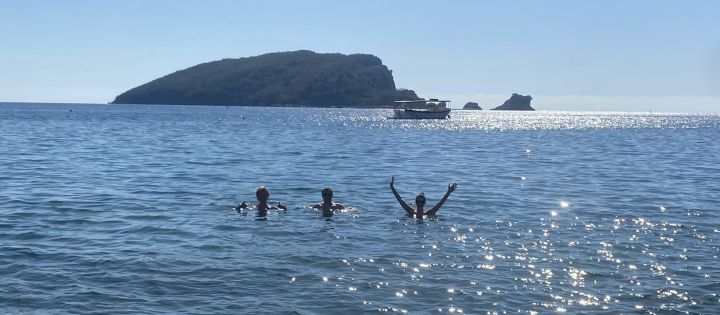
The weather was also pleasantly warm during the day, and we were able to swim in the sea.
The playing hall was a large tent in which all the games were played. This meant you could look directly over the shoulders of the superstars. "Giri looked at my board for half a minute. He probably hasn't seen a position with two queens against three very often", one of our players said of his personal highlight.
You were not allowed to take your own photos in the playing hall, however. Mobile phones had to be left outside and there were strict checks at the entrance.
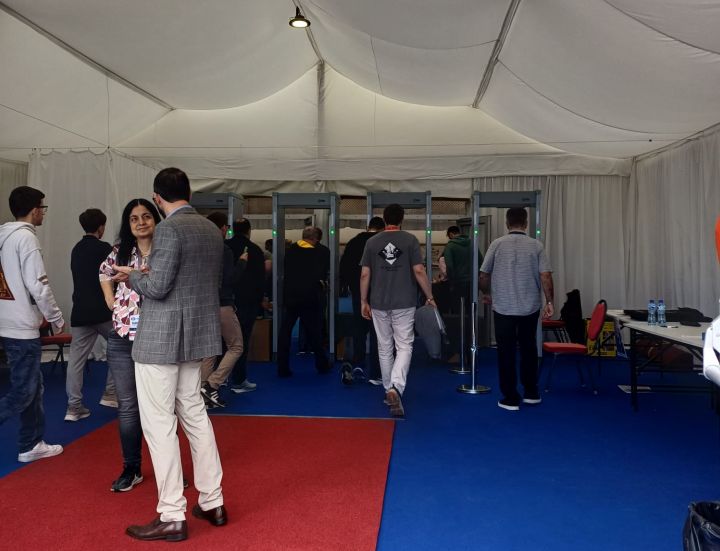
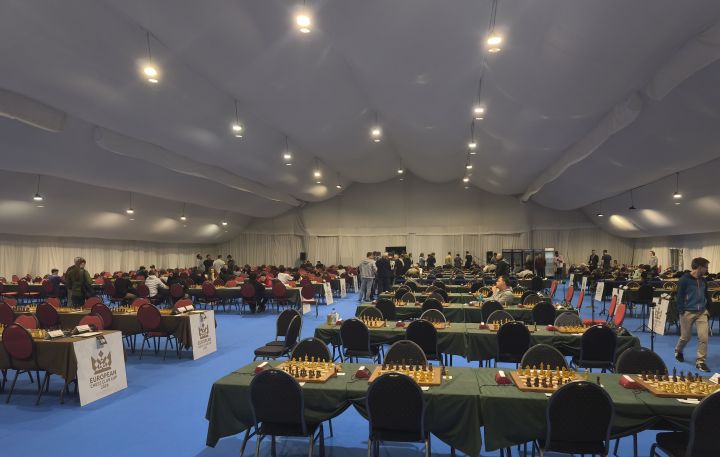
Only during the evening blitz tournaments was there an opportunity to take your own pictures in the playing hall. Otherwise, you had to rely on the tournament photographers, of whom there were fortunately always plenty around, and they also took pictures at the lower boards.
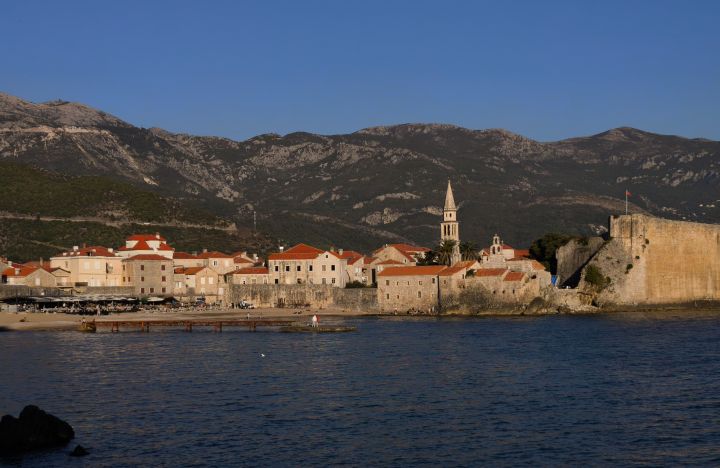
The rounds always began at 2 p.m. Those who wished could therefore spend the morning exploring Budva's attractive old town or taking short excursions.
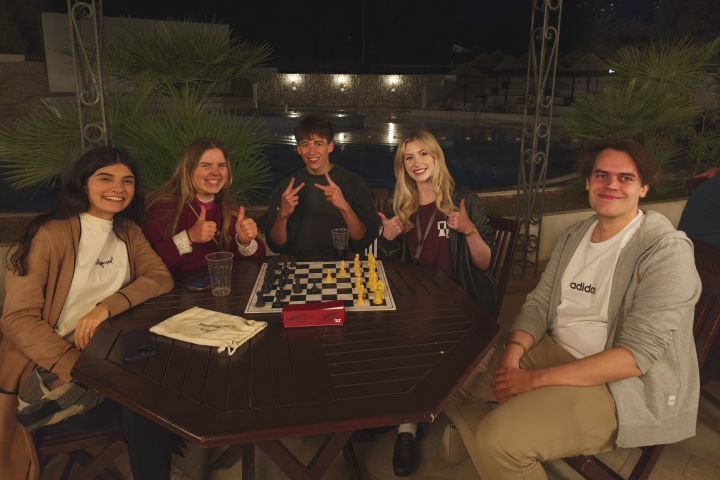
In the evenings, many players sat around the pool area, where the bar stayed open until 11 p.m. Drinks of all kinds were included. One of our players, Ben Erk, managed to get a photo with well-known streamers and Matthias Bluebaum (see title image).
From a chess perspective, the tournament was tough for us. We did, however, manage to achieve our goal of winning at least two matches and finishing ahead of nine teams.
| Round 3 on 19 October 2026 at 14:00 | ||||||||
|---|---|---|---|---|---|---|---|---|
| Bd. | 91 | SK Weisse Dame Hamburg (GER) | Elo | - | 106 | Bloemendaal S.V. (NED) | Elo | 3½:2½ |
| 52.1 | CM | □ Popist, Florian | 2245 | - | ■ Oosting, Robert | 1886 | 1 - 0 | |
| 52.2 | ■ Kielhorn, Sebastian | 2004 | - | □ Schimmel, Roy | 1931 | 1 - 0 | ||
| 52.3 | □ Schmidt, Deniz | 1877 | - | ■ Van Casteren, Frans | 0 | ½ - ½ | ||
| 52.4 | ■ Mandelbaum, Peter-Rene | 2089 | - | □ Rutte, Edwin | 1763 | 1 - 0 | ||
| 52.5 | □ Opasiak, Dustin Tennessee | 1732 | - | ■ De Ron, Paul | 0 | 0 - 1 | ||
| 52.6 | ■ Parnitzke, Lennert | 1869 | - | □ de Graaf, Dick | 2113 | 0 - 1 | ||
| Round 6 on 22 October 2026 at 14:00 | ||||||||
|---|---|---|---|---|---|---|---|---|
| Bd. | 103 | S.S. Lazio Scacchi (ITA) | Elo | - | 91 | SK Weisse Dame Hamburg (GER) | Elo | 1½:4½ |
| 50.1 | FM | □ Corvi, Marco | 2216 | - | CM | ■ Popist, Florian | 2245 | 0 - 1 |
| 50.2 | ■ Guido Guerriero, Samuele | 1958 | - | □ Kielhorn, Sebastian | 2004 | 0 - 1 | ||
| 50.3 | □ Tinari, Marco | 1832 | - | ■ Erk, Ben | 1804 | ½ - ½ | ||
| 50.4 | ■ Corvi, Maddalena | 1974 | - | □ Schmidt, Deniz | 1877 | 0 - 1 | ||
| 50.5 | □ Aceto, Andrea | 1771 | - | ■ Mandelbaum, Peter-Rene | 2089 | 0 - 1 | ||
| 50.6 | ■ Rabiti, Roberto | 1640 | - | □ Parnitzke, Lennert | 1869 | 1 - 0 | ||
| 99. SK Weisse Dame Hamburg (GER) (Avg. Elo: 1981, Wtg1: 4 / Wtg2: 43) | ||||||||||||
|---|---|---|---|---|---|---|---|---|---|---|---|---|
| Bd. | Name | Elo | 1 | 2 | 3 | 4 | 5 | 6 | 7 | Pts. | Gms | Avg. Elo |
| 1 | Popist, Florian | 2245 | ½ | 1 | 0 | ½ | 1 | ½ | 3,5 | 6 | 2218 | |
| 2 | Kielhorn, Sebastian | 2004 | 0 | ½ | 1 | ½ | ½ | 1 | 3,5 | 6 | 2144 | |
| 3 | Erk, Ben | 1804 | 0 | 0 | 0 | 0 | ½ | 0 | 0,5 | 6 | 2150 | |
| 4 | Schmidt, Deniz | 1877 | 0 | 0 | ½ | 0 | 1 | 1 | 2,5 | 6 | 1993 | |
| 5 | Mandelbaum, Peter-Rene | 2089 | 0 | 0 | 1 | 0 | ½ | 1 | 1 | 3,5 | 7 | 2025 |
| 6 | Opasiak, Dustin Tennessee | 1732 | 0 | 0 | 0 | 0 | 0 | 0 | 5 | 1897 | ||
| 7 | Parnitzke, Lennert | 1869 | 0 | 0 | 0 | 0 | 0 | 0 | 0 | 6 | 1971 | |
The professional teams finished at the top, mostly assembled squads whose players are rather unlikely to be found attending their club's regular blitz night.
Behind them came strong amateur teams keen to play against strong opposition, but also teams of retirees for whom the event was simply an enjoyable group trip - in other words, a colourful cross-section of the European chess scene.
At the prize-giving ceremony, which has already been covered in the two articles below, we noticed that those receiving the awards hardly seemed to celebrate at all. Had we been invited onto the stage, we would have cheered quite differently. The chess world really missed out there. Unfortunately, however, only the top three were honoured.
Despite a few difficulties, taking part in the European Club Cup was a great experience for us.


| Advertising |










.jpeg)

.jpeg)