
August 2016 ratings: Monster Maxime reaches 2819 FIDE!

by Albert Silver
7/31/2016 – What can one say except 'Wow'? 25-year-old Frenchman Maxime Vachier Lagrave continues his run after a win at Dortmund and crushing win over Svidler to reach 2819 FIDE and rocket into the world no.2 spot. He will bring great momentum into the approaching Sinquefield Cup. Be sure to read about 15-year-old Iranian phenom Parham Maghsoodloo who gained 75 Elo and is now the top rated in his country. Report, stats, and more.

YOUR PERSONAL CHESS COACH - Whether you’re taking your first steps into the world of club chess, or already playing at a tournament level: with FRITZ, you can train more efficiently, intelligently and with a more personalised approach than ever before.
FRITZ is more than just a chess engine – it’s a training revolution! Whether you’re taking your first steps into the world of club chess, or already playing at a tournament level: with FRITZ, you can train more efficiently, intelligently and with a more personalised approach than ever before.

FIDE August 2016 – Top 100 Players

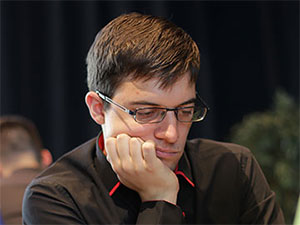
Can there be any doubt who the name of the month is? Frenchman Maxime Vachier-Lagrave has been on a run that has been breathtaking to watch. After winning Dortmund he now followed up with a crushing win over Peter Svidler by 3.0/4 in Biel. His rating of 2819 is right up there as one of the highest ever registered, and the 25-year-old will arrive at the Sinquefield Cup with huge momentum.

A special congratulations to Paraguayan GM Axel Bachmann who broke into the Top 100 for the first time after several near misses. The South American has been incredibly busy this year, racking up no fewer than 133 rated classical games! This month he had 33, from three opens in the US, and one in Spain.

Rk
Name
Ti.
Fed
Rtg
Gms
B-Year
1 Carlsen, Magnus g NOR 2857 10 1990
2 Vachier-Lagrave, Maxime g FRA 2819 11 1990
3 Kramnik, Vladimir g RUS 2808 7 1975
4 Caruana, Fabiano g USA 2807 7 1992
5 Aronian, Levon g ARM 2792 0 1982
6 Nakamura, Hikaru g USA 2791 10 1987
7 So, Wesley g USA 2771 10 1993
8 Anand, Viswanathan g IND 2770 0 1969
9 Giri, Anish g NED 2769 10 1994
10 Karjakin, Sergey g RUS 2769 10 1990
11 Mamedyarov, Shakhriyar g AZE 2764 0 1985
12 Topalov, Veselin g BUL 2761 0 1975
13 Ding, Liren g CHN 2755 16 1992
14 Grischuk, Alexander g RUS 2754 4 1983
15 Li, Chao b g CHN 2753 9 1989
16 Harikrishna, P. g IND 2752 13 1986
17 Rapport, Richard g HUN 2752 0 1996
18 Svidler, Peter g RUS 2751 4 1976
19 Gelfand, Boris g ISR 2743 6 1968
20 Navara, David g CZE 2742 7 1985
21 Nepomniachtchi, Ian g RUS 2740 9 1990
22 Wang, Yue g CHN 2737 13 1987
23 Eljanov, Pavel g UKR 2737 0 1983
24 Andreikin, Dmitry g RUS 2733 0 1990
25 Wojtaszek, Radoslaw g POL 2733 0 1987
26 Tomashevsky, Evgeny g RUS 2731 0 1987
27 Vitiugov, Nikita g RUS 2728 0 1987
28 Adams, Michael g ENG 2727 0 1971
29 Yu, Yangyi g CHN 2725 13 1994
30 Ivanchuk, Vassily g UKR 2723 9 1969
31 Le, Quang Liem g VIE 2723 0 1991
32 Radjabov, Teimour g AZE 2722 0 1987
33 Inarkiev, Ernesto g RUS 2721 6 1985
34 Dominguez Perez, Leinier g CUB 2720 7 1983
35 Bu, Xiangzhi g CHN 2715 13 1985
36 Vallejo Pons, Francisco g ESP 2713 0 1982
37 Wang, Hao g CHN 2712 13 1989
38 Jakovenko, Dmitry g RUS 2712 0 1983
39 Wei, Yi g CHN 2709 10 1999
40 Leko, Peter g HUN 2709 9 1979
41 Ponomariov, Ruslan g UKR 2709 7 1983
42 Rodshtein, Maxim g ISR 2698 0 1989
43 Malakhov, Vladimir g RUS 2697 0 1980
44 Naiditsch, Arkadij g AZE 2696 16 1985
45 Kasimdzhanov, Rustam g UZB 2696 0 1979
46 Bacrot, Etienne g FRA 2692 9 1983
47 Kryvoruchko, Yuriy g UKR 2691 0 1986
48 Rublevsky, Sergei g RUS 2689 0 1974
49 Cheparinov, Ivan g BUL 2688 0 1986
50 Nisipeanu, Liviu-Dieter g GER 2687 16 1976
51 Smirin, Ilia g ISR 2687 9 1968
52 Matlakov, Maxim g RUS 2686 20 1991
53 Ragger, Markus g AUT 2686 0 1988
54 Almasi, Zoltan g HUN 2684 0 1976
55 Morozevich, Alexander g RUS 2683 0 1977
56 Piorun, Kacper g POL 2681 9 1991
57 Safarli, Eltaj g AZE 2678 0 1992
58 Najer, Evgeniy g RUS 2677 7 1977
59 Fressinet, Laurent g FRA 2677 0 1981
60 Ganguly, Surya Shekhar g IND 2676 0 1983
61 Duda, Jan-Krzysztof g POL 2675 9 1998
62 Akopian, Vladimir g ARM 2675 0 1971
63 Bareev, Evgeny g CAN 2675 0 1966
64 Robson, Ray g USA 2674 0 1994
65 Shirov, Alexei g LAT 2674 0 1972
66 Zvjaginsev, Vadim g RUS 2673 13 1976
67 Granda Zuniga, Julio E g PER 2672 9 1967
68 Adhiban, B. g IND 2671 0 1992
69 McShane, Luke J g ENG 2671 0 1984
70 Sargissian, Gabriel g ARM 2670 10 1983
71 Fedoseev, Vladimir g RUS 2670 9 1995
72 Sadler, Matthew D g ENG 2670 0 1974
73 Vidit, Santosh Gujrathi g IND 2669 9 1994
74 Jobava, Baadur g GEO 2669 0 1983
75 Onischuk, Alexander g USA 2668 0 1975
76 Saric, Ivan g CRO 2667 10 1990
77 Short, Nigel D g ENG 2666 10 1965
78 Mamedov, Rauf g AZE 2666 0 1988
79 Movsesian, Sergei g ARM 2666 0 1978
80 Areshchenko, Alexander g UKR 2665 18 1986
81 Artemiev, Vladislav g RUS 2665 9 1998
82 Kovalenko, Igor g LAT 2664 9 1988
83 Howell, David W L g ENG 2663 0 1990
84 Markus, Robert g SRB 2662 0 1983
85 Efimenko, Zahar g UKR 2661 9 1985
86 Shankland, Samuel L g USA 2661 0 1991
87 Dreev, Aleksey g RUS 2660 16 1969
88 Motylev, Alexander g RUS 2660 0 1979
89 Negi, Parimarjan g IND 2660 0 1993
90 Tkachiev, Vladislav g FRA 2660 0 1973
91 Bologan, Victor g MDA 2659 9 1971
92 Sasikiran, Krishnan g IND 2658 10 1981
93 Hou, Yifan g CHN 2658 9 1994
94 Bukavshin, Ivan g RUS 2658 0 1995
95 Van Wely, Loek g NED 2657 9 1972
96 Ipatov, Alexander g TUR 2657 0 1993
97 Meier, Georg g GER 2657 0 1987
98 Bachmann, Axel g PAR 2656 33 1989
99 Zhigalko, Sergei g BLR 2656 18 1989
100 Korobov, Anton g UKR 2656 0 1985

Top climbers and descenders 

The biggest gain of the month was not the frenchman, even if it was the most noteworthy, it was by Azeri GM Arkadij Naiditsch, who earned 29 Elo and is nearly back to his former 2700+ self.

Rk
Old
Name
Fed
Ti.
Rating
Old
Gms
 2 4 Vachier-Lagrave, Maxime FRA GM 2819 +21 2798 11
 9 7 Giri, Anish NED GM 2769 -16 2785 10
 13 8 Ding, Liren CHN GM 2755 -23 2778 16
 21 32 Nepomniachtchi, Ian RUS GM 2740 +15 2725 9
 37 22 Wang, Hao CHN GM 2712 -22 2734 13
39 44 Wei, Yi CHN GM 2709 +13 2696 10
44 74 Naiditsch, Arkadij AZE GM 2696 +29 2667 16
50 64 Nisipeanu, Liviu-Dieter GER GM 2687 +13 2674 16
51 61 Smirin, Ilia ISR GM 2687 +11 2676 9
58 50 Najer, Evgeniy RUS GM 2677 -10 2687 7
67 41 Granda Zuniga, Julio E PER GM 2672 -27 2699 9
73 92 Vidit, Santosh Gujrathi IND GM 2669 +11 2658 9
77 Short, Nigel D ENG GM 2666 +14 10
80 101 Areshchenko, Alexander UKR GM 2665 +11 2654 18

FIDE Top 100 Women

The biggest gain was by 22-year-old Daria Pustovoitova, who moved up 115 Elo to 2386 FIDE. This was the result of three excellent results, not least of which was her third place in the Russian Women Higher League, where she gained 54 Elo no less.

Rk
Name
Ti.
Fed
Rtg
Gms
B-Year
1 Hou, Yifan g CHN 2658 9 1994
2 Koneru, Humpy g IND 2580 11 1987
3 Ju, Wenjun g CHN 2575 15 1991
4 Muzychuk, Anna g UKR 2544 11 1990
5 Harika, Dronavalli g IND 2542 15 1991
6 Muzychuk, Mariya g UKR 2539 11 1992
7 Kosteniuk, Alexandra g RUS 2538 9 1984
8 Cmilyte, Viktorija g LTU 2536 0 1983
9 Lagno, Kateryna g RUS 2530 0 1989
10 Dzagnidze, Nana g GEO 2529 0 1987
11 Gunina, Valentina g RUS 2520 0 1989
12 Zhao, Xue g CHN 2518 15 1985
13 Stefanova, Antoaneta g BUL 2515 15 1979
14 Sebag, Marie g FRA 2488 0 1986
15 Javakhishvili, Lela m GEO 2486 11 1984
16 Pogonina, Natalija wg RUS 2484 0 1985
17 Kosintseva, Nadezhda g RUS 2483 0 1985
18 Lei, Tingjie wg CHN 2480 4 1997
19 Paehtz, Elisabeth m GER 2476 9 1985
20 Tan, Zhongyi wg CHN 2475 15 1991
21 Goryachkina, Aleksandra wg RUS 2475 9 1998
22 Zhukova, Natalia g UKR 2475 0 1979
23 Batsiashvili, Nino m GEO 2474 10 1987
24 Shen, Yang m CHN 2474 3 1989
25 Hoang, Thanh Trang g HUN 2467 0 1980
26 Bodnaruk, Anastasia m RUS 2465 0 1992
27 Khotenashvili, Bela g GEO 2463 11 1988
28 Kashlinskaya, Alina m RUS 2462 9 1993
29 Socko, Monika g POL 2454 9 1978
30 Girya, Olga wg RUS 2452 15 1991
31 Ushenina, Anna g UKR 2452 7 1985
32 Skripchenko, Almira m FRA 2452 0 1976
33 Galliamova, Alisa m RUS 2450 0 1972
34 Huang, Qian wg CHN 2450 0 1986
35 Zatonskih, Anna m USA 2449 0 1978
36 Krush, Irina g USA 2444 9 1983
37 Danielian, Elina g ARM 2444 0 1978
38 Cramling, Pia g SWE 2441 20 1963
39 Hunt, Harriet V m ENG 2440 0 1978
40 Mkrtchian, Lilit m ARM 2439 11 1982
41 Zawadzka, Jolanta wg POL 2439 10 1987
42 Kovalevskaya, Ekaterina m RUS 2437 19 1974
43 Nomin-Erdene, Davaademberel m MGL 2437 7 2000
44 Cori T., Deysi wg PER 2433 19 1993
45 Munguntuul, Batkhuyag m MGL 2428 0 1987
46 Atalik, Ekaterina m TUR 2426 0 1982
47 Khademalsharieh, Sarasadat m IRI 2423 10 1997
48 Saduakassova, Dinara wg KAZ 2423 7 1996
49 Melia, Salome m GEO 2419 10 1987
50 Sukandar, Irine Kharisma m INA 2418 9 1992
51 Ding, Yixin wg CHN 2418 4 1991
52 Guo, Qi m CHN 2417 4 1995
53 Gaponenko, Inna m UKR 2416 0 1976
54 Shvayger, Yuliya wm ISR 2415 10 1994
55 Karavade, Eesha m IND 2415 0 1987
56 Padmini, Rout m IND 2415 0 1994
57 Daulyte, Deimante m LTU 2412 9 1989
58 Nechaeva, Marina m RUS 2410 9 1986
59 Szczepkowska-Horowska, Karina wg POL 2409 9 1987
60 Vega Gutierrez, Sabrina m ESP 2408 0 1987
61 Bojkovic, Natasa m SRB 2406 0 1971
62 Derakhshani, Dorsa wm IRI 2405 0 1998
63 Shuvalova, Polina wf RUS 2398 19 2001
64 Khurtsidze, Nino m GEO 2398 9 1975
65 Ni, Shiqun wg CHN 2398 4 1997
66 Tania, Sachdev m IND 2396 9 1986
67 Peptan, Corina-Isabela m ROU 2395 0 1978
68 Batchimeg, Tuvshintugs m MGL 2391 0 1986
69 Bulmaga, Irina m ROU 2389 20 1993
70 Abdumalik, Zhansaya wg KAZ 2389 9 2000
71 Zimina, Olga m ITA 2389 7 1982
72 Rajlich, Iweta m POL 2389 0 1981
73 Pustovoitova, Daria f RUS 2386 25 1994
74 Houska, Jovanka m ENG 2386 0 1980
75 Videnova, Iva m BUL 2386 0 1987
76 Ziaziulkina, Nastassia m BLR 2386 0 1995
77 Vijayalakshmi, Subbaraman m IND 2384 0 1979
78 Kovanova, Baira wg RUS 2382 9 1987
79 Abrahamyan, Tatev wg USA 2382 6 1988
80 Aulia, Medina Warda wg INA 2382 0 1997
81 Arakhamia-Grant, Ketevan g SCO 2381 9 1968
82 Gara, Ticia wg HUN 2379 6 1984
83 Ryjanova, Julia wg RUS 2379 0 1974
84 Lujan, Carolina m ARG 2378 10 1985
85 Brunello, Marina f ITA 2376 13 1994
86 Savina, Anastasia m RUS 2375 9 1992
87 Michna, Marta wg GER 2375 0 1978
88 Arabidze, Meri m GEO 2374 10 1994
89 Vasilevich, Tatjana m UKR 2372 9 1977
90 Berend, Elvira wg LUX 2372 0 1965
91 Lazarne Vajda, Szidonia m HUN 2372 0 1979
92 Hoolt, Sarah wg GER 2371 9 1988
93 Guramishvili, Sopiko m GEO 2370 7 1991
94 Soumya, Swaminathan wg IND 2370 0 1989
95 Wang, Jue wg CHN 2369 15 1995
96 Fierro Baquero, Martha L. m ECU 2369 10 1977
97 Khukhashvili, Sopiko m GEO 2368 9 1985
98 Peng, Zhaoqin g NED 2368 9 1968
99 Zhai, Mo wg CHN 2368 4 1996
100 Stockova, Zuzana m SVK 2368 0 1977

FIDE Top 100 Juniors

Wei Yi has bounced back after a period in which he dropped under 2700. After winning the Chinese Championship in May (above), he scored 50% at the elite Bilbao Masters in July and is now back at 2709.
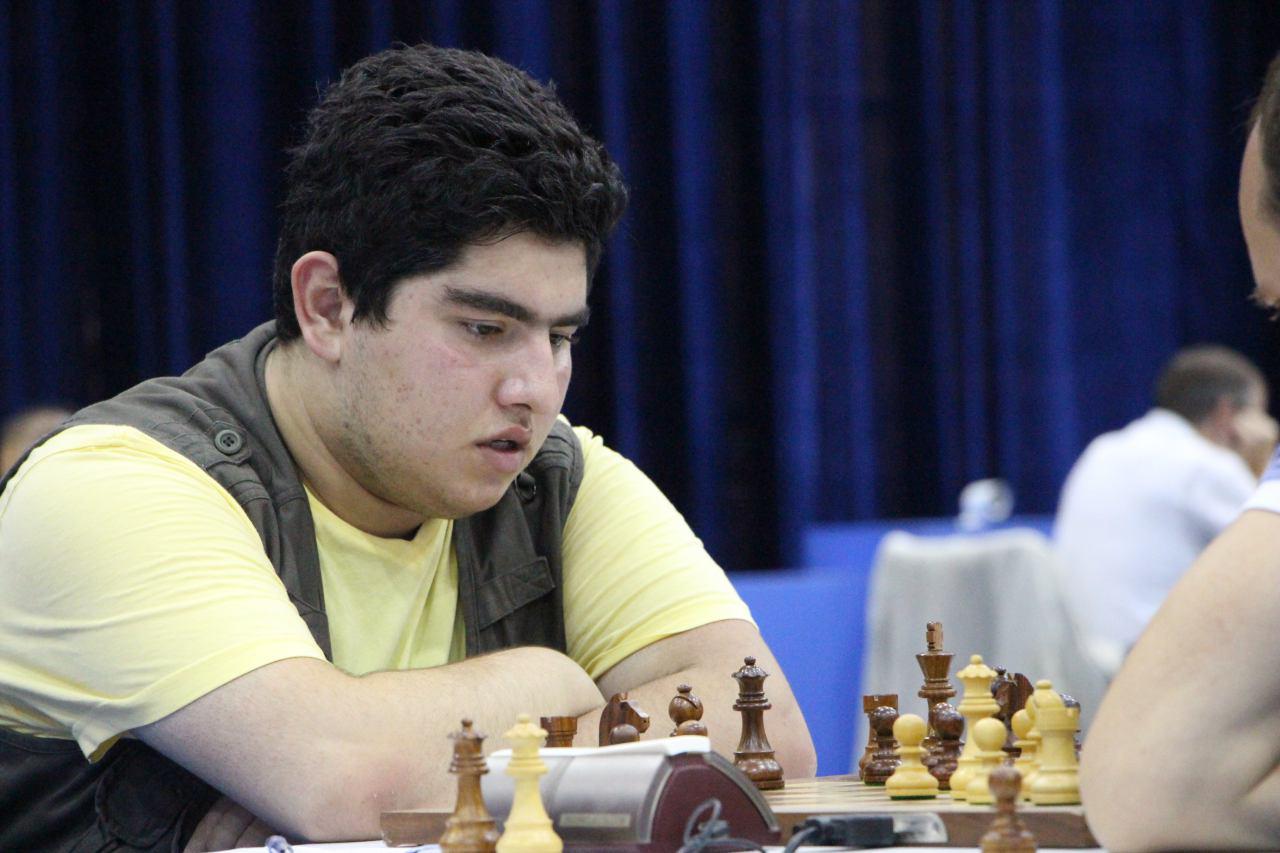
The biggest news was that of 15-year-old Parham Mahhsoodloo though. Rated 2501 already, his K factor is the strict minimum, yet in spite of this, the Iranian prodigy leapt an incredible 75 Elo (!!) to 2576 and is now the top Iranian player as well. Bear in mind, this great talent was also the youngest qualikfier for last year's World Cup, and qualified for the Iranian team at the Baku Olympiad. Iran's team, all from qualification, will field three players rated 15 or less. Astonishing.

A special heads up to both Dutch teen Jorden van Foreest, American Samuel Sevian, and Grigoriy Oparin from Russian, all of whom broke 2600 this month for the first time.

Rk
Name
Ti.
Fed
Rtg
Gms
B-Year
1 Rapport, Richard g HUN 2752 0 1996
2 Wei, Yi g CHN 2709 10 1999
3 Duda, Jan-Krzysztof g POL 2675 9 1998
4 Artemiev, Vladislav g RUS 2665 9 1998
5 Dubov, Daniil g RUS 2648 9 1996
6 Xiong, Jeffery g USA 2633 13 2000
7 Nyzhnyk, Illya g UKR 2621 15 1996
8 Bluebaum, Matthias g GER 2618 0 1997
9 Oparin, Grigoriy g RUS 2617 9 1997
10 Eliseev, Urii g RUS 2606 9 1996
11 Van Foreest, Jorden g NED 2601 9 1999
12 Sevian, Samuel g USA 2600 18 2000
13 Bortnyk, Olexandr g UKR 2588 7 1996
14 Alekseenko, Kirill g RUS 2582 16 1997
15 Donchenko, Alexander g GER 2581 9 1998
16 Gledura, Benjamin m HUN 2581 5 1999
17 Maghsoodloo, Parham IRI 2576 22 2000
18 Wagner, Dennis g GER 2572 0 1997
19 Tari, Aryan g NOR 2571 0 1999
20 Ghosh, Diptayan g IND 2570 0 1998
21 Antipov, Mikhail Al. g RUS 2565 16 1997
22 Vavulin, Maksim m RUS 2559 16 1998
23 Vaibhav, Suri g IND 2556 0 1997
24 Li, Ruifeng m USA 2555 33 2001
25 Gordievsky, Dmitry m RUS 2555 9 1996
26 Rambaldi, Francesco g ITA 2553 6 1999
27 Pichot, Alan g ARG 2550 23 1998
28 Chigaev, Maksim m RUS 2550 9 1996
29 Svane, Rasmus m GER 2546 9 1997
30 Santos Latasa, Jaime m ESP 2545 9 1996
31 Aravindh,Chithambaram VR. g IND 2543 0 1999
32 Burke, John M m USA 2537 18 2001
33 Bai, Jinshi g CHN 2537 15 1999
34 Boruchovsky, Avital g ISR 2531 7 1997
35 Paravyan, David m RUS 2528 18 1998
36 Schroeder, Jan-Christian g GER 2523 15 1998
37 Troff, Kayden W g USA 2522 15 1998
38 Henriquez Villagra, Cristobal m CHI 2520 33 1996
39 Deac, Bogdan-Daniel m ROU 2520 0 2001
40 Xu, Yinglun CHN 2516 25 1996
41 Sunilduth Lyna, Narayanan g IND 2515 0 1998
42 Karthikeyan, Murali g IND 2514 27 1999
43 Petrosyan, Manuel m ARM 2512 6 1998
44 Yuffa, Daniil m RUS 2507 16 1997
45 Stefanov, Emil BUL 2505 27 1999
46 Supi, Luis Paulo m BRA 2505 0 1996
47 Fang, Yuxiang m CHN 2503 36 1996
48 Drozdowski, Kacper m POL 2503 18 1996
49 Lampert, Jonas m GER 2500 0 1997
50 Dastan, Muhammed Batuhan m TUR 2490 19 1997
51 Esipenko, Andrey f RUS 2490 17 2002
52 Petrov, Nikita m RUS 2490 0 1996
53 Kobo, Ori m ISR 2489 12 1997
54 Chandra, Akshat m USA 2489 9 1999
55 Tabatabaei, M.amin m IRI 2489 9 2001
56 Ali Marandi, Cemil Can m TUR 2488 17 1998
57 Yang, Darwin m USA 2488 16 1996
58 Smirnov, Anton m AUS 2486 9 2001
59 Gagare, Shardul g IND 2486 0 1997
60 Sanal, Vahap m TUR 2485 17 1998
61 Aryan Chopra m IND 2485 9 2001
62 Repka, Christopher m SVK 2485 9 1998
63 Harutyunian, Tigran K. m ARM 2485 0 1997
64 Kelires, Andreas m GRE 2483 17 1999
65 Kollars, Dmitrij m GER 2483 16 1999
66 Zajic, Milan m SRB 2483 9 1999
67 Theodorou, Nikolas GRE 2481 25 2000
68 Golubov, Saveliy m RUS 2481 18 2000
69 Lei, Tingjie wg CHN 2480 4 1997
70 Lorparizangeneh, Shahin m IRI 2478 10 1999
71 Stremavicius, Titas m LTU 2477 28 1998
72 Studer, Noel m SUI 2477 9 1996
73 Goryachkina, Aleksandra wg RUS 2475 9 1998
74 Georgiadis, Nico m SUI 2474 9 1996
75 Izzat, Kanan m AZE 2474 0 1996
76 Tran, Tuan Minh m VIE 2473 0 1997
77 Albornoz Cabrera, Carlos Daniel f CUB 2471 9 2000
78 Salomon, Johan m NOR 2470 9 1997
79 Preotu, Razvan m CAN 2469 9 1999
80 Puranik, Abhimanyu m IND 2469 9 2000
81 Codenotti, Marco m ITA 2468 7 1997
82 Korpa, Bence m HUN 2468 7 1998
83 Ebeling, Daniel m FIN 2468 0 1996
84 Bellahcene, Bilel m FRA 2467 7 1998
85 Triapishko, Olexandr RUS 2466 9 2000
86 Steinberg, Nitzan m ISR 2466 7 1998
87 Igonin, Temur m UZB 2466 0 2000
88 Liang, Awonder m USA 2465 18 2003
89 Moroni, Luca Jr f ITA 2465 9 2000
90 Firouzja, Alireza IRI 2464 22 2003
91 Zenzera, Alexey m RUS 2464 0 1997
92 Gholami, Aryan f IRI 2461 17 2001
93 Gurevich, Daniel m USA 2461 17 1997
94 Xu, Xiangyu CHN 2461 15 1999
95 Martirosyan, Haik M. m ARM 2461 9 2000
96 Enkhnar, Enkhbaatar f MGL 2460 20 1997
97 Khegay, Dmitriy f RUS 2460 9 1997
98 Martinez Alcantara, Jose Eduardo f PER 2458 0 1999
99 Basso, Pier Luigi m ITA 2455 9 1997
100 Harmon-Vellotti, Luke m USA 2454 20 1998
101 Le, Tuan Minh m VIE 2454 0 1996

FIDE Top 100 Girls

The single biggest gain was Canadian talent FM Qiyu Zhou, 15 years old, who leapt 123 Elo to reach 2308 FIDE. This is not her first time at 2300, having attained it before, but her youth and high K factor mean swings are her bread and butter at the moment.

Rk
Name
Ti.
Fed
Rtg
Gms
B-Year
1 Lei, Tingjie wg CHN 2480 4 1997
2 Goryachkina, Aleksandra wg RUS 2475 9 1998
3 Nomin-Erdene, Davaademberel m MGL 2437 7 2000
4 Khademalsharieh, Sarasadat m IRI 2423 10 1997
5 Saduakassova, Dinara wg KAZ 2423 7 1996
6 Derakhshani, Dorsa wm IRI 2405 0 1998
7 Shuvalova, Polina wf RUS 2398 19 2001
8 Ni, Shiqun wg CHN 2398 4 1997
9 Abdumalik, Zhansaya wg KAZ 2389 9 2000
10 Aulia, Medina Warda wg INA 2382 0 1997
11 Zhai, Mo wg CHN 2368 4 1996
12 Tsolakidou, Stavroula wg GRE 2363 18 2000
13 Bivol, Alina wm RUS 2362 9 1996
14 Mammadzada, Gunay wg AZE 2361 8 2000
15 Marjanovics, Annamaria wf HUN 2349 16 2001
16 Osmak, Iulija wf UKR 2344 7 1998
17 Maltsevskaya, Aleksandra RUS 2341 9 2002
18 Obolentseva, Alexandra wf RUS 2339 5 2001
19 Hojjatova, Aydan wf AZE 2339 0 1999
20 Khomeriki, Nino wm GEO 2338 0 1998
21 Pratyusha, Bodda wm IND 2329 0 1997
22 Tokhirjonova, Gulrukhbegim wm UZB 2328 0 1999
23 Rodriguez Rueda, Paula Andrea m COL 2321 0 1996
24 Kiolbasa, Oliwia wm POL 2319 7 2000
25 Styazhkina, Anna wm RUS 2315 18 1997
26 Tejaswini, Sagar wf IND 2310 0 2000
27 Zhou, Qiyu f CAN 2307 19 2000
28 Dordzhieva, Dinara wm RUS 2304 9 1999
29 Navrotescu, Andreea-Cristiana wm FRA 2297 18 1996
30 Osmanodja, Filiz wm GER 2297 9 1996
31 Xiao, Yiyi wf CHN 2292 4 1996
32 Frayna, Janelle Mae wm PHI 2292 0 1997
33 Kalaiyalahan, Akshaya f ENG 2288 0 2001
34 Assaubayeva, Bibisara wf KAZ 2287 9 2004
35 Martynkova, Olena wf UKR 2287 7 2000
36 Vaishali R wm IND 2284 6 2001
37 Rodionova, Daria wf RUS 2279 0 1998
38 Mammadova, Narmin wm AZE 2277 9 1999
39 Solozhenkina, Elizaveta wf RUS 2275 18 2003
40 Harazinska, Ewa wf POL 2272 9 1998
41 Blagojevic, Tijana wm MNE 2267 15 1997
42 Chernyak, Viktoria wf RUS 2264 18 1997
43 Imnadze, Nato wm GEO 2261 9 1996
44 Buksa, Nataliya wg UKR 2261 0 1996
45 Dimitrova, Aleksandra wf RUS 2259 9 2000
46 Velikic, Adela SRB 2258 7 1997
47 Fataliyeva, Ulviyya wm AZE 2258 0 1996
48 Amina, Battsooj f MGL 2255 36 2001
49 Kazarian, Anna-Maja f NED 2254 9 2000
50 Injac, Teodora wf SRB 2252 18 2000
51 Nicolas Zapata, Irene wm ESP 2252 0 1997
52 Maslova, Polina wf RUS 2248 9 1999
53 Gorti, Akshita f USA 2246 8 2002
54 Movileanu, Daniela wf ITA 2245 0 1996
55 Avramidou, Anastasia wf GRE 2244 7 2000
56 Gueci, Tea wf ITA 2243 0 1999
57 Antova, Gabriela f BUL 2241 15 2002
58 Unuk, Laura wm SLO 2240 7 1999
59 Gu, Tianlu wm CHN 2239 3 1997
60 Bluhm, Sonja Maria wf GER 2235 9 1998
61 Khokhlova, Daria RUS 2235 9 1999
62 Bykova, Anastasia wf RUS 2235 7 1997
63 Priyanka Nutakki IND 2234 8 2002
64 Heinemann, Josefine wm GER 2231 9 1998
65 Garcia Martin, Marta wf ESP 2229 19 2000
66 Eswaran, Ashritha wm USA 2226 18 2000
67 Badelka, Olga BLR 2222 16 2002
68 Makarenko, Alexandra wf RUS 2219 9 1996
69 Ren, Xiaoyi CHN 2216 15 1996
70 Marikova, Jana CZE 2214 4 1996
71 Garcia-Castany Musellas, Gal.la wf ESP 2213 10 1997
72 Goltseva, Ekaterina wf RUS 2213 9 2002
73 Bykovtsev, Agata wm USA 2209 18 1999
74 Kubicka, Anna POL 2209 16 1999
75 Zayas Gonzalez, Laura Amalia wf CUB 2208 0 1998
76 Gazikova, Veronika wf SVK 2207 0 1999
77 Michelle Catherina, P wm IND 2205 0 1996
78 Di Benedetto, Desiree wf ITA 2204 9 2000
79 Berdnyk, Mariia UKR 2204 0 2003
80 Parnali, S Dharia wm IND 2203 26 1997
81 Narva, Mai wm EST 2202 8 1999
82 Alinasab, Mobina wf IRI 2199 9 2000
83 Uuriintuya, Uurtsaikh wm MGL 2199 0 1998
84 Mendoza, Shania Mae wf PHI 2191 0 1998
85 Sanchez Ones, Yeny wm CUB 2188 0 1997
86 Terbe, Julianna wf HUN 2187 9 1997
87 Roca Rojas, Ana Flavia wf CUB 2183 0 1996
88 Aakanksha Hagawane IND 2181 0 2000
89 Harshita Guddanti IND 2180 18 2001
90 Kanakova, Natalie CZE 2179 14 1999
91 Zarkovic, Mila wm SRB 2178 0 1996
92 Abdusattorova, Bakhora wf UZB 2177 0 1999
93 Georgescu, Lena wf SUI 2174 9 1999
94 Zhang, Lanlin CHN 2173 22 1999
95 Sieber, Fiona wf GER 2173 6 2000
96 Diakonova, Ekaterina RUS 2172 9 1999
97 Paramzina, Anastasya wf RUS 2172 9 1998
98 Yao, Lan CHN 2167 32 2000
99 Richterova, Natasa wf CZE 2167 18 1996
100 Kovacs, Judit HUN 2167 17 2002

Top 100 Rapid

It was a quiet month in the Rapid ratings with no significant changes.

Rk
Name
Ti.
Fed
Rtg
Gms
B-Year
1 Carlsen, Magnus g NOR 2894 0 1990
2 Nakamura, Hikaru g USA 2839 0 1987
3 Karjakin, Sergey g RUS 2818 0 1990
4 Nepomniachtchi, Ian g RUS 2812 0 1990
5 Dominguez Perez, Leinier g CUB 2803 0 1983
6 Anand, Viswanathan g IND 2802 0 1969
7 Vachier-Lagrave, Maxime g FRA 2795 4 1990
8 Mamedyarov, Shakhriyar g AZE 2791 0 1985
9 Radjabov, Teimour g AZE 2788 0 1987
10 Kramnik, Vladimir g RUS 2778 0 1975
11 Ivanchuk, Vassily g UKR 2771 0 1969
12 Aronian, Levon g ARM 2770 0 1982
13 Grischuk, Alexander g RUS 2767 0 1983
14 Sjugirov, Sanan g RUS 2765 0 1993
15 Wang, Hao g CHN 2763 0 1989
16 Le, Quang Liem g VIE 2761 0 1991
17 So, Wesley g USA 2759 0 1993
18 Gelfand, Boris g ISR 2753 6 1968
19 Caruana, Fabiano g USA 2752 0 1992
20 Giri, Anish g NED 2750 0 1994
21 Kamsky, Gata g USA 2749 8 1974
22 Andreikin, Dmitry g RUS 2743 0 1990
23 Adams, Michael g ENG 2741 0 1971
24 Kryvoruchko, Yuriy g UKR 2740 0 1986
25 Melkumyan, Hrant g ARM 2736 0 1989
26 Wang, Yue g CHN 2733 0 1987
27 Svidler, Peter g RUS 2729 4 1976
28 Rapport, Richard g HUN 2729 0 1996
29 Zhigalko, Sergei g BLR 2728 10 1989
30 Morozevich, Alexander g RUS 2725 0 1977
31 Short, Nigel D g ENG 2723 0 1965
32 Wojtaszek, Radoslaw g POL 2721 0 1987
33 Fedoseev, Vladimir g RUS 2720 0 1995
34 Onischuk, Vladimir g UKR 2720 0 1991
35 Bogdanovich, Stanislav m UKR 2719 0 1993
36 Rublevsky, Sergei g RUS 2718 11 1974
37 Yu, Yangyi g CHN 2716 0 1994
38 Petrosian, Tigran L. g ARM 2715 7 1984
39 Topalov, Veselin g BUL 2715 0 1975
40 Guseinov, Gadir g AZE 2714 0 1986
41 Korobov, Anton g UKR 2714 0 1985
42 Ponomariov, Ruslan g UKR 2712 0 1983
43 Jobava, Baadur g GEO 2710 0 1983
44 Tomashevsky, Evgeny g RUS 2710 0 1987
45 McShane, Luke J g ENG 2709 6 1984
46 Kovalenko, Igor g LAT 2708 0 1988
47 Inarkiev, Ernesto g RUS 2707 6 1985
48 Harikrishna, P. g IND 2706 0 1986
49 Popov, Ivan g RUS 2705 0 1990
50 Ding, Liren g CHN 2704 0 1992
51 Socko, Bartosz g POL 2702 0 1978
52 Artemiev, Vladislav g RUS 2701 0 1998
53 Malakhov, Vladimir g RUS 2701 0 1980
54 Bacrot, Etienne g FRA 2700 0 1983
55 Dubov, Daniil g RUS 2700 0 1996
56 Jakovenko, Dmitry g RUS 2699 0 1983
57 Akopian, Vladimir g ARM 2698 0 1971
58 Savchenko, Boris g RUS 2698 0 1986
59 Navara, David g CZE 2696 9 1985
60 Salem, A.R. Saleh g UAE 2694 0 1993
61 Amonatov, Farrukh g TJK 2693 0 1978
62 Bukavshin, Ivan g RUS 2692 0 1995
63 Leko, Peter g HUN 2692 0 1979
64 Amin, Bassem g EGY 2691 0 1988
65 Dreev, Aleksey g RUS 2690 8 1969
66 Meier, Georg g GER 2689 0 1987
67 Riazantsev, Alexander g RUS 2685 11 1985
68 Nguyen, Ngoc Truong Son g VIE 2685 0 1990
69 Berkes, Ferenc g HUN 2684 0 1985
70 Khairullin, Ildar g RUS 2683 0 1990
71 Georgiev, Kiril g BUL 2681 9 1965
72 Onischuk, Alexander g USA 2681 0 1975
73 Ragger, Markus g AUT 2680 0 1988
74 Bortnyk, Olexandr g UKR 2678 0 1996
75 Salgado Lopez, Ivan g ESP 2678 0 1991
76 Vitiugov, Nikita g RUS 2677 0 1987
77 Fressinet, Laurent g FRA 2676 0 1981
78 Movsesian, Sergei g ARM 2674 9 1978
79 Bartel, Mateusz g POL 2673 0 1985
80 Kasimdzhanov, Rustam g UZB 2673 0 1979
81 Matlakov, Maxim g RUS 2673 0 1991
82 Sargissian, Gabriel g ARM 2673 0 1983
83 Naiditsch, Arkadij g AZE 2672 0 1985
84 Howell, David W L g ENG 2671 6 1990
85 Mamedov, Rauf g AZE 2670 0 1988
86 Motylev, Alexander g RUS 2669 0 1979
87 Khismatullin, Denis g RUS 2668 0 1984
88 Bu, Xiangzhi g CHN 2667 0 1985
89 Najer, Evgeniy g RUS 2667 0 1977
90 Granda Zuniga, Julio E g PER 2665 0 1967
91 Delgado Ramirez, Neuris g PAR 2664 9 1981
92 Ponkratov, Pavel g RUS 2664 9 1988
93 Shirov, Alexei g LAT 2664 0 1972
94 Bauer, Christian g FRA 2662 15 1977
95 Laznicka, Viktor g CZE 2662 0 1988
96 Sadler, Matthew D g ENG 2661 0 1974
97 Nisipeanu, Liviu-Dieter g GER 2659 0 1976
98 Rodshtein, Maxim g ISR 2658 5 1989
99 Swiercz, Dariusz g POL 2658 0 1994
100 Istratescu, Andrei g FRA 2657 9 1975

Top 50 Women Rapid

There were no big changes in the top ranks.

Rk
Name
Ti.
Fed
Rtg
Gms
B-Year
1 Hou, Yifan g CHN 2631 0 1994
2 Lagno, Kateryna g RUS 2594 0 1989
3 Stefanova, Antoaneta g BUL 2565 0 1979
4 Dzagnidze, Nana g GEO 2549 0 1987
5 Ju, Wenjun g CHN 2542 0 1991
6 Kosteniuk, Alexandra g RUS 2519 0 1984
7 Gunina, Valentina g RUS 2512 0 1989
8 Tan, Zhongyi wg CHN 2501 0 1991
9 Ushenina, Anna g UKR 2498 0 1985
10 Khotenashvili, Bela g GEO 2487 0 1988
11 Koneru, Humpy g IND 2486 0 1987
12 Paehtz, Elisabeth m GER 2483 0 1985
13 Zhao, Xue g CHN 2479 0 1985
14 Krush, Irina g USA 2470 0 1983
15 Harika, Dronavalli g IND 2464 0 1991
16 Bodnaruk, Anastasia m RUS 2460 0 1992
17 Pogonina, Natalija wg RUS 2458 0 1985
18 Javakhishvili, Lela m GEO 2457 0 1984
19 Munguntuul, Batkhuyag m MGL 2455 0 1987
20 Hoang, Thanh Trang g HUN 2450 7 1980
21 Lei, Tingjie wg CHN 2446 0 1997
22 Zhu, Chen g QAT 2446 0 1976
23 Huang, Qian wg CHN 2445 0 1986
24 Turova, Irina m RUS 2444 0 1979
25 Guo, Qi m CHN 2442 0 1995
26 Wang, Jue wg CHN 2442 0 1995
27 Shen, Yang m CHN 2439 0 1989
28 Arakhamia-Grant, Ketevan g SCO 2437 0 1968
29 Matnadze, Ana m ESP 2427 0 1983
30 Mkrtchian, Lilit m ARM 2425 0 1982
31 Goryachkina, Aleksandra wg RUS 2424 0 1998
32 Pustovoitova, Daria f RUS 2421 0 1994
33 Batsiashvili, Nino m GEO 2417 0 1987
34 Nechaeva, Marina m RUS 2413 18 1986
35 Socko, Monika g POL 2411 0 1978
36 Gaponenko, Inna m UKR 2406 0 1976
37 Arabidze, Meri m GEO 2404 9 1994
38 Cramling, Pia g SWE 2401 0 1963
39 Houska, Jovanka m ENG 2400 6 1980
40 Peptan, Corina-Isabela m ROU 2397 9 1978
41 Kovanova, Baira wg RUS 2393 9 1987
42 Zhang, Xiaowen wg CHN 2390 0 1989
43 L'Ami, Alina m ROU 2388 0 1985
44 Lomineishvili, Maia m GEO 2388 0 1977
45 Girya, Olga wg RUS 2386 0 1991
46 Khademalsharieh, Sarasadat m IRI 2386 0 1997
47 Zimina, Olga m ITA 2382 0 1982
48 Rajlich, Iweta m POL 2381 0 1981
49 Ambartsumova, Karina wg RUS 2376 0 1989
50 Lujan, Carolina m ARG 2375 9 1985

Top 100 Blitz

Ding Liren maintains his top spot by a hair after Carlsen lost Blitz rating in both Paris and Leuven. Unless a rated blitz event is held in Sinquefield this coming week, possibly for the pairings (hint! hint!), it seems unlikely there will be any real changes until the World Blitz Championship at the end of the year in Qatar.

Rk
Name
Ti.
Fed
Rtg
Gms
B-Year
1 Ding, Liren g CHN 2875 0 1992
2 Carlsen, Magnus g NOR 2873 0 1990
3 Nakamura, Hikaru g USA 2842 0 1987
4 Nepomniachtchi, Ian g RUS 2840 0 1990
5 Aronian, Levon g ARM 2826 0 1982
6 Vachier-Lagrave, Maxime g FRA 2823 0 1990
7 Shkuro, Iuri g UKR 2814 0 1982
8 Caruana, Fabiano g USA 2800 0 1992
9 Karjakin, Sergey g RUS 2800 0 1990
10 Radjabov, Teimour g AZE 2800 0 1987
11 Svidler, Peter g RUS 2795 0 1976
12 Tomashevsky, Evgeny g RUS 2793 0 1987
13 So, Wesley g USA 2791 0 1993
14 Anand, Viswanathan g IND 2790 0 1969
15 Bortnyk, Olexandr g UKR 2784 0 1996
16 Dominguez Perez, Leinier g CUB 2783 0 1983
17 Artemiev, Vladislav g RUS 2781 0 1998
18 Mamedov, Rauf g AZE 2770 0 1988
19 Adams, Michael g ENG 2768 0 1971
20 Wang, Hao g CHN 2768 0 1989
21 Giri, Anish g NED 2766 0 1994
22 Gelfand, Boris g ISR 2765 0 1968
23 Amonatov, Farrukh g TJK 2764 0 1978
24 Grischuk, Alexander g RUS 2761 0 1983
25 Harikrishna, P. g IND 2759 0 1986
26 Ivanchuk, Vassily g UKR 2754 0 1969
27 Navara, David g CZE 2754 0 1985
28 Jobava, Baadur g GEO 2752 0 1983
29 Mamedyarov, Shakhriyar g AZE 2748 0 1985
30 Le, Quang Liem g VIE 2747 0 1991
31 Ponomariov, Ruslan g UKR 2743 0 1983
32 Onischuk, Vladimir g UKR 2740 0 1991
33 Kasimdzhanov, Rustam g UZB 2737 0 1979
34 Dubov, Daniil g RUS 2734 0 1996
35 Kamsky, Gata g USA 2732 14 1974
36 Fedoseev, Vladimir g RUS 2732 0 1995
37 Melkumyan, Hrant g ARM 2727 0 1989
38 Bogdanovich, Stanislav m UKR 2721 0 1993
39 Petrosian, Tigran L. g ARM 2717 14 1984
40 Vitiugov, Nikita g RUS 2717 0 1987
41 Zubov, Alexander g UKR 2715 9 1983
42 Lu, Shanglei g CHN 2713 10 1995
43 Kramnik, Vladimir g RUS 2713 0 1975
44 Yu, Yangyi g CHN 2712 0 1994
45 Topalov, Veselin g BUL 2710 0 1975
46 Andriasian, Zaven g ARM 2709 9 1989
47 Kravtsiv, Martyn g UKR 2708 0 1990
48 Ponkratov, Pavel g RUS 2705 9 1988
49 Swiercz, Dariusz g POL 2705 0 1994
50 Berkes, Ferenc g HUN 2701 0 1985
51 Zhigalko, Sergei g BLR 2699 0 1989
52 Iturrizaga Bonelli, Eduardo g VEN 2698 0 1989
53 Matlakov, Maxim g RUS 2698 0 1991
54 Kovalenko, Igor g LAT 2697 0 1988
55 Leko, Peter g HUN 2697 0 1979
56 Megaranto, Susanto g INA 2697 0 1987
57 Bachmann, Axel g PAR 2696 14 1989
58 Adly, Ahmed g EGY 2696 9 1987
59 Bruzon Batista, Lazaro g CUB 2692 0 1982
60 Jones, Gawain C B g ENG 2689 0 1987
61 Riazantsev, Alexander g RUS 2686 0 1985
62 Laznicka, Viktor g CZE 2684 0 1988
63 Wang, Yue g CHN 2684 0 1987
64 Duda, Jan-Krzysztof g POL 2680 0 1998
65 Guseinov, Gadir g AZE 2676 0 1986
66 Hou, Yifan g CHN 2676 0 1994
67 Andreikin, Dmitry g RUS 2675 0 1990
68 Granda Zuniga, Julio E g PER 2673 0 1967
69 Safarli, Eltaj g AZE 2673 0 1992
70 Malakhov, Vladimir g RUS 2672 0 1980
71 Moiseenko, Alexander g UKR 2672 0 1980
72 Morozevich, Alexander g RUS 2671 0 1977
73 Stevic, Hrvoje g CRO 2671 0 1980
74 Amin, Bassem g EGY 2670 0 1988
75 Sjugirov, Sanan g RUS 2669 0 1993
76 Ragger, Markus g AUT 2667 0 1988
77 Korobov, Anton g UKR 2666 0 1985
78 Predojevic, Borki g BIH 2666 0 1987
79 Wojtaszek, Radoslaw g POL 2666 0 1987
80 Meier, Georg g GER 2664 0 1987
81 Saric, Ivan g CRO 2664 0 1990
82 Khairullin, Ildar g RUS 2663 0 1990
83 Vallejo Pons, Francisco g ESP 2663 0 1982
84 Alekseev, Evgeny g RUS 2662 0 1985
85 Grachev, Boris g RUS 2662 0 1986
86 Cheparinov, Ivan g BUL 2661 0 1986
87 Bocharov, Dmitry g RUS 2660 0 1982
88 Bosiocic, Marin g CRO 2659 0 1988
89 Eljanov, Pavel g UKR 2659 0 1983
90 Socko, Bartosz g POL 2658 0 1978
91 Ramirez, Alejandro g USA 2657 0 1988
92 Akobian, Varuzhan g USA 2655 14 1983
93 Akopian, Vladimir g ARM 2654 0 1971
94 Brunello, Sabino g ITA 2652 0 1989
95 Gasanov, Eldar g UKR 2652 0 1982
96 Lenderman, Aleksandr g USA 2650 0 1989
97 Onischuk, Alexander g USA 2650 0 1975
98 Nguyen, Ngoc Truong Son g VIE 2648 0 1990
99 Cvitan, Ognjen g CRO 2647 0 1961
100 Naiditsch, Arkadij g AZE 2647 0 1985

Top 50 Women Blitz

German IM Elizabeth Paehtz had a gain of 82 Elo this month after crushing the German Women Blitz Championship with the monster score of 37.5/38. Fantastisch!

Rk
Name
Ti.
Fed
Rtg
Gms
B-Year
1 Hou, Yifan g CHN 2676 0 1994
2 Lagno, Kateryna g RUS 2641 0 1989
3 Gunina, Valentina g RUS 2611 0 1989
4 Stefanova, Antoaneta g BUL 2582 0 1979
5 Kosteniuk, Alexandra g RUS 2576 0 1984
6 Ju, Wenjun g CHN 2571 0 1991
7 Tan, Zhongyi wg CHN 2552 0 1991
8 Paehtz, Elisabeth m GER 2538 38 1985
9 Zhao, Xue g CHN 2526 0 1985
10 Koneru, Humpy g IND 2502 0 1987
11 Harika, Dronavalli g IND 2501 0 1991
12 Dzagnidze, Nana g GEO 2500 0 1987
13 Ushenina, Anna g UKR 2485 0 1985
14 Krush, Irina g USA 2464 0 1983
15 Wang, Jue wg CHN 2457 0 1995
16 Matnadze, Ana m ESP 2452 0 1983
17 Arabidze, Meri m GEO 2442 9 1994
18 Socko, Monika g POL 2438 0 1978
19 Lei, Tingjie wg CHN 2434 0 1997
20 Rogule, Laura wg LAT 2426 11 1988
21 Gaponenko, Inna m UKR 2414 21 1976
22 Bodnaruk, Anastasia m RUS 2407 0 1992
23 Sukandar, Irine Kharisma m INA 2406 0 1992
24 Pogonina, Natalija wg RUS 2402 0 1985
25 Zhai, Mo wg CHN 2398 0 1996
26 Peptan, Corina-Isabela m ROU 2397 0 1978
27 Li, Ruofan m SIN 2394 0 1978
28 Lomineishvili, Maia m GEO 2394 0 1977
29 Zhukova, Natalia g UKR 2394 0 1979
30 Khotenashvili, Bela g GEO 2387 0 1988
31 Nemcova, Katerina wg USA 2384 0 1990
32 Pham, Le Thao Nguyen m VIE 2382 0 1987
33 Javakhishvili, Lela m GEO 2380 0 1984
34 Zhu, Chen g QAT 2379 0 1976
35 Mkrtchian, Lilit m ARM 2374 0 1982
36 Charkhalashvili, Inga wg GEO 2372 0 1983
37 Huang, Qian wg CHN 2372 0 1986
38 Batsiashvili, Nino m GEO 2370 0 1987
39 Pustovoitova, Daria f RUS 2369 0 1994
40 Linares Napoles, Oleiny wg CUB 2366 0 1983
41 Lubbe, Melanie wg GER 2364 38 1990
42 Khukhashvili, Sopiko m GEO 2364 0 1985
43 Ubiennykh, Ekaterina wm RUS 2364 0 1983
44 Padmini, Rout m IND 2362 0 1994
45 Abdumalik, Zhansaya wg KAZ 2361 0 2000
46 Cori T., Deysi wg PER 2358 0 1993
47 Babiy, Olga wg UKR 2354 0 1989
48 Kochetkova, Julia wg SVK 2354 0 1981
49 Heinemann, Josefine wm GER 2349 38 1998
50 Khademalsharieh, Sarasadat m IRI 2349 9 1997

Source: FIDE


Born in the US, he grew up in Paris, France, and after college moved to Rio de Janeiro, Brazil. He had a peak rating of 2240 FIDE, and was a key designer of Chess Assistant 6. In 2010 he joined the ChessBase family as an editor and writer at ChessBase News. He is also a passionate photographer with work appearing in numerous publications, and the content creator of the YouTube channel, Chess & Tech as well as the author of Typing Tomes, a powerful typing program.

Discuss

Rules for reader comments


Not registered yet? Register

imdvb_8793 imdvb_8793 8/3/2016 07:21
Are you daft, Brabo? I'm not talking about gamescore errors - where did you get that notion? You clearly have comprehension difficulties.

I'm telling you something very simple: chess is NOT a mathematically solved game. This is fact. The biggest tablebases are, what, 7-man? 8-man? Computers come up with the supposedly "best moves" by using search and evaluation algorithms based on principles and rules deduced by HUMANS about the game, which are practical guidelines that are about as scientifically proven as whether the universe is infinite or not - meaning not at all. Therefore, any evaluation by a computer of a line or position, or move, while possibly (even that we don't know for sure - we're just assuming, as with everything else relating to this matter) closer to the ultimate truth than an evaluation by a weaker human player, is about as valuable, scientifically, as a random, uneducated guess. It means nothing.

Once all of the possible variations starting from move one will have been calculated using a computer program, and the best moves in every possible position, for each side, determined (at which point we could well find out that 90% of all the things we think we "know" about how chess is supposed to be played right now are quite wrong, and, honestly, I wouldn't be all that surprised if that turned out to be the case), then you can talk to me about "proof" of inflation not existing, based on computers evaluating players' moves. Until then, what computers "think" about it is about as reliable (from a scientific standpoint) as what any half-decent player thinks about it. Which is not at all.

Surely you understand such a simple concept!... Or am I wrong? Until you address this problem, or prove to me, with links to an article about the mathematical solution to chess having been found, and details of said solution, we have nothing more to discuss, because all of your studies and all of the "scientific" research you keep mentioning is quite meaningless. It's just as much speculation as any random chess fan's opinions on the matter. Which is what I've been trying to explain to you for a while now - neither Regan, Haworth (whose article is nothing more than a statistical study of something that has no real scientific value whatsoever - computer evaluations of human moves), you, or I, or anybody else, is any kind of expert on this, no matter how much any of us think we know about it. So, please, stop boring me with your college-level statistics based on completely unfounded assumptions! Because, sadly, you're not saying anything new anymore, by this point, but just repeating the same stuff that you've chosen to believe is the truth, based on your background, temperament and education. Your opinions on inflation, or anything else we've discussed here, have no more value than anybody else's, and I'm tired of hearing them from you over and over, in that same smug, amateur scientist tone - you've already wasted far too much of my time.

But, like I said, you can send me the Fischer chapter page and move numbers, if you feel like that means anything, and I'll go over them and acknowledge if you're right about there being multiple instances of Kasparov "correcting" Fischer. Because I promised I'd do so. But, apart from that, until/unless you have that link for me about the mathematical solution to chess, I have no more interest in this conversation, so please leave me alone! Thank you!
pwcca pwcca 8/2/2016 11:59
I'd like to see some rivalry against Carlsen and MVL if he continues his ascent. Such thing should bring some sparkling interest on the next world championship matches.
brabo_hf brabo_hf 8/2/2016 07:14
If you would have read carefully the paper of the professors then you can find all the relevant links in it. I quote:
"Further methodological details, including the incidence of gamescore errors in the test-data sets
and the policy on fixing them, and difficulties in the identification of repetitions (amending ‘0.00’
values given by chess programs that are premature according to the rules of chess), will be found
in links from the first-author’s website, www.cse.buffalo.edu/∼regan/chess/, along with
the data and C++ and Perl code used here."

So just to avoid a misunderstanding, the number crunching was based on more than 150.000 games and happened fully automated by special developed programs. You don't do the effort to read a paper of a few pages but you will go through tons of data ? Oh you are probably too tired, right?
imdvb_8793 imdvb_8793 8/2/2016 06:02
Anyway, no need to rush - I won't look at them today. I'm too tired. Tomorrow or the day after. (If you post them by then.) You have my word. You'll see - I don't break promises.
imdvb_8793 imdvb_8793 8/2/2016 05:18
:)) What credentials? (You probably meant contact information.)

"Anybody knows"

Yes, very convincing... Is that how you prove things scientifically these days? I must be getting old!... At least this time you bothered to state your opinion, and didn't dodge the question altogether. (As for how engine moves correlate with your playing strength: a sample of one is meaningless. I want a link to a study of how they correlate with, let's say, 1000 players' strengths. And I want it done by the book, with mathematical proof for every step, no random assumptions, etc.; until then, as I said, saying "anybody knows" is just like me saying "anybody knows Fischer was stronger than Carlsen" - it's not some self-evident fact, like saying that water flows, or whatever, so no matter how many people think they "know" it, it's not even close to being scientific fact. Surely this much you can understand without my having to repeat myself!)

"It will take me probably a couple of hours work to put both books next to each other, compare the analysis and write down the differences in evaluation."

Bro, if it takes you a couple of hours, good for you!... If I thought it'd take me so little time, I'd probably do it, like you say. But I don't. I think it'd take me way longer than that. But, yeah, I confirm that I WILL look at your results (and agree with you here, if they support your claim). That I KNOW would only take a few minutes, having the exact page and move numbers - maybe an hour... and that long I do have at my disposal, obviously.
brabo_hf brabo_hf 8/2/2016 04:37
"neither you, nor Regan, nor Haworth, nor anybody else, have ever proven scientifically that computer evaluations of players' moves is actually related to their playing strength."
Anybody knows that the number and size of errors that an engine can find, correlates with the playing strength. Well you are joking of course.
B.t.w. if you are 1% serious then I did in fact publish a small study about how the number type of errors correlate with my own playing strength see http://chess-brabo.blogspot.com/2015/10/mistakes.html


It will take me probably a couple of hours work to put both books next to each other, compare the analysis and write down the differences in evaluation. I can free this time this evening. However I don't believe you that you will look at it seriously. If you are really interested in it then you would spent yourself the couple of hours. So I don't buy it.

Anyway my line stays open for any constructive feedback. You have my credentials so you know where to find me.
imdvb_8793 imdvb_8793 8/2/2016 03:28
"A subjective opinion without any details has zero value."

So ignore it. Because your article is also precisely that - a subjective opinion (the 'subjective' is superfluous there, by the way) -, given the "strength" of the assumptions it's based upon.

"Calm down. Anyway shouting via capital letters does not make things true. It is too easy to say something is flawed and not back it up."

Yeah, I don't need to back it up, because neither you, nor Regan, nor Haworth, nor anybody else, have ever proven scientifically that computer evaluations of players' moves is actually related to their playing strength. That's just an assumption that has, to quote you, 'zero value', scientifically speaking. Makes for fun speculation and nothing more. I invite you to prove me wrong by linking to whatever article you think demonstrates that this is not the case, and that this is an actual thing!

"First it was zero errors. Now it is already one or 2 on top of what I found. Yes this is really getting ridiculous."

I never said it was zero errors. I half-jokingly said I didn't remember anybody ever finding errors in Fischer's analysis. If you think that's some binding statement, and want to turn it into a whole debate, then that's your problem. I don't really care that much. (And no, not 1-2 on top of what you found - 1-2 altogether; remember, I was talking about what I remembered from when I read the chapter, when I had no idea you, or your finding, even existed! It could easily be included in those 1-2 - but, again, this is a dumb discussion, because I wasn't being too serious about this point, and I certainly didn't actually COUNT them at the time, in order to come up with an exact number. I said 1-2, but I could just as well have said 2-3 or 3-4. It was a random low number I threw out. But, if you want to make a big deal out of it, go ahead, do the research! I'm interested.)

"If I give you the pages and the move numbers then I am sure you will laugh how stupid I was by falling into a typical trap of a troll. I won't give you that pleasure."

I'm as much a troll as you are. You were the first to make pseudo-scientific references to support some lame crusade against what you think is a misguided notion that there is inflation, that helps you boost your obviously fragile ego.
And no, if you gave me the page and move numbers, I wouldn't laugh, I would check them out very seriously, and then acknowledge you were right, in this very comments section. Because I don't care anywhere near as much about my "image", or whatever, as you seem to do. Don't presume to know me, troll!... But, yeah, if you don't want to do that, that's also fine by me. I'll have forgotten the whole thing by the end of the week, perhaps sooner.

And, by the way, I don't hear you contradicting me about your impressive "background" in statistics not making you an expert, or even anything close to it...
brabo_hf brabo_hf 8/2/2016 02:59
"Some of the assumptions you make there are extremely shaky, in my opinion... (And I believe you admit to it yourself, at one point.) I'd wanted to go into more detail on that, but decided not to do that based on a Google Translate reading, in the end..."
A subjective opinion without any details has zero value. I think you are angry and just wrote this line trying to annoy me. Didn't work however.

"Dude, if the tool you're using to generate the numbers (in this case, engine analysis) is flawed, then the study helps understand nothing, regardless of how well grounded in statistical theory it is. This is the part you seem to refuse to grasp and, no, it does NOT take knowledge of ANYTHING to understand that. "
Calm down. Anyway shouting via capital letters does not make things true. It is too easy to say something is flawed and not back it up.

"Still, I don't remember there being that many corrections (one or two, sure, but not more) by Kasparov on Fischer's analysis, specifically, but I could be remembering it wrong."
First it was zero errors. Now it is already one or 2 on top of what I found. Yes this is really getting ridiculous.

"I don't have time to go through the chapter again myself, obviously. I've said that already. You can point out the page and move numbers, if you don't want to have to copy all of that stuff here, that's perfectly fine by me."
If I give you the pages and the move numbers then I am sure you will laugh how stupid I was by falling into a typical trap of a troll. I won't give you that pleasure.
imdvb_8793 imdvb_8793 8/2/2016 02:07
"On my blog I even published a small study about it containing a number of references (which you probably didn't read yet). If you are willing to discuss that subject with hard facts, statistical calculations and well based conclusions then I am all ears. I will continue to counter baseless statements about inflation anytime anywhere as long I have the means as I do think this myth is uttermost damaging chess."

http://schaken-brabo.blogspot.ro/2012/12/elo-inflatie.html - there, some free publicity! :) That's the article you mean, right?

So, I've just read your article - with Google Translate, admittedly, because I don't speak Dutch, but I feel like I understood 90% of it, and pretty much all of the important stuff, through some simple deductions. Also, feel free to translate it for me, if you feel there might have been significant misunderstandings! Some of the assumptions you make there are extremely shaky, in my opinion... (And I believe you admit to it yourself, at one point.) I'd wanted to go into more detail on that, but decided not to do that based on a Google Translate reading, in the end...

"The profiles have very little to do anymore with how individuals play chess of the same strength but do help us to understand if inflation or not exists. To understand this you need to have knowledge of how statistical research works. I followed during my years at the university some courses about it."

Dude, if the tool you're using to generate the numbers (in this case, engine analysis) is flawed, then the study helps understand nothing, regardless of how well grounded in statistical theory it is. This is the part you seem to refuse to grasp and, no, it does NOT take knowledge of ANYTHING to understand that.

Anyway, if the fact you 'followed some courses at university' is the kind of credentials you want to use to convince me you know what you're talking about, then I think you might be barking up the wrong tree. I 'followed a course' in art history at university - does that make me an expert on the subject? :)) Please!...

I know - personally - people with a solid background in statistics, who actually WORK IN THE FIELD right now, and have had several discussions with them about specific statistical models (in relation to another field, not chess.) Am I saying I'm an expert because of that? No. I'm not even an amateur. What I'm saying is I know how they think, what kind of assumptions they make and what kind of fallacies they strive to avoid, and I can tell you that, based on this, and on reading your article and comments, you're the one that sounds like an amateur statistician, even more so than the likes of Rod Edwards and others you so nonchalantly call amateurs. But, hey, it's OK! I, unlike you, won't tell you to 'stop thinking for yourself'. Amateur scientists like yourself should be encouraged - who knows what they could stumble onto someday?! You never know...
imdvb_8793 imdvb_8793 8/2/2016 02:07
"You claimed that Fischer made no errors in his analysis or at least you insinuated that. I only wanted to proof with one example that this is false. I am sure there are more examples. In fact I remember that Kasparov in his Predecessors book of Fischer made on several points corrections of Fischers original analysis. I possess both books so I can dig it up quickly if you don't have them both / don't have the time but you are interested in the details and will afterwards admit being wrong. Just send me your emailadress. Mine can be found on my blog / internet if you do a little bit of googling."

You already gave the link to your blog.

You don't want to post the quotes here, for all to see? I don't mind being proven wrong in public. And, honestly, I'd rather not give out my email address to someone I don't know personally, if it's all the same to you...

Anyway, I do have the books, and I did, of course, read the Fischer chapter, but that was a few years ago. Still, I don't remember there being that many corrections (one or two, sure, but not more) by Kasparov on Fischer's analysis, specifically, but I could be remembering it wrong. I have no attachment to being right in this matter, so I definitely want you to show me all of the corrections you speak of. (I don't have time to go through the chapter again myself, obviously. I've said that already. You can point out the page and move numbers, if you don't want to have to copy all of that stuff here, that's perfectly fine by me.)

"I am not interested at all in what people think about Fischer, Kasparov, Tal,... That is the typical pub talk about who is greater, who is more consistent, who had the longer winning streak,... and leads to nothing.
However I am interested for many years already in the inflation subject as it belongs to all of us."

OK, fair enough. I understand now. Still seems like you're spending an awful lot of time talking about it, in spite of that, but, whatever... It's your time, not mine. :)
brabo_hf brabo_hf 8/2/2016 01:10
@imdvb_8793
I was not involved in any way with how the study of Kenneth Regan and Guy Haword was built. In fact first time that I read it, I was highly critical of the presented output. However looking at it more attentively, I started to realize that thanks to huge number crunching they were able to make several profiles of players with a different strength. The next step was to see if those profiles would change over time or not.

The profiles have very little to do anymore with how individuals play chess of the same strength but do help us to understand if inflation or not exists. To understand this you need to have knowledge of how statistical research works. I followed during my years at the university some courses about it.

I've been working with engines for more than 20 years extensively. There are indeed many pitfalls to avoid if you want to get the right output. Many articles on my blog are published about new methods, techniques how to improve this output and how to correctly interpret them.

I don't think I need to defend myself from personal attacks against my methods of play/ study. In the last 10 years I've played averagely 10 rated games per year so I focused on things which I cared about.
brabo_hf brabo_hf 8/2/2016 12:47
@imdbv_8793
You claimed that Fischer made no errors in his analysis or at least you insinuated that. I only wanted to proof with one example that this is false. I am sure there are more examples. In fact I remember that Kasparov in his Predecessors book of Fischer made on several points corrections of Fischers original analysis. I possess both books so I can dig it up quickly if you don't have them both / don't have the time but you are interested in the details and will afterwards admit being wrong. Just send me your emailadress. Mine can be found on my blog / internet if you do a little bit of googling.

I am not interested at all in what people think about Fischer, Kasparov, Tal,... That is the typical pub talk about who is greater, who is more consistent, who had the longer winning streak,... and leads to nothing.
However I am interested for many years already in the inflation subject as it belongs to all of us . On my blog I even published a small study about it containing a number of references (which you probably didn't read yet). If you are willing to discuss that subject with hard facts, statistical calculations and well based conclusions then I am all ears. I will continue to counter baseless statements about inflation anytime anywhere as long I have the means as I do think this myth is uttermost damaging chess.
imdvb_8793 imdvb_8793 8/2/2016 12:16
Also, you seem to be placing WAY too much importance on engines' evaluations. I'm not surprised to see you're around the same rating as myself. People like us tend to do that - believe in the engine's evaluations way more than we should. But there are so many practical considerations we overlook/ignore because of it. That's how Grandmasters beat us a lot of the time, really - they look deeper into positions than just checking the engine's score, analyze on their own, and discover which of them are actually uncomfortable to play for this or that side, despite the computer saying they're equal, or whatever. Which is also why all of these Rybka studies are - I feel the need to repeat myself -, while interesting, anecdotal, at best. Most definitely NOT scientific proof of anything, despite your constant protestations to that effect.

Maybe you actually know/realize these things, but what I'm saying is that you're not showing it, by placing so much emphasis on studies based on, exclusively, computer evaluations, in, practically, all of your comments. You appear very one-dimensional in your take on all of this...
imdvb_8793 imdvb_8793 8/2/2016 11:59
One small error - wow! Think how many games he would have lost due to that small error, had they only known!... When you tell me you've found 10-20 errors (and show them to me, obviously), then I'll agree with you. You want a serious discussion? Then do the work, as you claim you enjoy doing so much! (I'd do it myself, if I had the, apparently, limitless time you seem to have in your life.) Let me know how many days you expect it will take, and I'll promise to check back here then for your results!

"I am not interested at all in the typical pub talk which you can find also so often on the internet. It is not only completely useless but it also distracts the attention of any serious discussion."

Then why are you getting involved in it to begin with? Do you really need validation from people whose intellectual level you have no respect for? No? So, then, how is all of this productive in any way? Do you see how you're contradicting yourself? You're 'not interested at all', yet you're interested enough to take the time to dismiss it in writing... repeatedly...
imdvb_8793 imdvb_8793 8/2/2016 09:58
"A very common misunderstanding is that the greatest player of all time must also play the best chess. No it often means that he was much more ahead and/or for a longer period of his contemporaries than any other champion was able to do.
Kasparov also said that each champion is a product of its time. That also means that it is not respectful to compare the moves produced e.g. 50 years ago with today."

I agree with all of that. Because, of course, each player should, in fact, be judged based on the sum of resources available to him in his time. In which case I think Fischer and Kasparov are by far the strongest ever. Possibly Lasker, too. I also happen to think Fischer and Kasparov played the best chess REGARDLESS of anything else, but you're right, it's really not even terribly important, because, based on the resources they had, they were clearly the two that reached the highest peaks. (Fischer even more so, because Kasparov had A LOT more resources at his disposal.)

As for Tal in 1961, I quote from Soltis' Soviet Chess 1917-1991: "the question remains whether Tal was healthy enough to play at all. The Latvian had serious kidney problems throughout his life. Koblents said he suffered a mild heart attack two weeks before the match yet smoked 50 to 60 cigarettes a day during it. Asked in 1988 if there was anything in his life, he'd like to do over, Tal replied : "Well, maybe, I would have postponed my return match with Botvinnik." In fact, Nikolai Romanov notified Botvinnik before the rematch that it would be postponed a month for Tal to recover. But when Botvinnik demanded a doctor's certificate as proof, Tal refused, and the match started on schedule, Botvinnik wrote." I don't know how much truth there is to Tal and Soltis' claims, but I do think it's something you should take into consideration before making any statistical studies using said match. See, this is the trouble with statistics - certain factors, often decisive ones, such as the above, are simply not considered. Am I wrong about this? Please correct me if I'm wrong!

"Looking at the games of old champions often means we look at a collection of best games. However that gives a completely wrong impression of the playing strength of a player."

I think you misunderstood me - that's not what I've been doing. I've been looking at all kinds of games by the top players of the early 1970's. Wins, draws, defeats... Don't ask me how I pick them - I have a method, and I assure you it's QUITE random! And, yes, I analyze them with Komodo. Not as thoroughly as Regan, obviously, but, yeah, I am, in fact, NOT talking out of my ass...

"Stop thinking and stop making subjective conclusions. Study Kenneth Regans results or maybe better develop your own study and let it review by some experts in chess and statistics."

Stop thinking for yourself! :) Yes, that's a healthy message... (By the way, did I ever claim these were anything more than subjective conclusions? Unlike you...)

You seem to have a particular liking for calling people amateurs, either directly or implicitly. Is that something you admire about yourself? (Random, unrelated question. I'm not necessarily offended because, again, I claim to be no more than that, but you have to admit it does sound at least a little bit rude/condescending...)
imdvb_8793 imdvb_8793 8/2/2016 09:57
@lajosarpad - sure, but my contention is that all of those advantages only go so far towards making today's top 10 better, as there are still all of the practical problems to solve at the board, all of the calculation, in which Fischer was unequalled, plus Fischer could easily come up with something taken from the old masters, that they haven't analyzed in any detail, in order to surprise his opponents in the opening, and thus negate their theoretical advantage. Which he surely would do, because he wasn't dumb, I think you'll agree. (Also, what flaws were there ever discovered in Fischer's analysis? I don't remember any such examples...) And then, it'd be down to pure playing strength and, for me, Fischer was better than anybody today in that department.

In other words, all of those advantages can be overcome by the more talented player, and, like I said, most of today's top games are decided by precisely that - playing strength. Rarely are games between the very best decided in the opening. Sure, there is an advantage, in the long run, for the better prepared player, because he starts with better opening positions, but if he's outplayed afterwards (as I believe any of them would be, were they to face someone of Fischer or Kasparov's sheer talent, understanding and calculating ability, not to mention their mental fortitude, which few of today's top 10 can even claim to be close to matching, at least in my opinion), then it won't do him much good... Kasparov didn't beat everybody BECAUSE he was the best prepared - he beat them because he was the best prepared AND outplayed everybody after the opening as well. And, again, Carlsen himself is living proof that theoretical knowledge is no match for sheer playing ability and fighting spirit. He's never been the best prepared player of his day. Those would be Anand, Kramnik, maybe Topalov, maybe Giri, etc.

As for the archers vs. shooters - surely you don't actually think the difference in "arsenals" is as big as that in chess, 1970's vs. 2010's!... Even if you do, I strongly disagree. :)
brabo_hf brabo_hf 8/2/2016 09:01
Looking at the games of old champions often means we look at a collection of best games. However that gives a completely wrong impression of the playing strength of a player. We need to be careful that we don't mix a performance of a limited amount of games with the strength of a player.
A serious study of performances was made again by professor Kenneth Regan: http://www.cse.buffalo.edu/~regan/papers/pdf/Reg12IPRs.pdf. 2 examples of Tal are given in which you can see how much the performances sometimes fluctuate: 2683 in Wch of 1960 but only 2466 in Wch of 1961 !!

"but, as for the top 10, I just don't think that's the case"
Stop thinking and stop making subjective conclusions. Study Kenneth Regans results or maybe better develop your own study and let it review by some experts in chess and statistics.
brabo_hf brabo_hf 8/2/2016 08:44
A very common misunderstanding is that the greatest player of all time must also play the best chess. No it often means that he was much more ahead and/or for a longer period of his contemporaries than any other champion was able to do.
Kasparov also said that each champion is a product of its time. That also means that it is not respectful to compare the moves produced e.g. 50 years ago with today.
lajosarpad lajosarpad 8/2/2016 08:38
Fischer, in his prime did not have the knowledge of opening theory developed since his prime, didn't have access to tablebases, nor engines to help him determine the flaws of some analysis. He did not possess his own games played after his prime and did not have internet connection to play a few blitz games to stay in shape. His opponents did not have that possibility either. With such a disadvantage, frankly speaking I doubt Fischer, or Kasparov, any of them, in their prime would stand a chance against a top GM of today. We can play with the thought of Carlsen as a player of the 70's or a young Fischer or Kasparov of today. I am not sure that a Carlsen of the 70's would beat Fischer, but I am not sure that a young Fischer today would beat Carlsen either. We, essentially compare apples with oranges. Or, to give you another example: I am sure many native Americans were great archers, maybe even greater archers than the best White shooters, but they didn't stand a chance, because of their inferior technical background.

As about rating inflation, one of the key factors is the difference of number of players, which gives the possibility to grow for virtually anyone. Let us be happy for rating inflation, as it means that the game becomes more popular :)
imdvb_8793 imdvb_8793 8/2/2016 06:49
"Fischer's tournaments were longer, but his opponents were on average much weaker (it was current for him to play IM or even non-titled players, for example there were two untitled players in the famous 1963-1964 US tournament), no wonder he had better percentage results."

Yes, but it wasn't his fault super-tournaments back then also included more weak players; and during his interzonal and candidates run, he only played very strong players, and he did pretty well against them, to say the least...

"Every WC has some very painful defeats, and some very bad game or blunders."

I'm not saying that's not the case. I never did. All I said was Carlsen has had a lot more of them, on average, than the great champions of the past. (More so the very bad games than the blunders.)

"Since he is WC (2013), he had only one really bad result (last year in Norway). Even his results in the Olympiads are not really bad (he always had a positive score, +5-2=2 in 2014 if I remember correctly)."

+5-2=2 is NOT a decent result for a world champion against mostly weak - for a top 10 player's standards - opposition. And, again, that's still clearly more truly bad performances (and in a pretty short period of time) than the very best champions of the past.

"Kasparov and Karpov were very consistent, but they are the only WC who have shown this kind of consistency."

Are you serious? Apart from Fischer 1967-1972, there's also Capablanca, who hardly ever lost throughout the early and mid-1920's (so, basically, for the duration of his reign as champion), and Lasker, who was way more consistent than Carlsen (even in Hastings he came third, he was 2nd in Cambridge Springs, and, apart from that, from 1894, when he became champion, to 1924, he had ONLY 1st place finishes, 10 of them, playing in ONLY super-tournaments, across 30 years), and also Alekhine in the late 1920's and early 1930's... If you read everything I said, you'll see I claimed Carlsen was about Karpov's strength, in my opinion, possibly a bit weaker. So I only rate Fischer, Kasparov, and possibly Karpov, Capablanca and Lasker higher than him. Not any of the others (at least not overall, though, at certain points in their careers... it's hard to say...) That's still not bad. But Fischer and Kasparov were clearly better. The other 3 I'm not so adamant about, though I still very much believe in my rankings. So, overall, like I said, Carlsen is a great champion and certainly one of the best all-time, but NOT in the discussion for THE BEST all-time, to my mind.
Chess history didn't start in 1948. :)

"Remember Karpov plumetting playing level as the WC dragged on in 1984-1985, 1975, 1978... Remember the Rotterdam tournament in 1989's World Cup serie : he was leading with three round to go and only needed 2/3 to claim undisputed tournament victory. He lost his last three games..."

I know that. :) It's one of the first stories about chess I read as a kid. It was in an almanac... Anyway, you're talking about Karpov AFTER his prime - meaning roughly 1975-1984. Find me several bad games by him during that period (preferably NOT during one of the long World Championship matches that Carlsen is so lucky to avoid, due to the more forgiving modern rules), or even more than 1-2 truly bad tournaments, and I might acknowledge you have a point. But, as it stands, there's no comparison between the two, in my opinion, consistency-wise.

"Finally, compared to today's other leading players, it is simpler : Carlsen is the only player in the top 10 able to achieve consistent good results."

Today's top players are clearly no match for Carlsen (well, we'll see, but they haven't been until now... and Aronian/Giri do very well against him, but they've been too inconsistent to get to play him in a match, of course, at least so far.) I never disputed that for a second.
Angelo Pardi Angelo Pardi 8/2/2016 05:49
Fischer's tournaments were longer, but his opponents were on average much weaker (it was current for him to play IM or even non-titled players, for example there were two untitled players in the famous 1963-1964 US tournament), no wonder he had better percentage results.
Every WC has some very painful defeats, and some very bad game or blunders.

" What I was saying is that his bad results are REALLY bad, much worse than the great past world champions' bad results."
Since he is WC (2013), he had only one really bad result (last year in Norway). Even his results in the Olympiads are not really bad (he always had a positive score, +5-2=2 in 2014 if I remember correctly).
Kasparov and Karpov were very consistent, but they are the only WC who have shown this kind of consistency. Botvinnik, Smyslov, Petrossian, Spassky, Kramnik more regular than Carlsen ? Are you joking ?
Besides even Kasparov and Karpov had their bad moments. Remember Karpov plumetting playing level
as the WC dragged on in 1984-1985, 1975, 1978... Remember the Rotterdam tournament in 1989's World Cup serie : he was leading with three round to go and only needed 2/3 to claim undisputed tournament victory. He lost his last three games...

Finally, compared to today's other leading players, it is simpler : Carlsen is the only player in the top 10 able to achieve consistent good results.
imdvb_8793 imdvb_8793 8/2/2016 04:05
:)) I just realized 'imdvb' looks like an abbreviation of 'I am da very best' or something lame like that - it's not. It stands for 'il Milan di van Basten' (1987-1993.) Maybe that's part of why people like tom_70 are throwing so much hate at me... :)
imdvb_8793 imdvb_8793 8/2/2016 04:03
"Fischer is something like the archetype of the irregular player."

Before 1967? Yes, absolutely. But he wasn't even rated anywhere near 2700 before then (Elo compiled unofficial lists going as far back as mid-1967, as you can see on the Olimpbase website), and only after crushing everybody at Sousse, before withdrawing, did he cross 2700. After that, he pretty much won any tournament he played in, if memory serves, and I don't remember him losing too many games, either. He certainly didn't bomb entire tournaments, like the Carlsen did at the Olympiads or Norway Chess. From around 1967 to 1972, Fischer was, in fact, incredibly consistent, and clearly above everybody else in the world.

"Players who tend to win a lot of game also tend to lose a lot of game, because their take more risks. Carlsen takes risks (particularly in his opening choice, but also in middle-game decisions)."

Fischer was the same type of player when it comes to taking risks in order to win at all costs (in fact, he was probably even more averse to draws than Carlsen), but he won 21 games in a row against top grandmasters, and even in the 3-4 years before that run, he rarely lost. Much more rarely than Carlsen. He just did the same thing Carlsen does, but better, safer, and was also better at attacking chess (and at defending against attacks on his own king, for that matter.)

"Carlsen [...] has scored at least +2 and 60% in all his tournaments since 2011 with only two exceptions (Norway 2015 and Sinquefield 2014).
The only events were he has had consistent bad results are the Olympiads."

Agreed. What I was saying is that his bad results are REALLY bad, much worse than the great past world champions' bad results. But, again, I mostly meant he was inconsistent from game to game. Fischer lost due to taking risks, but, maybe apart from that first game in the match against Spassky (though even that isn't terrible, in my opinion - it's just one miscalculation that isn't a complete gimme even for a top player, under pressure), he didn't lose games as bad as Carlsen does, and most certainly didn't lose as often as Carlsen has, recently (and not only - remember his losses during the 2013 Candidates, those were pretty poor games, to say the least), even though, mind you, tournaments back in Fischer's time were twice as long (16, 18 and even 20-player round-robins were still the norm when it comes to strong international tournaments, unlike today's 10-games max., except for Wijk and the Candidates.)
imdvb_8793 imdvb_8793 8/2/2016 04:03
Sorry for the delayed response, guys - been sleeping. :)

Yes, I understand completely why Karpov and Fischer's games couldn't be used - I was just saying that, because of this, while the study more or less proves (with the reservations I expressed about the method itself) that there is no inflation in the sense of playing stength vs. actual, numerical rating, for players just outside the top 10/20, because it doesn't actually analyze those top 10 games, it doesn't, in the end, prove that there is no inflation at the very top, within the top 10. And, until someone actually does analyze those games, it's always going to be hard for me to believe that, say, Wesley So, rated about 2770 today, would win 70-30 out of 100 games (as strict Elo predictions would indicate) against someone like Tal, who was rated 2620 in July 1971. And I say this having actually recently studied a whole bunch of Tal's, and all other top 10 players of the early 70's games (purely coincidentally - I started doing that long before this discussion here ever took place), as well as watched a ton of recent broadcasts (and replayed the games from Chessbase's articles later) featuring today's top 10 players, Wesley So included, of course - I just don't see the big difference. In fact, to me, Tal was clearly stronger (as were others) than Wesley So is now - even then, when he wasn't quite in his best form. Of course, I'm not 2700, so, clearly, I'm not the best person to judge this sort of thing. But, then, let's throw it to the top 10 players of today themselves: when they were asked, recently, I think at the Sinquefield Cup (I'm not sure), who the greatest player of all time was, I don't think I remember a single one of them naming Carlsen, even though he's the one who's had the biggest rating, inflation not accounted for. Most said Kasparov, and 1-2 said Fischer. I don't remember if other names were mentioned. And they've actually PLAYED against Carlsen, a lot, and many of them also played against Kasparov...

I do agree that, simply due to the number of players involved in the game having grown so much, it's pretty clear that the overall strength of the world's top 100 has grown significantly over 1971, but, as for the top 10, I just don't think that's the case, and I would genuinely be surprised if somebody studied the moves - openings and, perhaps, also endgames, excluded - of today's top 10 vs. those of 1971's top 10, and concluded that today's top 10 are, in fact, 150 rating points' worth more accurate. VERY surprised...
Angelo Pardi Angelo Pardi 8/2/2016 01:46
Just to adress Imdbb_8793 claims on Carlsen's irregularity :
1) Fischer is something like the archetype of the irregular player.

2) Players who tend to win a lot of game also tend to lose a lot of game, because their take more risks. Carlsen takes risks (particularly in his opening choice, but also in middle-game decisions).

3) Last year, Carlsen has played 8 tournaments. Out of these, he won 6, was once shared 2nd, and had a very bad performance in Norway.
Before 2015, he was on a serie of thirty-three (33 !) tournaments ended at least in shared 3rd place.
He has scored at least +2 and 60% in all his tournaments since 2011 with only two exceptions (Norway 2015 and Sinquefield 2014).
The only events were he has had consistent bad results are the Olympiads.
brabo_hf brabo_hf 8/1/2016 02:40
Another element which is often neglected in discussions about inflation is that chess has become popular in new parts of the world.

Just compare the nationalities in the top 100 list of 1975 http://www.olimpbase.org/Elo/Elo197501e.html and the current top 100 list.
0 players of India and China were in the top 100 list of 1975. Today we have 7 players from India and 8 from China in the top 100 list.

The chess world is much bigger than 40 years ago so automatically there will also be much more stronger players. Our rating distribution does follow after all a Gauss curve.
brabo_hf brabo_hf 8/1/2016 02:27
"Therefore, the study includes neither Fischer, nor Karpov, anywhere near their prime, nor the top 10 players from the two's respective heydays."

True. There are very good reasons for that.
The study is based on statistical analysis of the quality of play linked to a well established rating.
- A statistical analysis makes only sense if you have a lot of data . Any conclusion about a handful of 2700 games played in periods before 1990 would just be doing pseudo scientific research.
- Fide only published in 1971 the first rating list. Not only very few players were in the first years rated but ratings were still rather provisional. So using ratings before 1976 would again be doing pseudo scientific research.

Anyway the study gives very accurate figures for + 2700 players over a period of 15 years and even 30 years for players below. That sounds to me a period long enough to know if inflation is really something so huge (more than 50 elo, I already consider as huge) as some pseudo-analysts state or not.
imdvb_8793 imdvb_8793 8/1/2016 12:31
@cythlord - Yup, very good point. Still, you can't exactly hold that against him. I mean, you don't KNOW he would have played them much weaker had he had to play them at the board. You can assume it, if you're so inclined, but it wouldn't be based on much, really. It's not like he used engines or tablebases. AND his opponents ALSO benefitted from having analyzed the adjourned position. And maybe his intuition would have steered him in the right direction anyway. Maybe when he started analyzing his adjournments, he already had a very good idea of what he had to do, and most of the analysis was just confirming that everything worked. I mean, there are so many factors to consider here, not least of which, of course, is the level of endgame theory he had to work with, which, while still quite advanced, was definitely not the same as it is today...

So, yeah, your point stands, but it only proves one thing: that you can't compare Carlsen and Fischer's endgame skills, because their endgames weren't played under the same conditions. It doesn't prove one or the other is/was better at endgames because of that, or at least I don't see it.
cythlord cythlord 8/1/2016 12:20
Fischer's endgames were very strong in part because of adjournments. Instead of having 30 min-1 hr. for endgame play, you could spend the whole night. Just keep that in mind.
imdvb_8793 imdvb_8793 8/1/2016 11:54
I understand I sound like I'm being nitpicky, but I think these are nits that might actually be worth picking... :)
imdvb_8793 imdvb_8793 8/1/2016 11:46
Still, it would be interesting to see someone analyze games of actual top 10 players from the 1970's, compared to today's. And I don't think Carlsen was included in that study of the games of World Champions a few years back, so it'd be cool to see an analysis of his games compared to the other champions'... If they show me Carlsen's moves are, on average, more accurate than Fischer's in his prime, then, while I won't accept that as proof (see the relevant paragraph above), I will, at least, consider adjusting my opinion on the matter somewhat. :)
imdvb_8793 imdvb_8793 8/1/2016 11:46
@brabo_hf - The study you mention is definitely very, very interesting. This is the kind of contribution this discussion needs, not tom_70's rants!

I would, however, like to point out a few things. If I understood that part correctly -, the games checked were those of players rated between 2690-2710, 2590-2610, etc., and, since "for 1976–1979 it was possible to find reliable and large-enough game sets only for the 2300 through 2600 mileposts, while 1991–1994 made it possible to add 2700", etc., the study in question actually analyzes virtually no games played between top 10 players for 1976-1979, and only starts doing so from 1991 - when there was already quite a bit of inflation (50-60 points), going by the more generally accepted theory. Therefore, the study includes neither Fischer, nor Karpov, anywhere near their prime, nor the top 10 players from the two's respective heydays.

Therefore, all it proves, more or less, is that there are far more players these days that are as strong as the players Karpov and Fischer were beating consistently in their day. Which is still a good thing to prove, I'll give you that! But we kind of knew that already, and it makes sense - the advancement of theory and the greater number of tournaments per year/region, etc., makes it so there are more rated players, and more players know the theory better, because of accessibility, so there are more very strong players. So, yes, perhaps the low 2600's of today are about the same strength as the low 2600's then, but the 2700's then aren't compared to the 2700's now, so we can't say the same about those, at least not based on this article. In other words, this still says nothing about the very top players and how they compare between the late 1970's and late 2000's (and, again, the 1991-1994 2700's ratings were already inflated quite a bit, so that comparison isn't quite as relevant either.) There's no proof, in my opinion, based on this article, that the advancement of theory has in any way impacted the quality of play of the very BEST players out there. Maybe, for example, once you've learned how to beat 2700's, the more there are, the easier it is for you, a top 3 player, or whatever, to gain rating points from them and get to 2850, or something, whereas for a Fischer or Karpov, who had only a few 2600-2650 players to get their points from, it was a lot harder to get there, even though they were just as good as Carlsen and Caruana, for example, are today. There are other things I'm not clear on as well, but there's a word cap, it seems...

And, finally, of course, the whole premise of this analysis is a bit shaky, because it's quite unclear whether even Rybka, just because it never blunders tactically and can calculate better than any human, really understands properly the depth of all of the grandmasters' plans/concepts, particularly world class grandmasters, especially in less tactically-charged positions, NOT TO MENTION that it probably can't understand at all a lot of the practical decisions they make (like speculative sacrifices based on the opponent's tendencies, psychological decisions, etc., and the pressure such decisions can put on a specific opponent), at times, so a lot of its evaluations could be misleading, to say the least. I would never use such a study as the be-all-end-all when it comes to comparing actual players' strengths. It's very interesting, for sure, and I always love looking at stuff like this, but it's FAR from being actual, scientific proof of anything, I think you'll agree...

I get that we're amateurs and stuff, myself and Edwards and Sonas and the rest, but, if you're a specialist yourself, or are in contact with specialists on the matter, then please, for the sake of all us ordinary folk's peace of mind, quickly address these issues - "explain it to me like I'm a four year old!" :) What's the flaw in my logic?
brabo_hf brabo_hf 8/1/2016 09:49
The only serious article I've read about inflation was published in 2011 by professors Kenneth Regan and Guy Haworth: http://www.cse.buffalo.edu/~regan/papers/pdf/ReHa11c.pdf
Many others like Rod Edwards, Jeff Sonas, .... are amateurs approaching the inflation subject in a pseudo-scientific way. Unfortunately it is exactly their articles which created myths about inflation.
imdvb_8793 imdvb_8793 8/1/2016 07:42
Also, I didn't know he was the youngest - that's pretty cool! Go Romania! :)
imdvb_8793 imdvb_8793 8/1/2016 07:40
@DeepGreen:

That's not an argument. Karpov lost to Kasparov, Capablanca lost to Alekhine, etc. - the positional player triumphs about as often as the attacking player in title matches. Youth is the deciding factor, most of the time, when there isn't a clear difference in playing strength between the two. Also, Fischer was FAR from being a predominantly attacking player, especially in his later years. He was a superb positional player and, also, a fantastic endgame player - I don't know how you compare him and Carlsen here, specifically; as excalibur2 says, have you performed computer analysis of the two's endgames? :)

@excalibur2 - believe it or not, I have a win and two draws against Deac, in our three games, the last two having been played last year and earlier this year. :) The first game was back in 2012, when I was actually a clear rating favorite against him (that was the other draw). Even then, I could see he had great understanding for his age. (He also calculates a lot, and very quickly, of course.) He's obviously a much better player than myself, overall, but I was only worse in the last game, which was a draw (and I end up worse against A LOT of people, though I do get my fair share of points from those games, in the end.) I suppose it's the inconsistency typical of junior players, or just the way our styles fit. I fully expect I'll lose the next 4 or 5 games against him, though, if I even get the chance to play him again. (I'm probably not helping my cause by saying this, either, were he to actually read it, although I doubt a lack of confidence is a real issue for such a talented young player...)
imdvb_8793 imdvb_8793 8/1/2016 07:21
I had expected no less of an insulting and obtuse response from you, having seen your previous posts.

"To say that Carlsen is "terribly inconsistent" is just laughable in the extreme."

Where were you last year?

"He always finishes in first or second place, regardless of the tournament."

Again, where were you last year? Under what rock? Must've been a big one...
Anyway, I mostly meant from game to game, playing level-wise. And I think I made that pretty clear. Even throughout many of the tournaments he does win, you will find 1-2 games where he's just well below his usual standards. More so than the champions of the past - you don't have to agree with this, by the way. It's obviously not something that can be proved or disproved. But that's my opinion - one I know several people agree with - and I think I've presented it far more articulately and convincingly than you have any of yours.

"All of today's elite players are better than those of previous eras. That is a fact."

Is it? Because you say so? Did the Fischer of 1972 or the Kasparov of 1990 play against the Anand of 2008 or the Carlsen of 2016? I don't recall those matches... No, in fact, this is as far from being a "fact" as anything... ever...

"Any of today's top 10 players would crush Fischer or Tal or Petrosion or Botvinnik."

As much a "fact" as the above... (And, in my opinion, horribly wrong; only Carlsen and, maybe, one or two more, would even stand a chance, were they to go against any of those four in their heyday.)

"Theory has improved exponentially."

So? Carlsen is still playing whatever the hell he feels like playing and beating everybody on pretty much playing strength alone. (Which other champions have done in the past as well. Not all were Fischers or Kasparovs.) And look at what Jobava and Rapport are doing! There's no substitute for talent, good calculation, good understanding and fighting qualities. Opening (and endgame) theory helps, of course, but the decisive mistakes in games at the top almost always come in the middlegame or in non-theoretical endgames, where one player (such as Carlsen) simply outplays or outcalculates the opponent.
Besides, I already addressed the issue of taking the difference in the level of chess theory of the time when comparing players' strengths from different eras. Did you even read my post? (Of course not - trolls never do that. They just read the first 20 words, and then spew a bunch of random s**t they heard somewhere else, trying to sound as though they know what they're talking about by insulting you, instead of actually making a case for anything.)

"Acting like the advancement of chess theory has no impact on the strength of today's players just shows your ignorance of the subject at hand."

Saying that I was acting like that simply proves beyond any doubt you didn't even read half of what I wrote. (Or, alternatively, that you forgot it within seconds.)
tom_70 tom_70 8/1/2016 06:20
@imdvb

Your response just shows how ignorant you are. To say that Carlsen is "terribly inconsistent" is just laughable in the extreme. He always finishes in first or second place, regardless of the tournament. I mean seriously, do you actually believe the nonsense your posting ??
All of today's elite players are better than those of previous eras. That is a fact. Theory has improved exponentially. Computers have made all players much better. Any of today's top 10 players would crush Fischer or Tal or Petrosion or Botvinnik. Acting like the advancement of chess theory has no impact on the strength of today's players just shows your ignorance of the subject at hand.
imdvb_8793 imdvb_8793 8/1/2016 05:53
And, personally, I think Carlsen is about Karpov's strength, maybe slightly below. Definitely not stronger than Fischer or Kasparov. I rate Lasker, Capablanca and others more highly as well, but that's more debatable, clearly - though, had they been born when Carlsen was born, and had access to the same resources he's had access to, I think they'd have been clearly stronger. To me they were more talented. Results-wise (vs. contemporaries) it's not really close, either. Carlsen has been terribly inconsistent as a champion, and loses incredibly poor games sometimes, for a strong World Champion's standards. Lasker and Capa also lost games, of course, perhaps even more frequently (such were the times), but they didn't lose like that, to my recollection. Maybe once or twice in their entire careers, but most definitely not multiple times a year, like Carlsen.

The debatable part is absolute playing strength. But even there, with no adjustments for time period and level of chess knowledge, I still think Fischer and Kasparov (and again, probably Karpov, by a little bit) were clearly better than Carlsen is, or ever will be, and would have won a pretty serious majority of matches against him, were they to play, say, 20 matches for the title. They were just much better, in my opinion. More consistent, more creative, better prepared - again, probably even without adjustments -, stronger mentally, more talented... you name it! Don't get me wrong - Carlsen is hella strong! :) But he's not really in the discussion for "best ever", in my opinion, at least not based on what he's achieved so far. The (adjusted) rating peaks (calculated by ELO for 1851-1978, and presented in his book, and then, of course, since 1971, by FIDE, using ELO's ratings system) more or less confirm my rankings, but, as Angelo says, that could be more or less accidental, as ratings don't necessarily measure players' results across different eras - different factors (not just inflation) might intervene and alter the rating pool, I suppose, after enough time has passed, so we can't take those as absolutes.
DeepGreen DeepGreen 8/1/2016 05:45
Lightsouttonight wrote:

"Sorry, but I disagree that Carlsen is better than Fischer was . In my opinion, Fischer is the best of all time. "

You're blinded by historical sentimentality: Fischer the attacking player would lose to Carlsen the positional player, for the same reasons Kasparov lost to Kramnik. Carlsen is also a stronger endgame player than Fischer. Fischer the aggressive player would fail versus Carlsen's positional defenses, and he would lose positionally in the mid- or endgame.

Fischer was more superior to his competitors back then than Carlsen is today (today the top players are more evenly matched), and this is why some people misinterpret this as Fischer being stronger than Carlsen. But in more absolute terms, Carlsen is stronger.

Also don't confuse this with who's the greatest player: The greatest player from a historical perspective (in terms of achievements, tournament wins, consistency over time, etc.) is Kasparov. Fischer was also great, but he had a much shorter career. Carlsen may (and probably will) be remembered as one of the greatest chess players when he retires, but he's still young (and he has already won 28 supertournaments, and has won two World Championships, etc.).

imdvb_8793 imdvb_8793 8/1/2016 05:35
"elo ony gives relative strength for same period players."

That's the key phrase, right there, of course...