



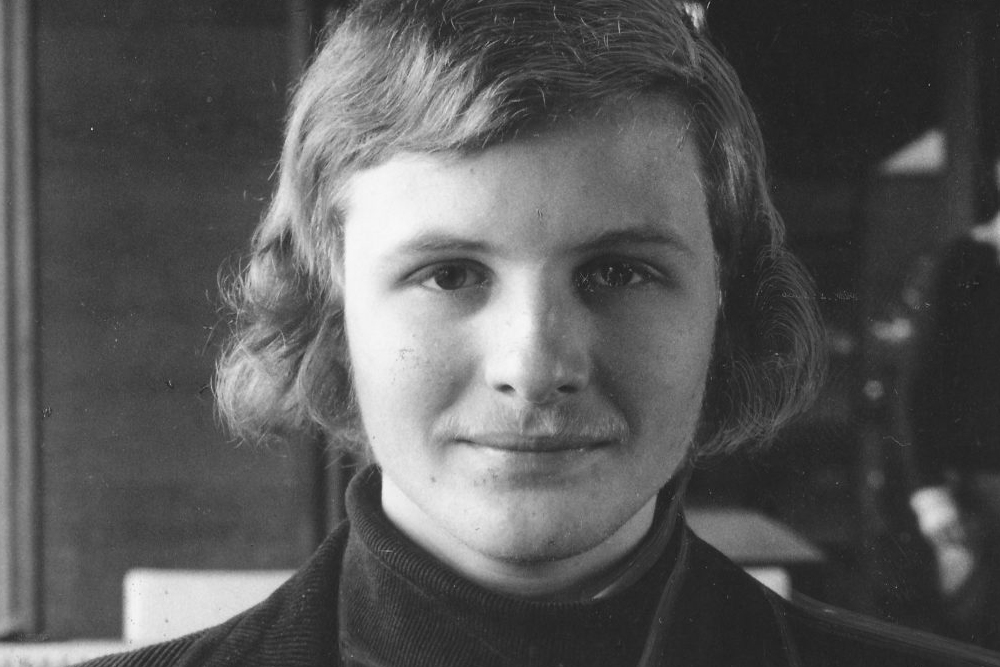

Anthony Miles, born on 23 April 1955 in a suburb of Birmingham, was already an outstanding chess talent at a young age. In 1968, he won the English Under-14 Championship and soon afterwards was already the strongest player in the English Midlands. In 1973, he finished runner-up in the World Junior Championship, and a year later he became world junior champion. In 1976, Miles became the first Englishman to receive the grandmaster title, and with it the £5,000 prize offered by the patron Jim Slater for achieving this feat.
During the 1970s and 1980s, Miles developed into a world-class player and attracted enormous attention when, at the 1980 European Team Championship in Skara, he defeated reigning world champion Anatoly Karpov with the highly unorthodox defence 1…a6. The move was not intended as a provocation. Miles had noticed that Karpov knew all his openings perfectly and wanted to lure the world champion out of his "comfort zone", as one would say today. It was not his only victory over Karpov.
This is a game everyone should know:
Miles was also a committed adherent of the Sicilian Dragon, which he regularly employed with success during the 1970s and 1980s.
In 1985, he played some of his games in Tilburg while lying on a stretcher because of back pain. The image went around the world.

Photo: Dutch National Archive
In 1986, Miles reached his highest position in the world top ten, rising to ninth in the rankings. Together with John Nunn, Nigel Short and Jonathan Speelman, he helped make the English national team one of the strongest in the world at the time. Only the Soviet team was stronger. Tony Miles' career, however, was repeatedly marked by setbacks for which he never found a satisfactory explanation.
Miles had a caustic sense of humour and never minced his words when he held a particular opinion. In 1987, he became involved in a dispute with Raymond Keene and the English Chess Federation over payments that Miles believed were unjustified. He also had a strained relationship with the rising Nigel Short. The continuing disputes affected Miles so badly that he suffered a nervous breakdown. Police detained him in Downing Street in September 1987, when Miles was apparently trying to reach Margaret Thatcher in order to speak to the Prime Minister about his dispute with the chess federation. Miles had to receive psychiatric care in a clinic for a period of time.
As a result of the disputes, Miles left the English federation and played for the US federation for a while. From 1988, he lived temporarily near Cologne in Germany.

Photo: British Chess News
In 1990, Miles won the US Championship. He also spent some time in Australia. In 1991, Miles returned to England and once again achieved good tournament results in the mid-1990s.
For ten years, Miles had also served as president of his chess club in Birmingham. The members knew him as a friendly, humorous and generous organiser. Miles also gave chess lessons and was not above teaching beginners, including children.
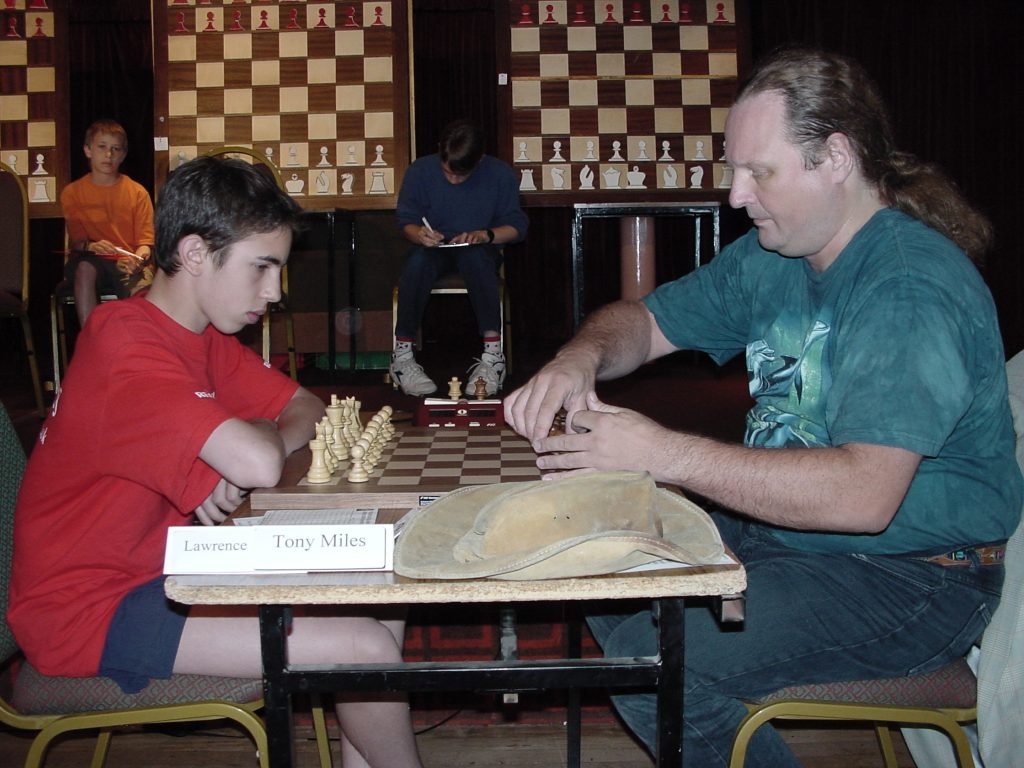
Miles v. Lawrence Trent at a tournament in Scarborough in 2001 | Photo: British Chess News
On 12 November 2001, an old school friend went to collect Miles to play bridge, but found him dead in his bed. Miles had died of heart failure, a consequence of long-term diabetes. His diabetes had almost certainly also been the cause of many of his episodes of weakness and periods of poor form. Remarkably, the illness had only been diagnosed three years before Miles' death.


| Advertising |







.jpeg)

