5/24/2017 – Did you ever wonder who was (or is) the best player of all time? Who would win if all 16 World Champions, plus Philidor, Labourdonnais, Anderssen and Morphy could play against each other in a tournament? How would Steinitz, Lasker or Capablanca cope against the best players from today? Such questions have no answer, of course, but are hotly debated.
new: Fritz 20
Your personal chess trainer. Your toughest opponent. Your strongest ally. FRITZ 20 is more than just a chess engine – it is a training revolution for ambitious players and professionals. Whether you are taking your first steps into the world of serious chess training, or already playing at tournament level, FRITZ 20 will help you train more efficiently, intelligently and individually than ever before.
The "Mega" is the database every serious chessplayer needs. The database contains 6.8 million games from 1500 to 2016, in highest quality standard, full of top level analyses and completely classified.
“Mate is great!” – Tactical training with Oliver Reeh, “The 8th rank” – Andy Woodward analyses his game against Magnus Carlsen from TePe Sigeman 2026, “A modern Nimzo-Indian” – Andrei Volokitin introduces readers to "his" system and much more!
€21.90
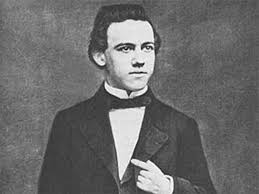
The prodigious talent of Morphy
It is difficult to separate skill and talent of a player from the chess knowledge of his time. If you let a computer check the games of the best players from past and present to find out who made the best and most precise moves, modern players will fare much better. Their theoretical knowledge is deeper and their general understanding of the game is better, not least because they had the chance to learn from their predecessors.
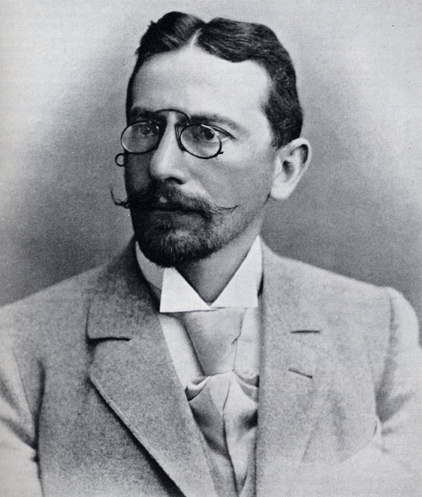
FIDE adopted the Elo-system in 1970, but the statistician Jeff Sonas has tried to quantify the strength of the best players from the past by calculating historical Elo-ratings for Steinitz, Lasker & Co. He published his findings on chessmetrics.com. But Sonas, too, cannot answer the question who was or is the best player of all time. According to Chessmetrics Bobby Fischer has the highest rating of all time but it is Emanuel Lasker who spent more time as the number one in the world than any player before or after him. And some historical ratings are simply surprising: for example, according to Chessmetrics, Dr. Siegbert Tarrasch (pictured at left) in June 1895 had an Elo-rating of 2824, more than players such as Smyslov, Tal, Petrosian, Spassky, Euwe, Bronstein or Keres ever had!
If you do not trust the numbers, you might want to rely on intuition. German chess coach and chess historian Gisbert Jacoby does. While he was updating and revising the historical part of the ChessBase Mega Database 2017, Jacoby came across a number of games Paul Morphy had played as a 12-year old. Impressive games which make Jacoby believe that the 12-year old Morphy was already the best player in America and one of the best players in the world.
In 1850 Morphy played a number of casual games against Johann Löwenthal from Hungary — according to Chessmetrics the world's number two from October 1858 to April 1859 and in 1850 definitely one of the world's best players. Morphy won this unofficial match.
In 1858, when Morphy was in Europe to challenge the best European players, the two played again, this time an official match. Morphy won with 6 wins, 3 losses, and 2 draws. But the games from 1850 already show the prodigious talent of Morphy.
Paul Morphy (left) and Johann Löwenthal during their match in London 1858
Morphy was also twelve years old when he played his first published game. His opponent was Eugène Rousseau, a French player who lived in America. In 1845 Rousseau played a match for the American Championship against Charles Stanley from England. Rousseau lost the match with +8, -15 und =8 but was definitely one of the top players in America. But this did not stop him from losing quickly against young Morphy!
Having talent is good but it also must have a chance to unfold. Morphy's environment was almost ideal for the development of his chess talent. Morphy was born on June 22nd, 1837, into a wealthy family in New Orleans. Ernest Morphy, the brother of Paul Morphy's father, Alonzo, was one of the best American players, and the Morphy-family often and enthusiastically played chess. Moreover, Alonzo Morphy also had a large library that gave his son Paul access to all important chess literature of his time. According to contemporary sources Morphy also had a photographic memory — he remembered everything he read.
On his twelfth birthday Morphy played the following game against his uncle Ernest. Morphy was playing blindfold — without seeing the board!
Games like these indicate Morphy's enormous talent. But of course they cannot answer the question whether Morphy would have been able to hold his own against today's top-players.
Gisbert Jacoby and Karsten Müller decided to take a closer look:
The "Mega" is the database every serious chessplayer needs. The database contains 6.8 million games from 1500 to 2016, in highest quality standard, full of top level analyses and completely classified.
Johannes FischerJohannes Fischer was born in 1963 in Hamburg and studied English and German literature in Frankfurt. He now lives as a writer and translator in Nürnberg. He is a FIDE-Master and regularly writes for KARL, a German chess magazine focusing on the links between culture and chess. On his own blog he regularly publishes notes on "Film, Literature and Chess".
YOUR PERSONAL CHESS COACH - Whether you’re taking your first steps into the world of club chess, or already playing at a tournament level: with FRITZ, you can train more efficiently, intelligently and with a more personalised approach than ever before.
How grandmasters win without fireworks: GM Jan Markos shows you 11 very practical tips from "How to play in a lost position" to "Be patient like Carlsen" that will improve your tournament chess.
The Nimzo-Indian has stood the test of time for over a century: Still a top choice for elite players today, from Magnus Carlsen to Praggnanandhaa, it remains one of Black's most reliable ways to fight for real chances against 1.d4 2.c4 3.Nc3.
1.c4 e5 2.Nc3 Bb4!? is an opening idea well worth considering. Black immediately threatens to double the pawns on c3 in the style of the Trompowski or Sicilian Grand Prix attack.
Italian Game Powerbase 2026 is a database and contains 8571 top class games from Mega 2026 and the Correspondence Database 2026, of which 479 are annotated.
Videos: Nico Zwirs discusses the Sicilian with 2…e6 3.d4 cxd4 4.Qxd4 Nc6 5.Qe3 Nf6 6.Nc3. Mihail Marin examines Sindarov’s 6.Ne5 in the Queen’s Pawn Defence. Plus the ‘Lucky bag’ featuring 41 analyses by Berg, Ftacnik, Gupta and many others.
€14.90
We use cookies and comparable technologies to provide certain functions, to improve the user experience and to offer interest-oriented content. Depending on their intended use, analysis cookies and marketing cookies may be used in addition to technically required cookies. Here you can make detailed settings or revoke your consent (if necessary partially) with effect for the future. Further information can be found in our data protection declaration.
Pop-up for detailed settings
We use cookies and comparable technologies to provide certain functions, to improve the user experience and to offer interest-oriented content. Depending on their intended use, cookies may be used in addition to technically required cookies, analysis cookies and marketing cookies. You can decide which cookies to use by selecting the appropriate options below. Please note that your selection may affect the functionality of the service. Further information can be found in our privacy policy.
Technically required cookies
Technically required cookies: so that you can navigate and use the basic functions and store preferences.
Analysis Cookies
To help us determine how visitors interact with our website to improve the user experience.
Marketing-Cookies
To help us offer and evaluate relevant content and interesting and appropriate advertisement.










 FIDE adopted the Elo-system in 1970, but the statistician Jeff Sonas has tried to quantify the strength of the best players from the past by calculating historical Elo-ratings for Steinitz, Lasker & Co. He published his findings on