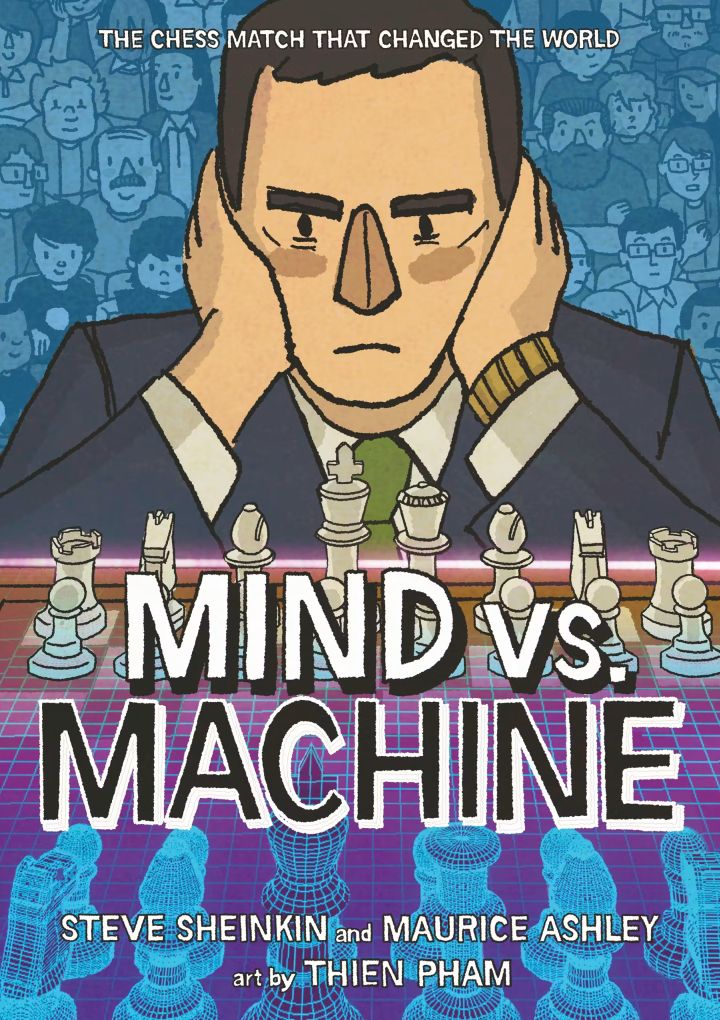
 Mind vs. Machine: The Chess Match That Changed the World
This thought-provoking graphic novel collaboration from first Black chess grandmaster Ashley (The Life-Changing Magic of Chess), Sheinkin (Diamond Fever!), and Pham (Family Style) celebrates human creativity and intuition amid an ever advancing technological landscape.
A prologue set in present-day Brooklyn reveals Ashley as the work’s omniscient narrator. As he competes against a young opponent in a park, Ashley recalls Hungarian engineer Wolfgang von Kempelen’s invention, an automaton chess player, and the existential question it inspired: “Can we be replaced by technology?”
Subsequent chapters introduce Garry Kasparov, the reigning world chess champion in 1997, as he prepares to travel from Moscow to New York City for his upcoming match with Deep Blue, a new supercomputer developed by IBM and Taiwanese American engineer Feng-hsiung Hsu.
Up until that point, Kasparov hadn’t lost a match in 12 years, and no computer had ever bested a grandmaster in tournament play, leading to global interest and speculation that was amplified by international news coverage of “the ultimate clash of human vs. machine.” It is an affirming story whose high stakes and taut atmosphere closely mirror contemporary issues in increasingly unprecedented technological times.
Maurice Ashley and Steve Sheinkin, illus. by Thien Pham. Roaring Brook, $22.99 hardcover (240p) ISBN 978-1-250-33477-0; $14.99 paper ISBN 978-1-250-33476-3
Here are some impressions from the book:
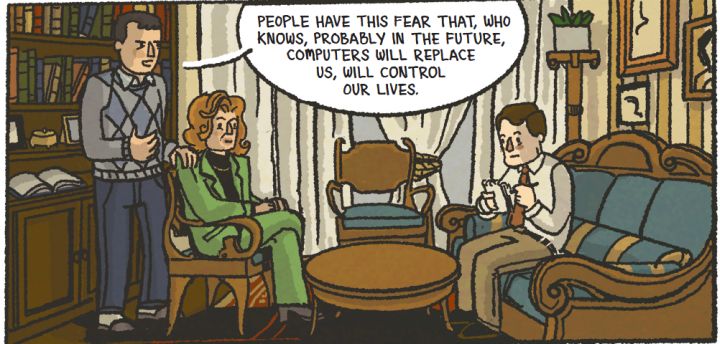
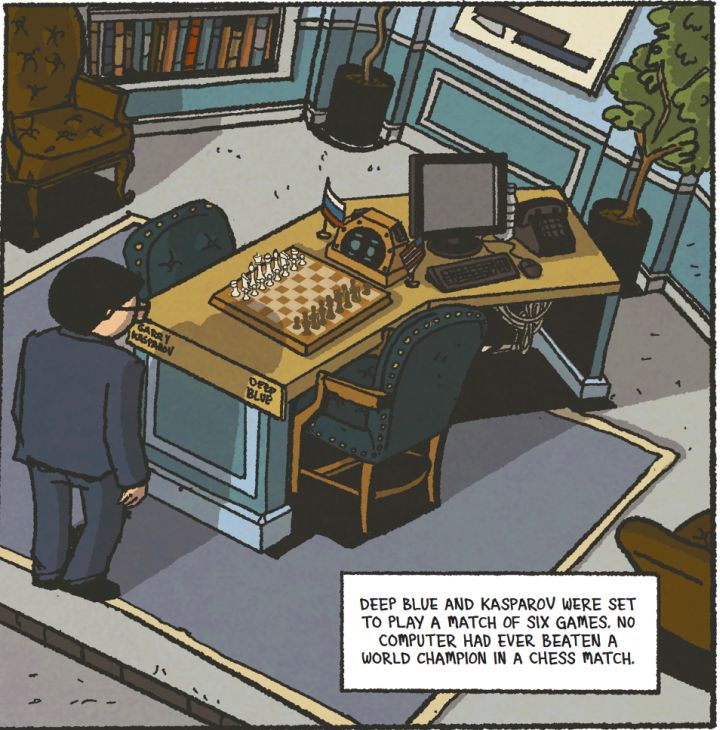
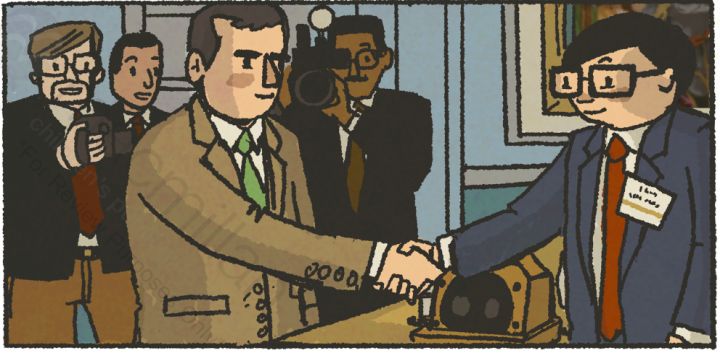
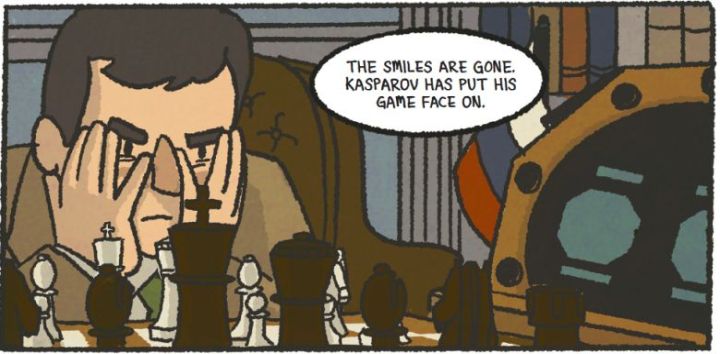
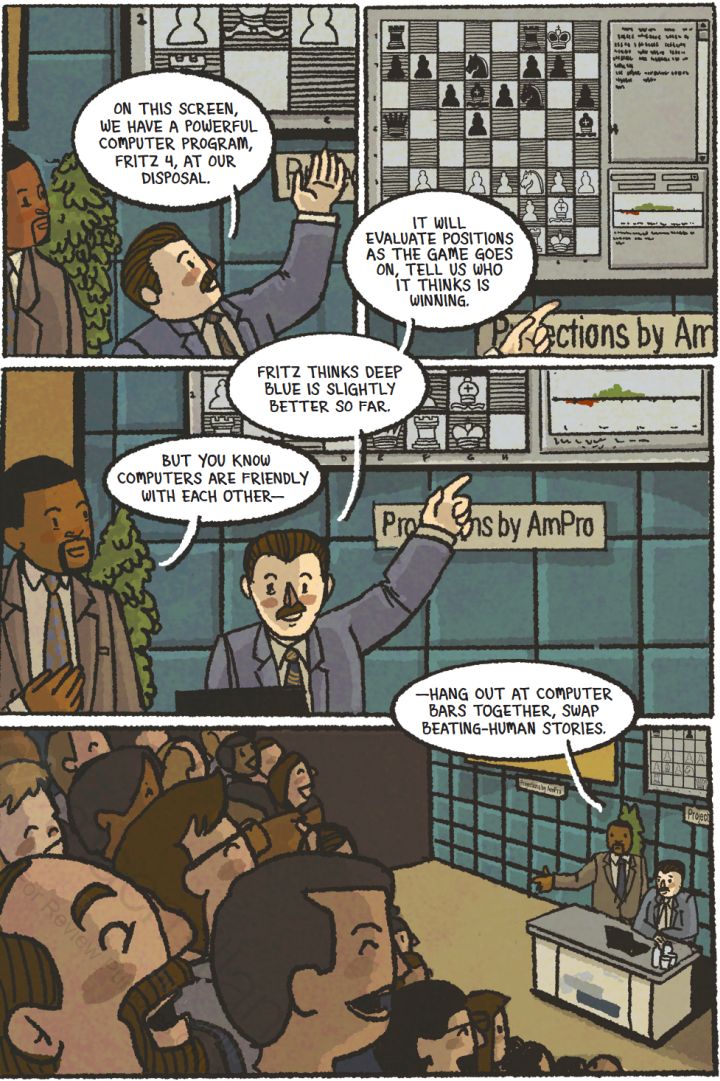
Frederic's appearance in a comic book
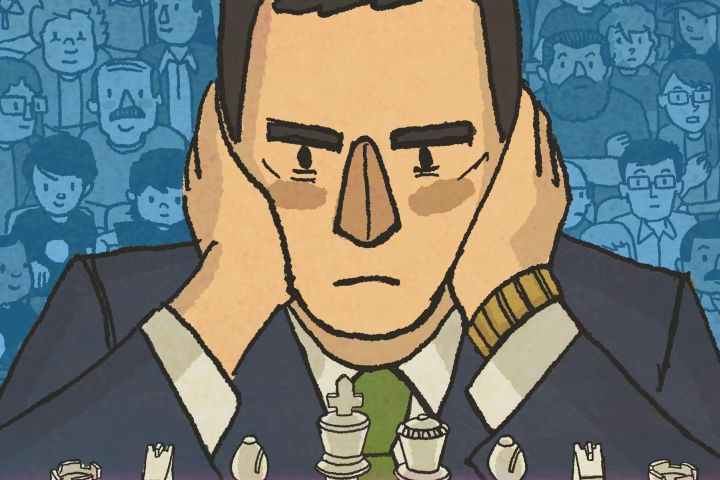
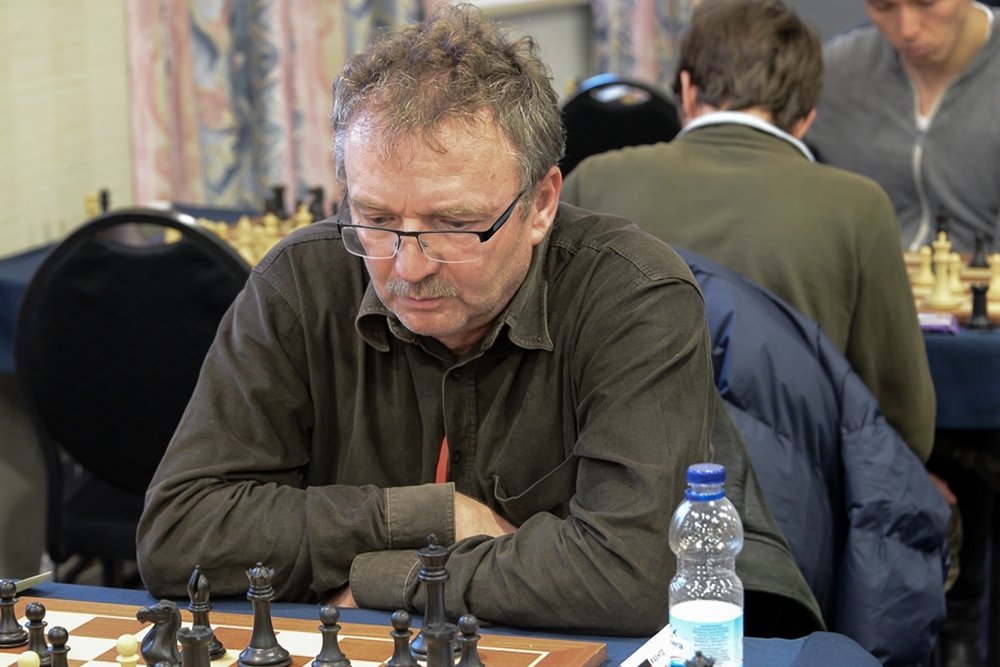
I have written a number of books, many thousands of articles, given countless interviews in TV and YouTube. But this is my first appearance in a comic book. The likeness is not striking, but it is a quite strange to see yourself featured in this form.
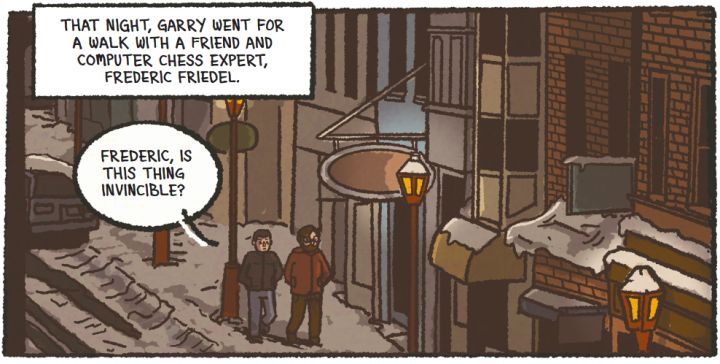
This is me finding out, late at night, that Garry did not have to resign game two – and waking Garry's second Yuri Dokhoian, early in the morning, to check it out.
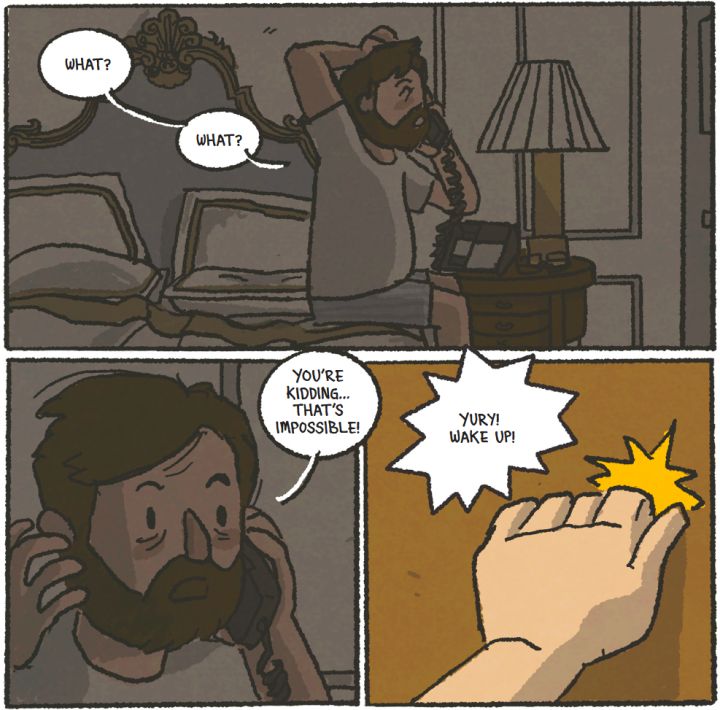
Garry had lost game two. In the book Chess Stories, I describe the traumatic aftermath:
After the fretful evening and a restless night, there was another shock waiting for Garry. In the early morning hours I was informed by the ChessBase team and IM Malcolm Pein that Kasparov had missed a drawing chance after move 45. I caught Yury before breakfast, and we looked at the perpetual check the people in Hamburg and London had found. Yuri was not surprised: he had been looking at similar ideas himself.
Now the question was: who should tell Garry? I thought the best course of action would be to keep the information from him until the end of the match. But I knew that the whole world would soon find out that he had missed a draw. If he got into a taxi cab, the driver would ask about it. Garry had to find out from us. Yury said he would tell him. In Deep Thinking Garry describes the revelation process as follows:
"My team – Yuri, Frederic, Michael and Owen – and I were walking to lunch down Fifth Avenue when Yuri approached me with the face of a man about to tell someone that a close family member has just passed away. ‘The final position of yesterday’s game was a draw,’ he told me in Russian. ‘Perpetual check. Queen to e3. Draw.’ I stopped dead still on the sidewalk with my hands on my head, looked at each of them since they had all obviously known this and had been debating if, when, and how to break the news to me.”
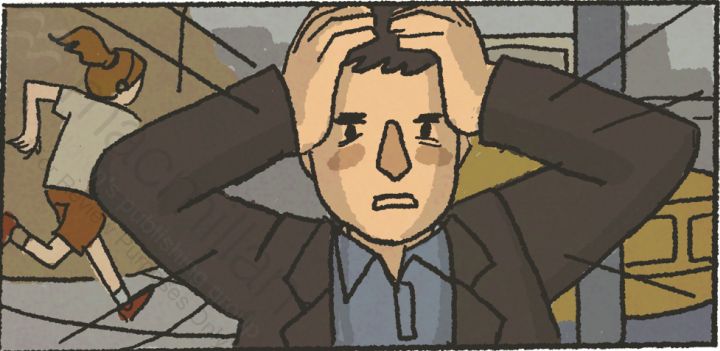 This is Garry reacting to the news about the draw he had missed, in Mind vs Machine.
The book is jolly good fun to read. You can get it from Macmillan, Amazon, or a variety of US and international retailers.















.jpeg)