5/16/2017 – English Grandmaster Simon Williams is a popular commentator and author who recently published a DVD about the London System with 2.Bf4. In an interview with ChessBase he explains why this seemingly quiet line is dangerous and also talks about effective opening study and reveals why it is sometimes a good idea to break rules.
new: ChessBase Magazine 225
Chess Festival Prague 2025 with analyses by Aravindh, Giri, Gurel, Navara and others. ‘Special’: 27 highly entertaining miniatures. Opening videos by Werle, King and Ris. 10 opening articles with new repertoire ideas and much more. ChessBase Magazine offers first-class training material for club players and professionals! World-class players analyse their brilliant games and explain the ideas behind the moves. Opening specialists present the latest trends in opening theory and exciting ideas for your repertoire. Master trainers in tactics, strategy and endgames show you the tricks and techniques you need to be a successful tournament player! Available as a direct download (incl. booklet as pdf file) or booklet with download key by post. Included in delivery: ChessBase Magazine #225 as “ChessBase Book” for iPad, tablet, Mac etc.!
"Simple yet aggressive!" Enjoy this new exciting DVD by Simon Williams. Let the famouns Grandmaster from England show you how to gain a very exciting yet well founded opening game with the London System (1.d4 d5 2.Bf4).
In almost every chess game there comes a moment when you just can’t go on without tactics. You must strike to not giving away the advantage you have worked for the whole game.
€39.90
Dear Simon, you just published a DVD on the London System with 2.Bf4. After dealing with the sharp King’s Gambit you now seem to cruise calmer waters. How did you get interested in this system?
Nowadays I have far less time to study all the latest developments that occur in opening theory. I wanted an opening that was perfect for a lazy player with little time to study, enter the London System.
Why does White play the bishop to f4? What are the ideas behind this move?
The main positional idea to Bf4 is to follow with e3 when the bishop will not be trapped in behind the pawn structure. This early move also leads to unique and unexplored territories.
“Knights before bishops”, I was told as a beginner. Is this rule no longer valid?
Rules are there to be broken. In all seriousness, general rules like this are ok, but as our skills in chess advance we will find numerous examples when it is a good idea to break some of these rules.
Though White develops his bishop before the knight, violating old and established rules, 2.Bf4 does not really seem to be a wild move. But is it really as harmless as it looks?
2 Bf4 has a lot of bite to it. I wouldn't be able to play an opening myself that simply leads to a boring and dull game. Like anything in life, it is what we make of it and the DVD I presented shows just how exciting and dangerous this move can be.
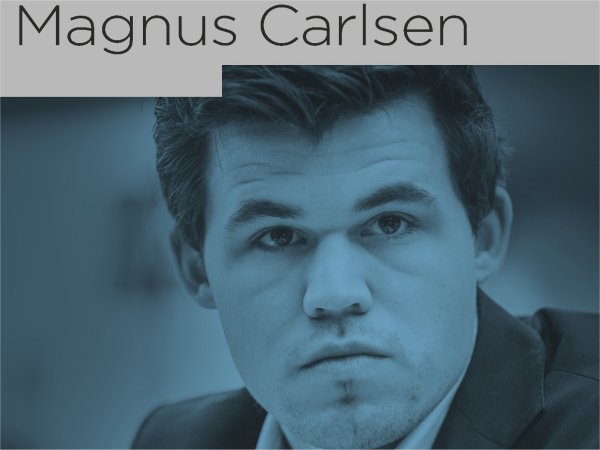
Magnus Carlsen has played 2.Bf4 in a couple of games. But do you think 2.Bf4 will become a regular guest in (top) tournaments or will the move be just a passing fashion?
Magnus Carlsen on the cover of the new Fritztrainer DVD which analyzes the play of the World Champion
I expect that this move will continue to be used at top level. It has a good solid positional foundation so why not play it?
How useful, do you think, is it for amateurs to imitate the opening choices of the world’s top players?
I actually think it is often a stupid thing to do. Why would a lower rated player want to try and play a vastly complicated opening that requires a tremendous amount of work behind it, when they can play something much more simply, time efficient and easier to play. Like the London System. We should take things example to example and not try to generalise.
And how useful is it for amateur players to follow the latest opening trends?
It can be useful, but I think it is much more important to try and understand the concepts and ideas behind the moves that are being played in the opening. Rather then thinking along the lines, " if he plays 21 Nxd4 then I must respond with ...Nf4" etc a player would improve much more thinking along lines such as, "The idea of playing 4 c3 is to reinforce my centre and allow me the option of playing Qb3. Qb3 can be a good move if my opponent moves his light square bishop on c8 away from the defence of b7." etc - Keep asking yourself 'Why?' - Why play that move, why did my opponent play that move. etc.
With a move like 2.Bf4 White seems to be determined to avoid theoretical lines. And though a lot of players profess an unwillingness to learn concrete lines, knowing your theory gives confidence and saves time on the clock. But with a move like 2.Bf4 that avoids theory you might simply not know how to continue with White, where to put your pieces, which piece to develop first, and so on. What do you think?
The main aim of my DVD is to explain to the viewer just how they should be thinking from the opening. I want them to understand and know the concepts behind the opening, then if they are surprised they will still know how to think in the correct way.
You made DVDs about relatively rarely played openings such as the King’s Gambit, the Evans Gambit, the “Black Lion” but also DVDs on more popular openings such as the Queen’s Indian, the Queen’s Gambit and the Slav. What is the attraction of playing main lines and what is the charm of a rarely played opening?
The Evans Gambit is an attempt to destroy Black in gambit fashion straight out of the opening. Featuring games of old, and numerous new and exciting ideas, this DVD will give you a genuine and more exciting way of playing the Giuoco Piano.
Both approaches have their time and place. I really try to teach what I preach. If it is an opening that I play and understand or an opening that I have spent a long time studying then I am happy to share that knowledge with people. I would also like to mention that deciding on the opening depends a lot on the individual, a lot of chess enthusiasts just do not have much spare time to study all the latest theory. In that case it makes a lot more sense to play openings that are sound but also slightly off beat. Hence why the London System is such a great choice for these players.
Personally, I have always found it tedious and boring to study openings. But judging from your DVDs, you seem to enjoy it. Where’s the fun in studying openings?
Lol! Lets be honest, I find a lot of opening work boring, but some work on it can be fascinating as well. I try to teach in a manner that explains and helps, but also keeps the viewer awake rather than putting them to sleep.
Do you remember a particular game or a particular moment when your opening study proved to be rewarding and satisfying?
I try to learn openings in a more general way rather then going for a specific 'one move crush'. This helps me in the majority of my games understanding such things as, 'what pawn structure I should be aiming for' 'where my pieces should move to' 'when to attack'. So learning with a very strong foundation, rather than just basing my knowledge on cheap tricks.
How important is it for amateurs to study openings?
It is important, but they must also not forget to keep an eye on other areas of the game. Of course watching my DVDs will automatically help them improve 200 elo points... (smiles)
Last question: what is your favourite game with 2.Bf4 and why?
Let me pick two games for different reasons.
1) Even though not officially starting with 2 Bf4, this only came a move later, the moves often being interchangeable. Carlsen vs Tomashevsky, 2016, was a masterful positional display from the world champion. With Magnus exchanging pieces with perfect timing.
On a more aggressive level the following Greek Gift idea has occurred on numerous occasions. Again White plays the bishop out one move later, but like I mentioned before it is the idea that is important not the specific move order.
Johannes FischerJohannes Fischer was born in 1963 in Hamburg and studied English and German literature in Frankfurt. He now lives as a writer and translator in Nürnberg. He is a FIDE-Master and regularly writes for KARL, a German chess magazine focusing on the links between culture and chess. On his own blog he regularly publishes notes on "Film, Literature and Chess".
YOUR PERSONAL CHESS COACH - Whether you’re taking your first steps into the world of club chess, or already playing at a tournament level: with FRITZ, you can train more efficiently, intelligently and with a more personalised approach than ever before.
How grandmasters win without fireworks: GM Jan Markos shows you 11 very practical tips from "How to play in a lost position" to "Be patient like Carlsen" that will improve your tournament chess.
The Nimzo-Indian has stood the test of time for over a century: Still a top choice for elite players today, from Magnus Carlsen to Praggnanandhaa, it remains one of Black's most reliable ways to fight for real chances against 1.d4 2.c4 3.Nc3.
1.c4 e5 2.Nc3 Bb4!? is an opening idea well worth considering. Black immediately threatens to double the pawns on c3 in the style of the Trompowski or Sicilian Grand Prix attack.
Italian Game Powerbase 2026 is a database and contains 8571 top class games from Mega 2026 and the Correspondence Database 2026, of which 479 are annotated.
Videos: Nico Zwirs discusses the Sicilian with 2…e6 3.d4 cxd4 4.Qxd4 Nc6 5.Qe3 Nf6 6.Nc3. Mihail Marin examines Sindarov’s 6.Ne5 in the Queen’s Pawn Defence. Plus the ‘Lucky bag’ featuring 41 analyses by Berg, Ftacnik, Gupta and many others.
€14.90
We use cookies and comparable technologies to provide certain functions, to improve the user experience and to offer interest-oriented content. Depending on their intended use, analysis cookies and marketing cookies may be used in addition to technically required cookies. Here you can make detailed settings or revoke your consent (if necessary partially) with effect for the future. Further information can be found in our data protection declaration.
Pop-up for detailed settings
We use cookies and comparable technologies to provide certain functions, to improve the user experience and to offer interest-oriented content. Depending on their intended use, cookies may be used in addition to technically required cookies, analysis cookies and marketing cookies. You can decide which cookies to use by selecting the appropriate options below. Please note that your selection may affect the functionality of the service. Further information can be found in our privacy policy.
Technically required cookies
Technically required cookies: so that you can navigate and use the basic functions and store preferences.
Analysis Cookies
To help us determine how visitors interact with our website to improve the user experience.
Marketing-Cookies
To help us offer and evaluate relevant content and interesting and appropriate advertisement.