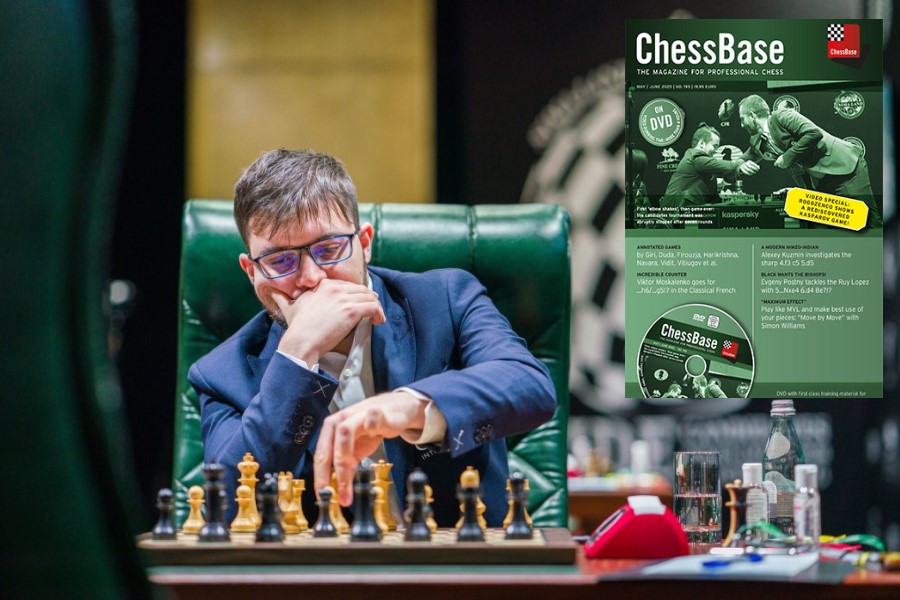


CBM 195: Boys will be boys!

by Nagesh Havanur
6/7/2020 – ChessBase offers a window to the world of professional chess. The current issue offers a bird’s eye view of three major events, the Candidates 2020, the FIDE Women's Grand Prix and Moscow Aeroflot, 918 games, 11 opening surveys, demo lectures and exercises for training. It also includes games annotated by Boris Gelfand, Anish Giri and Romain Edouard, just to mention a few. Columnist Nagesh Havanur takes a look. | Photo: Lennart Ootes / FIDE

Your personal chess trainer. Your toughest opponent. Your strongest ally.
FRITZ 20 is more than just a chess engine – it is a training revolution for ambitious players and professionals. Whether you are taking your first steps into the world of serious chess training, or already playing at tournament level, FRITZ 20 will help you train more efficiently, intelligently and individually than ever before. 

No more handshakes

ChessBase MagazineNo, we don’t shake hands with friends any more. If we do, we run the risk of shaking hands with Death itself next time. In the picture here both Grischuk and his rival Nepomniachtchi are doing their best to get used to the  “new normal” even as they see the looming shadow of the pandemic over the Candidates in which they are  both playing.

As is known, that abomination of an event held amidst the macabre dance of death all round was called off for an indefinite period, and it was announced that it would resume at a later date. Among other things, this issue includes all the games from that unfinished event. For now there are 29 games from 7 rounds, and they are annotated by Anish Giri, Romain Edouard, Michal Krasenkow and Boris Gelfand. These games were played in rather strange circumstances and it’s curious that the annotations make no mention of them altogether.

Firouzja wins in Prague

I was happier seeing the games from the Prague Masters 2020, with 21 of them beautifully annotated by the players themselves. As is known, Alireza Firouzja won the event after a blitz play-off with Vidit Gujrathi ahead of David Anton, Jan Duda and Sam Shankland. I was struck by the candour and friendly spirit with which each player commented on his rival’s game. Here is just one of them:


I was also interested in seeing the blitz play-off between Vidit and Alireza and struck by the standard of play, all in mere 5 minutes. 
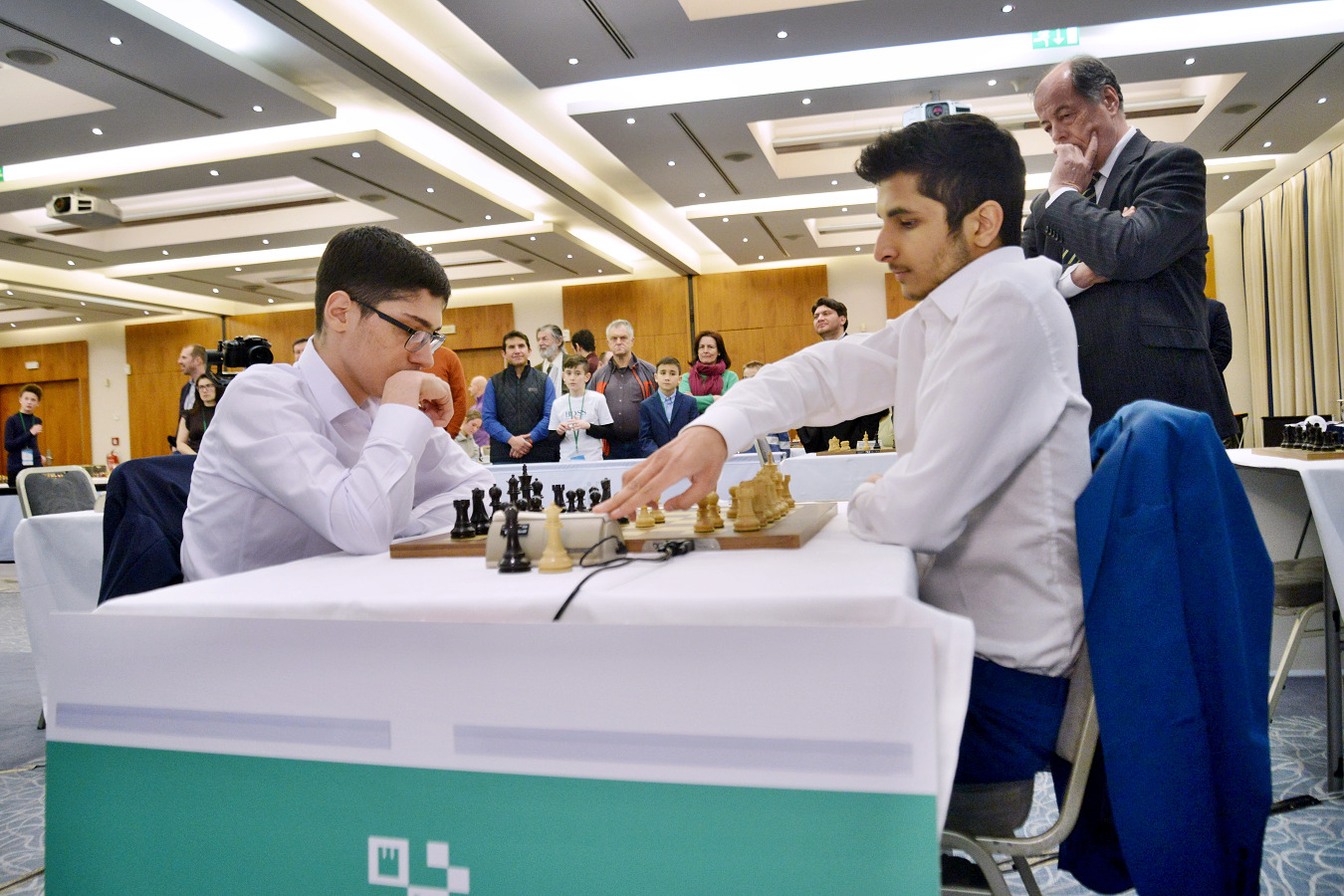
Alireza Firouzja, Vidit Gujrathi

Alireza Firouzja v Vidit Gurathi | Photo: praguechessfestival.com


A terrible debacle and the dispirited Vidit went down in the second game as well, making it 2:0 for Alireza.

Women elite players gather in Lausanne

I am very sympathetic to women’s chess (girls, please come and join the boys). In this issue, we have all the games from the FIDE Grand Prix in Lausanne won by Nana Dzagnidze, ahead of Aleksandra Goryachkina on tie-break with a score of 7/11.
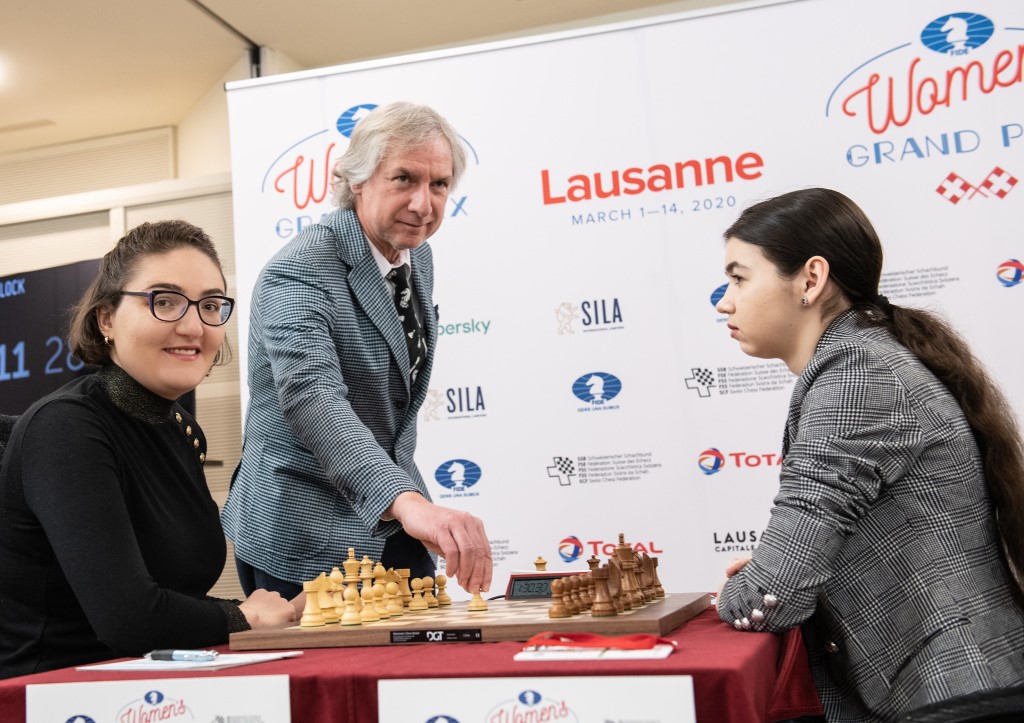
Nana Dzagnidze, Aleksandra Goryachkina

The deciding face-off between Dzagnidze and Goryachkina | Photo: David Llada

But somehow I could not enthuse myself over the games, and it’s rather unfair to the players who fought well and hard. So let not readers be swayed by my facile impression here. Perhaps there is more to these games than meets the eye. Do check out the annotations by Nana Dzagnidze, Aleksandra Goryachkina, Anna Muzychuk, Ju Wenjun and, last but not least,  Zhansaya Abdumalik to their games.

Suleymanli stuns in Moscow

For some reason the Moscow Aeroflot Open Tournament does not get the billing as a top tournament in this issue. All the games are there, though. 
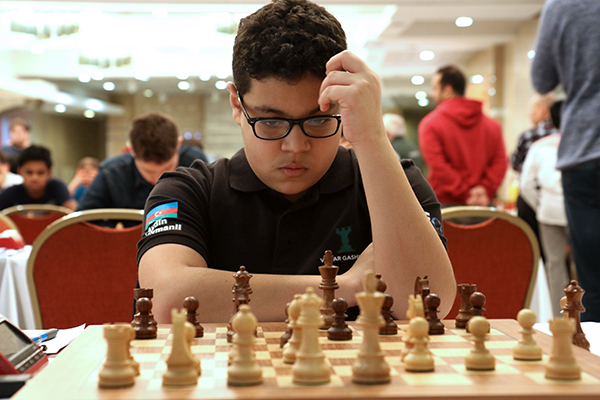
Aydin Suleymanli

Aydin Suleymanli | Photo: Eteri Kubashvili

As is known, fourteen-year-old Aydin Suleymanli won the tournament on tie-break with a score of 6½ points out of 9 ahead of Rinat Jumabayev and Rauf Mamedov. This was a strong field of 97 players with Artemiev, Sjugirov and Sargissian among them.

I think, the older opponents of Suleymanli underestimated him, like Ilya Smirin here, who went down before he knew what was happening.


Aleksandar Colovic, who annotated this game in British Chess Magazine, wondered why the veteran grandmaster did not employ the King’s Indian in which he is one of the greatest experts. Smirin has written a whole book on it (King’s Indian Warfare, New in Chess. 2016).

Probably he thought his young rival had read the work and wanted to sidestep his preparation. That was a mistake. But then, it is not easy to put yourself in the loser’s place.

Rauf Mamedov deserved better than his final placing in this event. Here is a game illustrative of his dynamic play:


The sporting grandmaster was only too happy for his young friend to have won the event.
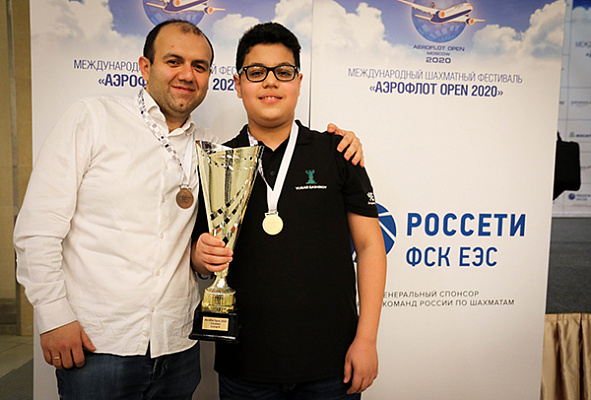
Rauf Mamedov, Aydin Suleymanli

Azerbaijani stars Rauf Mamedov and Aydin Suleymanli | Photo: Eteri Kubashvili

This brings me to the rest of the DVD. Apart from standard features on middlegame tactics, endgame play and training, this issue has as many as eleven opening surveys ranging from the Ruy Lopez to the Reti. Among them, I would single out the article on the Sicilian Sveshnikov by Robert Ris, which analyses just one line — 9.Bf6 gf6 10.Nd5 Bg7. Here I am offering a glimpse of the same with a commentary of my own. 


Robert Ris rightly points out that much of the current work on this sharp variation is done in correspondence chess. He is only right, and for the same reason I have included quite a few correspondence games in the commentary.

Apart from these surveys, there are regular sections on opening traps, middlegame tactics and endings. There is much else in this DVD that deserves to be explored. The main database of the issue has 918 recent games of which 32 are deeply annotated. Apart from the GMs I have already mentioned, the commentators include Krasenkow, Vitiugov and Navara, among others. A major contribution is made by Roman Edouard, who has annotated 8 games. It may be noted that there are more annotated games in the sections on opening theory and training.

Well, practice makes perfect.

Recommended.  

Links


Prof. Nagesh Havanur (otherwise known as "chessbibliophile") is a senior academic and research scholar. He taught English in Mumbai for three decades and has now settled in Bangalore, India. His interests include chess history, biography and opening theory. He has been writing on the Royal Game for more than three decades. His articles and reviews have appeared on several web sites and magazines.

Discuss

Rules for reader comments


Not registered yet? Register

cbresearch cbresearch 6/9/2020 02:18
@Stonker I'm shocked.
Stonker Stonker 6/8/2020 03:33
Thank you, chessbibliophile, for your full and generous response. I'm glad it was just the words and phrases (present and absent) in the original article that in this case got in the way of your true thoughts. Not knowing you personally, I could only draw out and share the impression that I (and others reading the article with no pre-judgement) got from it.
wittgenstein: indeed. The Political Correction Police do indeed get on my nerves too. My original response was not of that nature, and neither am I. Please read my little ditty beyond the first four words. My feelings related to coherence of text as well as fairness, not pedantry. I do believe one should speak up when something is, or seems to be, counter to one's strongly held principles. Not enough of that going on 'out there' at the moment, I'm sure you'll agree! With that off all our chests, I can look forward to reading the next Chessbase News articles, possibly renewing my CBM subscription and above all: pushing some wood; real or digital...1.d4
chessstandards chessstandards 6/8/2020 11:06
Boys will be boys!
Girls will be girls!
These are troubled times.
Remember the poor.
Remember the sick.
Even as you play.
wittgenstein wittgenstein 6/8/2020 05:17
This politically correct thing is making the world very boring. Boys will be boys. What is wrong? Easy man.
chessbibliophile chessbibliophile 6/7/2020 06:23
Easy, easy. There is some misunderstanding here. The subtitle, “Boys will be boys” refers to the players who played with such youthful spirit in Prague. They were bold, bright, impulsive and impatient. No gender implication there. Much as I wished, I couldn’t spare enough time for a thorough scrutiny of the games from Women’s Grand Prix in this issue. The ones I saw were either too long or with one player completely dominated by the other. Ordinarily, for the review I select games in which both sides have had their chances. Here I missed them. So as a matter of self-criticism, I wrote, I have not done justice to the performance of the female players here. It’s no reflection on their talent or hard work.
This brings me to a personal opinion expressed here. I would like girls and women to play along with boys and men. It would serve the cause of chess and society both. Many female players already participate. Let it become universal. Unfortunately, there are many constraints and they prevent it from happening.
I never see the women’s tournaments taking place in a vacuum. I know what the players have had to leave behind, who they have had to leave behind when they play in a tournament far away from home. I also understand the problems they face all the way down from society to bureaucracy. Does this make me politically incorrect or paternalistic? Probably, but not condescending. Meanwhile I appreciate the concern of our fellow reader here. Let there be more understanding, care and concern for female players without any sense of superiority on our part.
Stonker Stonker 6/7/2020 05:06
'Boys will be boys? Trying to put that into some meaningful context in the case of this article. Not obvious enough to me, it appears. Until I reads on: 'I am very sympathetic to women’s chess (girls, please come and join the boys)'. What? Sympathy, as in paternalistically superior? 'I could not enthuse myself over the games, and it’s rather unfair to the players who fought well and hard.' What is unfair: the author not being enthused? Heavy head scratching increases. 'So let not readers be swayed by my facile impression here.'
Worse than facile, dear author. This would be just bizzare if it weren't quite offensive. Any woman, let alone 'girl' who might stumble into this article, might very well assume the chess world is some place from a couple of centuries ago, and definitely not for her.
Full disclosure: I'm male, a patzer, usually a fan of most things Chessbase, father of girls, and feet firmly planted in the 21st Century. I'm about to go all 'Gladiator', but not yet, not yet; so I'll stop here.
1