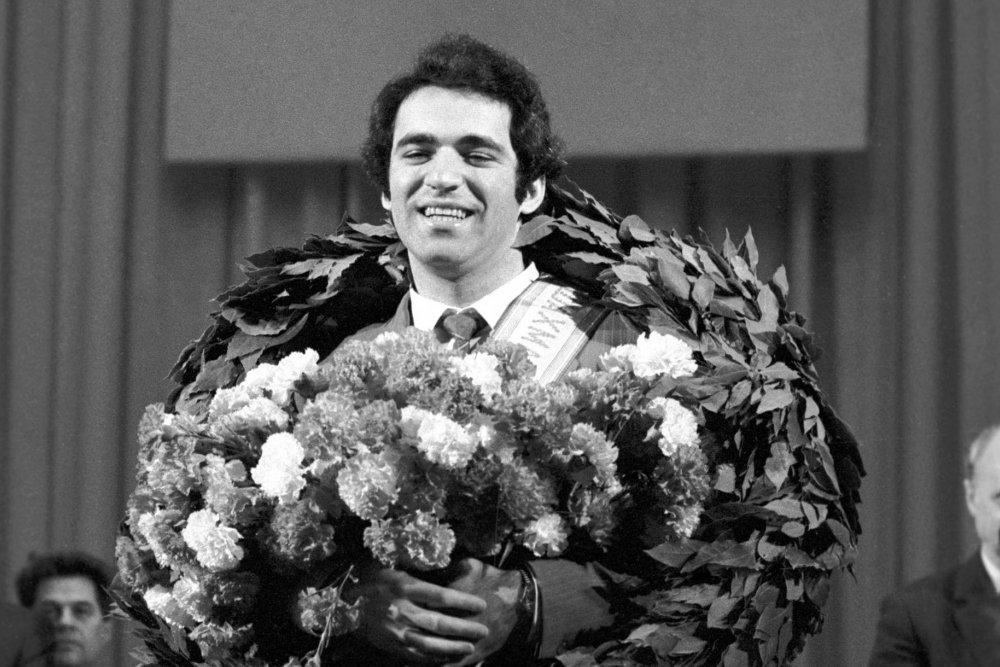
11/11/2025 – On 9 November 1985, Garry Kasparov defeated Anatoly Karpov in the 24th game of their World Championship match and became the 13th World Chess Champion. It was the conclusion of an extraordinary duel. The first match between the two, begun in 1984, had been abandoned after 48 games without a decisive result. In the rematch, the rules were changed: the match was limited to 24 games, and the reigning champion would retain the title in case of a tie. Across the two matches, Kasparov had to play a total of 72 games against Karpov to claim the crown — one of the most demanding World Championship battles in chess history. | Photos: Tass Archive
new: Fritz 20
Your personal chess trainer. Your toughest opponent. Your strongest ally. FRITZ 20 is more than just a chess engine – it is a training revolution for ambitious players and professionals. Whether you are taking your first steps into the world of serious chess training, or already playing at tournament level, FRITZ 20 will help you train more efficiently, intelligently and individually than ever before.
YOUR PERSONAL CHESS COACH - Whether you’re taking your first steps into the world of club chess, or already playing at a tournament level: with FRITZ, you can train more efficiently, intelligently and with a more personalised approach than ever before. FRITZ is more than just a chess engine – it’s a training revolution! Whether you’re taking your first steps into the world of club chess, or already playing at a tournament level: with FRITZ, you can train more efficiently, intelligently and with a more personalised approach than ever before.
The Italian Four Knights is the ideal choice. It combines the solid foundation of classical openings like the Ruy Lopez or the Italian Game with an active, initiative-driven style of play.
€24.90
40 years ago: Kasparov becomes World Champion
On 9 November 1985, almost exactly 40 years ago to the day, Garry Kasparov was finally able to celebrate becoming World Champion. He is the player who, without doubt, had to play the longest match to win the title from his predecessor Anatoly Karpov. No fewer than 72 competitive games were necessary to win the title, spread over two matches, the first of which was aborted because it seemed to have no end.
Kasparov, who was just 19 at the time, had won the Interzonal Tournament in September 1982 with a clear lead of 1.5 points ahead of Alexander Beliavsky, thus qualifying for the Candidates Tournament. In the quarter-finals in March 1983, Kasparov clearly defeated Beliavsky 6:3. But then he was not allowed to compete in the semi-final against Viktor Korchnoi because FIDE had moved the match to the USA, and after the NATO Double-Track Decision (armament with medium-range missiles) and the Soviet Union’s intervention in Afghanistan in December 1979, relations between the Soviet Union and the West, especially the USA, were at a low point.
Kasparov lost the Candidates semi-final without a fight, but his supporter Heydar Aliyev, first head of the KGB in Azerbaijan and later a member of the Politburo of the CPSU, ensured that the match could still take place. Kasparov defeated Korchnoi 7:4 and also won the Candidates Final against Vasily Smyslov 8.5:4.5. This made him the challenger.
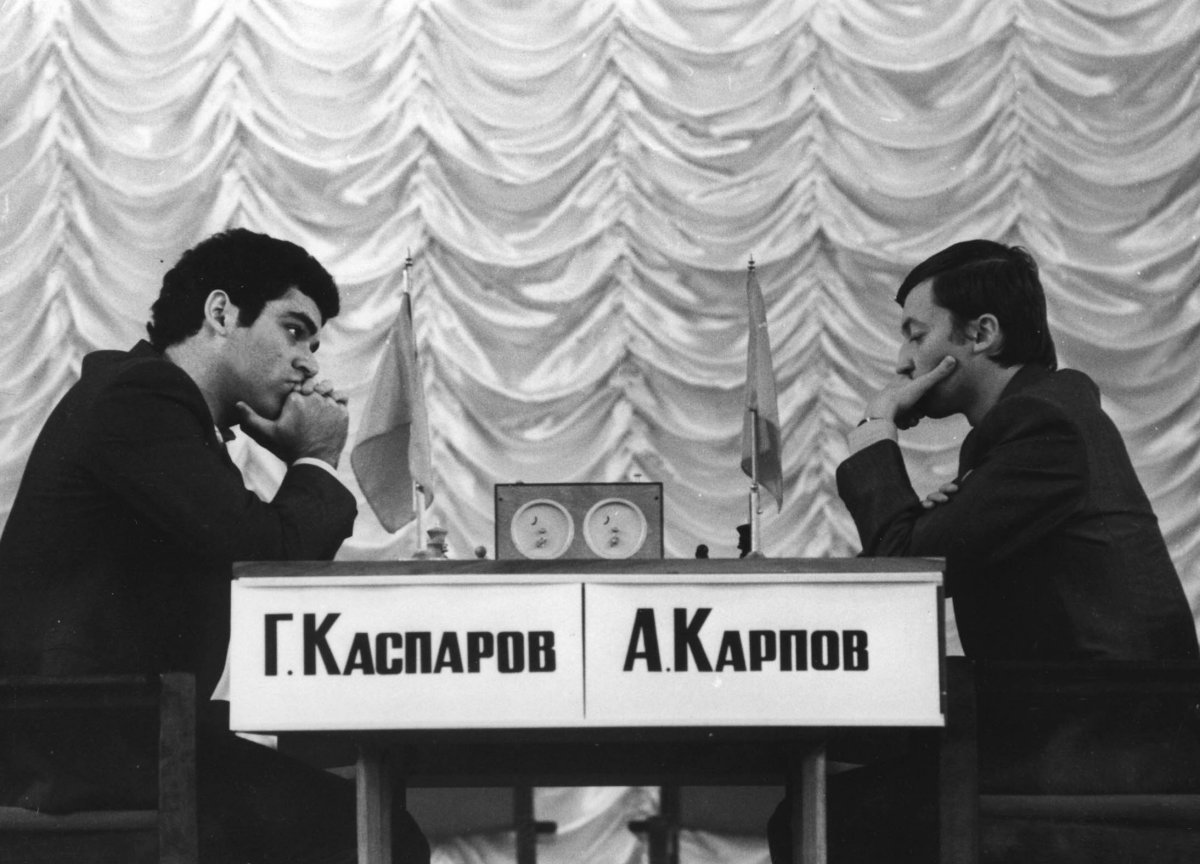
In September 1984, the World Championship match between Anatoly Karpov and Garry Kasparov began. It was played in the prestigious Columned Hall of the Trade Union House in Moscow. The old rules from the Fischer era still applied: the winner would be the first player to achieve six victories. The outcome of the match was therefore still open.
The young Kasparov started energetically, but was given a bloody nose by the experienced Karpov. After nine games, Karpov was already leading 4:0. Kasparov then changed his match strategy and played a waiting game, beginning to copy Karpov’s openings. This was followed by a long series of draws. In the 27th game, Karpov scored again to make it 5:0. In the 32nd game, Kasparov achieved his first victory, but he was still far from turning the match around. Another long series of draws followed. Kasparov then won the 47th and 48th games.
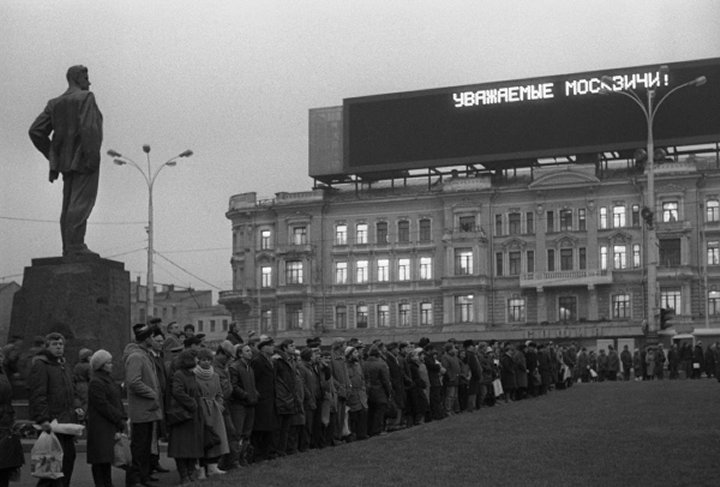
In Moscow, people were not happy about the never-ending competition. The Columned Hall had been occupied for too long and was needed for other important events. Pressure grew behind the scenes. The match was moved to a hotel on the outskirts of the city, and FIDE President Florencio Campomanes was summoned from Dubai, where he had been conducting negotiations for the 1986 Chess Olympiad. Finally, on 8 February 1985, the match was aborted with the score at 5:3. Kasparov suspected a conspiracy because he had just won two games, and Karpov was also dissatisfied because he was still leading 5:3. One more win and he would have remained World Champion.
Crowds flock to the World Championship match in Moscow | Photo: Tass Archive via Douglas Griffin
Despite considerable resistance, the match was rescheduled and began with a score of 0:0. FIDE had now changed the rules. The new match was set for 24 games. The challenger had to have more points at the end. A draw was enough for the defending champion to retain his title. He also received the right to a rematch.
The second match between also took place in Moscow, this time at the Tchaikovsky Theatre. Kasparov had prepared with a number of different matches and events. He won a training match against Robert Hübner 4.5:1.5, played an exhibition match against 32 chess computers (32:0), but lost a handicap simul match against a team from the Hamburger SK 3.5:4.5. In Belgrade, Kasparov played another training match against Ulf Andersson, which he won 4:2.
The rematch against Anatoly Karpov began on 3 June. This time, Kasparov started with a win in the first game, but lost the fourth and fifth games and was again behind.
Photo: Kasparov.com
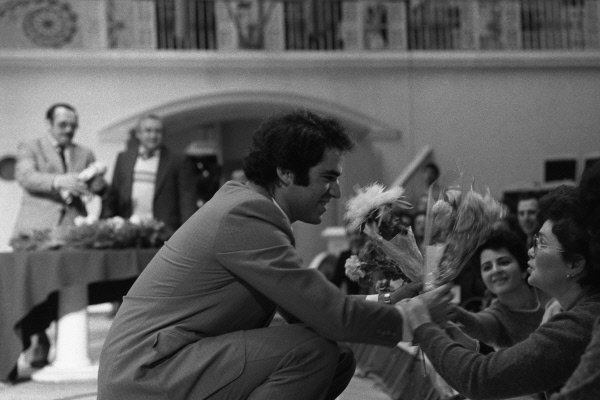
He equalised in the 11th game, took the lead in the 16th game, and increased his lead in the 19th game on 24 October. In the 22nd game, Karpov was able to reduce the deficit with a win. But on 9 November, Kasparov restored his old lead with a win in the 24th and final game and became the new World Champion, the 13th World Champion in the history of chess.
Kasparov receives flowers | Photo: Tass Archive via Douglas Griffin
On this DVD a team of experts gets to the bottom of Kasparov's play. In over 8 hours of video running time the authors Rogozenko, Marin, Reeh and Müller cast light on four important aspects of Kasparov's play: opening, strategy, tactics and endgame.
Garry Kasparov's rise to the top was meteoric and at his very first attempt he managed to become World Champion, the youngest of all time. In over six hours of video, he gives a first hand account of crucial events from recent chess history, you can improve your chess understanding and enjoy explanations and comments from a unique and outstanding personality on and off the chess board.
ChessBase is re-releasing this timeless classic in the modern ChessBase Media format - complete with brand-new training features. Get ready to rediscover a masterpiece of chess instruction! In 2004, 13th World Chess Champion Garry Kasparov recorded a best-selling video course on the Queen‘s Gambit. Now, ChessBase is re-releasing this timeless classic in the modern ChessBase Media format - complete with brand-new training features. Get ready to rediscover a masterpiece of chess instruction!
Free sample video: Introduction
Free sample video: Hanging pawns d5/c5
YOUR PERSONAL CHESS COACH - Whether you’re taking your first steps into the world of club chess, or already playing at a tournament level: with FRITZ, you can train more efficiently, intelligently and with a more personalised approach than ever before.
Michael Kotyk presents a complete repertoire after 1.e4 e5, built around creative ideas, surprising move orders, and practical weapons designed to catch your opponents off guard.
Michael Kotyk presents a complete repertoire after 1.e4 e5, built around creative ideas, surprising move orders, and practical weapons designed to catch your opponents off guard.
Michael Kotyk presents a complete repertoire after 1.e4 e5, built around creative ideas, surprising move orders, and practical weapons designed to catch your opponents off guard.
“Attack with Qh5!!” – Tactical training with Oliver Reeh, “6…g5 – nothing ventured, nothing …” – Le Quang Liem comments on one of his victories in Biel, “Grischuk’s stroke of genius” – Petra Papp reveals a surprise in the Sicilian Kan Variation, and much
YOUR PERSONAL CHESS COACH - Whether you’re taking your first steps into the world of club chess, or already playing at a tournament level: with FRITZ, you can train more efficiently, intelligently and with a more personalised approach than ever before.
While tactics decide the game in concrete moments, strategy guides the entire battle. Understanding how to improve your pieces, create weaknesses, execute maneuvers, and steer the game toward favorable structures is what defines strong players.
The Italian Four Knights is the ideal choice. It combines the solid foundation of classical openings like the Ruy Lopez or the Italian Game with an active, initiative-driven style of play.
€24.90
We use cookies and comparable technologies to provide certain functions, to improve the user experience and to offer interest-oriented content. Depending on their intended use, analysis cookies and marketing cookies may be used in addition to technically required cookies. Here you can make detailed settings or revoke your consent (if necessary partially) with effect for the future. Further information can be found in our data protection declaration.
Pop-up for detailed settings
We use cookies and comparable technologies to provide certain functions, to improve the user experience and to offer interest-oriented content. Depending on their intended use, cookies may be used in addition to technically required cookies, analysis cookies and marketing cookies. You can decide which cookies to use by selecting the appropriate options below. Please note that your selection may affect the functionality of the service. Further information can be found in our privacy policy.
Technically required cookies
Technically required cookies: so that you can navigate and use the basic functions and store preferences.
Analysis Cookies
To help us determine how visitors interact with our website to improve the user experience.
Marketing-Cookies
To help us offer and evaluate relevant content and interesting and appropriate advertisement.