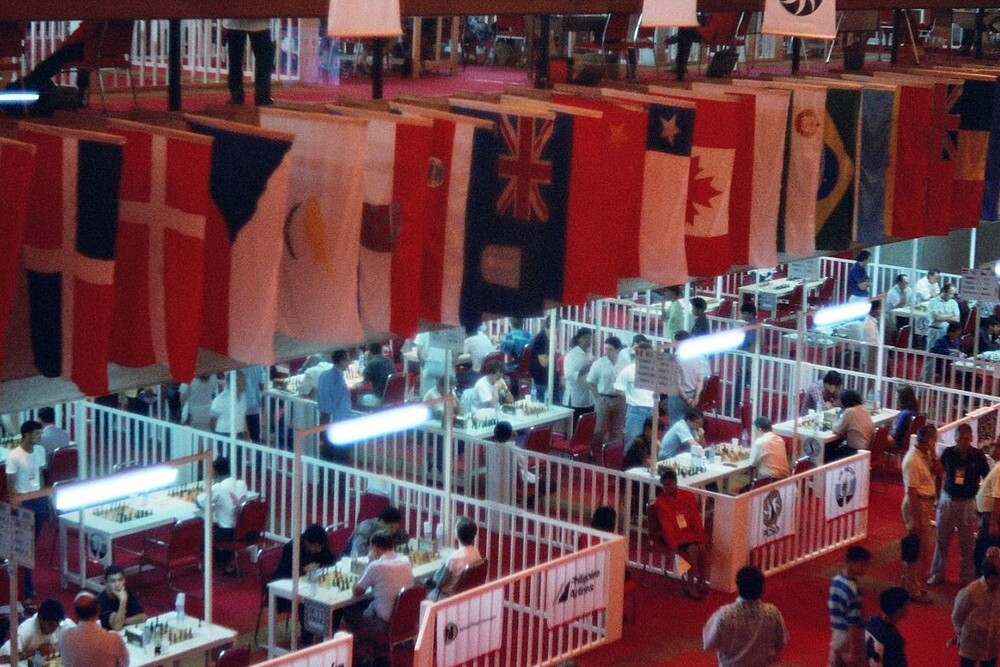
The year 1992 was a very eventful one in chess. Mikhail Tal died, major tournaments were held in Baden-Baden and Dortmund, Bobby Fischer re-emerged after ten years out of the spotlight and played a "rematch" against Boris Spassky in Sveti Stefan. And in Manila, the first Chess Olympiad following the collapse of the Soviet Union took place.
With its large number of leading players, the Soviet Union had dominated world chess since the end of the Second World War and had won gold at every Chess Olympiad it entered, with one exception: at the 1978 Olympiad in Buenos Aires, the Soviet Union had to settle for silver after losing its match against West Germany. Hungary won gold instead.
The first Olympiad without a Soviet team since 1952
 In this video course, experts (Pelletier, Marin, Müller and Reeh) examine the games of Viktor Korchnoi. Let them show you which openings Korchnoi chose to play, where his strength in middlegames were, or how he outplayed his opponents in the endgame.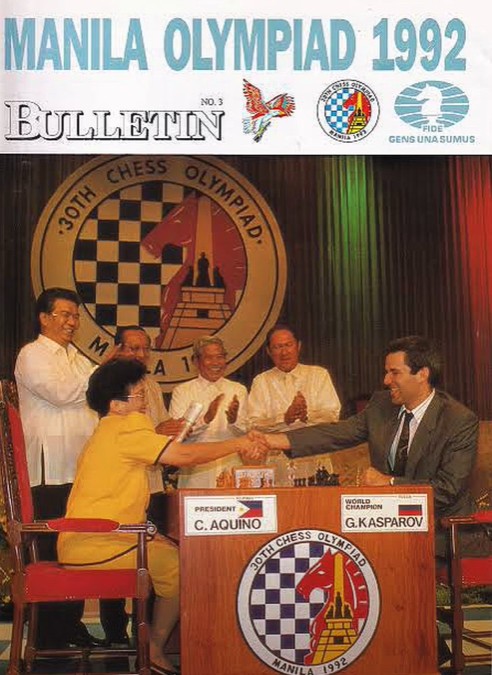
When the 30th Chess Olympiad began in Manila in early June 1992, there was no longer a Soviet team. Russia took its place and fielded the following lineup: 1. Garry Kasparov, 2. Alexander Khalifman, 3. Sergey Dolmatov, 4. Alexei Dreev, 5. Vladimir Kramnik, 6. Alexei Vyzmanavin.
Kasparov had ensured that the then 17-year-old Kramnik was selected. It soon proved to be a good decision. With this team, Russia won the gold medal and successfully took over the mantle of the Soviet Union. Kasparov (8½/10) and Kramnik (8½/9) were the team's best performers.
 On this DVD a team of experts gets to the bottom of Kasparov's play. In over 8 hours of video running time the authors Rogozenko, Marin, Reeh and Müller cast light on four important aspects of Kasparov's play: opening, strategy, tactics and endgame.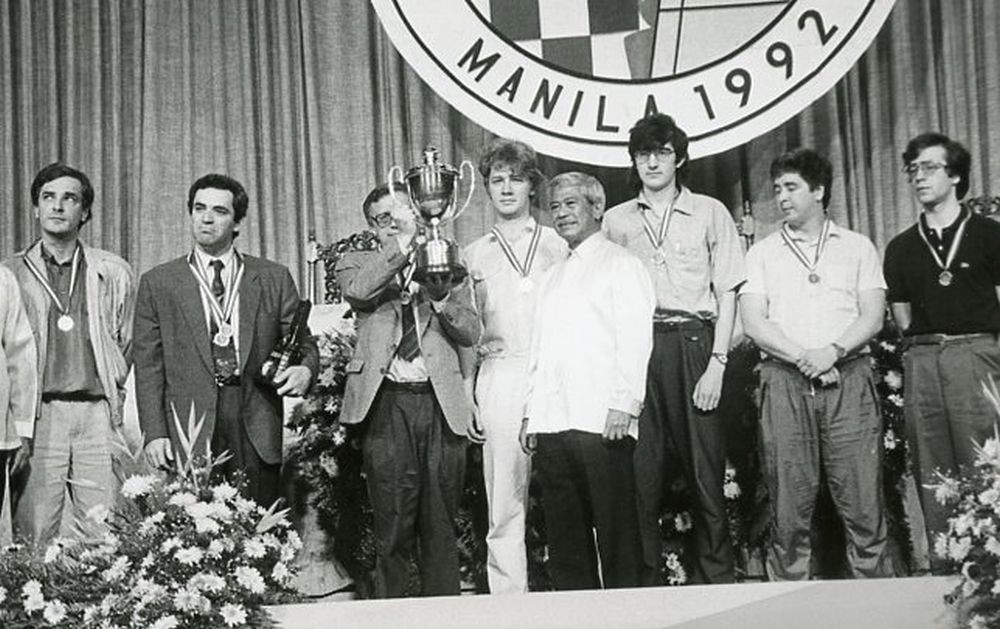
Gold for Russia
Anyone from the other nations who believed that the collapse of the Soviet Union had also ended Soviet dominance in chess was mistaken. In fact, the opposite happened. The former Soviet republics, now independent, entered their own teams as new members of the International Chess Federation, and all of them were extremely strong. In effect, there was now not just one Soviet team, but many of them - under different names. And the first republics emerging from the break-up of Yugoslavia were now also taking part with strong teams.
As far as the former Soviet Union was concerned, in addition to Russia, Ukraine, Moldova, Latvia, Lithuania, Estonia, Armenia, Georgia, Turkmenistan, Kyrgyzstan, Kazakhstan and Uzbekistan all took part with their own teams.
Armenia fielded grandmasters such as Vaganjan, Akopian and Lputian. Georgia had Asmaiparashvili on board one. Shirov played on board one for Latvia. And Ukraine arrived with Ivanchuk, Beliavsky and Romashin - to name only some of the best-known players.
Surprise team: Uzbekistan
The surprise team of this Chess Olympiad, however, was Uzbekistan, which in 2026 is hosting the 46th Chess Olympiad.
Few experts had really expected much from Uzbekistan. With a lineup of 1. Valery Loginov, 2. Grigory Serper, 3. Alexander Nenashev, 4. Sergei Zagrebelny, 5. Mikhail Saltaev, 6. Saldai Iuldachev, Uzbekistan won silver. In fact, only Loginov held the grandmaster title. Four of the remaining five players were only international masters, while Iuldachev had no title at all.
With 4 points from 13 games, Loginov on board one was the team's weakest link. He won only one of his games - against Robert Hübner. He lost six times against strong opponents, with the remaining games ending in draws.
The "killers" in the Uzbek team were Serper, Nenashev and Zagrebelny. Each of them scored 8½ points or more. The team's best performer was Nenashev with 9½/12. That earned him the individual gold medal on his board. Among his victims were John Nunn and Alexey Dreev. He was awarded the grandmaster title later in 1992.
Scattered far and wide
Alexander Nenashev later moved to Germany, adopted his father's surname Graf and became a German citizen in 2000. Between 2002 and 2006, he played for the German team at three Chess Olympiads.
 This DVD allows you to learn from the example of one of the best players in the history of chess and from the explanations of the authors (Pelletier, Marin, Müller and Reeh) how to successfully organise your games strategically, consequently how to keep y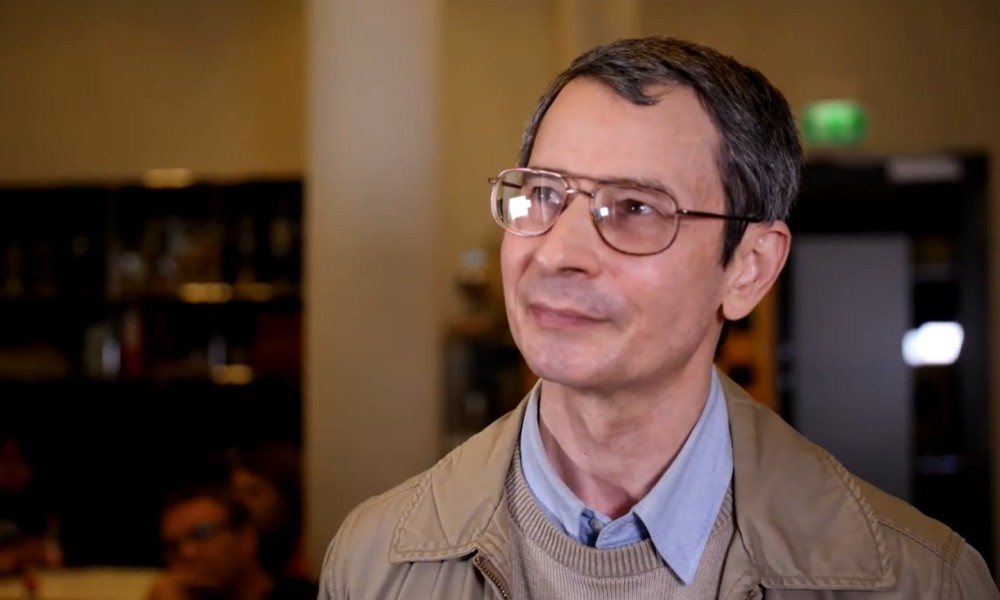
Alexander Nenashev at the Grenke Open 2018 | Video screenshot
In 2003, Alexander Nenashev-Graf won the European Championship under the German flag. In 2004, he became German champion.
Mikhail Saltaev also moved to Germany and plays for Mülheim-Nord. He remained, however, with the Uzbek federation. He received the grandmaster title in 1995. Valery Loginov lived for a time in Hungary and took part in many First Saturday tournaments there. He then moved to Saint Petersburg and worked as a chess trainer.
Grigory Serper received the grandmaster title in 1992.
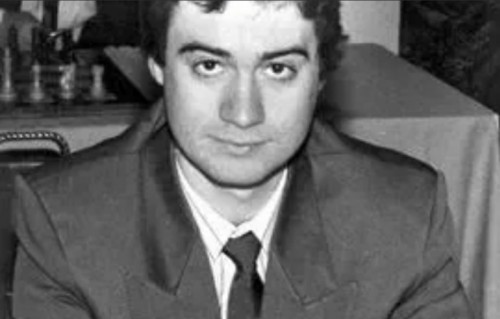
Grigory Serper, 1990s
In 1996, Serper immigrated to the United States with his family and became a US citizen. In 1999, he won the World Open in Philadelphia. In recent years, Serper has written a number of articles for chess.com and worked for the ICC.
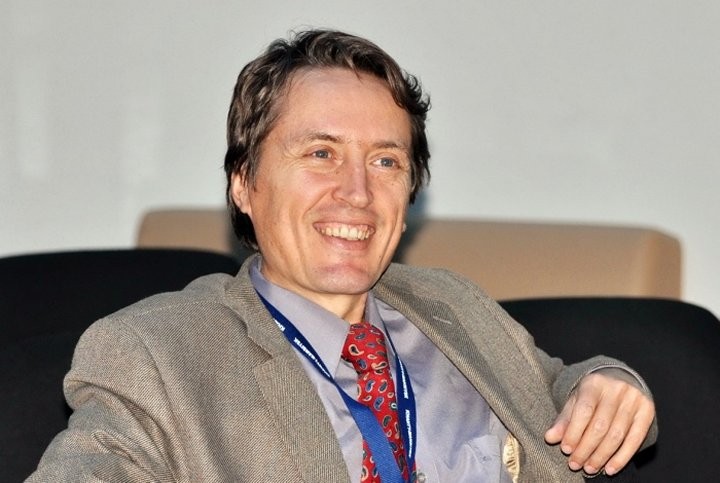
Sergey Zagrebelny in 2021 | Photo: ChessMoscow.ru
Sergey Zagrebelny received the grandmaster title in 1993 and later worked as a youth trainer in Moscow. Saldali Iuldachev became a grandmaster in 1996 and remained in Uzbekistan.
Behind Uzbekistan, Armenia became another former Soviet republic to win a medal, taking bronze. Latvia (5th), Georgia (8th) and Ukraine (9th) also finished in the top ten. Six of the ten best teams were therefore former Soviet republics. The best "Western" country was the USA, although its team included three Soviet émigrés: Gata Kamsky, Alexander Yermolinsky and Boris Gulko.
 Let us learn together how to find the best spot for the queen in the early middle�game, how to navigate this piece around the board, how to time the queen attack, how to decide whether to exchange it or not, and much more!
The German team, with a lineup featuring 1. Hübner, 2. Lobron, 3. Hertneck, 4. Hort, 5. Wahls and 6. Lutz, eventually finished 13th.
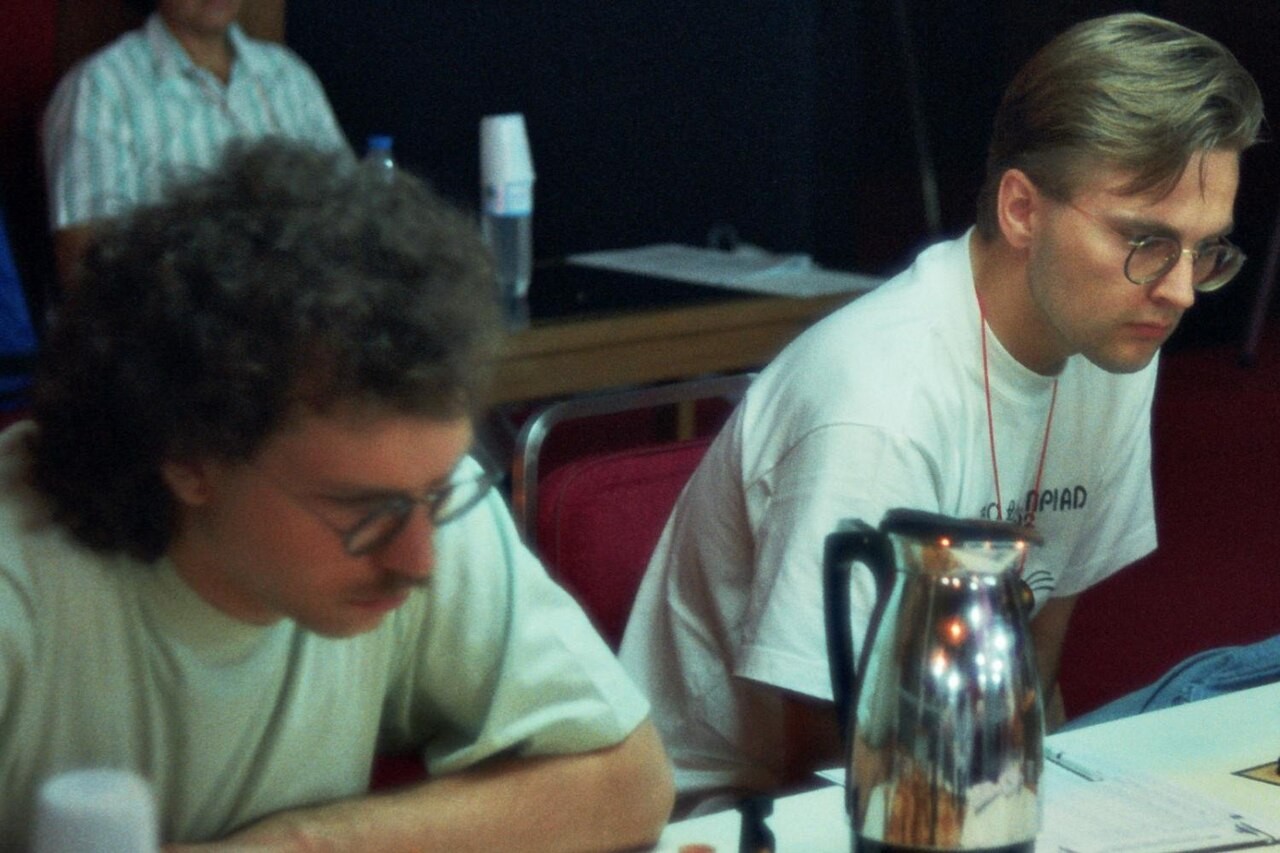
Christopher Lutz and Matthias Wahls | Photo: Gerhard Hund (Wikipedia)
Final standings
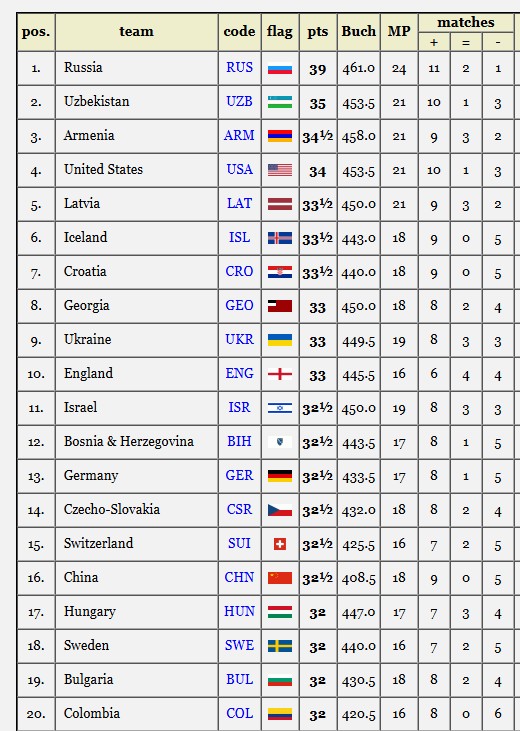
...102 teams
The Women's Chess Olympiad
The picture in the Women's Olympiad was similar, albeit in a different order. Within the Soviet Union, Georgian women had been the benchmark in chess. With a lineup featuring 1. Maia Chiburdanidze, 2. Nona Gaprindashvili, 3. Nana Ioseliani and 4. Nino Gurieli, they won the gold medal ahead of another former Soviet republic, Ukraine.
The Chinese women won bronze. Russia, with several players who are scarcely remembered today, finished fourth behind Hungary. Azerbaijan in 7th and Kazakhstan in 8th completed the strong showing by the former Soviet republics. The German team – with three players from the former East Germany – finished 36th. At the time, matches in the Women's Olympiad were still played over three boards, with one reserve player in the squad.
Five of the six team medals went to former Soviet republics.
 In this insightful video course, Grandmaster David Navara shares practical advice on when to calculate deeply in a position — and just as importantly, when not to.
In this insightful video course, Grandmaster David Navara shares practical advice on when to calculate deeply in a position — and just as importantly, when not to.
Free sample video: Introduction
Free sample video: Invisible moves
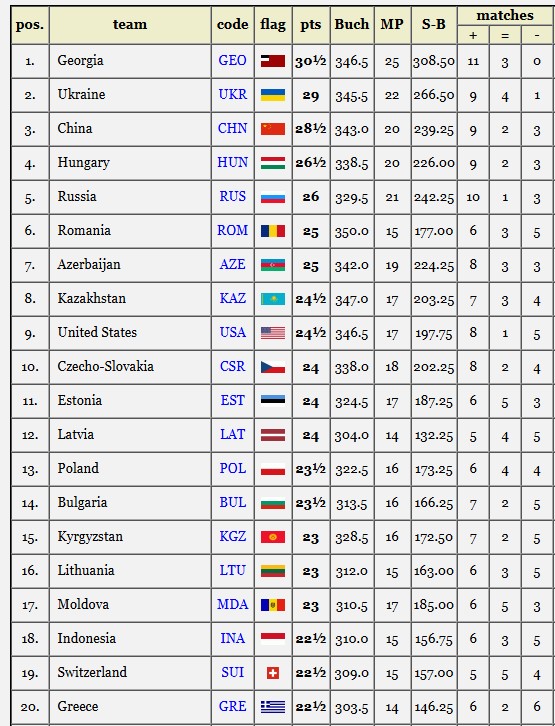
...62 teams
Once again without Russia
In the men's, or rather the open competition, Russia was able to maintain its dominance through to the 2002 Olympiad in Bled, winning gold every time. But that was the end of the run. Since then, Russia has not managed to win another gold medal in the open event. Since 2022, Russian teams have been suspended because of the war against Ukraine.
For the young independent Republic of Uzbekistan, the silver medal was of course a huge success. The younger generation, led by top grandmasters Nodirbek Abdusattorov and Javokhir Sindarov, surpassed that achievement at the 2022 Chess Olympiad in Chennai. The Uzbek team won gold.
Can the young Uzbek players repeat that success at their home Olympiad in Samarkand?

















.jpeg)