When I returned to competitive chess in 2016 after a lengthy break, ChessBase FritzTrainer courses became my preferred source of information for brushing up on my chess knowledge. I enjoy the combination of videos, databases and interactive exercises, and FritzTrainer courses soon became something of a "hobby within a hobby". Of the more than 100 FritzTrainer courses I have watched or worked through over the past ten years, certain courses and authors have proved particularly instructive. I would like to introduce a selection of them here.
Opening Courses
What these courses have in common is that they provide the foundations for building a reliable opening repertoire. The emphasis is on understanding the tactical and strategic characteristics of the openings and variations, rather than simply compiling lines. Of course, such courses tend to "age" relatively quickly, as opening theory develops at a rapid pace. Nevertheless, they retain their value over time because the essential characteristics of the openings do not change.
As ChessBase customers, we have plenty of opportunities to expand the repertoires we have developed with the help of these courses and keep them up to date using other products, such as the Opening Encyclopaedia:
YOUR EASY ACCESS TO OPENING THEORY: Whether you want to build up a reliable and powerful opening repertoire or find new opening ideas for your existing repertoire, the Opening Encyclopaedia covers the entire opening theory on one product.
YOUR EASY ACCESS TO OPENING THEORY
Be well prepared with the new Opening Encyclopaedia 2026! Whether you want to build up a reliable and powerful opening repertoire or find new opening ideas for your existing repertoire, the Opening Encyclopaedia covers the entire opening theory on one product and is the ideal start for your opening training. Many new articles enrich the current theory with new or revisited ideas. The Encyclopaedia can help you learn openings quickly and give you a head start on your next opponent. Each article contains explanations and annotated games illustrating typical plans to deepen your understanding.
... the Fritz Powerbook:
Even more power forFritz. Even more Chess knowledge for you.
The Fritz Powerbook 2026 contains 25 millions opening positions, derived from 1.7 million high class tournament games. Together with each position all relevant information is stored: all moves that were played in the position, by players of what average rating, with what success and performance results.
... or the opening articles in ChessBase Magazine:
“Attack with Qh5!!” – Tactical training with Oliver Reeh, “6…g5 – nothing ventured, nothing …” – Le Quang Liem comments on one of his victories in Biel, “Grischuk’s stroke of genius” – Petra Papp reveals a surprise in the Sicilian Kan Variation, and much
ChessBase Magazine offers first-class training material for club players and professionals! World-class players analyse their finest games and explain the ideas behind the moves. Opening specialists present the latest trends in opening theory and exciting ideas for your repertoire. Master coaches in tactics, strategy and endgames show you exactly the tricks and techniques you need to be a successful tournament player!
Included in the package: CBM #233 as a ‘ChessBase Book’ for iPad, tablet, Mac, etc.! Available at books.chessbase.com

These resources allow us to continually expand and update our repertoires.
PowerPlay 23-25 by Daniel King
On this DVD, Grandmaster Daniel King offers you a repertoire for Black with the QGD and against the Catalan. The repertoire is demonstrated in 20 stem games, covering all White's major systems.
On this DVD, Grandmaster Daniel King presents a repertoire for Black against the opoular queen's pawn openings such as the London System or the Trompowsky!
PowerPlay volumes 23–25 provide a complete and solid repertoire for Black against 1.d4 (as well as 1.c4 and 1.Nf3), based on the moves ...d5, ...e6 and ...Nf6. I consider the didactic quality and the careful selection of variations and recommendations in these courses to be simply "outstanding". Volume 23 covers the Queen's Gambit Declined, Volume 24 the Catalan, and Volume 25 Queen's Pawn Openings without c4.
I recently published a detailed review of Daniel King's PowerPlay series.
A Repertoire against the Sicilian, ABC of the English Opening und Queen's Gambit Declined von Lorin D'Costa
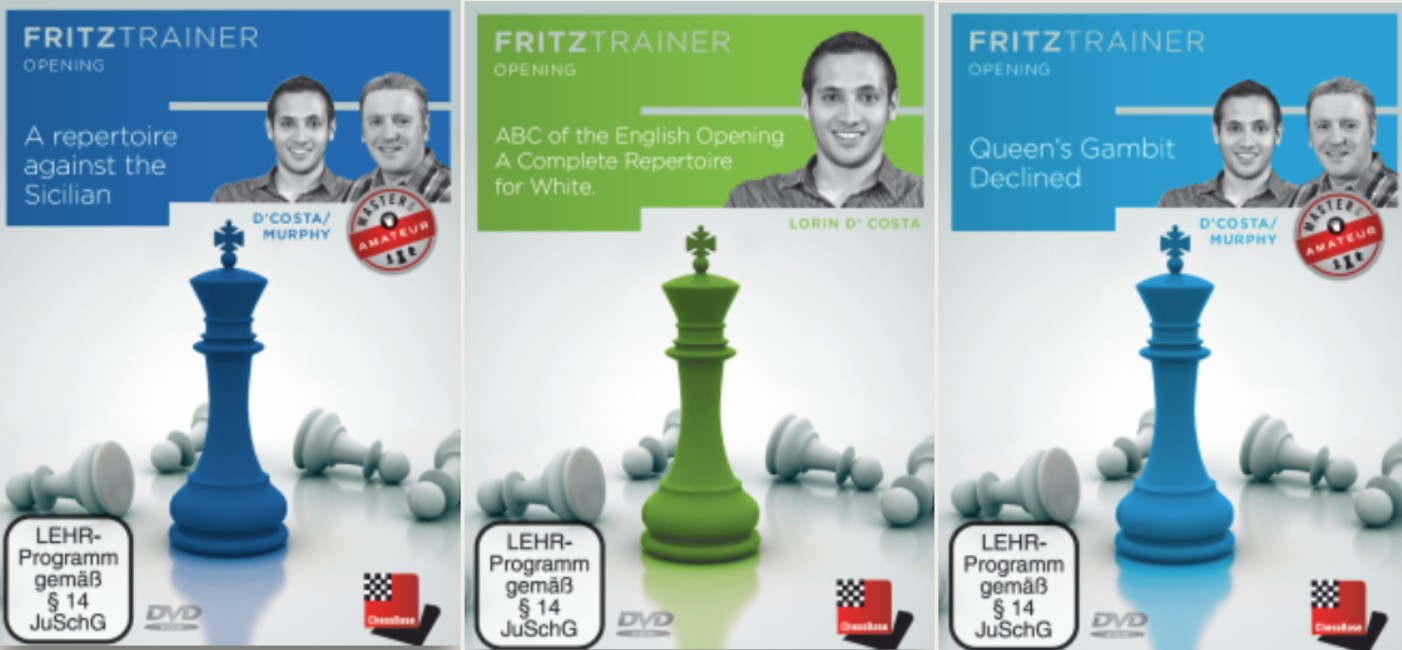
For me, the courses by IM Lorin D'Costa (some of them together with Nick Murphy, who asks the master typical questions from an amateur's perspective) are something of a "hidden gem" for players who are unfamiliar with these openings but would like to learn them. The focus is on getting started and understanding the fundamental ideas, which are explained very clearly and instructively through illustrative games and exercises.
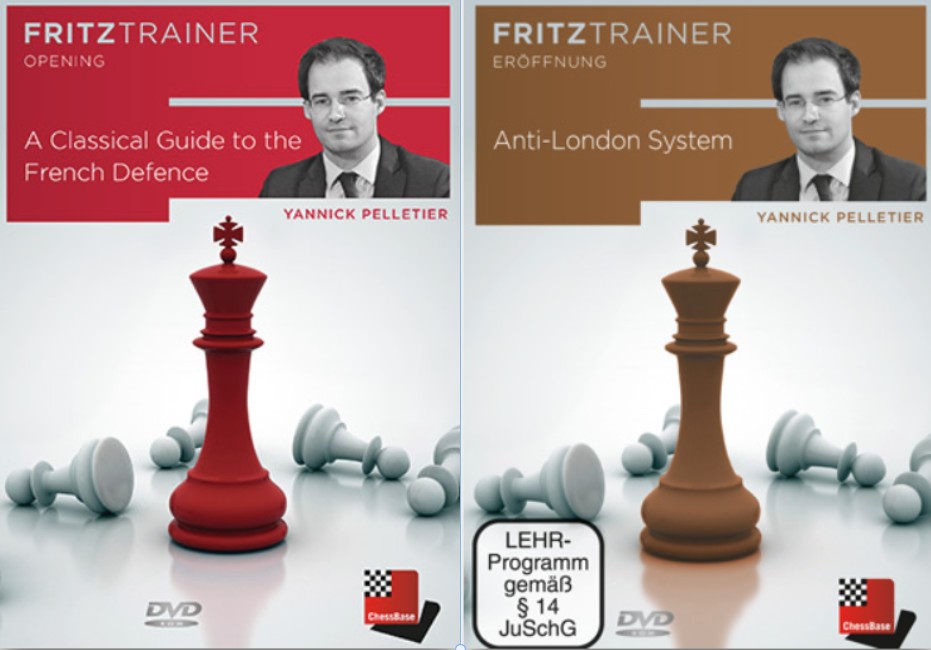
Another author who is particularly good at explaining complex theory to beginners is Swiss GM Yannick Pelletier. I have already discussed his "Classical Guide to the French" in my review of courses on the French Defence. In my view, this course, together with Daniel King's PowerPlay 22, provides an ideal introduction for anyone wishing to take up this opening.
Pelletier's "Anti-London System" course has a different background. A few years ago, there was a real craze for the London System (1.d4 followed by 2.Bf4 or 3.Bf4), and it sometimes seemed as though White could obtain an advantage almost effortlessly with this setup. Since then, the enthusiasm has subsided somewhat, and the London System is now regarded as one of many good options for White.
With his course, Pelletier wanted to demonstrate that Black has several good ways of meeting the London System, depending on which opening Black normally plays against 1.d4 and 2.c4: systems based on ...d5 or ...g6, the Queen's Indian Defence, the Queen's Gambit, the Benoni, the Benko Gambit or the Dutch Defence.
Courses on Tactics and Strategy
Calculation Training and Extreme Calculation Training by Robert Ris
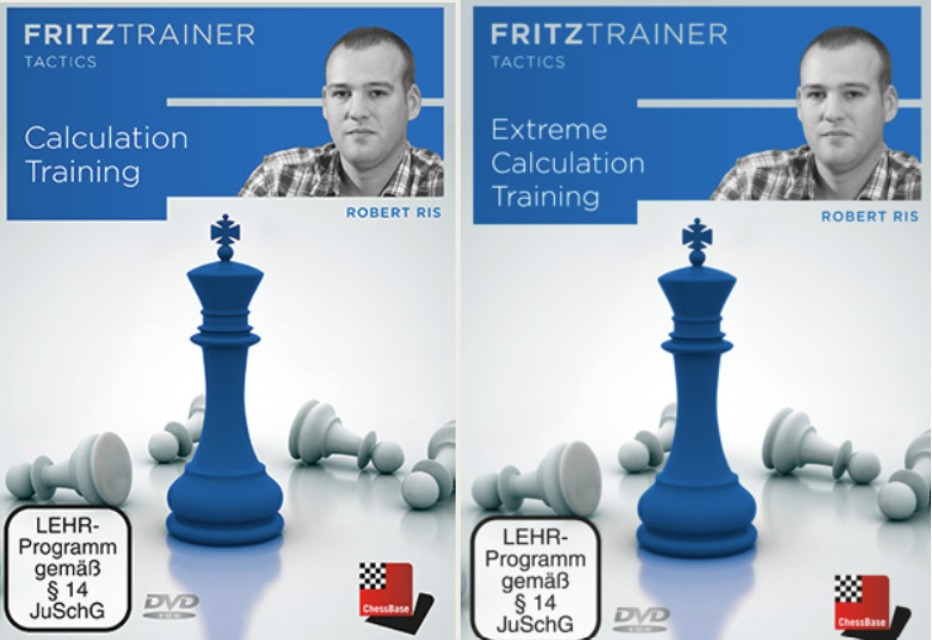
I have already discussed Robert Ris's excellent "Calculation Training" series in an earlier review.
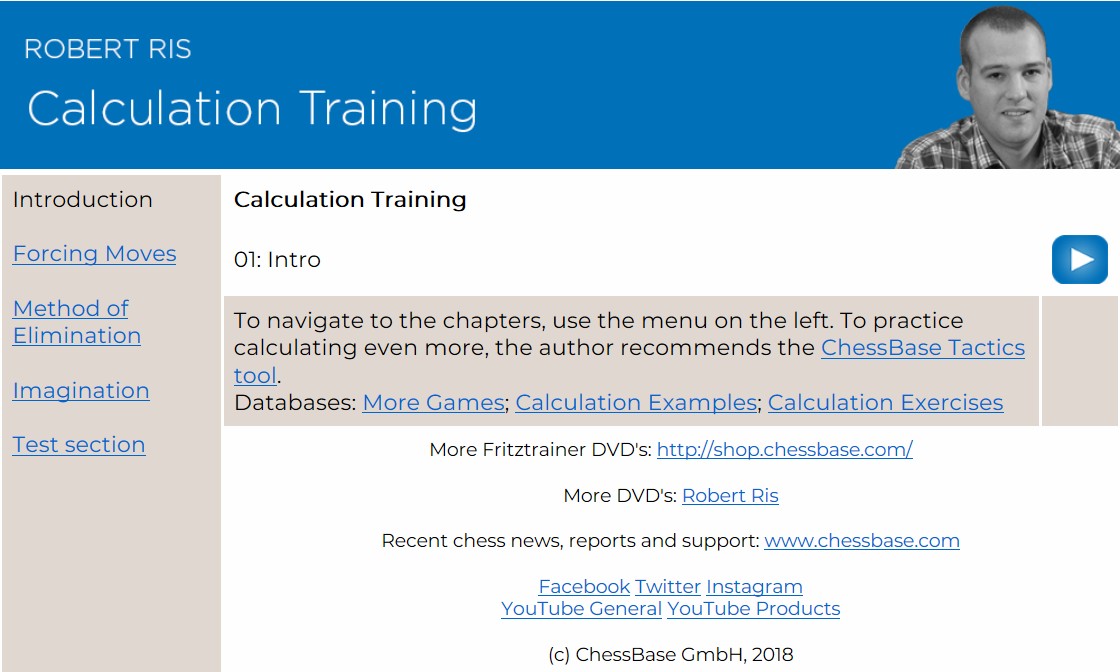
The first two volumes, "Calculation Training" and "Extreme Calculation Training", remain my favourites. For me, the combination of thoroughly annotated examples and interactive exercises, which are also explained in great detail, makes these courses some of the highlights among FritzTrainer releases focusing on tactics and calculation.
The products were provided to the author by ChessBase for review.
--> MORE REVIEWS <--
On this DVD, Grandmaster Daniel King presents a repertoire for Black against the opoular queen's pawn openings such as the London System or the Trompowsky!




.jpeg)












.jpeg)

.jpeg)