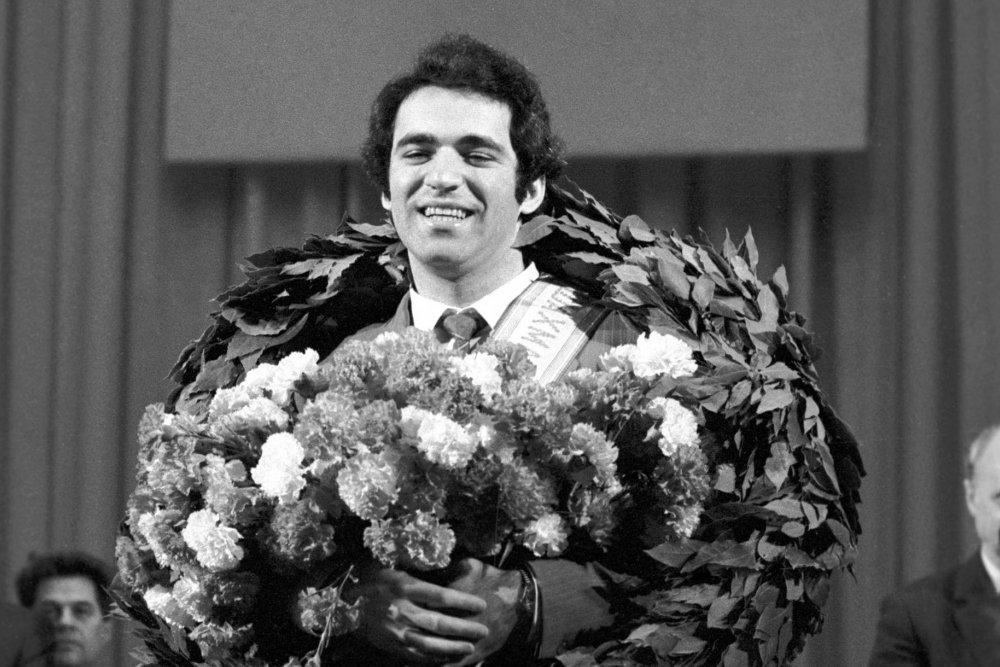
Three hundred years ago today, on 7 September 1726, André-François Danican Philidor was born. In his day, he was not only the strongest chess player in the world, but also a popular composer of operas. His musical legacy has since faded somewhat into the background, but in the chess world the memory of this early master has remained very much alive.
Few people, even among chess enthusiasts, know Philidor's full name: André-François Danican Philidor. Ironically, “Philidor” was not even his actual family name, but an additional name which, according to one story, can be traced back to an Italian oboist named Filidori. Philidor's great-uncle Michel Danican is said to have performed at the court of Louis XIII, and his playing reminded the French king of the aforementioned oboist. So the story goes. Michel Danican added “Philidor” to his name, and the other members of the family followed suit. The actual family name, Danican, was of Scottish origin and had originally been “Duncan”.
Philidor came from a family of musicians. Not only his great-uncle Michel Danican Philidor, but also his grandfather Jean Danican Philidor had been successful musicians, as had his father, André Danican Philidor.
André-François Danican Philidor was born to his father's second wife, Elisabeth Le Roy, and was the couple's third child. His mother was 26 when Philidor was born, while his father was already 79. His father died four years later. As custodian of the royal music library, André Danican Philidor had assembled an extensive collection of musical works of the period, which formed the foundation of the French National Library's music collection. André-François Philidor later followed his father's example by collecting and copying contemporary musical works.
Philidor began his own musical education at the age of six, as a page in the chapel at Versailles. It was the musicians there who taught him to play chess. At the age of twelve, Philidor composed his first piece of music. At fourteen, he left the chapel, moved to Paris and earned his living as a music teacher and copyist. In Paris, he soon became a regular at the Café de la Régence. François Antoine de Legall was employed there as the resident chess player and became Philidor's chess teacher.
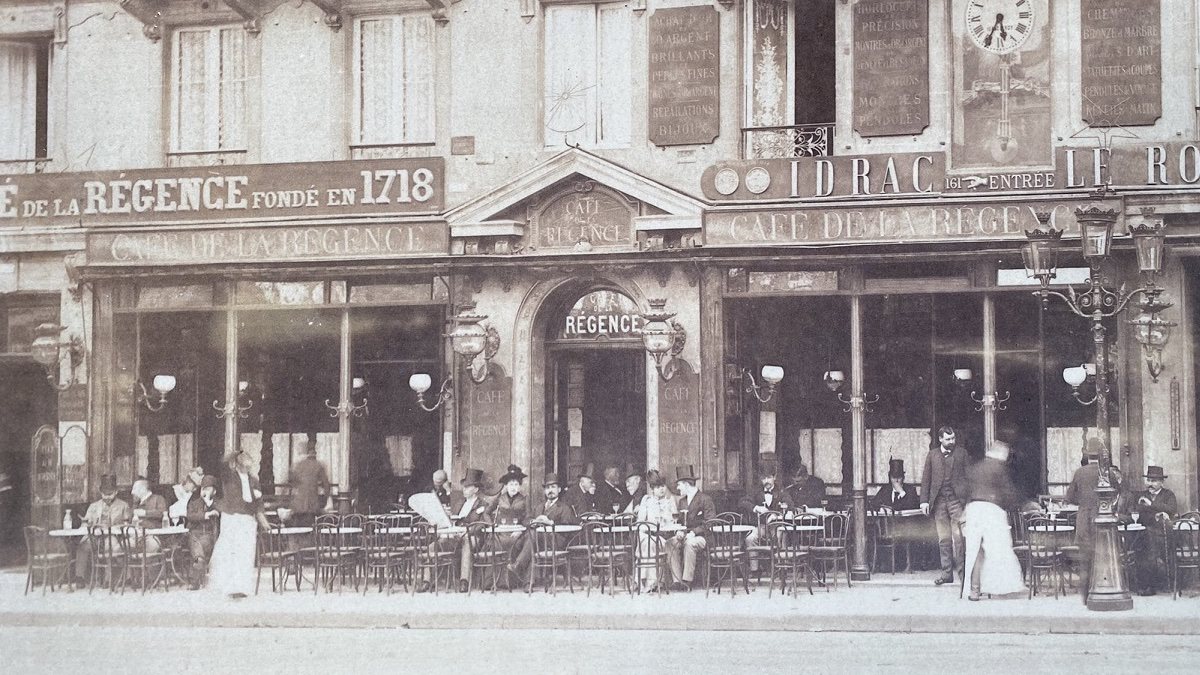
The Café de la Régence in later years
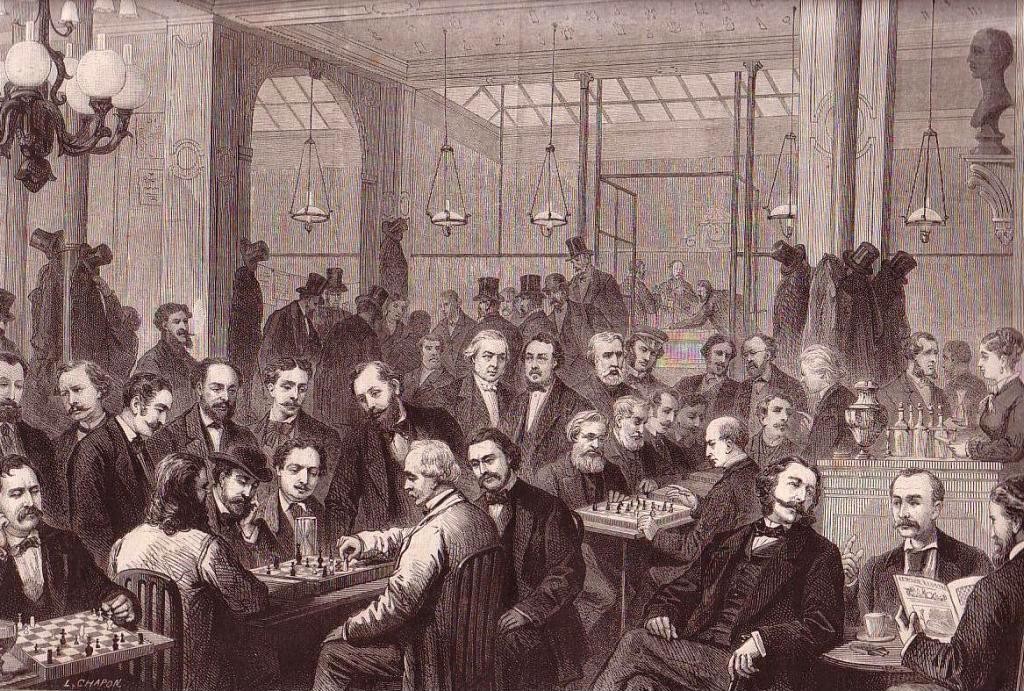
Famous guests of the Café de la Régence, 1874 | Drawing by M. Horsin-Déon
At the Café de la Régence, Philidor met some of the leading intellectuals of the time, including Jean-Jacques Rousseau, Voltaire and Denis Diderot. Philidor and Diderot formed a lifelong friendship.
After a concert tour in the mid-1740s ended in financial failure, Philidor began to play chess professionally. Games were usually played for money in coffee houses, while chess masters also demonstrated their skills in simultaneous exhibitions. Travelling via the Netherlands, Philidor moved to London in 1747. There, at Old Slaughter's Coffee House in St Martin's Lane, a meeting place for English chess players, he faced Sir Abraham Janssen and the Syrian-born Philipp Stamma and defeated both convincingly in matches, establishing his reputation as the strongest chess player in the world. In 1749, he published his book “L’Analyse des Échecs” in London, a textbook on positional play. “The pawns are the soul of chess” was Philidor's credo.
Practically no games from Philidor's early years have survived. Recording games was not yet common at the time, nor was it necessary, as there were no time controls. Moreover, most games were casual games. By far the largest number of Philidor's surviving games date from his later years in London. From today's perspective, the games of that period often look somewhat unsophisticated. Hardly surprising, since there was little chess literature, few textbooks and few models to learn from. Yet the players of the time occasionally came up with surprisingly “modern” ideas.
After returning to the continent, Philidor's great popularity throughout Europe allowed him to tour the major European cities, astonishing audiences with his skill in simultaneous and blindfold exhibitions. In 1750, at the invitation of Frederick II, Philidor visited Sanssouci Palace. The Prussian king, a lover of music and chess, instructed his best generals to play against Philidor in the hope of learning successful strategies from the chess master that might perhaps also prove useful on the battlefield. In Berlin, Philidor gave blindfold exhibitions on three boards simultaneously. His appearances were extensively reported in the Berlin newspapers.
From Berlin and Potsdam, Philidor travelled to the court of Carl August Friedrich of Waldeck in Arolsen (Free State of Waldeck), where he remained until the end of 1750 as a paid court chess player.
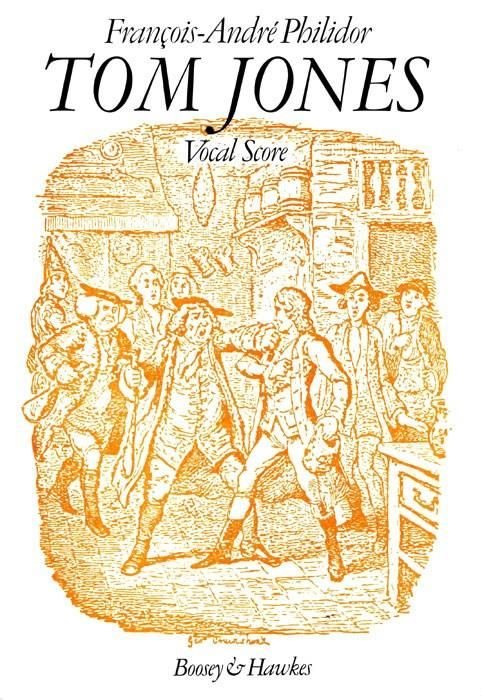
After stops in Belgium and London, Philidor returned to Paris in 1754. At the Café de la Régence in 1755, he convincingly defeated his former teacher Légall in a match. Philidor now had no serious rival left in Paris. He gave chess lessons and once again devoted more of his time to music. Over the following years, Philidor composed a total of eleven operas, which were very well received by music lovers in France. His best-known work is Tom Jones.
After this highly productive period as a composer, Philidor turned his attention back to chess. The members of the newly founded chess club at the Salopian Coffee House in London, established in 1770, offered him a generous fee if he would spend the months from February to June each year at their club, playing matches and giving chess lessons. Philidor gladly accepted the offer and spent the first half of 1771 and 1772 as a chess professional and regular guest at the club.
He was subsequently lured away by the London Chess Club, which met at Parsloe's coffee house in St James's Street. Hans Moritz, Count von Brühl, may have been responsible for the move. By then, the Saxon diplomat was living in London, having previously served in Paris, and Philidor and Count von Brühl presumably already knew each other from that time. Count von Brühl was a keen chess enthusiast and regularly played Philidor, and a number of their games have survived. Occasionally, the Count even managed to win. Some of the games, however, were played with Philidor blindfolded or giving odds of a move or a piece.
Thus, until the 1790s, Philidor continued to travel back and forth between Paris and London. During these years, he played games and matches against, among others, Verdoni, his successor at Parsloe's, and George Atwood, one of Philidor's pupils. It is thanks to Atwood that a number of Philidor's games from this period have been preserved for posterity.
During this period, Philidor also encountered Wolfgang von Kempelen's “Chess Turk” in Paris. Hidden inside von Kempelen's automaton, which was designed to resemble a Turk, was a strong chess player. Von Kempelen toured Europe several times with his invention, astonishing curious audiences with the supposed chess-playing abilities of his machine. In Paris, the Frenchman Bernard is said to have been the chess master concealed inside the machine and to have made the moves from his hiding place.
Because of the enormous public interest, the game against Philidor was played at the Académie des Sciences. According to contemporary reports, however, Philidor won the game with ease.
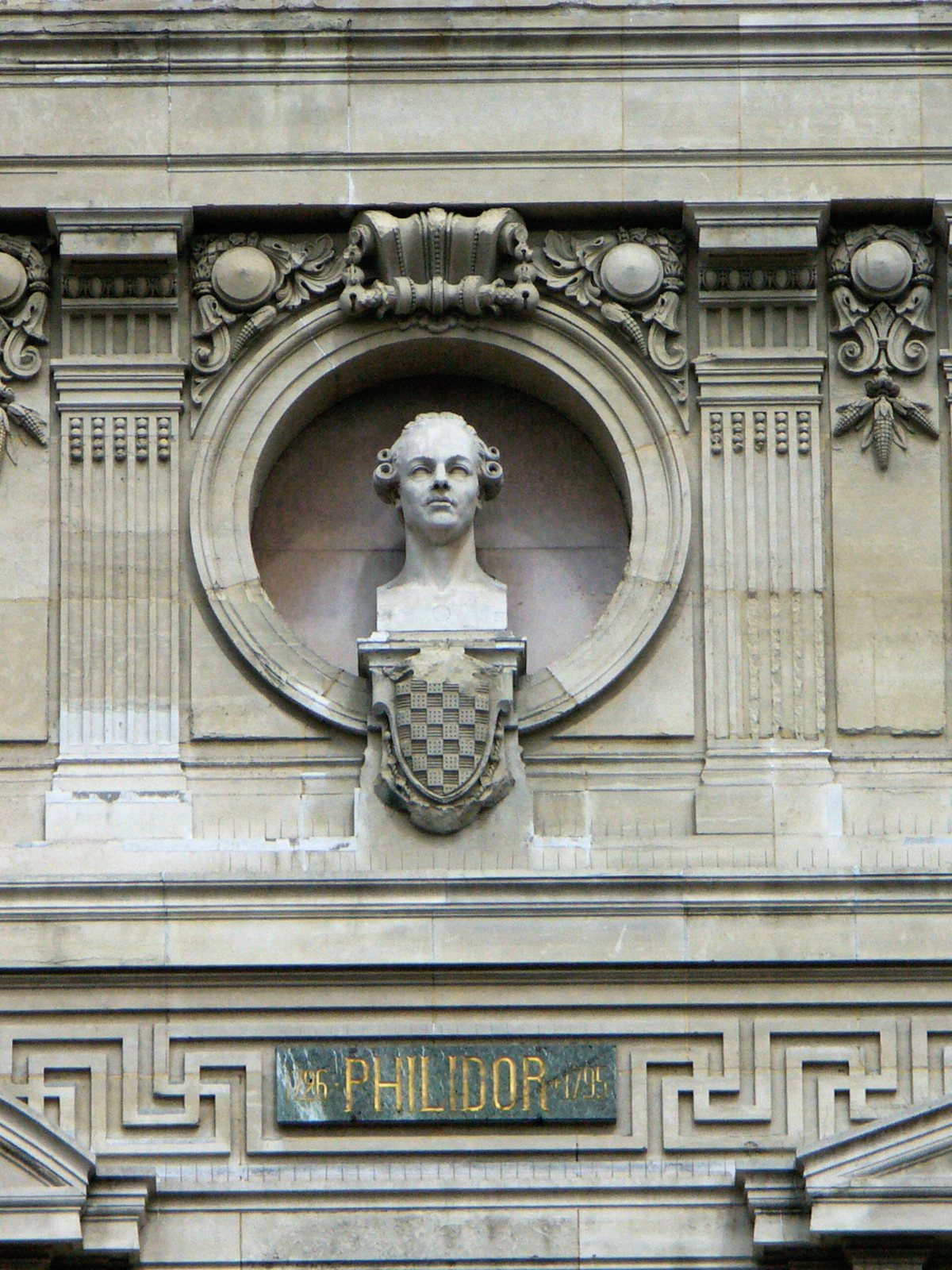
Philidor's bust at the Paris Opera | Photo: Wikipedia, Rossi Pena
In 1792, England too became involved in the Revolutionary Wars. For political reasons, Philidor was now unable to return to France and remained in London. Despite his advanced age, he continued to support himself financially by giving simultaneous and blindfold exhibitions. In the final years of his life, however, Philidor suffered defeats with increasing frequency, even against weaker opponents.
Philidor died on 31 August 1795 and was buried in London at St James' Chapel (Euston, London Borough of Camden, grave g18, Ground 3).
In Paris, a small street was named after Philidor. It is not a particularly beautiful one, but still:
The modern form of the Philidor Defence arises via the move order 1.e4 d6 2.d4 Nf6 3.Nc3 e5. Then after 4.Nf3 Nbd7, Shirov has introduced the pawn sacrifice 5.g4!? into practice — and achieved excellent results with it.
















.jpeg)