


Click on one of the following images to load the sample as a "ChessBase Book" in your web browser.
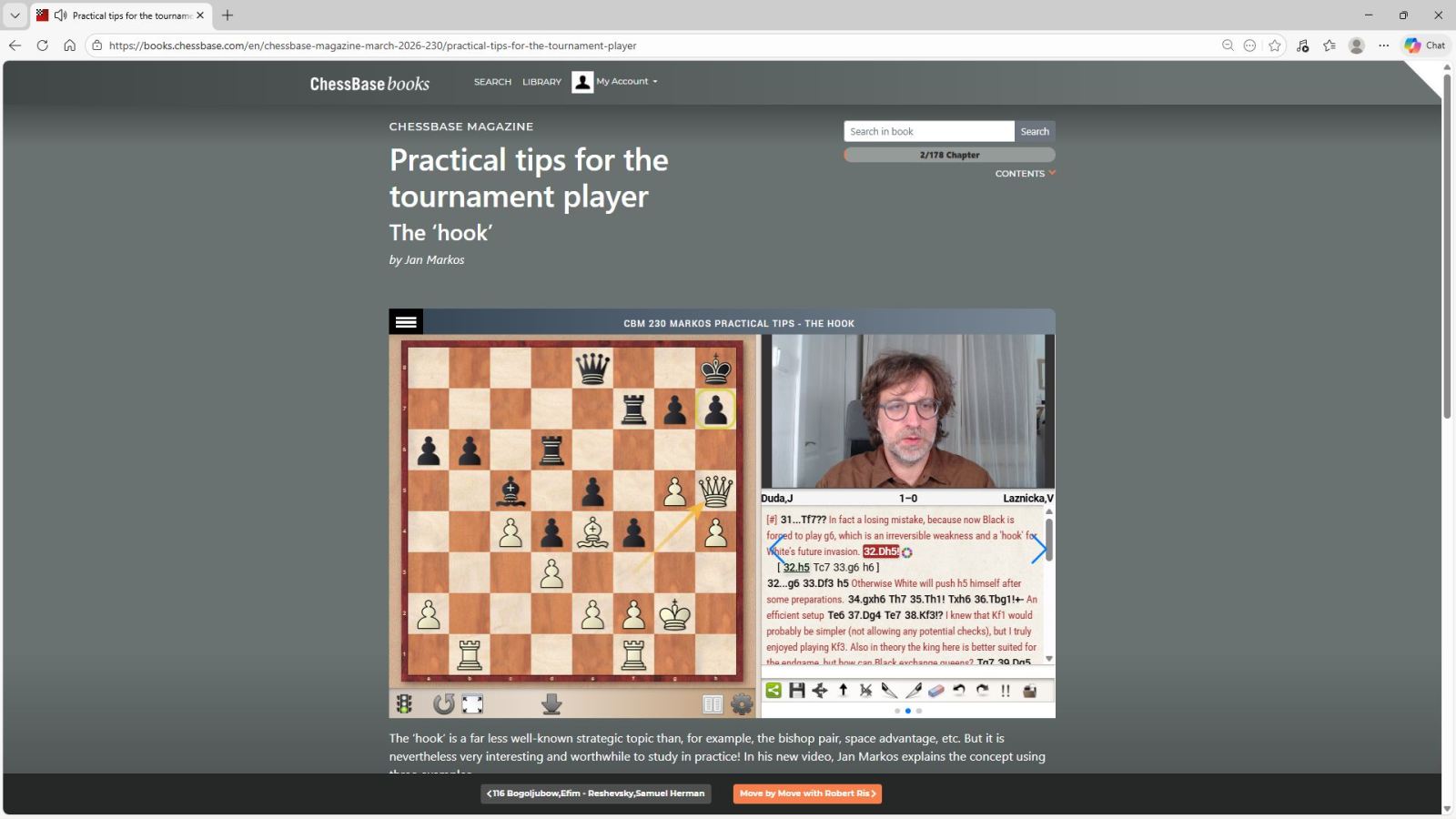
The ‘hook’ is a far less well-known strategic topic than, for example, the bishop pair, space advantage, etc. But it is nevertheless very interesting and worthwhile to study in practice! In his new video, Jan Markos explains the concept using three examples.
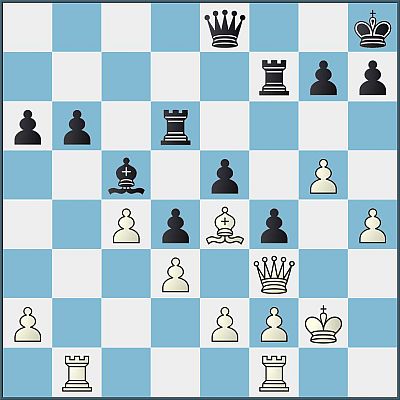
In Duda – Laznicka (2019), White invested a tempo with 32.Qh5 to force 32...g6 (the queen retreats to f3) and thus create a point of attack, a ‘hook’ on g6. This was a very worthwhile investment, as there is now no defence against White's attack on Black's king.
A similar scenario can be found in the example Leko – Radjabov (2006):
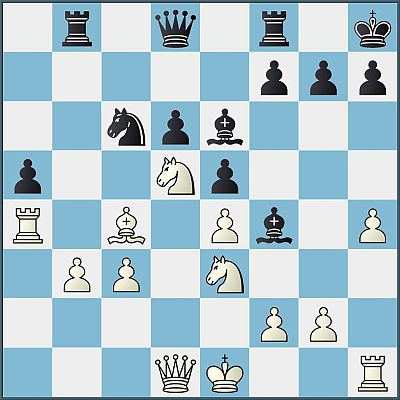
Leko played 19.Nf5!!, followed by 19...g6 20.Nfe3 and only a few moves later Black was losing with a disastrous king position.
The third example has a different character: with 12...Qh4, Black provoked 13.h3.
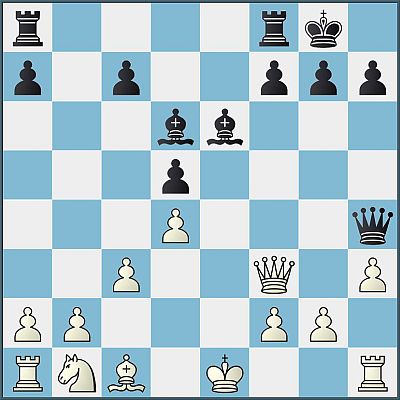
How should Black continue after 13...Rae8 14.0-0?
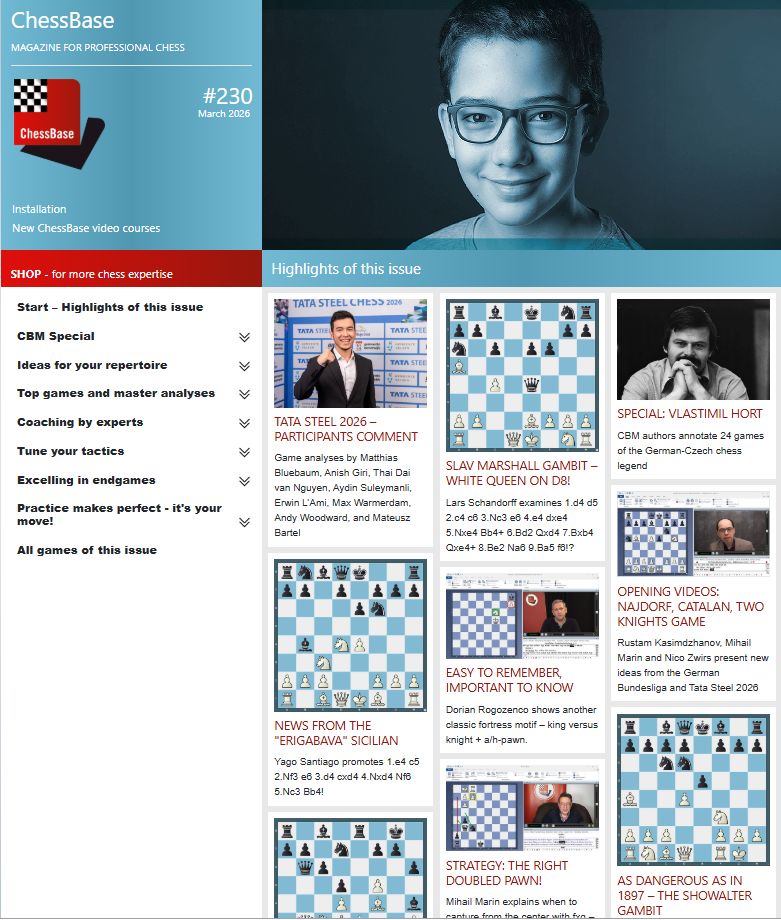
From Tata Steel 2026 to Rustam Kasimdzhanov's opening video on the Two Knights Game and Dorian Rogozenco's ‘The Fortress’ to Karsten Mueller's training series ‘Fundamental Endgame Knowledge’.
Over 6 hours of video training with Martin Breutigam, Rustam Kasimdzhanov, Jan Markos, Mihail Marin, Karsten Müller, Oliver Reeh, Robert Ris, Dorian Rogozenco and Nico Zwirs.
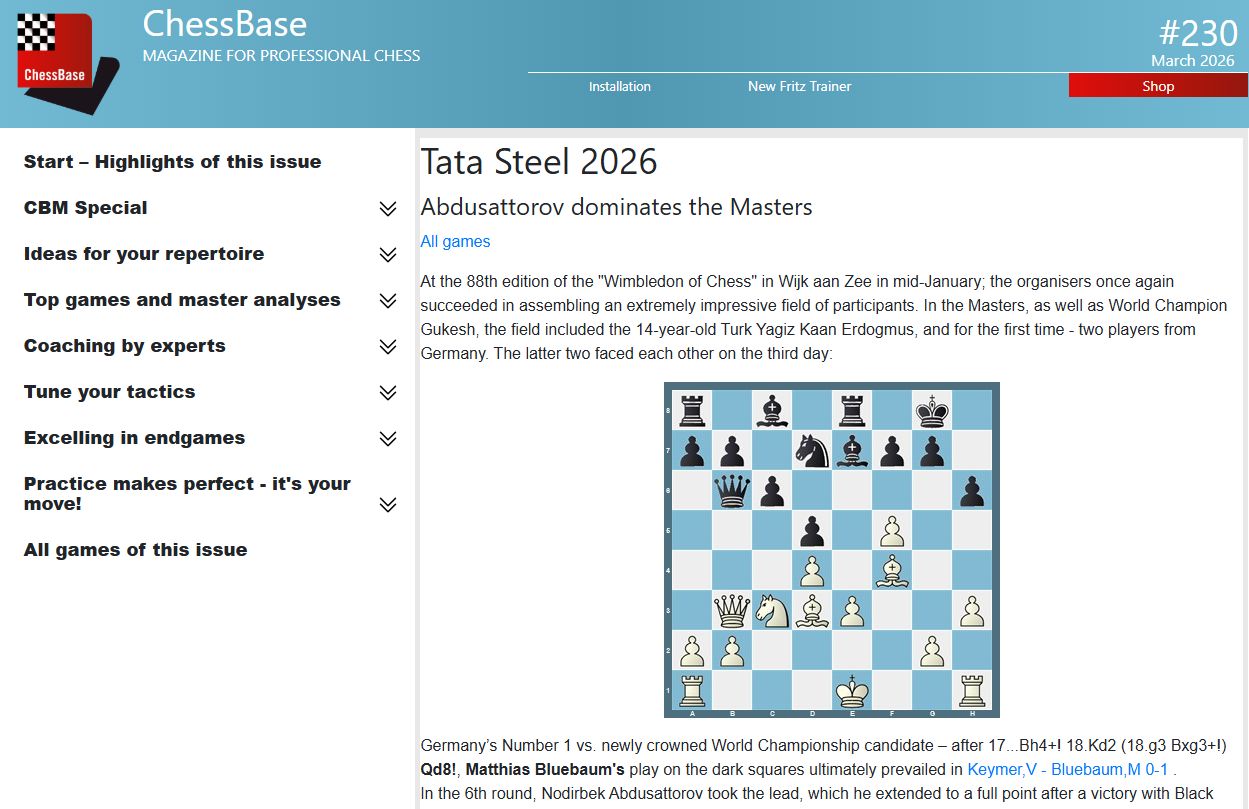
Tata Steel 2026: At the ‘Wimbledon of chess’ in Wijk aan Zee, the Uzbek top player Nodirbek Abdusattorov was among the leaders in the Masters from the outset and ultimately prevailed with 9 out of 13, ahead of his compatriot Javokhir Sindarov (8.5 out of 13). In the Challengers, the decision was made in the final round, when Andy Woodward prevailed against Erwin L'Ami and Aydin Suleymanli, who had been level on points until then, lost to Velimir Ivic. From a German perspective, Christian Glöckler's triumph in the Qualifiers (8.5 out of 9 – see cover!) is particularly leasing. In this issue, you will find game analyses by Blübaum, Giri, Nguyen, Suleymanli, Warmerdam and Woodward.
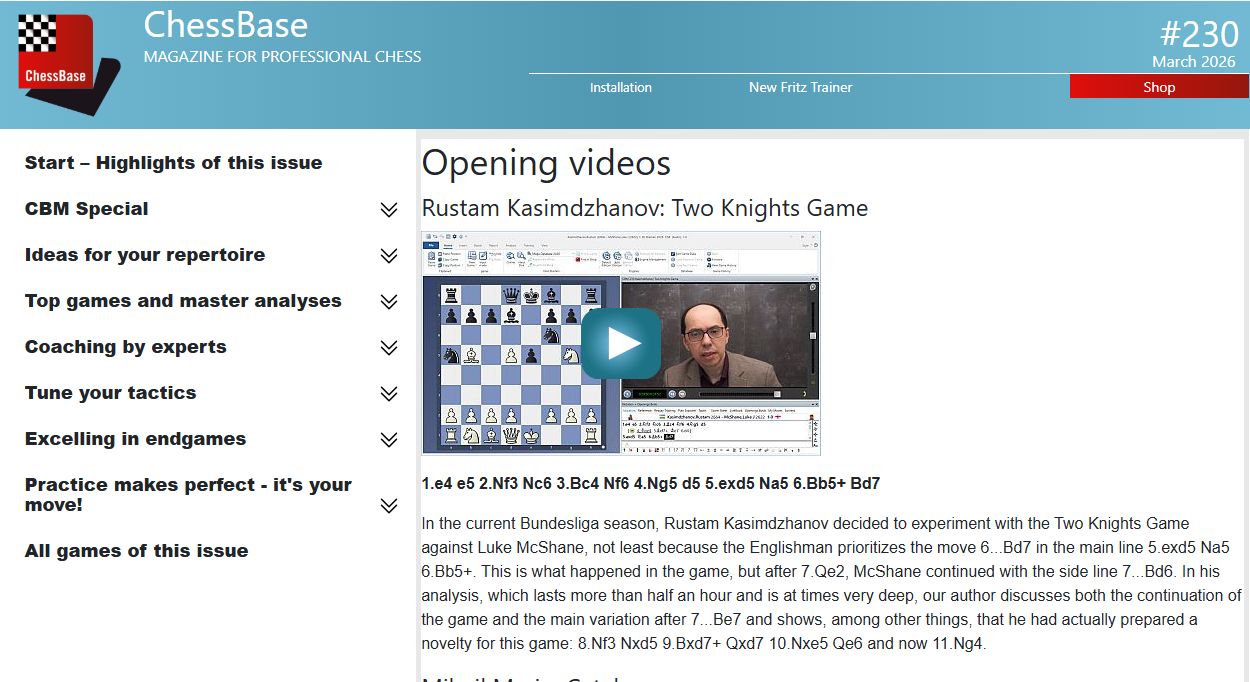
Mihail Marin and Nico Zwirs take two games from the Tata Steel tournament as the starting
point for their opening theory analyses. Aravindh-Blübaum featured the Catalan, while Van Foreest-Giri saw the Sicilian Najdorf Variation. And Rustam Kasimdzhanov reports on his experiment with the Two Knights Game against McShane in the German Bundesliga.
Mihail Marin: Catalan
1.d4 d5 2.c4 e6 3.Nf3 Nf6 4.g3 Be7 5.Bg2 0–0 6.0–0 dxc4 7.Qc2
Nico Zwirs: Sicilian Najdorf
1.e4 c5 2.Nf3 d6 3.d4 cxd4 4.Nxd4 Nf6 5.Nc3 a6 6.Be3 e5 7.Nb3 Be7 8.f3 Be6 9.Qd2 Nbd7 10.0–0–0 h5 11.Kb1 Qc7
Rustam Kasimdzhanov: Two Knights Game
1.e4 e5 2.Nf3 Nc6 3.Bc4 Nf6 4.Ng5 d5 5.exd5 Na5 6.Bb5+ Bd7
... and much more!
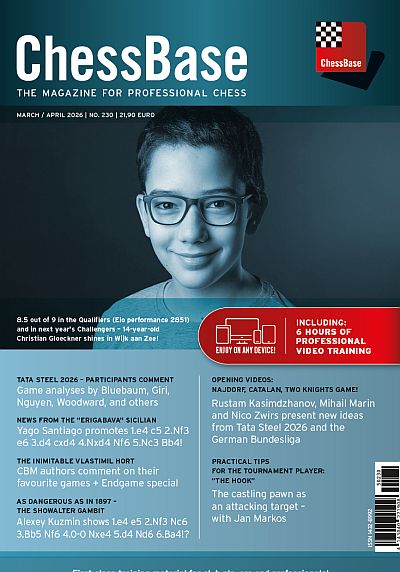
Order now in the ChessBase Shop – Single issue € 21.90!
The new ChessBase Magazine subscription can be cancelled at any time. Available with payment by credit card or PayPal.