Many a Hamburg chess fan or older Bundesliga player will surely still remember Peter Dankert, born on 26 January 1951: a great chess talent in his youth and later a strong Bundesliga player.
Peter Dankert learned to play chess only at the age of 14 from his father, who taught all his children the game. Unlike his three brothers and his sister, however, Peter Dankert was immediately seized by the chess bug.
How it all began much earlier
The interest in chess did not come entirely out of nowhere. The "chess bug" had already been present in the family before. Peter Dankert's great-uncle Otto Dankert had been a passionate chess player. Otto Dankert lived in Kiel, was an active player in the workers' chess movement of the time, played correspondence chess tournaments and, as an editor, published contributions in the Deutsche Arbeiter-Schachzeitung, the organ of the German Workers' Chess Federation.
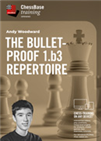 This compact course is designed specifically for practical play. Instead of overwhelming you with endless theory, it focuses on the critical lines, typical plans, and recurring tactical ideas.
Looking for an opening that gets your opponents thinking on move one? Grandmaster Andy Woodward has relied on 1.b3 for years in blitz and bullet, using it to defeat strong masters and grandmasters who underestimated its hidden venom. While many players dismiss the opening as harmless, they often find themselves caught in unfamiliar positions, tactical traps, and uncomfortable middlegames. This compact course is designed specifically for practical play. Instead of overwhelming you with endless theory, it focuses on the critical lines, typical plans, and recurring tactical ideas that matter most when the clock is ticking.
Free video sample: Introduction
Free video sample: King's Indian Setup

Issue of the Arbeiter-Schachzeitung
The Arbeiter-Schachzeitung first appeared in July 1912. A good 20 years later, after the National Socialists came to power, the Workers' Chess Federation was dissolved and the newspaper discontinued.
Otto Dankert was a supporter and pioneer of the then very young Alekhine Defence. In 1925, through the Workers' Chess Federation, he published a 52-page brochure on this opening entitled Die Aljechin-Verteidigung im Korrespondenzkampf: eine theoretische Studie (printed by Chr. Haase & Co, Kiel).
Only one game by Otto Dankert can be found in the Mega Database, but it is a good one. In 1925, Otto Dankert took part in a simultaneous exhibition by Emanuel Lasker. The second world chess champion in history had to work hard to hold his worse position to a draw. Naturally, Otto Dankert had chosen the Alekhine Defence as his opening.
From garden chess to tournament chess
Otto Dankert's great-nephew Peter Dankert gradually improved his understanding of chess through self-study and tried out his new insights in Hammer Park, where, with his growing playing strength, he increasingly amazed the local top dogs at a garden chess set. After Peter Dankert could no longer find opponents of his own level there, he joined Schachfreunde Hamburg in 1968 at the age of 15.
In his first surviving game, Peter Dankert followed in the footsteps of his great-uncle. In 1970 in Flensburg, he too took part in a simultaneous exhibition by a world-class player - Lothar Schmid was demonstrating his chess skills. Against Dankert's French Defence, however, the future arbiter of the 1972 World Championship match between Bobby Fischer and Boris Spassky went about matters too optimistically and had to resign after only 23 moves.
Peter Dankert quickly became an important pillar of the Schachfreunde Hamburg youth team and, at the turn of 1970/71, was invited to an international U20 youth tournament in Büsum, where he finished in a good mid-table position among 18 participants. The other participants included Walter Rostalski, another young, gifted Hamburg player. Peter Dankert and the rather introverted Walter Rostalski later became close friends, taking part in many tournaments together and spending many evenings playing blitz in Hamburg chess cafés between tournaments.
At Schachfreunde Hamburg, Peter Dankert continued to make progress and eventually became strong enough to reach the final of the German Youth Cup in 1971. The following year, Peter Dankert became Hamburg youth champion. Soon he was the best player at Schachfreunde and also one of the best players in Hamburg.
Chess ranked very high in Peter Dankert's life. That did not mean, however, that he did not also enjoy occasionally going out with his sister Susanne and her friends. It could happen, though, that the girls sometimes waited in vain because Peter Dankert still had an adjourned game to finish.
The only chess player in the sports promotion group
After his school years at the Catholic Jesuit Gymnasium Sankt Ansgar, Peter Dankert, as a youth squad player, was able to complete his military service in the Bundeswehr's sports promotion group in Sonthofen. Chess players, however, were rather rare there. He told his sister Susanne how, after sport, he sat together with some of his fellow athletes and was asked what kind of sport he practised. The answer, chess, led to astonished faces. Although nominally recognised as a sport, the idea that tournament chess could be regarded as a real sport was not widespread in the 1970s.
Good chess skills could already be used profitably at times even then. By the 1970s, the development of chess computers had advanced to the point where manufacturers sought comparisons with good club players, usually in department stores, where the chess computers could also be bought. To create an incentive to take on the machine - and perhaps embarrass oneself - prizes were offered. Peter Dankert agreed to play a game against a chess computer at the time, and in the end carried home a colour television as the winner.
After his military service in the sports promotion group, Peter Dankert began studying law in Hamburg. From 1973 to 1976, he took part in only a few tournaments outside Hamburg, but he was a regular guest at the club evenings of Schachfreunde Hamburg and, in 1973, became the youngest player to win the club championship. In 1974, he defended his title. In the 1970s, he also became club blitz champion four times. Schachfreunde awarded him the title of "the most successful chess player of the club".
First international tournaments and a chess book
At the turn of 1974/75, Peter Dankert took part in the Challengers tournament of the Christmas Congress in Hastings, England. Of the two surviving games, one is a win against Jonathan Speelman, who was three years younger and only 18 at the time.
In the early to mid-1970s, Peter Dankert must have studied the Alekhine Defence intensively and was thus following in the footsteps of his great-uncle. In December 1976, Heinz Brunthaler's publishing house released his monograph Die Aljechin-Verteidigung - mit einer ausführlichen Darstellung der Theorie mit 121 Beispielpartien. It should be remembered that in 1976 writing a book, especially a chess book, was still a difficult undertaking. The 121 games mentioned had to be collected by the author himself. The ChessBase database, from which one can now easily export any number of games, did not yet exist.
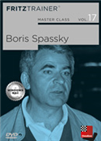 In this video course, experts including Dorian Rogozenco, Mihail Marin, Karsten Müller and Oliver Reeh, examine the games of Boris Spassky. Let them show you which openings Spassky chose to play, where his strength in middlegames were and much more.
Peter Dankert began playing more tournaments again at the start of 1977. He had qualified for the German Chess Federation's cup tournament, the so-called Dähne Cup and, after four knockout rounds, became German Cup winner with a final victory over Dario Doncenvic. Since at Schachfreunde Hamburg he could only play below his level in team competitions, he switched to Favorite Hammonia, actually a rowing club, but one that had also had a strong chess section since 1972.
German Cup winner and start in the Bundesliga
At the time, the Bundesliga was still played in four regional groups of eight teams each. In 1975/76, Favorite Hammonia had been promoted to the Bundesliga North, immediately finished second and also stayed up in the following seasons. The 1979/1980 season saw the Favorite Hammonia team even finish as northern champions, after a playoff, thereby qualifying for the final of the four regional champions.
Hamburg did beat the favoured team from Solingen, but after the second tiebreak criterion, the number of board points, finished only as runners-up. Dankert contributed to the 5–3 win over Solingen with a victory against grandmaster Hans-Joachim Hecht.
The 1979/80 season was the last season of the four-part Bundesliga. In 1980, the single-division Bundesliga was introduced. Favorite Hammonia qualified as the previous year's runners-up and managed to stay up in the first season, but were relegated the following season after finishing fourth from bottom.
On the occasion of the 100th anniversary of the German Chess Federation, Favorite Hammonia organised a tournament in 1977, in which a club selection played against international players using the Scheveningen system, with every player from one team facing every player from the other. Against strong opponents, however, Dankert managed only four draws and lost five games. Things went better at the German Individual Championships in May 1978. With 24 participants, the tournament was played under the Swiss format. Peter Dankert finished with 7 out of 11 points, behind Ludek Pachman and Ralf Lau, in shared third-fourth place.
National team player, German Championships and strong international tournaments
In the same year, Peter Dankert was selected by the German Chess Federation for the still quite young Mitropa Cup. Behind Ralf Lau, Dankert played on board two, ahead of the then 18-year-old Stefan Kindermann, who was already an IM. The German team finished third behind Yugoslavia and hosts Italy.
In 1979, Peter Dankert was invited to the International German Championships in Munich. The tournament had an excellent field, with world champions Anatoly Karpov and Boris Spassky, international stars such as Ulf Andersson, Yuri Balashov and Andras Adorjan, alongside top German players Robert Hübner and Helmut Pfleger. The 16 participants played an all-play-all event. After five rounds, Anatoly Karpov withdrew from the tournament and travelled to Moscow because his father had died. Andras Adorjan fell ill and also withdrew after five rounds.
 Top trainers strongly recommend regular study of well-explained classical games to improve your understanding of chess in the long term. 33 modern classics are explained in details on this video course.
Dankert could not keep pace with the strong competition, although he scored draws against Ulf Andersson and Helmut Pfleger, among others, and defeated veteran master Wolfgang Unzicker. He nevertheless finished last.
Dankert played a very good game against Karpov, whom he confronted with the Sicilian Wing Gambit. The world champion, however, gradually reduced all White's possibilities and won in typical style.
He blundered away the game against Spassky in two moves, but it produced a fine picture with many spectators on the sidelines.
In 1979, Dankert was again nominated for the Mitropa Cup, this time on board four. He was not particularly successful, but once again won bronze with the team. Otto Borik and Ralf Hess were the team's best players.
The following year, Favorite Hammonia organised an anniversary tournament in honour of Herbert Heinicke. Heinicke was a very strong player, born in Brazil as the son of German emigrants. He returned to Germany with his parents in 1914 after they had been expropriated in Brazil. Heinicke boxed and once became German lightweight runner-up. Above all, he liked playing chess and took part in many chess tournaments. In 1937, Heinicke founded a stainless-steel company, with which he was very successful. Heinicke, however, had been a convinced National Socialist, which meant he was later not well liked in Hamburg. It was he who, together with friends, had founded the chess section at Favorite Hammonia.
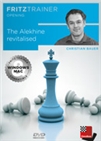 In this video course Christian Bauer explains the ins & outs of this surprise weapon so that you can add it into your repertoire.
The Alekhine (1.e4 Nf6) is a rare guest in general and especially at a high-level. During the pandemic, however, this daring opening has been employed on several occasions, notably by the World Champion Magnus Carlsen. A faster time-control and perhaps the unusual atmosphere created by online games probably helped some players unleash, from time to time, a marginal opening to surprise their opponents.
The anniversary tournament was won by Vlastimil Hort. Dankert achieved a very good sixth place. Dankert also performed well at the 1980 German Championships in Bad Neuenahr, finishing between fifth and eighth place. Eric Lobron won convincingly.
Peter Dankert was occasionally invited to give simultaneous exhibitions. Unfortunately, photos from that time are rare or blurred, but at least some exist.
In one photo, Peter is playing a small simultaneous exhibition in Kiel in 1990 as a guest of the chess section of TUS Holtenau. On the left of the picture, Peter's godson Marcel can be seen.
On the move in the Bundesliga
After Favorite Hammonia's relegation from the Bundesliga, Peter Dankert joined the Köln-Porz team and was thus also able to take part in the international GM tournament in Porz in 1981/82. The tournament began on New Year's Eve 1981. The stars were Mikhail Tal, Tony Miles and Vlastimil Hort. That was also the order at the top of the final standings. Dankert managed only a few draws, but at least consigned Cologne veteran Paul Tröger to last place.
With SG Porz, Peter Dankert won the German Team Championship title in the 1981/82 season. In the following season, Porz finished only as runners-up behind Bayern Munich, and in 1983/84 they became champions again. Dankert, however, had already left Porz and was now playing in the Second Bundesliga North division. In the 1985/86 season, Dankert made a guest appearance for Zehlendorf in the top Bundesliga section, and in 1986/87 he played for the Hamburg SG BUE team. The team was relegated, however. Dankert then played for several years in the Second Bundesliga North division.
For the 1991/92 season, he moved to Hannoverscher SK and again played in the top section of the Bundesliga. His team, however, finished last and was relegated. In 1995/96 Peter Dankert can be found in the Oberliga North, in 1996/97 with Hamburg SG BUE in the Second Bundesliga North, and the following year back in the Oberliga.
Together with his chess friends from Hamburg SG BUE, Uwe Kunstowicz, Walter Rostalski and Mike Münder, Peter Dankert formed a feared four-player team which, under the name "Lokomotive Hamburg", collected many prizes at weekend rapid tournaments.
After many different stops, Dankert ultimately returned to his home club, Schachfreunde Hamburg. There, in 2000, 26 years after his first success, he became club champion once again. Dankert then also played a major role in helping his team win promotion to the second division of the Bundesliga in 2002/2003. In the following season, however, he only played six games.
The tragedy - remembering a great personality
 YOUR PERSONAL CHESS COACH - Whether you’re taking your first steps into the world of club chess, or already playing at a tournament level: with FRITZ, you can train more efficiently, intelligently and with a more personalised approach than ever before.
FRITZ is more than just a chess engine – it’s a training revolution! Whether you’re taking your first steps into the world of club chess, or already playing at a tournament level: with FRITZ, you can train more efficiently, intelligently and with a more personalised approach than ever before.
During a meeting to play blitz with Walter Rostalski in a pub near the Heiligengeistfeld, Peter Dankert slipped so badly on a staircase during the evening that he suffered serious injuries. He was taken to hospital, where he died on 27 May 2004 from the consequences of his injuries. Peter Dankert was 53 years old.
Schachfreunde Hamburg honour Peter Dankert as the most successful player in the club's history. They had already named him an honorary member in 1980.
Peter Dankert's sister Susanne suggested to Schachfreunde Hamburg that they establish a Peter Dankert Tournament, which has now been held there every year since 2006. The tournament is also the official Hamburg Rapid Chess Championship. Peter Dankert's sister personally provides the participants with home-baked cakes. This year's tournament took place on 13 June.
Tournament announcement...
Incidentally, the chess bug remains active in the Dankert family. Peter Dankert's niece Stefanie played tournament chess for Meerbauer Kiel for a while and won the U14 state youth individual championship in 1997. Other nephews and nieces, and already some great-nephews and great-nieces, also enjoy playing chess, mostly as a hobby. The family's aim, however, is for one of the young chess enthusiasts one day to be able to play competitively in the tournament held in honour of their uncle, starting from 1800 DWZ/Elo.
This article was written with the support of Schachfreunde Hamburg and Peter Dankert's sister Susanne, to whom special thanks are due for her sharing of many anecdotes and suggestions.