Loose Pieces Drop Off (LPDO)

by Karsten Müller
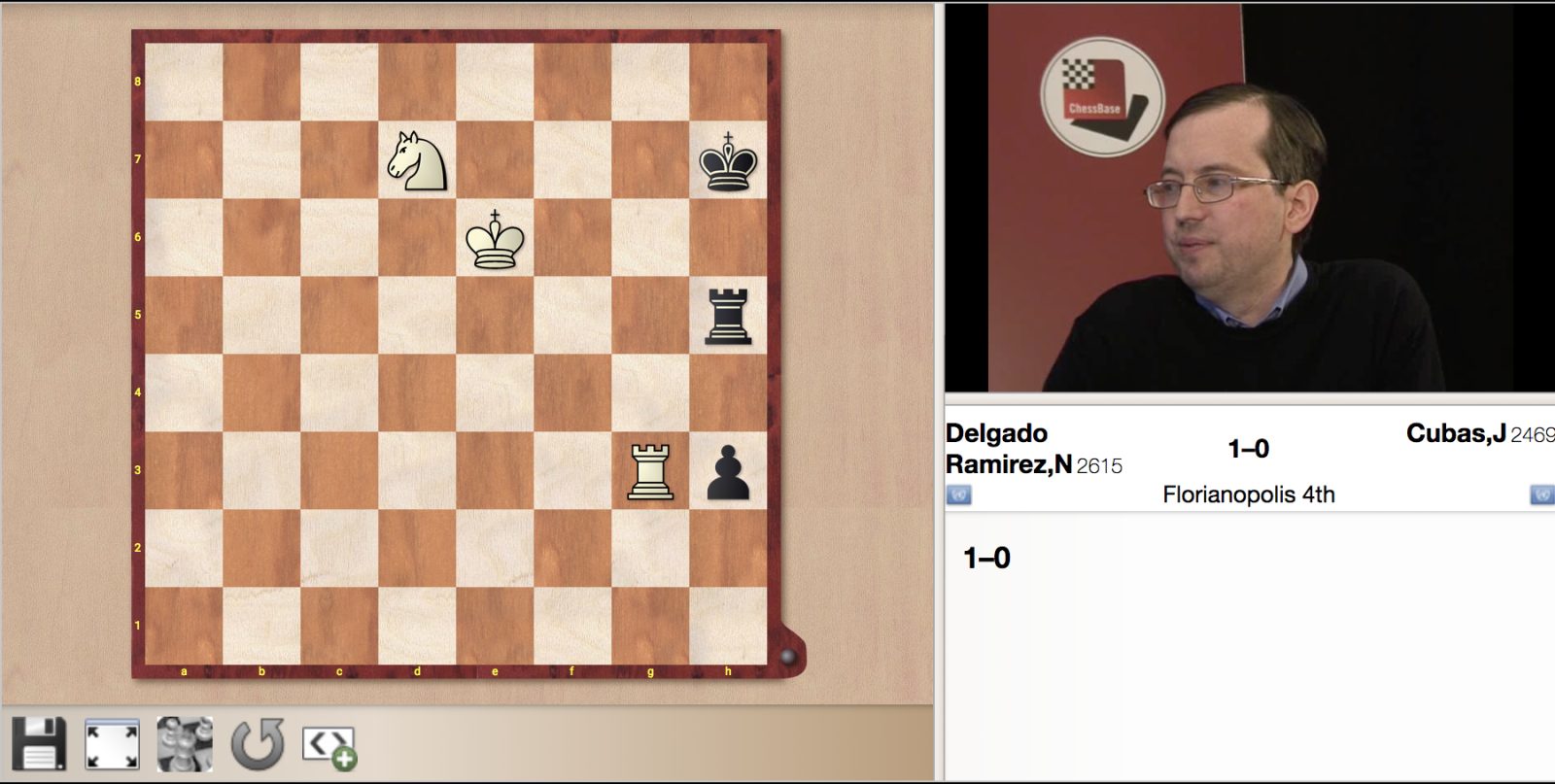
3/8/2022 – The acronym "LPDO" was probably coined by the English player Mike Cook, who used it to explain the majority of his losses in a 100-game blitz match against John Nunn. But it was Nunn who made the term popular by talking about this blitz match in his book "Secrets of Practical Chess". Keeping "LPDO" in mind might help to reduce blundering pieces, even in the endgame. In the diagrammed position Black's rook and bishop are both "loose". How did White manage to let them "drop off"?

Let endgame expert Dr Karsten Müller show and explain the finesses of the world champions. Although they had different styles each and every one of them played the endgame exceptionally well, so take the opportunity to enjoy and learn from some of the best endgames in the history of chess.
 

Karsten Mueller in ChessBase Magazine

Do you like these lessons? There are plenty more by internationally renowned endgame expert Dr Karsten Müller in ChessBase Magazine, where you will also find openings articles and surveys, tactics, and of course annotations by the world's top grandmasters.


ChessBase Magazine #205

Order now at the ChessBase Shop ! Available as a download or on DVD.

ChessBase Magazine Exta #205

 Order now at the ChessBase Shop ! Available as download or on DVD.

Apart from his regular columns and video lectures in ChessBase Magazine there is a whole series of training DVDs by Karsten Mueller, which are bestsellers in the ChessBase Shop.

Karsten Mueller

Karsten Mueller regularly presents endgame lessons in the ChessBase Video Portal

Links


Karsten Müller is considered to be one of the greatest endgame experts in the world. His books on the endgame - among them "Fundamentals of Chess Endings", co-authored with Frank Lamprecht, that helped to improve Magnus Carlsen's endgame knowledge - and his endgame columns for the ChessCafe website and the ChessBase Magazine helped to establish and to confirm this reputation. Karsten's Fritztrainer DVDs on the endgame are bestsellers. The mathematician with a PhD lives in Hamburg, and for more than 25 years he has been scoring points for the Hamburger Schachklub (HSK) in the Bundesliga.

Discuss

Rules for reader comments


Not registered yet? Register

adbennet adbennet 3/8/2022 07:11
LPDO is definitely an acronym. Back to chess.

I don't think this diagram is a particularly good example of LPDO. Before 77...Bd6 black has one loose piece (bR/c3), and one guarded piece (bB/c7). But after the sequence 77...null-move 78.Rf3+ Ke4 79.Nf2+ Kd4 80.Rxc3 Kxc3 the loose piece on c3 did *not* "drop off", and the formerly guarded black bishop on c7 is *not* guarded, and would equally *not* be guarded on any square reachable at move 77. But only on d6 does it drop off.

77...Bd6 doesn't lose because the bishop is loose on this square. It loses because e4 is now a forking square. So this is not an example of LPDO but of what Lasker calls the "geometric principle".

Good moves for black are 77...Rc2+, 77...Rc4, and 77...Kf6. Notably, all these good moves continue to leave the rook "loose".
Johannes Fischer Johannes Fischer 3/8/2022 12:51
@sligunner
Wikipedia disagrees: "Acronyms can be pronounced as words, like NASA and UNESCO; as individual letters, like FBI, TNT, and ATM; or as both letters and words, like JPEG (pronounced JAY-peg) and IUPAC." https://en.wikipedia.org/wiki/Acronym
sligunner sligunner 3/8/2022 12:08
LPDO is not an acronym, it's an abbreviation. An acronym is something that can be pronounced as a word, such as Nato, Unesco etc., not FBI, CIA . . . and LPDO
Johannes Fischer Johannes Fischer 3/8/2022 10:54
@TimSpanton
Thanks for writing and indicating the error. It was corrected.
TimSpanton TimSpanton 3/8/2022 09:52
This needs to be corrected to Black's rook and bishop (rather than knight). Tim Spanton https://beauchess.blogspot.com/
1