Loek van Wely: 10 Chess Principles That Actually Matter

by ChessBase
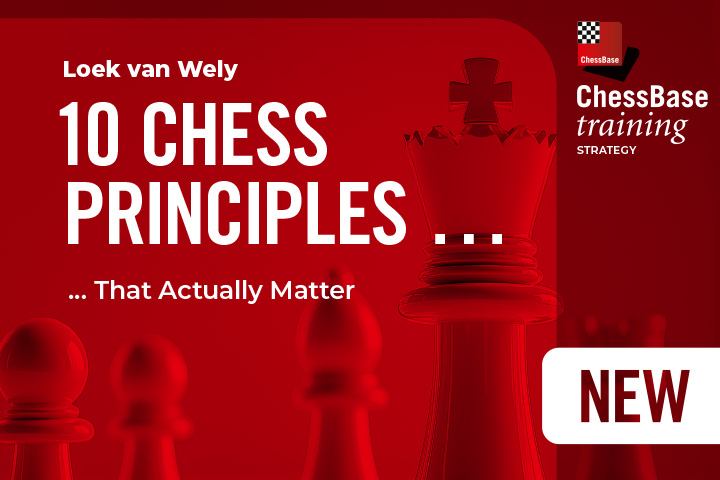
11/6/2026 – In his new course, GM Loek van Wely shares ten practical principles from a career spanning 14 Olympiads, eight Dutch championship titles and decades of games against Karpov, Kasparov, Anand and Carlsen. Instead of opening lines, he focuses on how decisions are really made at the board: managing your clock around the critical moments, knowing when to simplify, staying objective about mistakes and recognising the right moment to take a risk. He also covers the psychological side of chess, from not being intimidated by stronger opponents to trusting your own calculation under pressure. A course about the part of chess that opening theory can’t teach you.

Keep it simple. Stay objective. Watch the clock. Sometimes take the risk. GM Loek van Wely explains the ten principles that decide real games. They aren’t about theory. They’re about what you do at the board when it counts.
Opening theory gets all the attention. But according to GM Loek van Wely, a player who has played in 14 Olympiads, is eight-time Dutch champion, and has decades of experience against Karpov, Kasparov, Anand, and Carlsen, most of what separates strong players from the rest has nothing to do with memorised lines.
Free sample video: Introduction
Free sample video: Don't Bluff the Donkey

10 Chess Principles That Actually Matter  

by Loek van Wely

Opening theory gets all the attention. But according to GM Loek van Wely, a player who has played in 14 Olympiads, is eight-time Dutch champion, and has decades of experience against Karpov, Kasparov, Anand, and Carlsen, most of what separates strong players from the rest has nothing to do with memorised lines.

Free sample video: Introduction

Free sample video: Don't Bluff the Donkey

In this course, Van Wely breaks down ten practical principles he's used throughout his career, and that he still sees even grandmasters get wrong. Among them: managing your clock around the real turning points of a game rather than reacting too late, knowing when to simplify instead of complicate, staying objective about your own mistakes as well as your opponent's, and recognising the one moment to take risks before it's too late to matter. He also addresses the psychological side of the game: not being intimidated by a strong opponent's body language or time pressure, and trusting your own calculations even against higher-rated players.

This isn't a course on lines or theory. It's a look at how decisions actually get made (and also mishandled) at the highest level, and how to apply that awareness to your own games.

What you'll get:
• Ten practical principles drawn directly from a top grandmaster's tournament career
• Guidance on time management, risk-taking, and staying objective under pressure
• Real examples and stories from decades of play against World Champions
• Insight into the psychological side of chess that opening books never cover

The part of chess that opening theory can't teach you.

Running time: 3 hours 35 minutes

Keep it simple. Stay objective. Watch the clock. Sometimes take the risk. GM Loek van Wely explains the ten principles that decide real games. They aren’t about theory. They’re about what you do at the board when it counts.
Opening theory gets all the attention. But according to GM Loek van Wely, a player who has played in 14 Olympiads, is eight-time Dutch champion, and has decades of experience against Karpov, Kasparov, Anand, and Carlsen, most of what separates strong players from the rest has nothing to do with memorised lines.
Free sample video: Introduction
Free sample video: Don't Bluff the Donkey

Links:


Reports about chess: tournaments, championships, portraits, interviews, World Championships, product launches and more.
Discussion and Feedback Submit your feedback to the editors