Press release by FIDE
 Pattern recognition is an important tool in modern chess, as it helps you to understand better the characteristics of a position. Particularly when you have been confronted with a surprise opening system played by your opponent, it helps when you can just
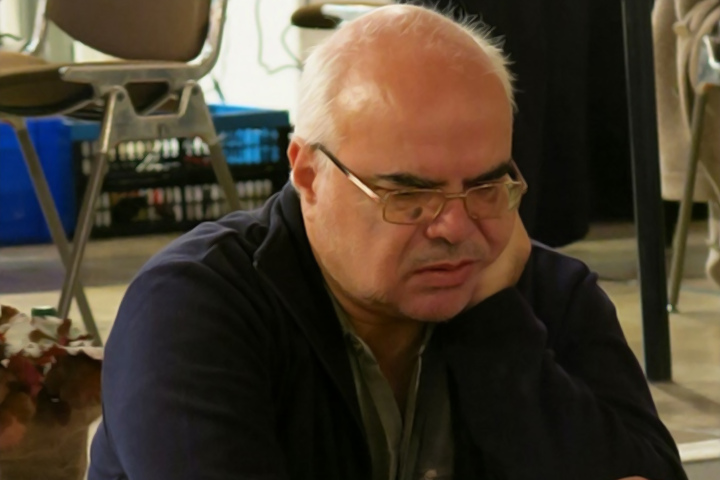
It is with great sadness that we learned of the passing of Vereslav Eingorn, a distinguished Ukrainian chess grandmaster, coach, and author. He was 69.
Born on 23 November 1956 in Odesa (then the Ukrainian SSR, Soviet Union), Eingorn grew up in a chess-playing family. He learned the game from his grandmother and began attending a chess club at the age of 12. His talent quickly became apparent, and he went on to establish himself among the leading players in Soviet chess during the 1980s.
Eingorn graduated from Odesa State University with a degree in mathematics, but he devoted his professional life to chess. He earned the title of Soviet Master of Sport in 1976, International Master in 1984, and Grandmaster in 1986.
Eingorn was a consistent, high-level performer in the exceptionally strong Soviet chess scene of the 1980s. He competed in multiple USSR Championships, earning bronze medals in 1984, 1987, and 1989, along with a tie for second through seventh place in 1986.
During the most productive period of his career, Eingorn won or shared first place in strong events, including tournaments in Minsk (1983), Bor (1986), and Moscow (1986), and tied for first at the Cappelle-la-Grande Open in 1986. His peak came in 1987 when he qualified for the Interzonal tournament in Zagreb, where he finished in ninth place.
Three memorable victories by GM Eingorn
 The Hyper-Accelerated dragon is fast, from the very first moves, your bishop heads to g7, seizes the long diagonal, and turns into the most feared piece on the board.
It rewards players who love initiative and clear attacking plans.
The Hyper-Accelerated dragon is fast, from the very first moves, your bishop heads to g7, seizes the long diagonal, and turns into the most feared piece on the board.
It rewards players who love initiative and clear attacking plans.
This two-volume course presents a complete repertoire for Black after 1.e4 c5 2.Nf3 g6 - the Hyper-Accelerated Dragon. In recent years, this dynamic line has grown significantly in popularity, with several of the world’s top players adding it to their repertoires.
This variation has two main advantages for black, he does not have to face the Rossolimo or Moscower Variation after 3.Bb5 and in many lines he can play d5 in one go and save a tempo. This first volume covers the Open Sicilian with both the razor sharp lines from the dragon and the positional Maroczy Bind.
Free video sample: Introduction
Free video sample: 6.Be3 Qb6 Introduction
Eingorn's contributions to chess extended far beyond his own competitive results. After the dissolution of the Soviet Union, he became an important member of the Ukrainian national team. He represented Ukraine at three Chess Olympiads, including the 2000 Olympiad in Istanbul, where Ukraine won the bronze medal. In 2001, he was part of the Ukrainian team that won the World Team Chess Championship in Yerevan.
In the mid-2000s Eingorn largely retired from active play and turned to coaching. As head coach of the Ukrainian women's national team, he guided them to gold medals at the 2006 Chess Olympiad in Turin. He was awarded the title of FIDE Senior Trainer in 2007.
A respected author, Eingorn penned several insightful books, including Decision-Making at the Chessboard (2003), Creative Chess Opening Preparation (2006), Chess Explained: The French (with Valentin Bogdanov, 2008), and A Rock-Solid Chess Opening Repertoire for Black (2012).
FIDE extends its deepest condolences to Vereslav Eingorn's family, friends, colleagues, and students.
Recent obituaries