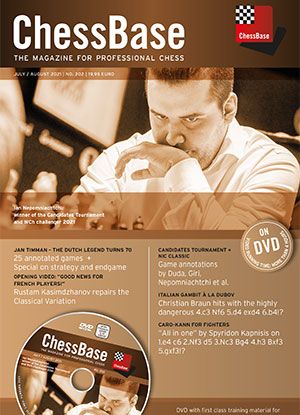
7/5/2021 – For a long time, the Classical Variation in the French Defence (1.e4 e6 2.d4 d5 3.Nc3 Nf6 4.e5 Nfd7 5.f4 c5 6.Nf3 Nc6 7.Be3 cxd4 8.Nxd4 Qb6) has been considered as slightly dubious for Black. But recently Black found new possibilities and the line became attractive again. In the new ChessBase Magazine #202, opening expert Rustam Kasimdzhanov shows the latest developments of this variation. The French expert uses the game Alekseenko-Grischuk from the Candidates Tournament 2020/2021 as a starting point. Take a look at an excerpt of his video analysis!
new: Fritz 20
Your personal chess trainer. Your toughest opponent. Your strongest ally. FRITZ 20 is more than just a chess engine – it is a training revolution for ambitious players and professionals. Whether you are taking your first steps into the world of serious chess training, or already playing at tournament level, FRITZ 20 will help you train more efficiently, intelligently and individually than ever before.
World class players explain the ideas behind their moves. Opening specialists present current trends and exciting ideas for your repertoire. Master trainers in terms of tactics, strategy and endgame show you exactly the tricks and techniques that you need to be a successful tournament player!
In this course, Grandmaster Elisabeth Pähtz presents the London System, a structured and ambitious approach based on the immediate Bf4, leading to rich and dynamic positions.
€59.90
"Good news for French players!"
Rustam Kasimdzhanov repairs the Classical Variation
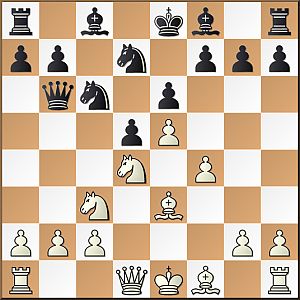
If you choose the Classical Variation with 3 ... Nf6, the chances are very good that you will get the variation with 8…Qb6 on the board. Because after 4.e5 there is hardly any promising alternative for White. After 1.e4 e6 2.d4 d5 3.Nc3 Nf6 4.e5 Nfd7 5.f4 c5 6.Nf3 Nc6 7.Be3 cxd4 8.Nxd4 Qb6
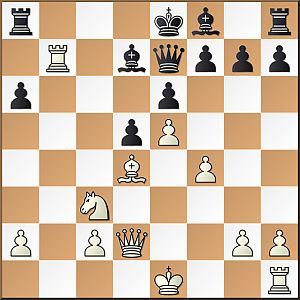
After the (to a great extent) forced moves 9.Qd2 Qxb2 10.Rb1 Qa3 11.Bb5 Nxd4 12.Bxd4 a6 13.Bxd7+ Bxd7 14.Rb3 Qe7 15.Rxb7 we reach the main position of the variation:
Till now Black has often tried 15…Rc8 16.0-0 Qd8. But Kasimdzhanov explains, e.g. by means of the line starting with 17.f5 exf5 18.Qe3!?, that White’s position appears to have more potential. In the meantime Black has been preferring two other moves: 15…Qd8 and 15…Qh4+. Kasimdzhanov provides deep analyses which somteimes go all the way into the endgame. His conclusion: Black is okay in both lines. “Good news for French players!”
Rustam Kasimdzhanov's video (excerpt)
Running time of the complete video in CBM #202: 24:18 min
ChessBase Magazine #202 (July/August 2021) also offers video analyses by Daniel King (Albin Counter Gambit: 1.d4 d5 2.c4 e5 3.dxe5 Ne7) and Mihail Marin (Gruenfeld: 1.d4 Nf6 2.c4 g6 3.Nc3 d5 4.Nf3 Bg7 5.Qb3 dxc4 6.Qxc4 0-0 7.e4 Bg4 8.Be3 Nfd7). The total playing time of all the three opening videos is just under an hour.
YOUR PERSONAL CHESS COACH - Whether you’re taking your first steps into the world of club chess, or already playing at a tournament level: with FRITZ, you can train more efficiently, intelligently and with a more personalised approach than ever before.
1.c4 e5 2.Nc3 Bb4!? is an opening idea well worth considering. Black immediately threatens to double the pawns on c3 in the style of the Trompowski or Sicilian Grand Prix attack.
Italian Game Powerbase 2026 is a database and contains 8571 top class games from Mega 2026 and the Correspondence Database 2026, of which 479 are annotated.
Videos: Nico Zwirs discusses the Sicilian with 2…e6 3.d4 cxd4 4.Qxd4 Nc6 5.Qe3 Nf6 6.Nc3. Mihail Marin examines Sindarov’s 6.Ne5 in the Queen’s Pawn Defence. Plus the ‘Lucky bag’ featuring 41 analyses by Berg, Ftacnik, Gupta and many others.
If you're looking for a dynamic alternative to the Slav, Queen's Gambit Declined, or other mainstream systems, the Chigorin Defence offers exactly what modern tournament players need.
Michael Kotyk presents a complete repertoire after 1.e4 e5, built around creative ideas, surprising move orders, and practical weapons designed to catch your opponents off guard.
€69.80
€59.90
We use cookies and comparable technologies to provide certain functions, to improve the user experience and to offer interest-oriented content. Depending on their intended use, analysis cookies and marketing cookies may be used in addition to technically required cookies. Here you can make detailed settings or revoke your consent (if necessary partially) with effect for the future. Further information can be found in our data protection declaration.
Pop-up for detailed settings
We use cookies and comparable technologies to provide certain functions, to improve the user experience and to offer interest-oriented content. Depending on their intended use, cookies may be used in addition to technically required cookies, analysis cookies and marketing cookies. You can decide which cookies to use by selecting the appropriate options below. Please note that your selection may affect the functionality of the service. Further information can be found in our privacy policy.
Technically required cookies
Technically required cookies: so that you can navigate and use the basic functions and store preferences.
Analysis Cookies
To help us determine how visitors interact with our website to improve the user experience.
Marketing-Cookies
To help us offer and evaluate relevant content and interesting and appropriate advertisement.