Eugenio Torre was born on 4 November 1951 in Iloilo City on the Philippine island of Panay. He was the seventh of his parents' ten children. His grandfather and his father were both keen chess players. His father, a lawyer by profession, taught all his children to play chess, including his son Eugenio when he was five or six years old. The children often played chess and even made their own chess pieces from scraps of leather obtained from a shoemaker. His older brothers also became strong players, but Eugenio surpassed them all with his talent.
A chess family spanning several generations
In 1958, the family moved to Quezon City in the Greater Manila area. By the age of nine, Eugenio Torre was already playing in junior tournaments, where the other youngsters were generally much older than he was. At sixteen, Torre became Philippine junior champion.
 How grandmasters win without fireworks: GM Jan Markos shows you 11 very practical tips from "How to play in a lost position" to "Be patient like Carlsen" that will improve your tournament chess.
Most chess books teach you what to think about. This series teaches you what to actually do when the clock is running and the result is on the line. Compiled from GM Jan Markos's acclaimed "Practical Tips for the Tournament Player" column in ChessBase Magazine, Volume 1 covers the decisions every tournament player faces before the position ever gets complicated: how you use your time, how you handle pressure, and how you think when the stakes are real.
Free Video Sample: How to use your time effectively
Torre made his progress entirely as a self-taught player, without any chess coach, using a few instructional books. Chess books were difficult to obtain, however. Torre learned mainly by playing through games from Chess Informant.
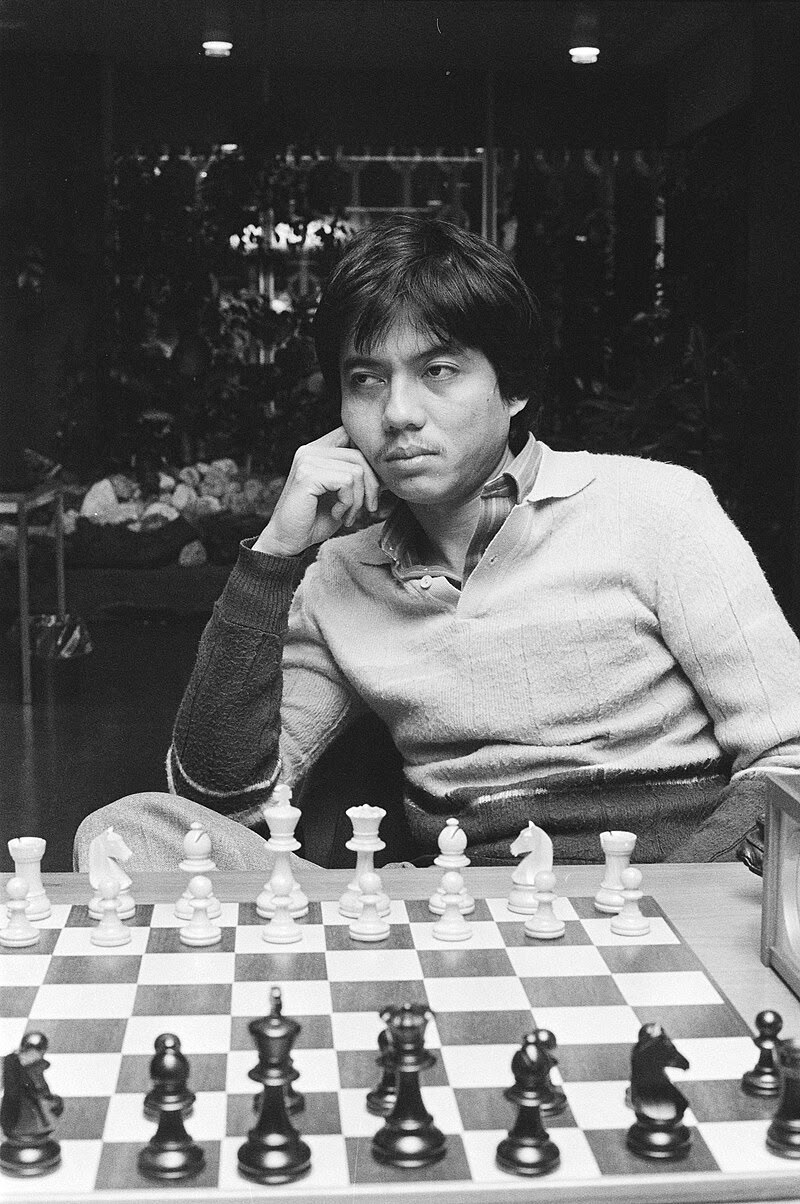
A chess player with a pop-star look
In 1968, Eugenio Torre played his first major international tournament in Manila. The following year, he took part in the 1969 World Junior Championship in Stockholm. Finishing fourth in his preliminary group (won by Anatoly Karpov), he missed the A final but won the B final. In 1970, Torre also won the Philippine national championship for the first time. At the 1971 World Junior Championship, he finished fourth, ahead of several strong players including Rafael Vaganian.
After finishing school, Torre began studying economics with a focus on banking and finance, but gave up his studies after two years because they could not be combined with his chess activities.
Record Olympiad participant
In 1970, Torre was selected for the Philippine team at the Chess Olympiad in Siegen. In the years that followed, Torre remained part of the Philippine squad through to the 2016 Olympiad and played in every Chess Olympiad with one exception. He did not take part in Dresden in 2008. With 23 appearances at Chess Olympiads, Eugenio Torre is therefore the record holder for Olympiad participation. In 1974 (Nice), 1980 (Valletta), 1986 (Dubai) and 2016 (Baku), he achieved the third-best result on his board and won the individual bronze medal.
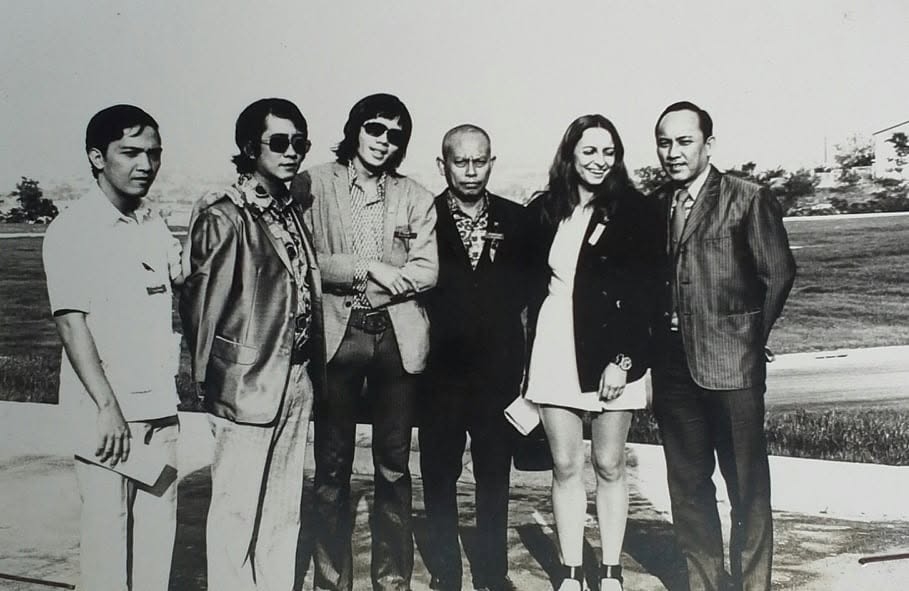
The Philippine team at the 1972 Chess Olympiad in Skopje, from left: Ruben Rodriguez, Edgar De Castro, Glicerio Badilles, team official Vera and Rodolfo Tan Cardoso - Julian Lobigas is missing | Photo: Eugenio Torre on Facebook
Torre also represented the Philippines nine times at the Asian Team Championships, winning team gold four times, silver once and bronze once. On four occasions, Torre won the individual gold medal on board one. He also won one individual bronze medal.
First grandmaster from Asia
In 1972, FIDE awarded Torre the title of international master. After the Chess Olympiad in Nice, he also became the first player from Asia to receive the grandmaster title.
After winning the zonal tournament in Hong Kong in 1972, Torre qualified for the Interzonal Tournament in Leningrad, but finished only in the lower half of the standings. Nor was he able to make a stronger impression at the 1976 Interzonal in Manila. In 1979, Torre again took part in a zonal tournament. In Rio de Janeiro, he finished 7th-9th in a field of 18 players.
 In this insightful video course, Grandmaster David Navara shares practical advice on when to calculate deeply in a position — and just as importantly, when not to.
Free sample video: Introduction
Free sample video: Invisible moves
Torre achieved his best Interzonal result in Toluca in 1982, when he shared first place with Lajos Portisch.
As the first chess player from Asia, he now took part in the Candidates matches, but was eliminated in the quarterfinals by Zoltan Ribli. At the next Interzonal in 1985, Eugenio Torre again performed very well, sharing 4th-6th place. This was followed by a playoff for a place in the Candidates matches against Nigel Short and John van der Wiel, who had finished level on points, but Torre came last.
In 1987, Torre once again qualified for an Interzonal and, finishing seventh in Zagreb, again missed out on the Candidates matches. In 1990, Manila again hosted an Interzonal, this time played as a 64-player Swiss-system tournament. Torre, however, finished only in mid-table.
When Torre first qualified for an Interzonal tournament, he found several supporters in his home country who enabled him to undertake long journeys and play tournaments in Asia, America and, above all, Europe. Among his supporters at the time was Florencio Campomanes, who later became FIDE president. In 1972-1973, Torre lived in Madrid in order to shorten his journeys to tournaments in Europe and save on travel costs. His backers provided him with a monthly allowance of US$250.
Tournaments all over the world
Eugenio Torre took part in countless tournaments over the course of his career. In Europe, he was a welcome guest as something of an "exotic" figure. In 1977 and 1983 (fourth place), he also took part in the International German Championships in Bad Lauterberg and Hanover respectively.
Among Torre's outstanding successes were tournament victories on the Costa del Sol in 1974 and in the four-player tournament in Manila in 1976, ahead of Karpov, Ljubojevic and Browne.
Torre won the Marlboro Chess Classic in Manila in 1977, the Jakarta Internationals in 1978 and 1979 (sharing victory with Averbakh and Dorfman), the Marlboro Chess Classic in Manila in 1979, San Francisco in 1991 and Kuala Lumpur in 1994.
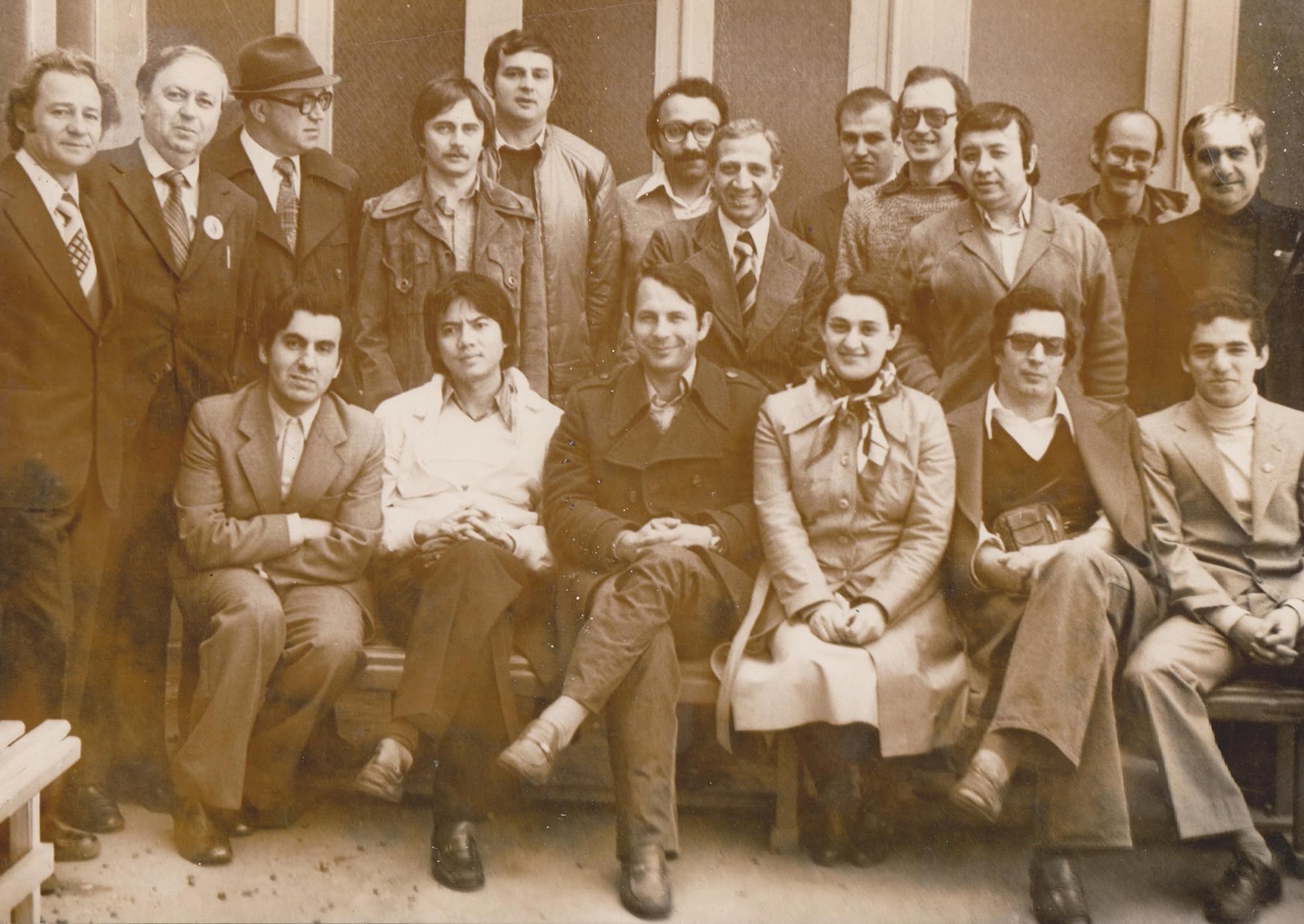
Who is who at the 1980 tournament in Baku? | Photo: Eugenio Torre on Facebook
In 2001, 2002 and 2014, Torre once again became Philippine national champion. In 2017, he won the Asian Senior Championship with a perfect 9/9 score.
In 1984, Torre was one of the participants in the return edition of the USSR v. Rest of the World match and won his individual match against Andrey Sokolov 2-1.
Friendship with Fischer, "Sportsman of the Millennium"
In 1974 and 1982, Eugenio Torre was named Sportsman of the Year by the Philippine sports press, and in 2000 he was named the Philippine Sportsman of the Millennium. He also received a number of other awards and honours. In 2021, he was inducted into the World Chess Hall of Fame.
Eugenio Torre was also one of the few chess players Bobby Fischer trusted and with whom the American maintained a friendship. The two first met at the 1970 Chess Olympiad in Siegen. After Fischer withdrew from public life following his World Championship victory in 1972, he also hid for a time in the Philippines. It was during this period that his close friendship with Torre developed. At the 1992 "rematch" between Fischer and Spassky, Torre served as Fischer's second and played several training games against him before the match.
 In this course, we will learn how to identify passively placed pieces in any given situation and how to improve their health by bringing them into active squares.

Bobby Fischer in discussion with Boris Spassky, with Eugenio Torre on the left | Photo: Eugenio Torre on Facebook
At the beginning of the 2000s, Fischer even lived for a time in Baguio City, in the same residential complex as Torre.
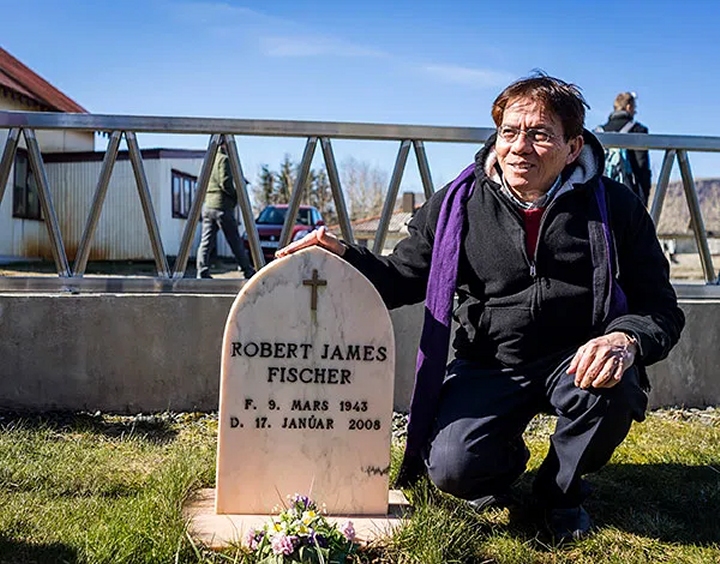
At Fischer's grave | Photo: Eugenio Torre on Facebook
Eugenio Torre's successes played a major role in the popularity of chess in the Philippines. The 1978 World Championship match between Karpov and Korchnoi was held there, and the country hosted a Chess Olympiad in 1990. Even today, Eugenio Torre remains one of the country's greatest sporting icons. In 2023, he opened a small personal chess museum near his home in Concepcion Dos, Marikina City, where he displays memorabilia, cups and trophies from his 50-year chess career.
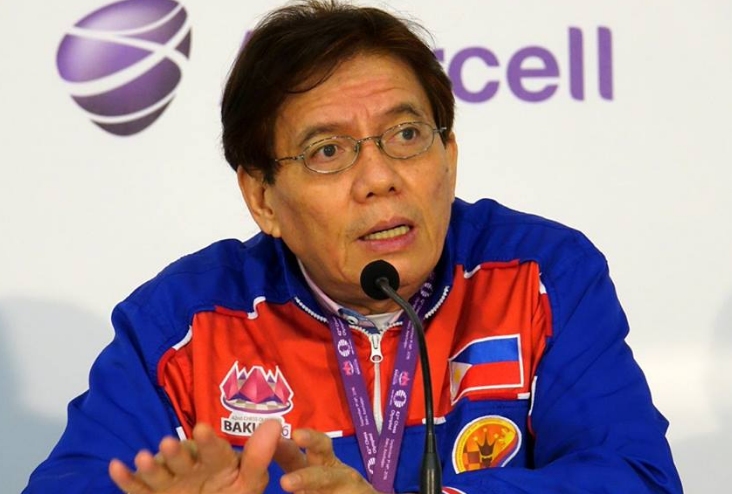
In 2023, Torre was appointed national coach of the Philippines and also accompanied the Philippine team to the 2024 Chess Olympiad in Budapest.
No other World Champion was more infamous both inside and outside the chess world than Bobby Fischer. On this DVD, a team of experts shows you the winning techniques and strategies employed by the 11th World Champion.
Grandmaster Dorian Rogozenco delves into Fischer’s openings, and retraces the development of his repertoire. What variations did Fischer play, and what sources did he use to arm himself against the best Soviet players? Mihail Marin explains Fischer’s particular style and his special strategic talent in annotated games against Spassky, Taimanov and other greats. Karsten Müller is not just a leading international endgame expert, but also a true Fischer connoisseur.













.jpeg)

.jpeg)