Computers and computer glitches
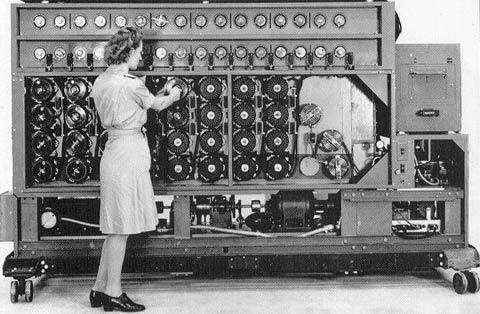
A technician working hard to get the computer back online
Actually the picture above show the Bomba (or Bomba kryptologiczna
– Polish for "cryptologic bomb"), a special-purpose machine
designed about October 1938 by Polish Cipher Bureau cryptologist Marian Rejewski
to break German Enigma
machine ciphers.

The first computer bug in history was found, on September 9, 1945, by U.S.
Navy officer Grace Hopper. In her notes we see that the problem that stopped
the Harvard Mark II computer from operating was a moth stuck between the relays.
The term "bug" for a computer error became a popular term after this
incident.

Repairing a computer – here the arithmetic unit of the AVIDAC in 1953

A modern server park (that's us on the back left, third rack from the end)
ChessBase.com – looking back nostalgically
Our web site has been online for at least twelve years now. There are people
out there who store the history of the world wide web, at least in part, and
so we can take a look back at where we were and how things started.
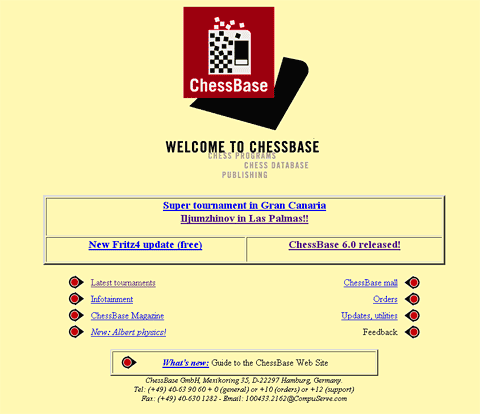
Above is the first
web page (nice yellow, guys, and blinking text!) that we could locate in
the Wayback archives. It is from December 1996. Note that the link to the brand
new ChessBase 6.0 program is no longer active, so it is futile trying to order
it today.
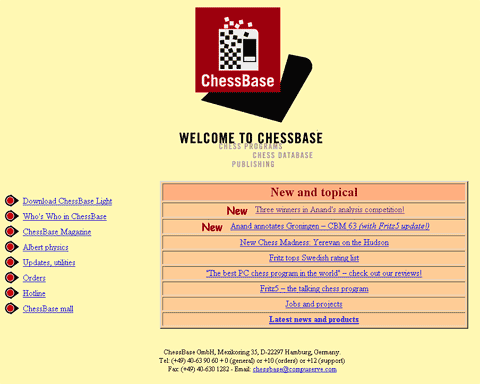
The newspage
in 1998, with a still working link to "Anand's analysis competition".
Anand also annotates Groningen for ChessBase Magazine 63 (which contains a Fritz
5 udate!). You can actually retrieve the sampler provided.

This was the new
look in August 2000 – a mainly template driven page with static HTML
files uploaded to the server. You could do that for a couple of years at the
time, but at some stage it becomes necessary to install a modern database driven
system.

Can you imagine when we launched the new database driven ChessBase.com news
page? It went online on September 11th 2001, and the very first report we had
to upload was on the terrorist destruction of the World Trade Center in New
York. You can find the story by clicking on "Last page" at the bottom
of our current front page or go straight to it using this
link. Note that you will see it today in our current ASP template, which
is different to when it was first introduced. Note too that the ID number is
44 – the first 43 reports were used for testing the site before launch.
If you have a lot of time to wallow in the history of our
newspage
you can spend hours doing so in the Wayback Machine archive page here.