In Europe, Germany and Poland were at war with one another; in Buenos Aires, they fought over medals at the chessboard. In the end, Germany finished half a point ahead of Poland to win team gold at a Chess Olympiad for the first and, so far, only time. But the outbreak of war also affected the course of the Olympiad.
Six team matches were not played and were instead recorded as 2-2 draws by default, including Germany v Poland. The English team, which had qualified for the final group, left early. Three of its members, Conel Hugh O'Donel Alexander, Stuart Milner-Barry and Harry Golombek, later worked at Bletchley Park and helped decipher encrypted messages sent by the German armed forces.
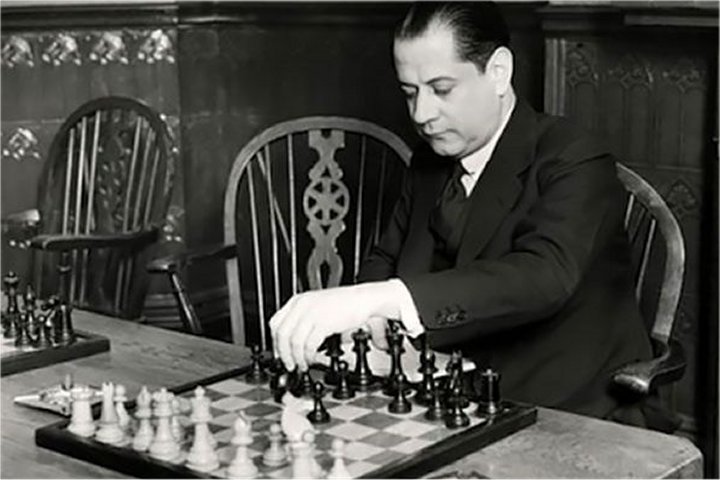
 He was a child prodigy and he is surrounded by legends. In his best times he was considered to be unbeatable and by many he was reckoned to be the greatest chess talent of all time: Jose Raul Capablanca, born 1888 in Havana.
But many participants did not return to Europe at all. All five members of the German team, Erich Eliskases, Paul Michel, Ludwig Engels, Albert Becker and Heinrich Reinhardt, remained in South America, while the Polish team also dispersed. Miguel Najdorf and Paulino Frydman stayed in Argentina, and Franciszek Sulik later went to Australia. Savielly Tartakower, however, who had lived in France for years but played for Poland, returned to Europe and joined the Free French forces during the war.
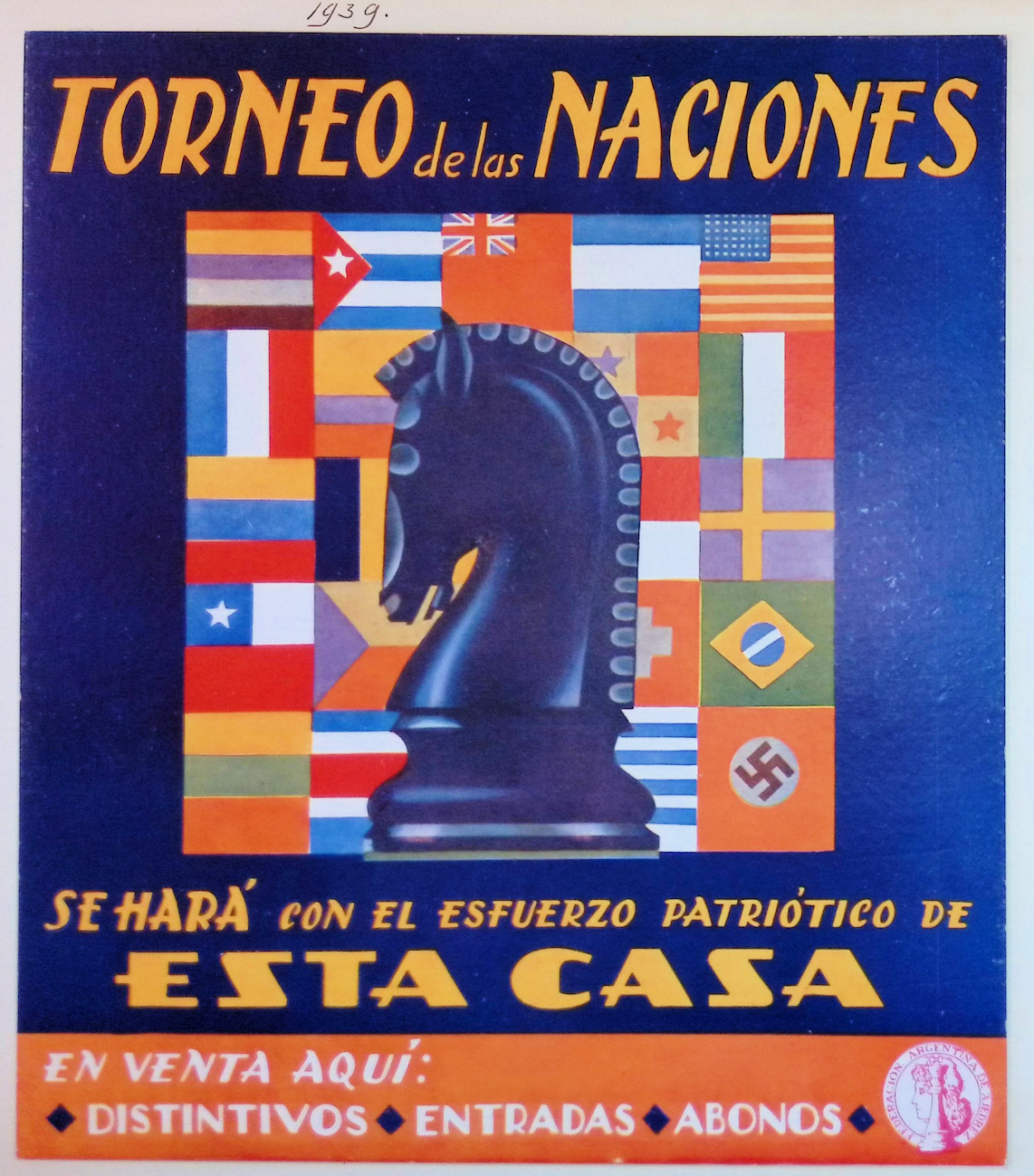
Poster for the Buenos Aires Olympiad | Source: FIDE
For Capablanca, the outbreak of the World War caused hopes of a second World Championship match against Alexander Alekhine, who had gone to the Olympiad as reigning world champion, to fade. Ever since his surprising defeat to Alekhine in the 1927 World Championship match, Capablanca had sought a rematch. In vain, because Alekhine kept finding new reasons not to play him. Instead, he defended his title against Efim Bogoljubow in 1929 and 1934. In 1935, he unexpectedly lost to Max Euwe, who thereby became the new world champion. Euwe, however, gave Alekhine the chance of a return match, and Alekhine took it. He won the 1937 rematch and regained his title.
Alekhine also avoided Capablanca in tournaments. After their 1927 World Championship match, he made sure not to play in the same events as Capablanca. It was not until 1936, nine years after their World Championship match, that they faced each other again at the tournament in Nottingham. Capablanca won. Two further games followed at the 1938 AVRO tournament in the Netherlands. The first was drawn, while Alekhine won the second. It was their last tournament game against each other.
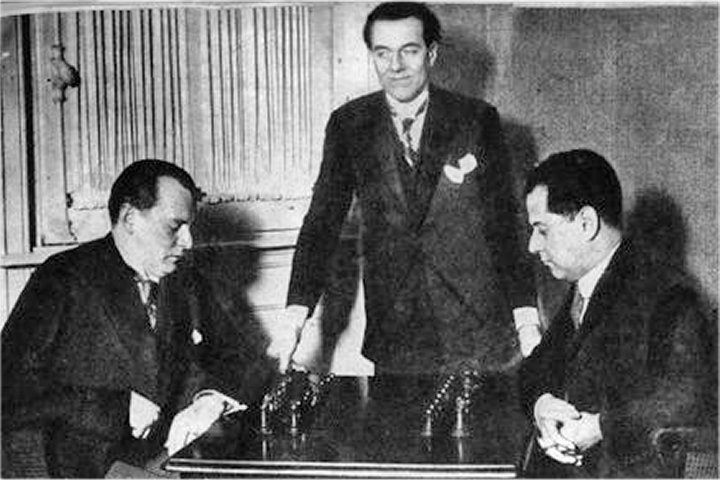
Alekhine (left) and Capablanca during their 1927 World Championship match in Buenos Aires
In Buenos Aires in 1939, however, it was Capablanca who avoided the direct encounter. Capablanca played on board one for Cuba, Alekhine for France, and on 14 September, in the twelfth round of the final group, the two could have faced each other. But Capablanca did not play, so Alberto López Arce appeared on the top board for Cuba against Alekhine and lost in 25 moves. The team match ended 2-2.
 On this DVD Grandmaster Daniel King offers you a repertoire for Black against the Catalan, based around maintaining the rock of a pawn on d5. Keeping central control ultimately gives Black good chances to launch an attack against the enemy king.
Capablanca explained the following day in the Argentine newspaper Crítica that his decision had been made solely for personal reasons. He had already informed the Argentine Chess Federation a week earlier that he would not play against Alekhine. The Olympiad was a team tournament, not an individual event, and neither Cuba nor France were fighting for overall victory.
Nevertheless, Capablanca and Alekhine continued negotiating over a rematch during the Olympiad. On 16 September, Capablanca reiterated in a letter to Augusto de Muro, president of the Argentine Chess Federation, that he was willing to play for the World Championship: "I am ready to play as soon as the match can be organised". Alekhine replied evasively and, in his response of 18 September, pointed out that as a reserve officer in the French army he might be called up for interpreting duties (see Edward Winter, Chess Notes No. 4696, "Capablanca and Alekhine in Buenos Aires, 1939").
In the end, there was never a rematch. The Olympiad did, however, bring Capablanca one final sporting success and a symbolic victory over his great rival. Capablanca remained unbeaten in Buenos Aires and scored 11½ points from 16 games (+7, =9, −0). Alekhine scored 12½ points from 16 games (+9, =7, −0), one point more. Since only the results from the final group counted towards the individual medals at this Olympiad, however, the gold medal for the best performance on board one went to Capablanca. He scored 8½/11 in the final group, while Alekhine had to settle for silver with 7½/10.
This success was Capablanca's swansong. After the Olympiad, he played no more tournaments, only simultaneous exhibitions and casual games. On 7 March 1942, the 53-year-old, who had suffered from high blood pressure for years, had a stroke while visiting the Manhattan Chess Club in New York. He died the following morning at Mount Sinai Hospital.
The last tournament game of Capablanca's life was played at the Buenos Aires Olympiad against the Brazilian Octávio Trompowsky, after whom the Trompowsky Variation 1.d4 Nf6 2.Bg5!? is named. Capablanca won the game in the same way he had won countless games throughout his career: he avoided theoretical discussions in the opening, steered clear of tactical complications that might even have favoured him, and instead outplayed his opponent in the middlegame by apparently simple means. This led to a favourable endgame, which Capablanca converted without difficulty.
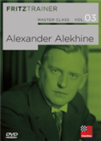 On this DVD GMs Rogozenco, Marin, Müller, and IM Reeh present outstanding games, stunning combinations and exemplary endgames by Alekhine. And they invite you to improve your knowledge with the help of video lectures, annotated games and interactive tests
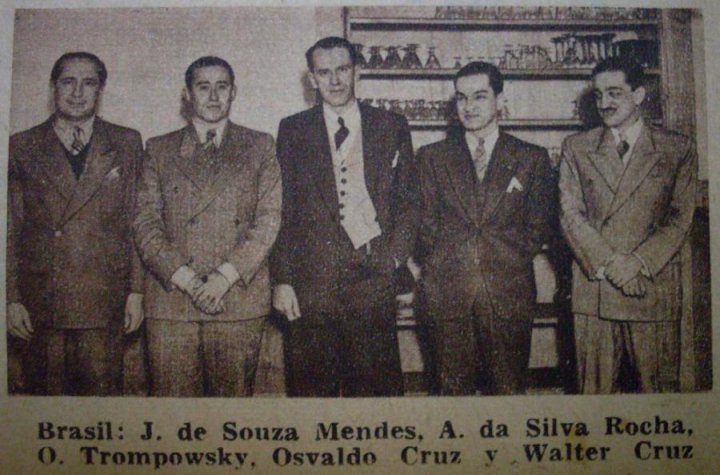
The Brazilian team | Source: https://www.ara.org.ar/chs/ajedrez/perlas/buenosaires1939.html
From Mating with a queen; a rook; two bishops; a knight and a bishop; to the basics of pawn endgames – here you will gain the necessary know-how to turn your endgame advantages into victories!
Links















.jpeg)

