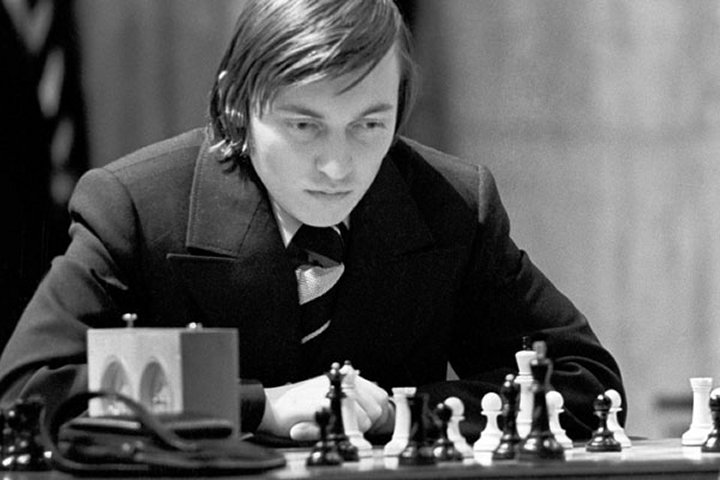
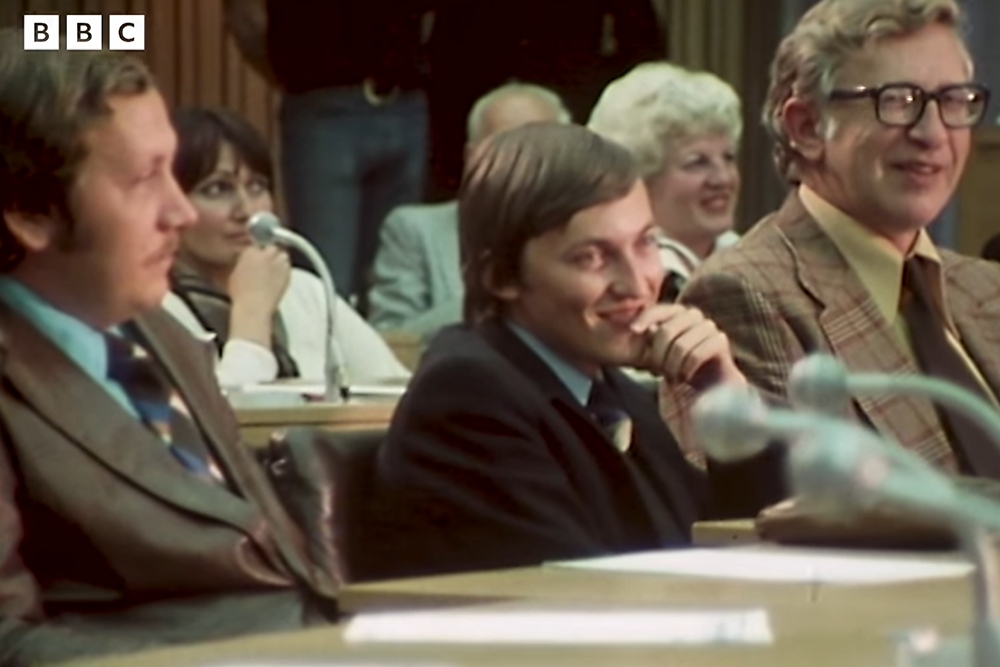
8/26/2026 – The BBC has released a 1977 documentary from its archives on YouTube about the then world chess champion, Anatoly Karpov. The programme traces Karpov's rise to the world title and features footage from the 1977 Interpolis Tournament in Hilversum, with many of the leading players and prominent figures in chess.
new: ChessBase Magazine 225
Chess Festival Prague 2025 with analyses by Aravindh, Giri, Gurel, Navara and others. ‘Special’: 27 highly entertaining miniatures. Opening videos by Werle, King and Ris. 10 opening articles with new repertoire ideas and much more. ChessBase Magazine offers first-class training material for club players and professionals! World-class players analyse their brilliant games and explain the ideas behind the moves. Opening specialists present the latest trends in opening theory and exciting ideas for your repertoire. Master trainers in tactics, strategy and endgames show you the tricks and techniques you need to be a successful tournament player! Available as a direct download (incl. booklet as pdf file) or booklet with download key by post. Included in delivery: ChessBase Magazine #225 as “ChessBase Book” for iPad, tablet, Mac etc.!
YOUR PERSONAL CHESS COACH - Whether you’re taking your first steps into the world of club chess, or already playing at a tournament level: with FRITZ, you can train more efficiently, intelligently and with a more personalised approach than ever before. FRITZ is more than just a chess engine – it’s a training revolution! Whether you’re taking your first steps into the world of club chess, or already playing at a tournament level: with FRITZ, you can train more efficiently, intelligently and with a more personalised approach than ever before.
The Hyper-Accelerated Dragon is fast, from the very first moves, your bishop heads to g7, seizes the long diagonal, and turns into the most feared piece on the board.
It rewards players who love initiative and clear attacking plans.
€39.90
Chess fever in the 1970s
In the 1970s, tournament chess began to attract a great deal of attention. At first, this was largely thanks to Bobby Fischer - his successes, his escapades and, finally, his victory over Boris Spassky in the 1972 World Championship match in Reykjavik. The match received extensive coverage all over the world. Anyone hoping that Fischer would now make a series of dazzling appearances at tournaments was soon disappointed. Fischer took his laurels, boarded a plane and disappeared. Not entirely, though. The new world champion continued to haunt chess magazines and newspapers like a phantom. From time to time, reports would claim that he was about to return, or that he had been spotted here or there. In fact, Fischer did not play a single tournament game as world champion, and it was another 20 years before he was finally seen at the chessboard again.
On this DVD a team of experts looks closely at the secrets of Karpov's games. In more than 7 hours of video, the authors examine four essential aspects of Karpov's superb play.
In 1975, Fischer was due to defend his title against the new challenger, Anatoly Karpov. However, Fischer made demands concerning the match conditions that could not be met and thus did not play. Karpov therefore became world champion without a contest, and the new international enthusiasm for chess soon transferred to him.
In many respects, Karpov was the complete opposite of Fischer. Where the tall American was loud and brash - "eccentric", as he was often described - the slight Karpov was reserved, almost inconspicuous. But unlike the now-vanished Fischer, Karpov was very much present on the tournament circuit. As the new world champion, he received numerous invitations and accepted most of them. And when he played, he did so in a manner worthy of a world champion, albeit in a very different style from Fischer.
Chess fever had spread particularly strongly in England. In 1972, the English millionaire Jim Slater had helped ensure that the World Championship match between Spassky and Fischer took place at all by increasing the prize fund. The match had been in serious doubt because the unpredictable Fischer had failed to arrive on time and had made additional financial demands, which Slater met.
Slater was also responsible for something of a chess boom in England when he offered £5,000 to the first English player to become a grandmaster. In the 1970s, £5,000 was worth considerably more than it is today, and the grandmaster title was still a relatively rare distinction. In 1976, Tony Miles duly became England's first grandmaster.
The BBC responded to chess' growing popularity. In 1976, it launched its legendary television series The Master Game, an innovative tournament format designed specifically for a television audience. These televised tournaments, featuring world-class players, continued until 1983. The German broadcaster NDR adapted several of the tournaments and showed them around Christmastime.
The BBC also produced a number of documentaries about chess tournaments. One of these programmes from the BBC archive has now been uploaded to YouTube. Entitled Where Karpov Is King, it examines the dominance of the new world champion. Some of the footage was filmed at the 1977 Interpolis Tournament in Tilburg. Among the great chess personalities of the period appearing on-screen are FIDE President Max Euwe, Vasily Smyslov, Jan Timman, Tony Miles and Robert Hübner.
YOUR PERSONAL CHESS COACH - Whether you’re taking your first steps into the world of club chess, or already playing at a tournament level: with FRITZ, you can train more efficiently, intelligently and with a more personalised approach than ever before. FRITZ is more than just a chess engine – it’s a training revolution! Whether you’re taking your first steps into the world of club chess, or already playing at a tournament level: with FRITZ, you can train more efficiently, intelligently and with a more personalised approach than ever before.
5/23/2026 – The second event of the 2026 Grand Chess Tour is the Super Chess Classic Romania, which is taking place on 14-23 May in Bucharest. Vincent Keymer and Fabiano Caruana enter the final round tied for first place, while Javokhir Sindarov, Wesley So and Jorden van Foreest stand a half point back and still have chances of taking the title. | Follow the action live with expert commentary starting two hours earlier than usual, at 13.00 CEST (7.00 ET, 16.30 IST) | Photo: Lennart Ootes
5/15/2026 – In 1983, 21 years after Wolfgang Uhlmann's victory over Mikhail Botvinnik at the 1962 Chess Olympiad in Varna, a German player once again managed to defeat a reigning world champion. In the first round of the International Mephisto Chess Tournament in Hanover, Wolfram Hartmann, then a 27-year-old law student from Bamberg, achieved one of the most astonishing underdog victories in German chess history against Anatoly Karpov (pictured). | Photo: V. Savostianov, Novosti Press (via Douglas Griffin)
‘New ideas in the Najdorf – a Power Play 18 Update’ aims to complement Daniel King’s popular DVD from last year ‘The Sicilian Najdorf - a repertoire for Black’. Such a dynamic and popular opening as the Najdorf is developing the whole time. On this download, Daniel King updates lines that were included on his DVD but also responds to viewers’ requests, considering lines that he omitted from his original repertoire. The lines examined on this update are:
• 1 e4 c5 2 Nf3 d6 3 d4 cxd4 4 Nxd4 Nf6 5 Nc3 a6 6 h3 e5 7 Nde2
• 5….a6 6 Bc4 in combination with the English Attack (Be3, f3 etc)
• 5…a6 6 Be3 and the …a5 variation
• 5…a6 6 Be2 and 9 Re1
• 5 f3 (instead of 5 Nc3)
It isn’t necessary to have seen the original Najdorf DVD to understand the lines examined here – but it would help as they form part of a complete repertoire.
YOUR PERSONAL CHESS COACH - Whether you’re taking your first steps into the world of club chess, or already playing at a tournament level: with FRITZ, you can train more efficiently, intelligently and with a more personalised approach than ever before.
1.c4 e5 2.Nc3 Bb4!? is an opening idea well worth considering. Black immediately threatens to double the pawns on c3 in the style of the Trompowski or Sicilian Grand Prix attack.
Italian Game Powerbase 2026 is a database and contains 8571 top class games from Mega 2026 and the Correspondence Database 2026, of which 479 are annotated.
Videos: Nico Zwirs discusses the Sicilian with 2…e6 3.d4 cxd4 4.Qxd4 Nc6 5.Qe3 Nf6 6.Nc3. Mihail Marin examines Sindarov’s 6.Ne5 in the Queen’s Pawn Defence. Plus the ‘Lucky bag’ featuring 41 analyses by Berg, Ftacnik, Gupta and many others.
If you're looking for a dynamic alternative to the Slav, Queen's Gambit Declined, or other mainstream systems, the Chigorin Defence offers exactly what modern tournament players need.
Michael Kotyk presents a complete repertoire after 1.e4 e5, built around creative ideas, surprising move orders, and practical weapons designed to catch your opponents off guard.
€69.80
€59.90
We use cookies and comparable technologies to provide certain functions, to improve the user experience and to offer interest-oriented content. Depending on their intended use, analysis cookies and marketing cookies may be used in addition to technically required cookies. Here you can make detailed settings or revoke your consent (if necessary partially) with effect for the future. Further information can be found in our data protection declaration.
Pop-up for detailed settings
We use cookies and comparable technologies to provide certain functions, to improve the user experience and to offer interest-oriented content. Depending on their intended use, cookies may be used in addition to technically required cookies, analysis cookies and marketing cookies. You can decide which cookies to use by selecting the appropriate options below. Please note that your selection may affect the functionality of the service. Further information can be found in our privacy policy.
Technically required cookies
Technically required cookies: so that you can navigate and use the basic functions and store preferences.
Analysis Cookies
To help us determine how visitors interact with our website to improve the user experience.
Marketing-Cookies
To help us offer and evaluate relevant content and interesting and appropriate advertisement.















.jpeg)