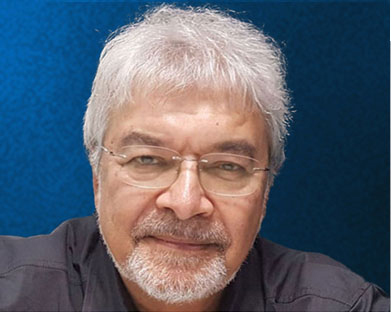
8/3/2025 – Frederic Friedel reveals what the Egyptian pyramids, an internship with Otto Borik and a frog game on the home computer have to do with his career in Germany's leading chess magazine SCHACH-MAGAZIN 64, where he was interviewed by Stefan Liebig. The four-page article is reproduced here in English with the kind permission of Schuenemann-Verlag. | Photos: Archiv Frederic Friedel
new: ChessBase Magazine 225
Chess Festival Prague 2025 with analyses by Aravindh, Giri, Gurel, Navara and others. ‘Special’: 27 highly entertaining miniatures. Opening videos by Werle, King and Ris. 10 opening articles with new repertoire ideas and much more. ChessBase Magazine offers first-class training material for club players and professionals! World-class players analyse their brilliant games and explain the ideas behind the moves. Opening specialists present the latest trends in opening theory and exciting ideas for your repertoire. Master trainers in tactics, strategy and endgames show you the tricks and techniques you need to be a successful tournament player! Available as a direct download (incl. booklet as pdf file) or booklet with download key by post. Included in delivery: ChessBase Magazine #225 as “ChessBase Book” for iPad, tablet, Mac etc.!
YOUR PERSONAL CHESS COACH - Whether you’re taking your first steps into the world of club chess, or already playing at a tournament level: with FRITZ, you can train more efficiently, intelligently and with a more personalised approach than ever before. FRITZ is more than just a chess engine – it’s a training revolution! Whether you’re taking your first steps into the world of club chess, or already playing at a tournament level: with FRITZ, you can train more efficiently, intelligently and with a more personalised approach than ever before.
Renowned for its solidity and strategic soundness, it has been a cornerstone of the repertoires of elite grandmasters including Fabiano Caruana and Ian Nepomniachtchi, who relied on it successfully in the Candidates Tournament.
€39.90
There are probably not many people who live so much for chess, have so many friends in the international chess world, and have contributed so much to the digitalization of chess as Frederic Friedel. The list of overnight guests at his and his wife Ingrid's home is virtually endless: Nunn, Short, Gelfand, Leko, Kramnik, Anand, Svidler, the Polgars, Sachdev, Hou Yifan, Mendonca, Gukesh…
On August 2nd, the all-rounder and autodidact turns 80. He has already published an entire book with his stories from the world of chess, and it's simply fun to listen to him tell his stories:
Mr. Friedel, we are speaking shortly before your 80th birthday – how will you celebrate this special day?
First of all, my wife Ingrid and I are currently in the middle of moving. We're moving closer to my son Martin's family. He, his wife Tanja, and their two 12- and 13-year-old sons, Hennes and Enders, will then be just a six-minute walk away from us – the grandchildren only need four minutes (laughs)!
But I want to get it done by my birthday. We'll be celebrating with our family then, and my other son, Thomas, will be there too.
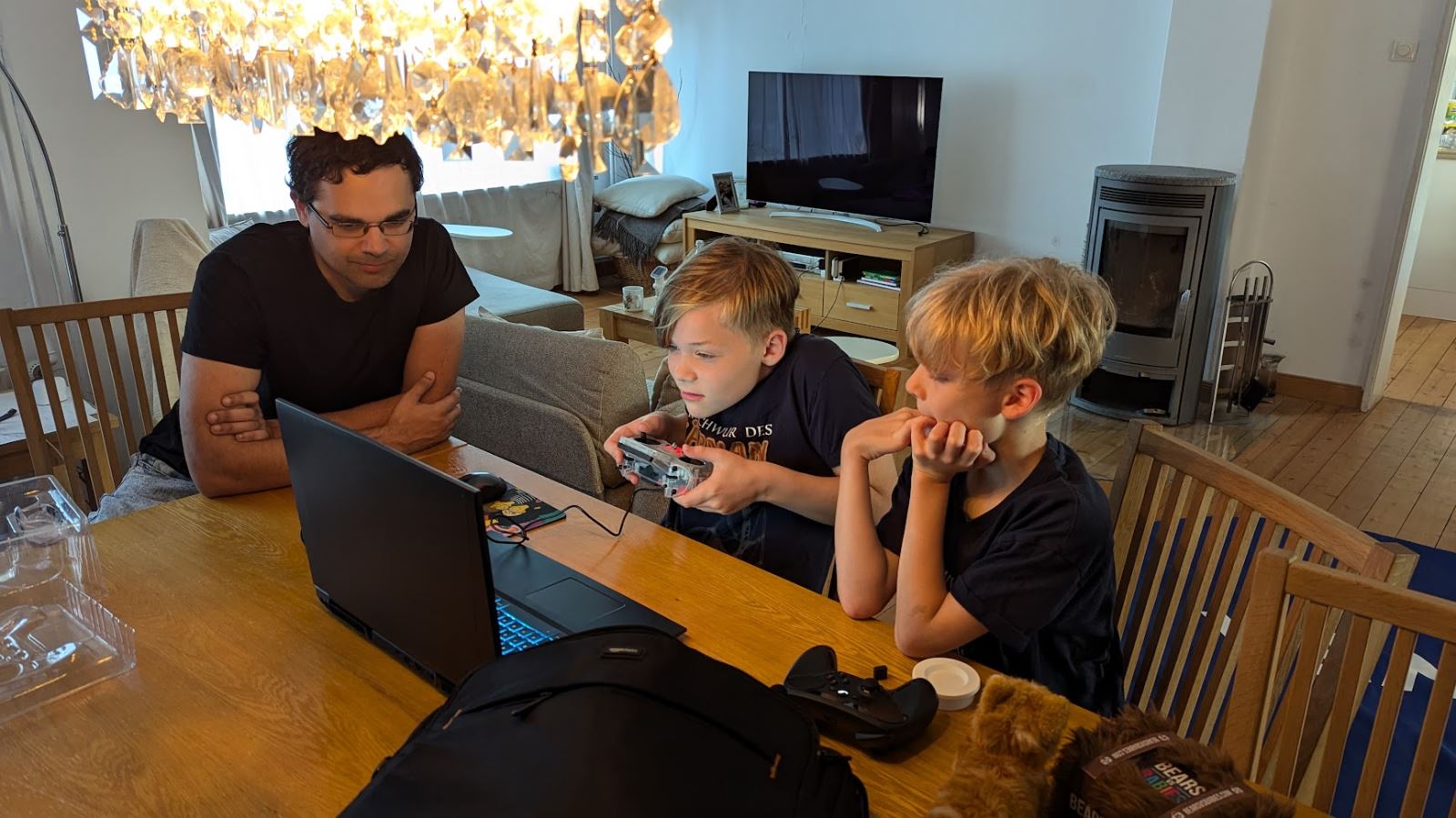
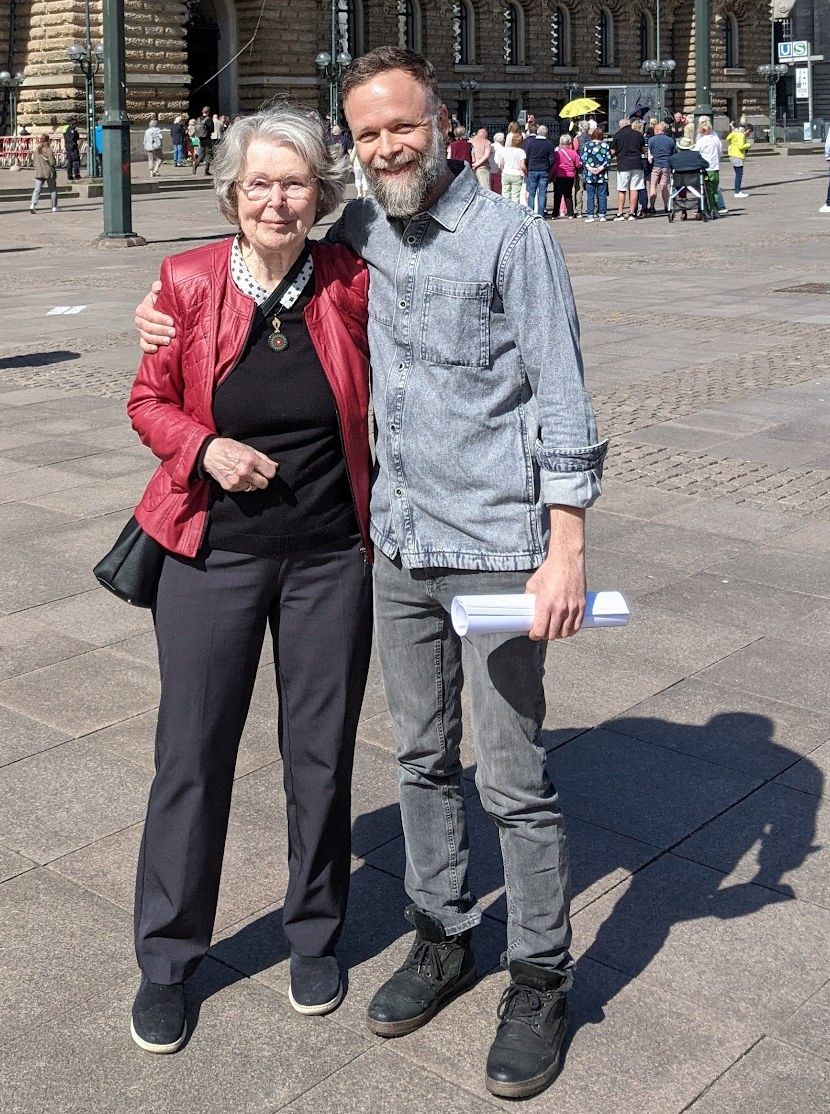
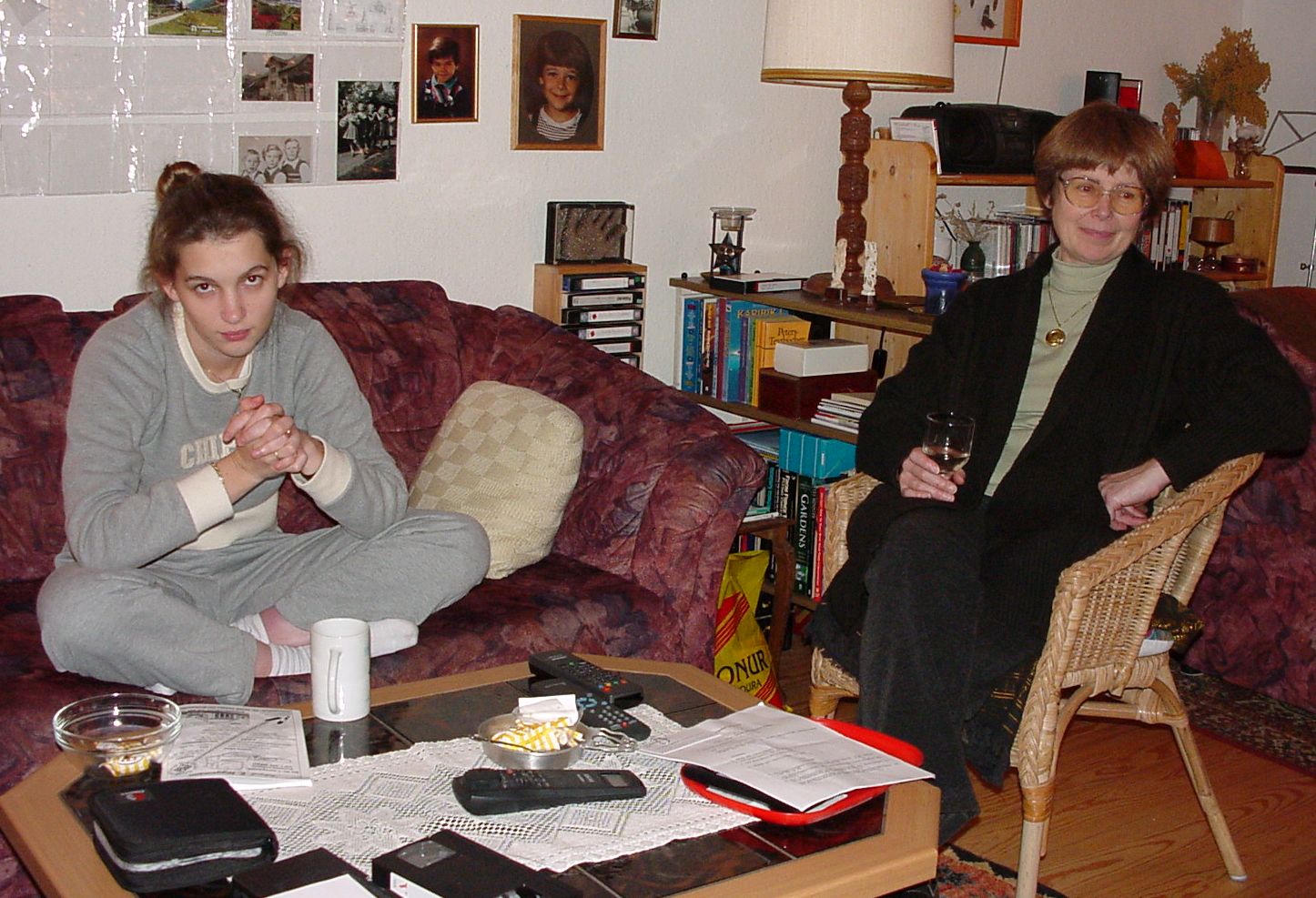
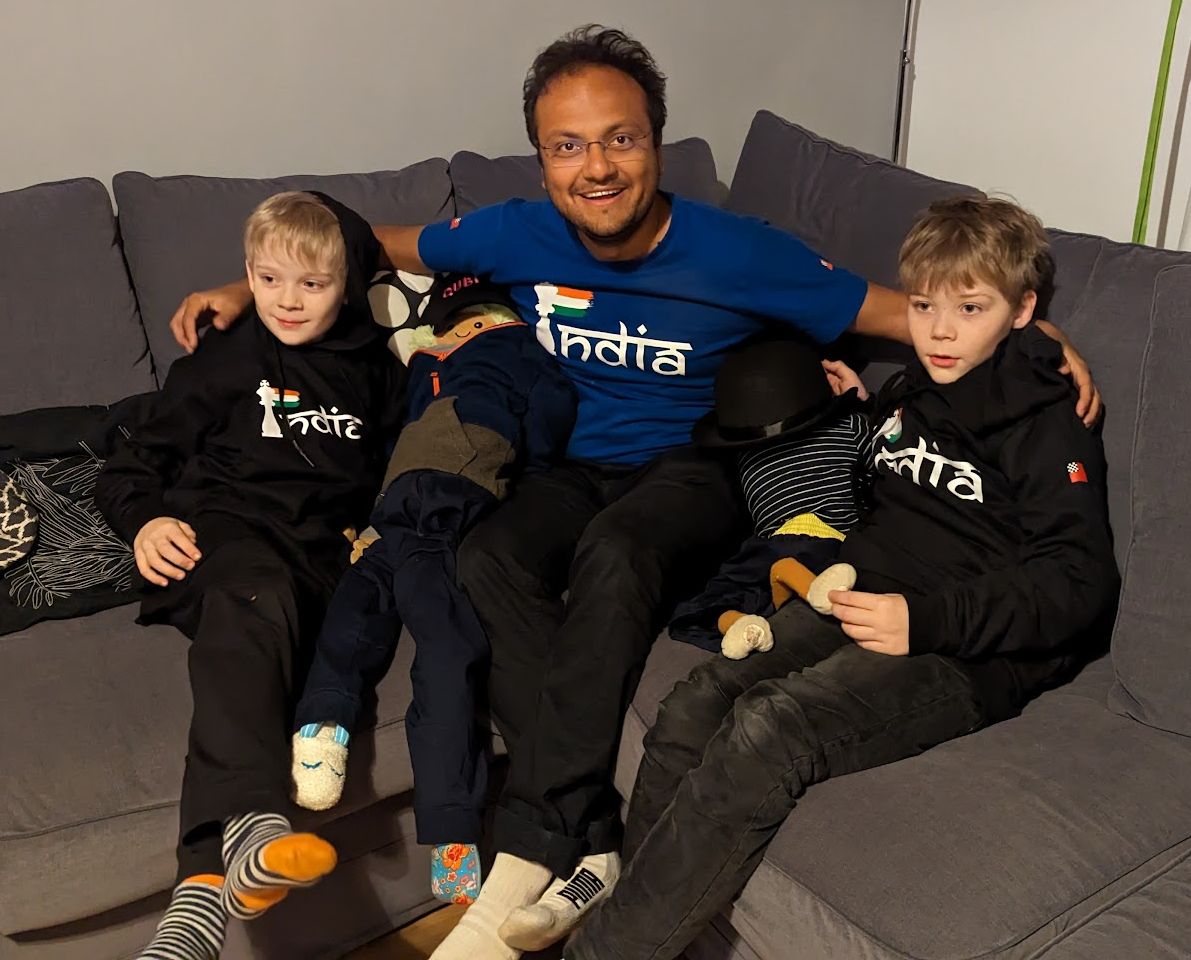
Son Tommy and grandsons Enders and Hennes: all generations of the Friedel family have been inspired by computers. | Below: Frederic's wife Ingrid with son Martin.
That sounds quite manageable – one would have expected many international guests from the chess scene!
I think I'll catch up on everything with them via video conference.
That could take a while – how many chess players are you in regular contact with?
Actually, with all the top players in the world, especially with the four Indian top 10 players. In total, that's probably up to 80 close contacts, mostly friendships.
Yes, anyone staying overnight with us can, or rather, must, register there. Vishy Anand holds the record with 36 stays. Garry Kasparov is the only exception – he was always put up in a hotel, but also visited us several times during the day.
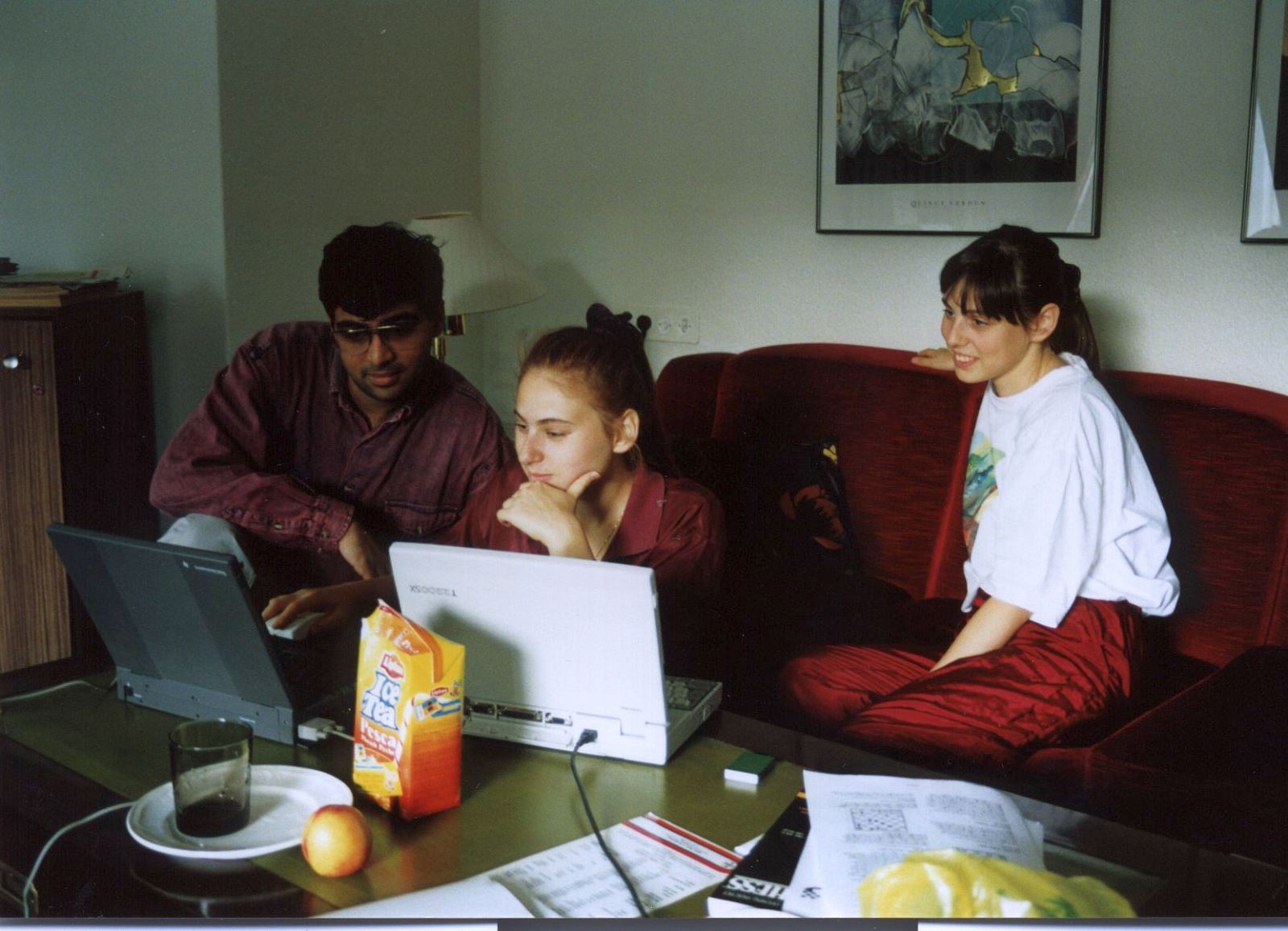
Record guest Vishy Anand, with Judit and Sofia Polgar.
Will this tradition continue in the new house?
Only to a very limited extent – to a select group of guests who have practically become family members over the years. We're still happy for them to come and visit us for a few days.
May our readers find out who these guests are, and what makes them special?
One example is Almira Scripcenco, originally from the Republic of Moldova. She won our hearts from the moment she walked in on her first visit, immediately behaving like a member of the family. Other exceptional friends come from the younger Indian generation: Tania Sachdev, Sagar Shah, Gukesh, whom I call "Guki" like his family, and Leon Luke Mendonca, an exceptionally versatile young man and a gifted musician. I very much hope he breaks into the top 10. What they all have in common is that they don't just come to talk to me about chess and ChessBase, but they are open and affectionate to the entire family and participate with interest in our lives.
The young Viswanathan Anand also immediately captured our hearts as a teenager: He was interested in everything, played with our sons, and was always friendly – this developed into a decades-long friendship. It's actually incredible that he's now over 50 years old.
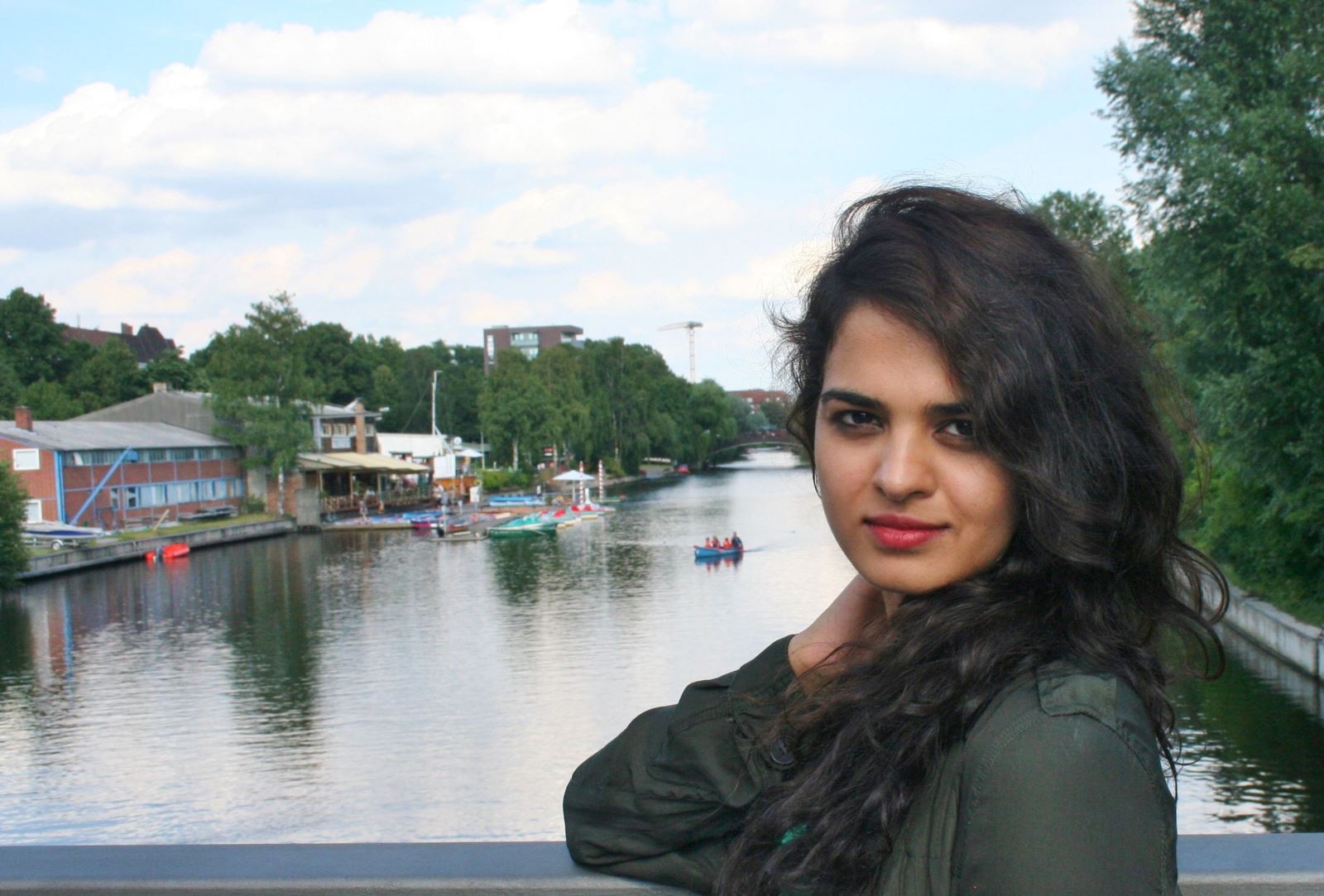
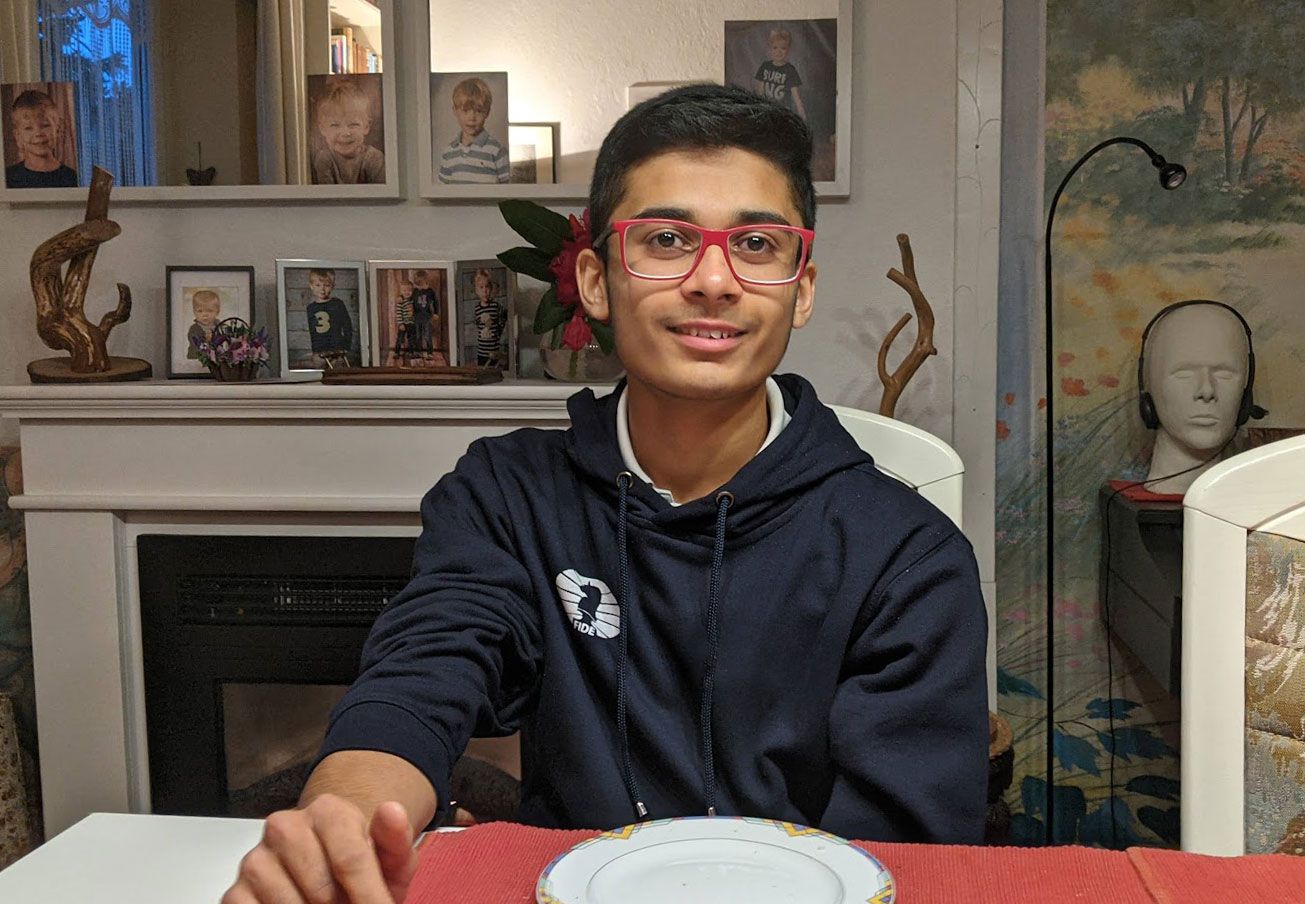
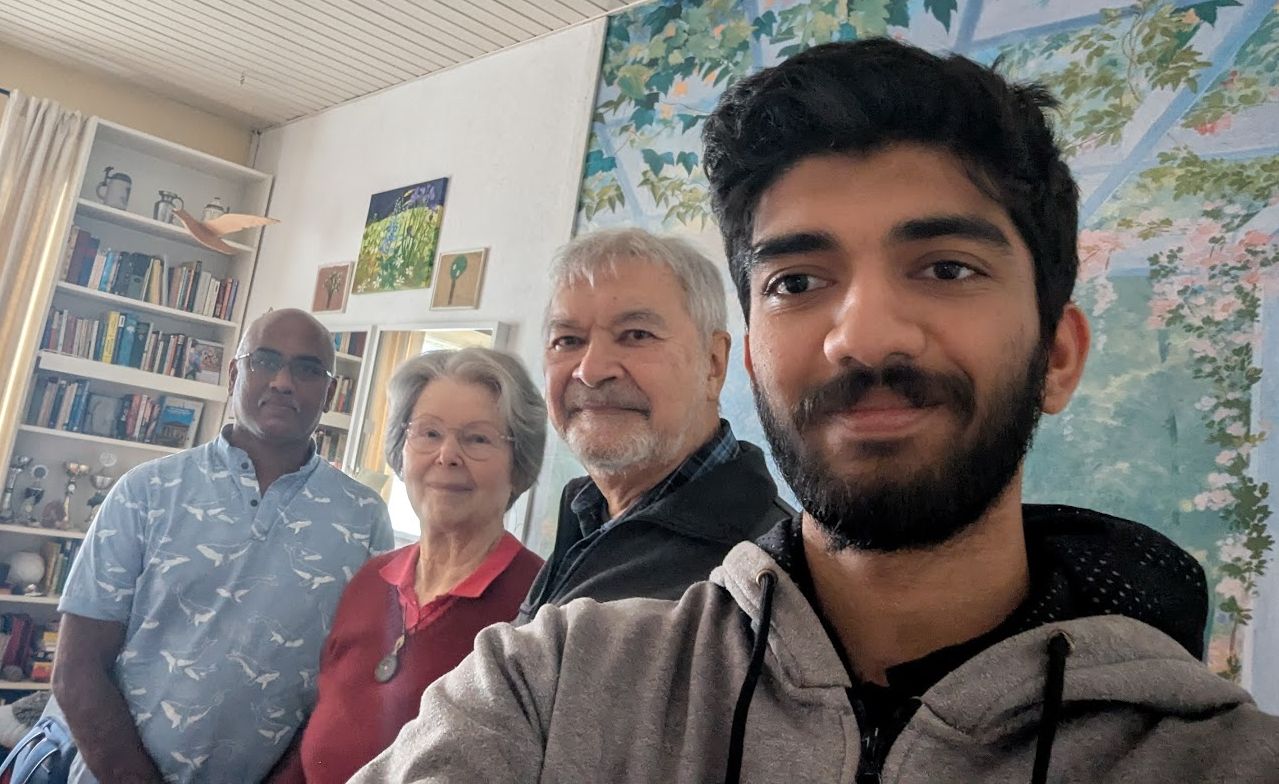
Four quasi-family members of the Friedels: Almira Scripcenco, Tania Sachdev, Leon Luke Mendoca and Gukesh.
Telephone hotline
Gukesh and Mendonca call you regularly?
Yes, I always wonder what they actually want from me, an old man in Hamburg. They ask for tips. But what advice should I give these brilliant players? I often chat with Leon and notice he just wants an opinion he can think about. I chatted with Gukesh via WhatsApp during the World Championship final against Ding Liren. I told him that I once told Garry Kasparov he should eat a piece or two of Toblerone to combat the typical slumps in the fourth and fifth hours of his games. The higher blood sugar level actually helped him in his match against Karpov. Gukesh asked, "Does it have to be Toblerone?" (smiles) Of course it doesn't – milk chocolate's fine...
You've had a direct hand in the rise of the current generation of Indian super talents. How did that come about?
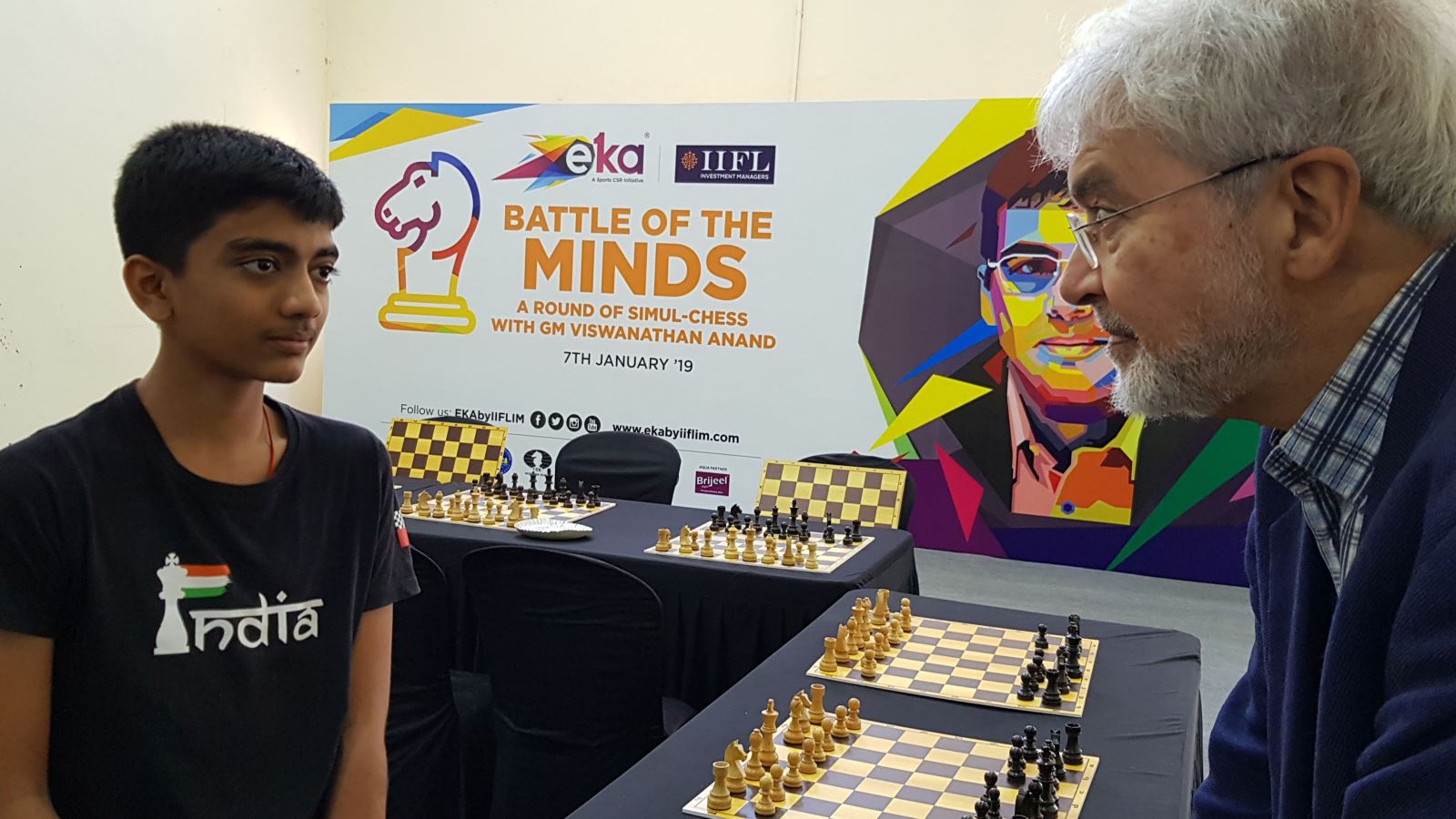
It all started in January 2019. I was attending a tournament in Mumbai, and at one point Sagar Shah introduced me to a 12-year-old player. I was shocked to learn that this boy already had two GM norms.
January 7, 2019: Frederic meets Gukesh for the first time
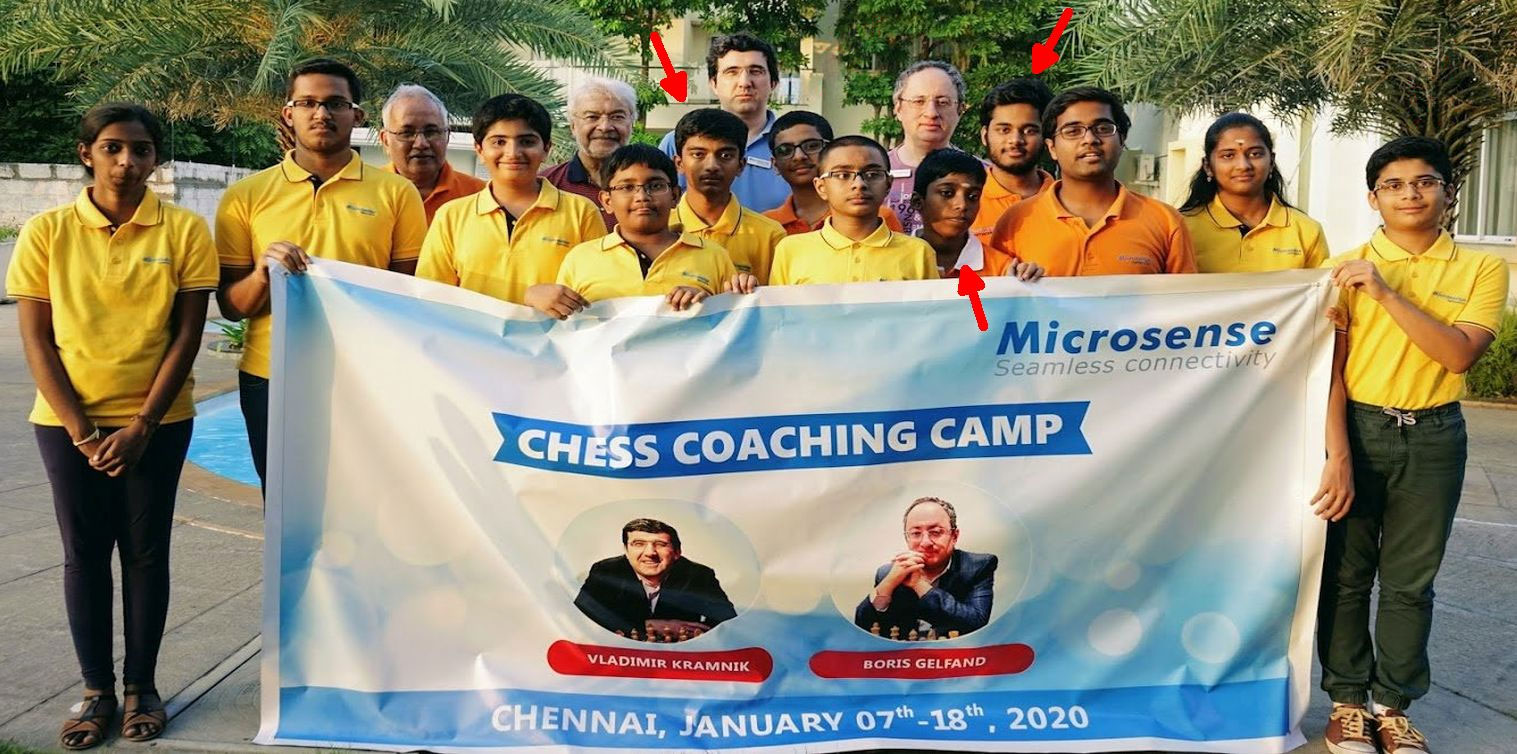
Ten days later, I visited him at his home in Chennai and discovered that he had now achieved his third norm. At the age of twelve, Gukesh was a fully fledged grandmaster. At the time I knew that my good friend Vladimir Kramnik had retired from competitive chess. I suggested that he coach the very young super-talented players I had met on various trips to India. He agreed, and Sagar soon found a sponsor: the company Microsense sponsored training sessions in France and then in Chennai (where Boris Gelfand joined him). I was part of both training camps. It was fascinating to watch these 13- and 14-year-olds discussing complex strategic ideas with a former world champion.
Unrealistic?
During the second session, a reporter from Indian television asked me where this might all lead. I predicted that in five years at least two of the top ten players in the world would be from India. "Isn't that a bit unrealistic?" asked the journalist. "Shall I tell you their names now?" I replied, pointing to three of the boys kicking a soccer ball around on the grass. The Indian journalist smiled in disbelief.
The red arrows point to (from left): Gukesh, Praggnanandhaa and Erigaisi - numbers 4 to 6 in the FIDE World Ranking at the time of going to press.
In February 2023, Gukesh visited me at my home in Hamburg, and I reminded him of my prediction. "You have until the end of 2025 to break into the top ten," I told him. At that point, he was ranked number 29. "That's pretty unrealistic, Fred," he said. "I'll do it much sooner!" Today, the three boys I pointed out in 2019 (Gukesh, Praggnanandhaa and Arjun Erigaisi) occupy positions 4-6 on the FIDE list. I was never a particularly strong chess player, but I'm proud of my prediction skills.
Frederic Friedel on the background of his childhood in India:
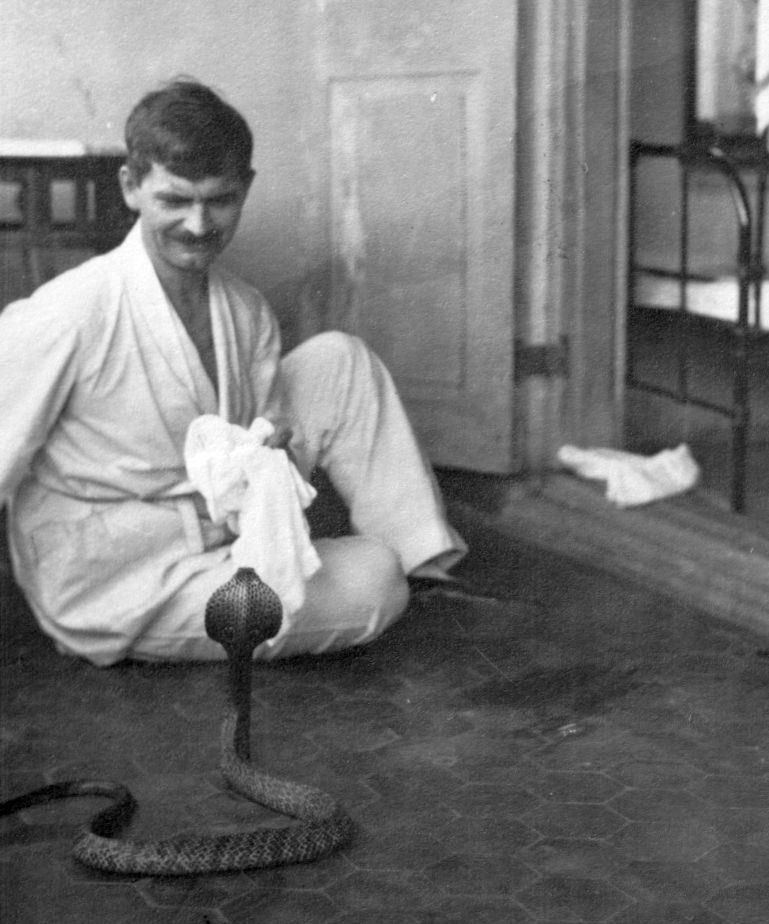
"My father, Alois Friedl, was a 'horologist'—he designed and built chronometers for navigation and assisted a Swiss company in establishing maritime stations in Asian ports. His employer's headquarters were in Bombay. When the war broke out, he, as a German citizen, was placed in a prisoner of war camp by the British. The camp was infested with snakes, and he studied these reptiles together with a leading herpetologist. In fact, together they developed the first antidotes for Indian snake-bites. Alois was granted British citizenship by King George. He married a Portuguese-Indian lady, and I was their first child. He established a research station in the jungles of the Western Ghats, and I spent part of my early youth roaming the jungle, catching reptiles and rodents to feed his snakes. I often visited a tribe of Stone Age people living there. It was a very adventurous childhood."
You and your wife seem to have a preference for the Indian mentality. Is this due to the Indian players or to your early youth in India (see info box)?
Both. Incidentally, the respect young Indians show for older people is quite remarkable. With Pentala Harikrishna, it took me over half a year to get him to stop calling me "Freddy-Uncle." I'm called Sir and Mister all the time, even though I don't want them to do that. But it's the Indian way of showing respect.
Vincent Keymer also leaves an impression
Back to Kasparov – you and Germany's number 1 also share some background with him…
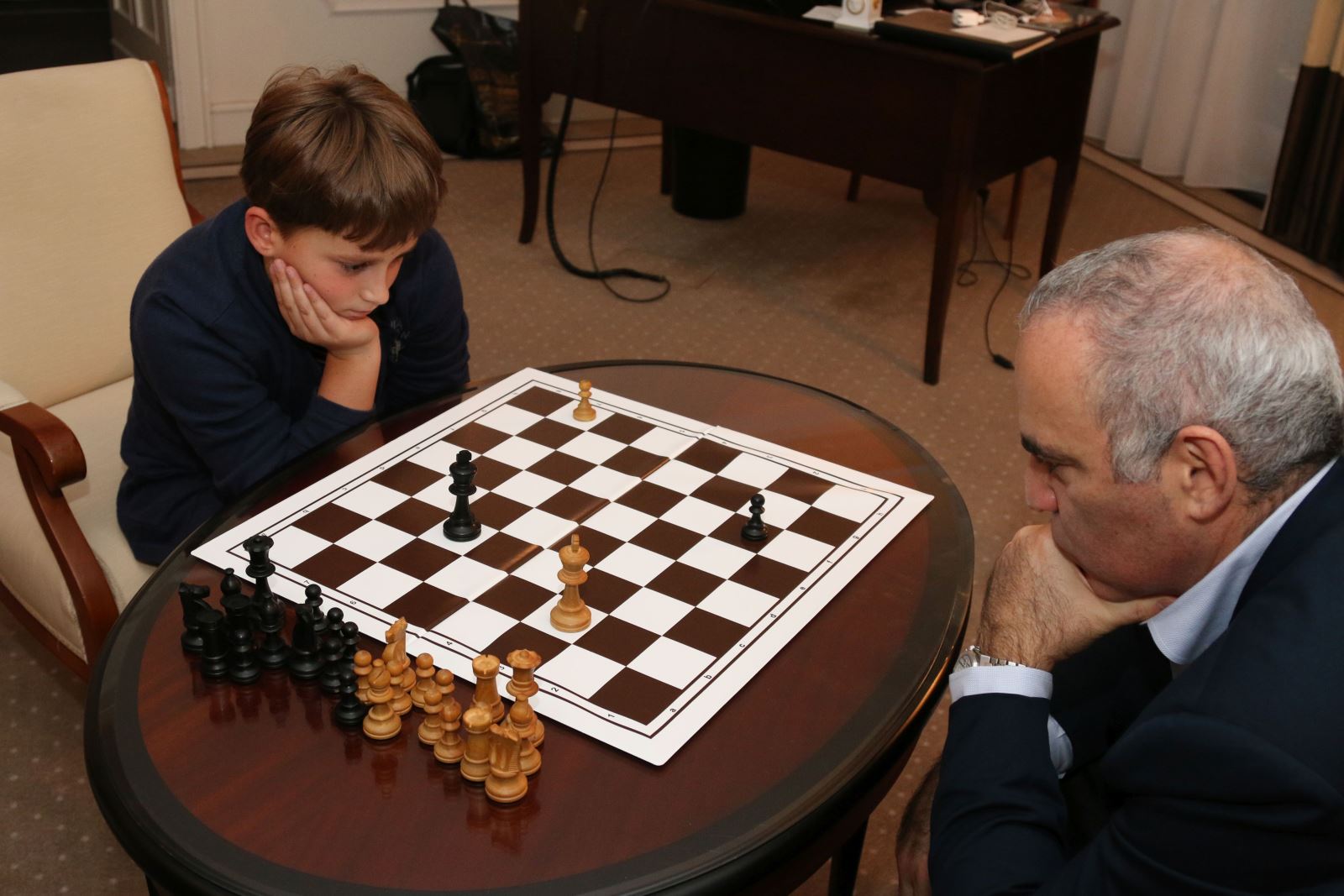
Yes, I met Vincent in the ChessBase office when he was 13. It was clear to me that he was a tremendous talent. I had an agreement with Garry that I could introduce him to one or two talented players each year, whom he would then critically examine. We met Garry in Berlin. Garry spoke only with Vincent's father Christof and me, before suddenly turning to Vincent and asking, "Do you have a chess set with you?" Of course he did, and the two of them retreated into Garry’s room for an hour or two. Afterward, Garry had a very positive assessment of Vincent's great talent. He had done the same thing years earlier with Katerina Lagno, whom I had introduced to him. Immediately after our joint analysis, in her presence, he announced, "She'll break into the top 10 women one day." Katerina was speechless that Garry had recognized and listed all of her weaknesses and preferences in such a short time.
What do you enjoy most about promoting talent in this way?
I find it inspiring to see how children have such incredible knowledge in their heads, and apply it so masterfully.
At Friedel's request, Kasparov tested the skills of the young Vincent Keymer in 2015.
One of your family members has also enjoyed Kasparov's respect for a long time!
(laughs) Yes, that was over four decades ago now: Garry owned one of the first computers in the Soviet Union. He didn't really know what to do with it. I sent him some computer games, and he discovered "Hopper": The aim was to collect points with a frog, and he really enjoyed it. Of course, he was always interested in increasing his high score. The first time he visited me, he said, "I'm the best Hopper player in Baku." It roused his curiosity when I said: "There's someone here who can beat you!" He asked if it was me. I shook my head. "Your wife?" Shook my head again. "Oh, of course, Martin?" (who was eleven at the time). When I shook my head again, he looked incredulously at three-year-old Tommy. Garry played first and set a new personal best of around 16,000 points – Tommy then scored more than twice as many points. It was clear to Garry: a generation of computer geniuses was growing up in the West, while the Soviet computer industry was still in its infancy. When Atari offered him an advertising contract a little later, Garry negotiated: he asked for 50 percent more in return for the rights to using his name, but suggested that it could be paid for in computers instead of money. It was a good deal for both sides. With these computers, he founded the first computer clubs in the Soviet Union. Whenever he traveled in the West, he bought computer accessories and returned home heavily laden.
Do your children or grandchildren also play chess?
The only one who showed a greater interest in chess was my son Tommy. He won quite a few trophies in his pre-teen years, but then chose a different career. He became one of the best programmers around, and works for his brother Martin's company. My grandchildren have other hobbies, and that's a good thing.
And you yourself? You live for chess, but you're not on the ratings list.
My father, who was a city champion in Bavaria, taught me the game when I was four. As a teenager, I played a lot in Hamburg. I was probably at a level that would correspond to around 2000 Elo today and played on the first board of my club. I had almost no theoretical knowledge, and my clubmates laughed when I spent ten minutes thinking about the second or third move. But I was usually able to prevail tactically. I knew, though, that if I devoted my entire life to chess, the best I could do was become a weak IM. Give up everything else—studies, career, family—to achieve that? So I looked elsewhere.
Several academic attempts
Instead, you decided to study at university.
Yes, I started studying medicine, but quit after six months. It consisted mainly in memorizing Latin terms for body parts—that wasn't enough thinking for me. Then I started studying mathematics, because I wanted to learn computer science—it didn't exist as a separate field back then. But I discovered I didn't have a math brain. So I decided to study philosophy, with a minor in linguistics. In philosophy, you can tackle fundamental problems in all fields of knowledge. That suited my affinity for logical thinking much better. I graduated, but then abandoned the idea of completing my doctorate. After all, an academic career would have been about waiting for a professor to retire and then fighting with my best friends from university for the vacant position. I didn't want that.
And then?
An opportunity arose to enter television science journalism. I contacted one of the great TV science journalists of the time: Hoimar von Ditfurth. I participated in a two-part program in which we explained the construction of the pyramids of Egypt. After several more contributions, I suggested doing something on chess-playing computers. The ZDF program caused such a stir—we received over 95,000 letters from viewers—that the other channel, NDR, asked me to produce a second program on the topic!
“Internship” at Chess Magazine 64
After that, you took on an interesting journalistic role?
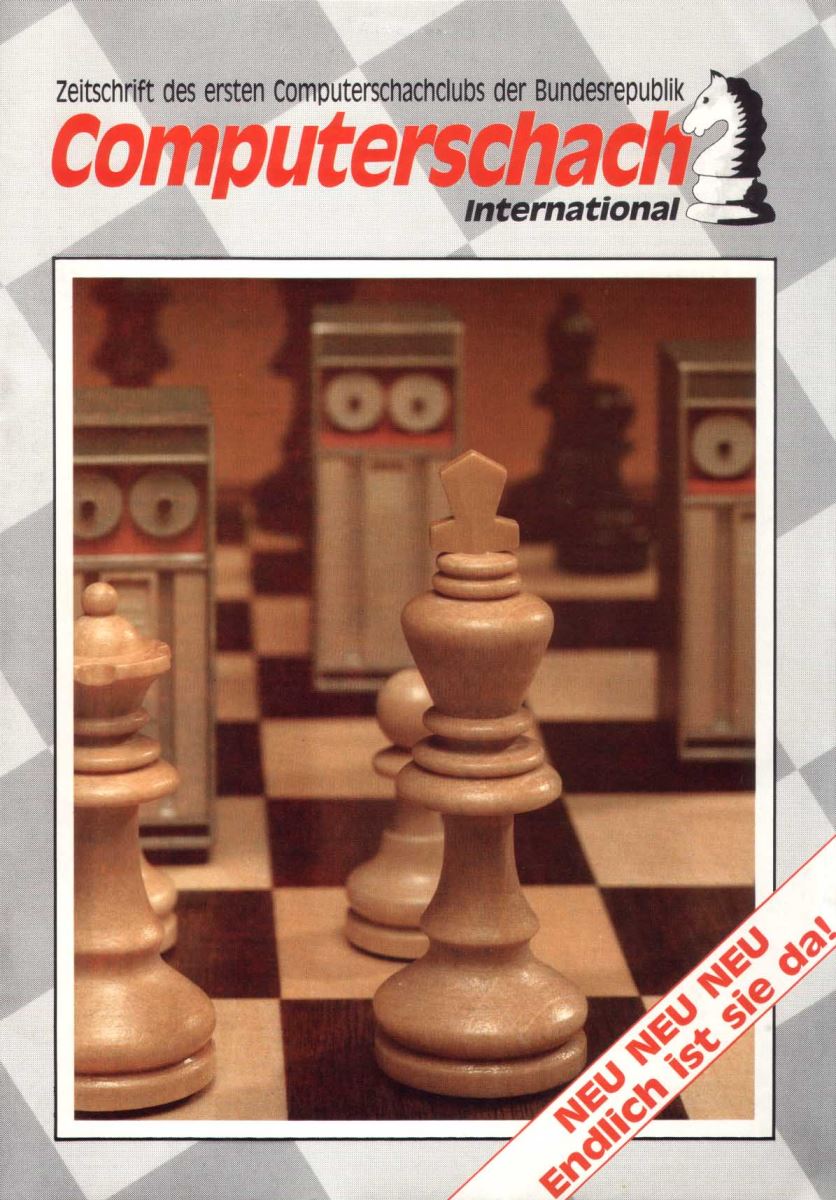
Yes, the topic of computer chess had me in its grip. I became editor-in-chief of the magazine Computerschach und Spiele (CSS), which was published bimonthly for 22 years.
How did that happen? You only had journalistic experience in TV so far?
In fact, Otto Borik, who was already producing SCHACH-MMAGAZIN 64 at the time, invited me to his place and showed me what goes into magazine production. I'm very grateful to him for that.
Shortly after that you founded another company?
When I first met Garry Kasparov, he wanted to know how computers worked – and I, in turn, wanted to know what the machines could do for chess. That's when the idea of creating a chess database came up. Shortly afterward, I met Matthias Wüllenweber, who had developed the prototype of a chess database. We showed his database to Kasparov, who was speechless when he saw it. He encouraged us to found a company and make the database, which we called ChessBase, available to the chess world.
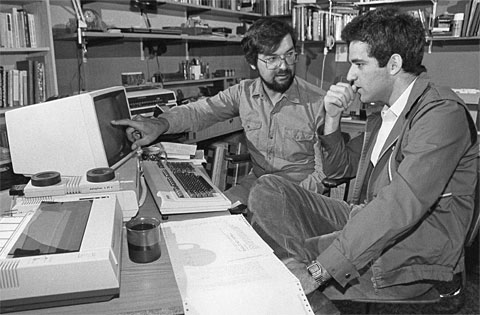
40 years ago: Frederic Friedel showing Garry Kasparov how computers work
What happened next with ChessBase, and where did you get the ideas from?
I didn't do any programming. Matthias Wüllenweber developed everything. I just contributed ideas. For example, I suggested that our chess program, Fritz, should comment on moves during the game. At the time, I had co-developed the automatically generated planetary descriptions for the space game "Elite." I asked Matthias to implement a similar function for Fritz. The program then learned to speak—it could suddenly comment on game situations appropriately and amusingly. That was groundbreaking at the time. And we're seeing it again today: Fritz 20 now speaks with AI voices.
Future of chess programs
Where is this headed, and who still plays against computer programs that have over 3500 Elo points?
This is a question that Fritz 20 answers convincingly: the program can adjust itself to mirror the user's playing strength, with all of its intelligence being used to create opportunities for the opponent. The program can also play games in the style of famous chess players. It's simply fun to play virtually against Morphy or Lasker.
What else can follow?
There's a very large market we still need to address: non-chess players. Here, I can imagine a combination of "Fritz 20" and "Fritz & Fertig." This could inspire many young people to play chess.
ChessBase.com
The ChessBase news page has been very successful. When and how was it set up?
In the mid-1990s, we discovered the internet. I found a decent provider and, together with John Nunn, set up the first ChessBase website. It was pretty basic at first, but then we implemented a modern CMS (content management system). On September 12, 2001, I wrote the very first report in the new system—about the terrorist attacks on the World Trade Center, where I had been a few years earlier for the Kasparov vs. Anand World Championship. Our new (English) news site grew and at times managed to register over 100,000 visitors a day. That was a pretty sensational number at the time. I filled the site for 20 years, usually with three reports a day – Christmas, birthdays, holidays, never missing anything. Today, I write an average of three reports a week.
Expansion
It is also interesting that many years after your “internship” with Otto Borik, you also became a successful trainer?
You're talking about Sagar? Yes, the young Sagar Shah sent me two articles, which I published on the news page. He wrote more, and I began to edit them intensively. I highlighted all the places I had changed in his text so he could see them. I did the same with other authors. But Sagar was the only one who learned from every correction and didn't repeat his mistakes. He became a very good author. At some point, we developed the idea of launching ChessBase India with Managing Director Rainer Woisin. An absolute success in a rapidly growing market with all the great Indian players. And Sagar became one of my family's best friends.
The ‘trainee’ Sagar Shah is now also part of the Friedel family
Now your wife wants you to slow down a bit. Should your fans be worried that you'll withdraw?
Oh, I've been trying to slow down for 15 years. But new ideas and projects always pop up. Besides, friends from the chess world are constantly sending me suggestions for new topics. So I keep writing. I've also written books, of which I've finished two. Of course, Ingrid and I would like to spend more time with our grandchildren and maybe travel to some new destinations, like South Africa and New Zealand—we have friends everywhere and have to make the most of the time while we're still fit.
For all those who have acquired a taste for Frederic Friedel's stories and would like to hear more of them: Chess Stories is now available in English – for $9.47 in the Kindle eBook version!
Mr. Friedel, all the best for your plans. We wish you a wonderful birthday, a creative new decade, and thank you very much for the interview!
And here is another video with Frederic Friedel and Hou Yifan:
Summary biography
Frederic Alois Friedel (born August 2, 1945, photo: ChessBase, all other photos: Frederic Friedel Archive) is a linguist and science journalist specializing in computer chess. After growing up in the Indian jungles as the son of a German herpetologist and simultaneously receiving a British education, he moved to Germany—the homeland of his ancestors—as a teenager. He studied philosophy, linguistics, and scientific theory in Hamburg and Oxford. He subsequently worked as a TV journalist, producing programs for ARD and ZDF, two of which were about computers and computer chess. Starting in 1983, he published the magazine Computerschach & Spiele, of which he was editor-in-chief until 2004. Together with Matthias Wüllenweber, he founded the company ChessBase in 1987. In 1997, Friedel advised Garry Kasparov during his legendary match against IBM's chess computer Deep Blue. He writes books and articles on computer chess and logic puzzles, including Schach am PC (1995) and Schachgeschichten (2022, with Christian Hesse). Friedel lives in Hamburg, is the father of two sons and the grandfather of two grandchildren.
Stefan LiebigStefan Liebig, born in 1974, is a journalist and co-owner of a marketing agency. He now lives in Barterode near Göttingen. At the age of five, strange pieces on his neighbour’s shelf aroused his curiosity. Since then, the game of chess has cast a spell over him. Flying high in the NRW youth league with his home club SV Bad Laasphe and several appearances in the second division team of Tempo Göttingen were highlights for the former youth South Westphalia champion.
YOUR PERSONAL CHESS COACH - Whether you’re taking your first steps into the world of club chess, or already playing at a tournament level: with FRITZ, you can train more efficiently, intelligently and with a more personalised approach than ever before.
The Nimzo-Indian has stood the test of time for over a century: Still a top choice for elite players today, from Magnus Carlsen to Praggnanandhaa, it remains one of Black's most reliable ways to fight for real chances against 1.d4 2.c4 3.Nc3.
1.c4 e5 2.Nc3 Bb4!? is an opening idea well worth considering. Black immediately threatens to double the pawns on c3 in the style of the Trompowski or Sicilian Grand Prix attack.
Italian Game Powerbase 2026 is a database and contains 8571 top class games from Mega 2026 and the Correspondence Database 2026, of which 479 are annotated.
Videos: Nico Zwirs discusses the Sicilian with 2…e6 3.d4 cxd4 4.Qxd4 Nc6 5.Qe3 Nf6 6.Nc3. Mihail Marin examines Sindarov’s 6.Ne5 in the Queen’s Pawn Defence. Plus the ‘Lucky bag’ featuring 41 analyses by Berg, Ftacnik, Gupta and many others.
If you're looking for a dynamic alternative to the Slav, Queen's Gambit Declined, or other mainstream systems, the Chigorin Defence offers exactly what modern tournament players need.
€34.90
We use cookies and comparable technologies to provide certain functions, to improve the user experience and to offer interest-oriented content. Depending on their intended use, analysis cookies and marketing cookies may be used in addition to technically required cookies. Here you can make detailed settings or revoke your consent (if necessary partially) with effect for the future. Further information can be found in our data protection declaration.
Pop-up for detailed settings
We use cookies and comparable technologies to provide certain functions, to improve the user experience and to offer interest-oriented content. Depending on their intended use, cookies may be used in addition to technically required cookies, analysis cookies and marketing cookies. You can decide which cookies to use by selecting the appropriate options below. Please note that your selection may affect the functionality of the service. Further information can be found in our privacy policy.
Technically required cookies
Technically required cookies: so that you can navigate and use the basic functions and store preferences.
Analysis Cookies
To help us determine how visitors interact with our website to improve the user experience.
Marketing-Cookies
To help us offer and evaluate relevant content and interesting and appropriate advertisement.




.jpeg)







 Oh, I've been trying to slow down for 15 years. But new ideas and projects always pop up. Besides, friends from the chess world are constantly sending me suggestions for new topics. So I keep writing. I've also written books, of which I've finished two. Of course, Ingrid and I would like to spend more time with our grandchildren and maybe travel to some new destinations, like South Africa and New Zealand—we have friends everywhere and have to make the most of the time while we're still fit.