The single-division German Chess Bundesliga was introduced in the 1980/81 season. Previously, there had been four regional Bundesliga divisions, whose winners competed in a round-robin tournament at the end of the season to determine the German team champions. In the early 1980s, playing chess at a high level was still much simpler. There was no internet on which games could be followed live and every move recorded, and ChessBase had not yet been invented. Opportunities for preparation were therefore limited, generally consisting of studying books, if players prepared at all. Tournament players might consult the Chess Informant, but it contained only games by leading players.
In the new single-division Bundesliga, 16 teams played a round-robin competition, as they still do today. However, travelling across the length and breadth of West Germany now meant longer journeys. Travel and accommodation costs increased the financial burden on the clubs. The period between 1980 and 1990 was a transitional decade in the Bundesliga, as it moved from amateur to professional competition. Teams were still allowed to field only two foreign players, most of whom were professionals. But there were already some German professionals who had no particular connection to the clubs they represented. It became increasingly difficult for clubs without a permanent wealthy patron to keep up.
Before the introduction of the single-division Bundesliga, SG Solingen had dominated German team chess, winning seven championship titles by 1980. In the early years of the new format, a three-way rivalry developed between SG Solingen, SG Porz and Bayern Munich's chess section. These three clubs shared every championship title between them until the 1999/2000 season.
In the 1986/87 season, almost 40 years ago, Solingen once again prevailed over their two rivals. With Robert Hübner, Nigel Short, Boris Spassky and Eric Lobron on the top four boards, Solingen won 14 of their 15 matches, surprisingly dropping a match point only against Lasker Steglitz.
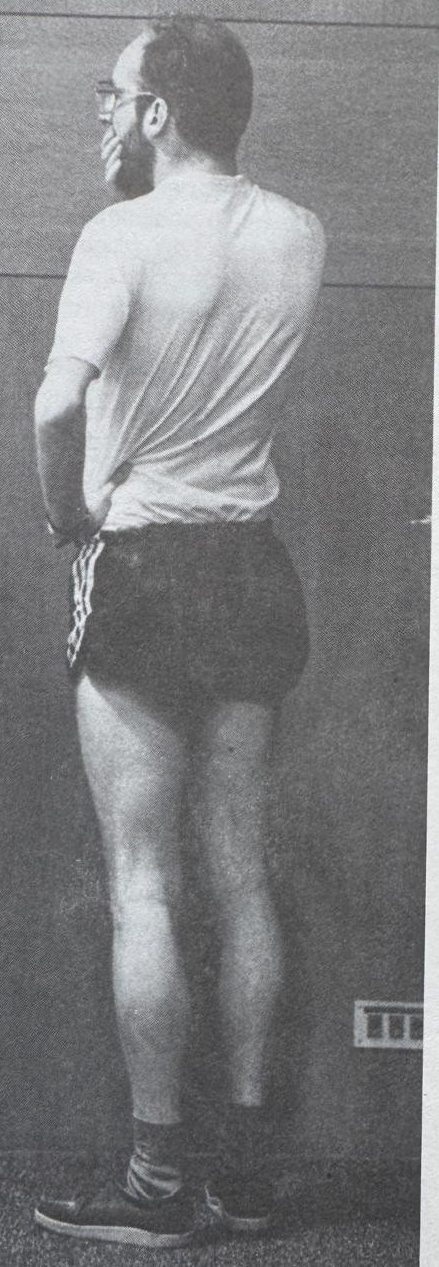
Robert Hübner, looking thoughtful, in sportswear at the chessboard.
Bayern Munich, with Zoltan Ribli on board one, lost their crucial encounter with Solingen and finished second. Hamburger SK, fielding two professionals, John Nunn and Murray Chandler, alongside a mixture of young and experienced home-grown players, finished third, pushing Porz, with Vlastimil Hort and Tony Miles, into fourth place.
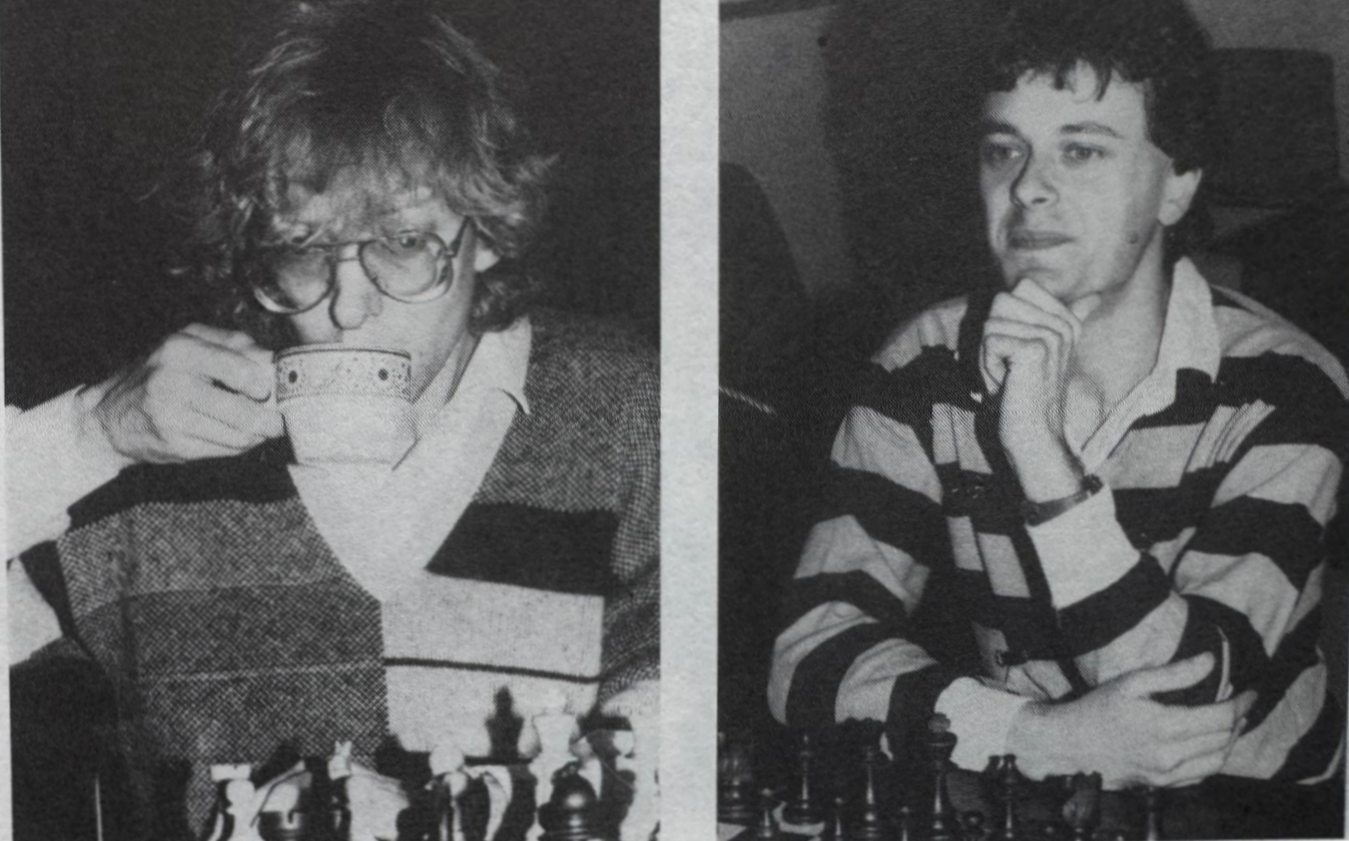
Murray Chandler and John Nunn
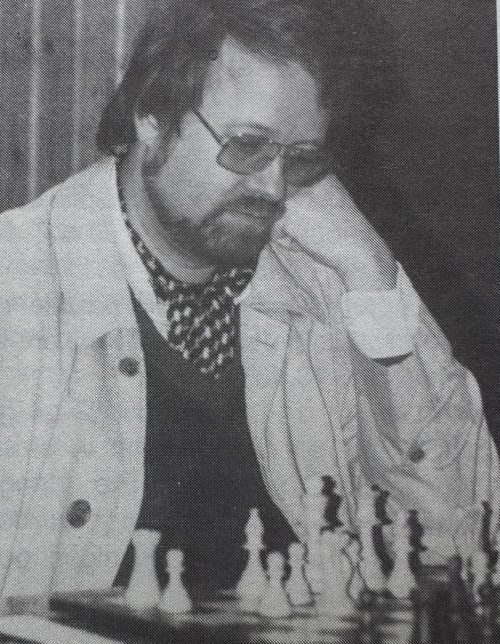
Dr Helmut Reefschläger (HSK)
The championship was decided in the encounters between the three perennial favourites and Hamburger SK, which at the time was part of Hamburger SV, the well-known sports club.
If you're looking for a dynamic alternative to the Slav, Queen's Gambit Declined, or other mainstream systems, the Chigorin Defence offers exactly what modern tournament players need.
Most Queen's Gambit players expect a familiar battle for the center. The Chigorin Defence shatters those expectations immediately. After 1.d4 d5 2.c4 Nc6, Black ignores conventional wisdom and chooses activity over structure. Instead of protecting the d5-pawn, Black challenges White's center directly, accelerates development, and aims to seize the initiative before White can establish a comfortable position. The Chigorin is not an opening for players who want to defend patiently. It is a weapon for ambitious competitors who are prepared to fight for the initiative from the very beginning. Rapid piece development, central counterplay, tactical opportunities, and unbalanced positions are the hallmarks of this fascinating opening.
Free Video Sample: Introduction
Free Video Sample: 3.e3
Solingen v Bayern Munich
Solingen v Porz
Bayern Munich v Porz
Bayern Munich v Hamburg
And in the final round: Solingen v Hamburg
Also of interest: Hamburg v Bamberg. Helmut Pfleger defeated John Nunn on the top board, but all the other decisive games went Hamburg's way.
A dispute in the relegation battle
The battle against relegation, fought mainly between teams without professional players, was made even more dramatic by the regulations and decision-making bodies of the German Chess Federation (Deutscher Schachbund, or DSB). At the time, the Bundesliga was not yet run by a separate organisation. It was administered by the DSB, and in particular by its sports director, Helmut Nöttger.

Helmut Nöttger
During the season, an unusual incident occurred in the match between Heidelberg and Munich. The match was scheduled to begin at 2 p.m. on Saturday, as Bundesliga matches still are today, but the arbiter started the clocks a little late. Normally this would hardly have mattered, but on this occasion it made all the difference. Yugoslav grandmaster Nikolac, playing for Munich, arrived just over an hour late for his game — just over an hour after the scheduled starting time, that is, but less than an hour after the clocks had actually been started.
The arbiter therefore awarded Heidelberg a point by default because the player had arrived too late. Heidelberg consequently won the match 4½–3½ and finished the season level on match points with Hamburger SG/BUE, sharing 12th and 13th places. At the time, teams tied on points had to play a deciding match. Munich 36 finished in mid-table and was not involved in the relegation battle.
What happened next? You guessed it: Munich 36 appealed against the result of Nikolac's game. After all, the Munich club argued, he had arrived within the permitted one-hour grace period, measured from the time the clocks had actually been started. DSB sports director Nöttger ruled in Munich's favour and ordered the match to be replayed. The replay ended 4–4. Heidelberg were relegated, while Hamburger SG/BUE remained in the top division.
Games from the replayed match
But Heidelberg then appealed to the DSB's Federal Tournament Court (Bundesturniergericht), the federation's body for adjudicating tournament disputes. It overturned Nöttger's decision and ruled in Heidelberg's favour. Heidelberg were now once again level on points with Hamburger SG/BUE and won the necessary relegation play-off 4½–3½. Heidelberg stayed up; Hamburger SG/BUE went down.
The relegation play-off
Final standings:
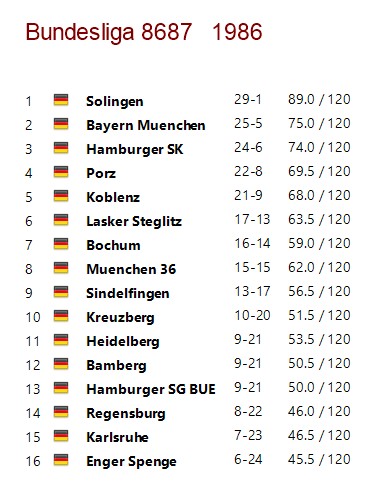
What do the rules say today? One for an arbiter training course.
The premiere chess database with over 11.7 million games
The ChessBase Mega Database 2026 is the premiere chess database with over 11.7 million games from 1475 to 2025 in high quality.
Links
















.jpeg)

.jpeg)