

To be fair, there was no way to know that such a seemingly innocent incident would lead to a plague that has spread around the world, infecting players' shoes, shirts, and even World Championship toilets. The culprit has since dedicated a great portion of his life to combatting this pandemic he unleashed, and has expressed great sorrow and regret for being its pioneer. Who is this evil doer to make even Sauron blush?
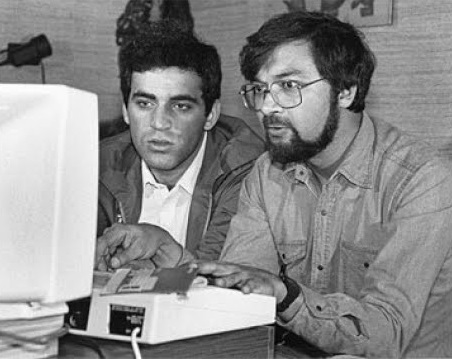
Garry Kasparov (before he became World Champion) and Frederic Friedel
Yes, it is hard to believe, but this reformed co-founder of the revolutionary chess software company, ChessBase, was once the mastermind of nefarious science documentaries whose plan was to one day unravel all that is good and pure in chess. No such dastardly deed could be carried out without a like-minded partner in crime, and this brings in the second player in this terrible act:
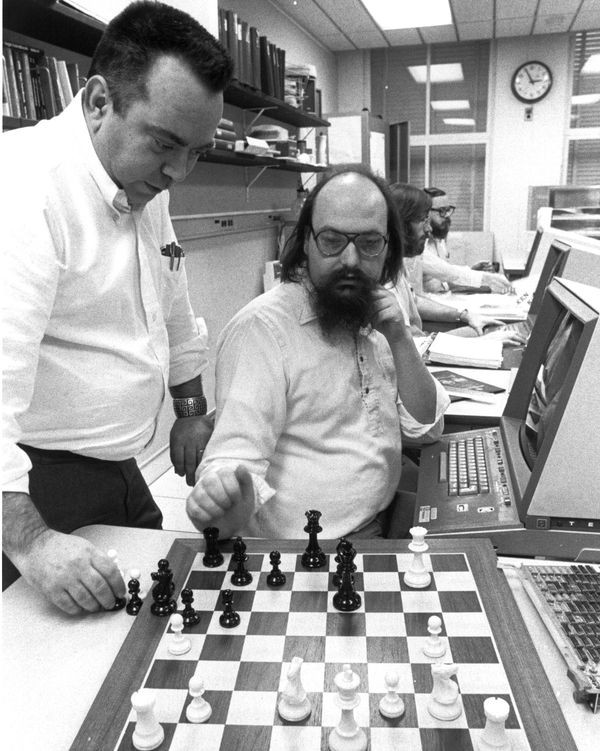
Ken Thompson (seated), the inventor of Unix, as he worked on Belle with James Conlon.
Oh the humanity!
To make this plot possible, Ken Thompson, the renowned computer scientist, had just finished his third and final version of the great chess computer, Belle. It was a revolutionary development, since at the time consumer machines were weak amateurs at best, and even the large experimental projects running on mainframe computers of the time were no threat to master players, nevermind grandmasters.
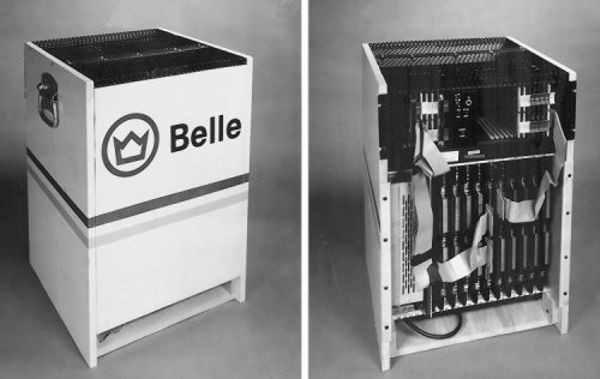
Belle was in a league of its own. This large machine with dedicated hardware for its chess calculations looked more like a small refrigerator, and would later serve as the inspiration for Chiptest, the precursor to Deep Thought and Deep Blue.
Its skill was unprecedented for the time and it would later score 8.5/12 in the US Open, when machines were still allowed to compete in such events, and it became the first machine ever to be certified Master by the US Chess Federation.
This footage underwent some slight retouching to improve overall image quality, but is otherwise unchanged
The first time (to the best of my knowledge) that a computer was used to clandestinely help a human player during a game, occurred in Hamburg, Germany, in August 1980. The perpetrators of the deception were Frederic Friedel, working as a science reporter at the time, a few colleagues from a German TV station, and Ken Thompson of Bell Laboratories. The victim was German grandmaster Dr Helmut Pfleger.
At the time they were making a science documentary about computer chess and wanted to perform a chess cheating Turing test of sorts. Dr Pfleger was giving a simultaneous exhibition at the Hamburg Chess Festival, and they decided to secretly play a computer against him. Ken had just finished constructing his new Belle machine. They hid a radio receiver under the hair of a young colleague of Frederic's, Dieter Steinwender, who was a participant in the simul.
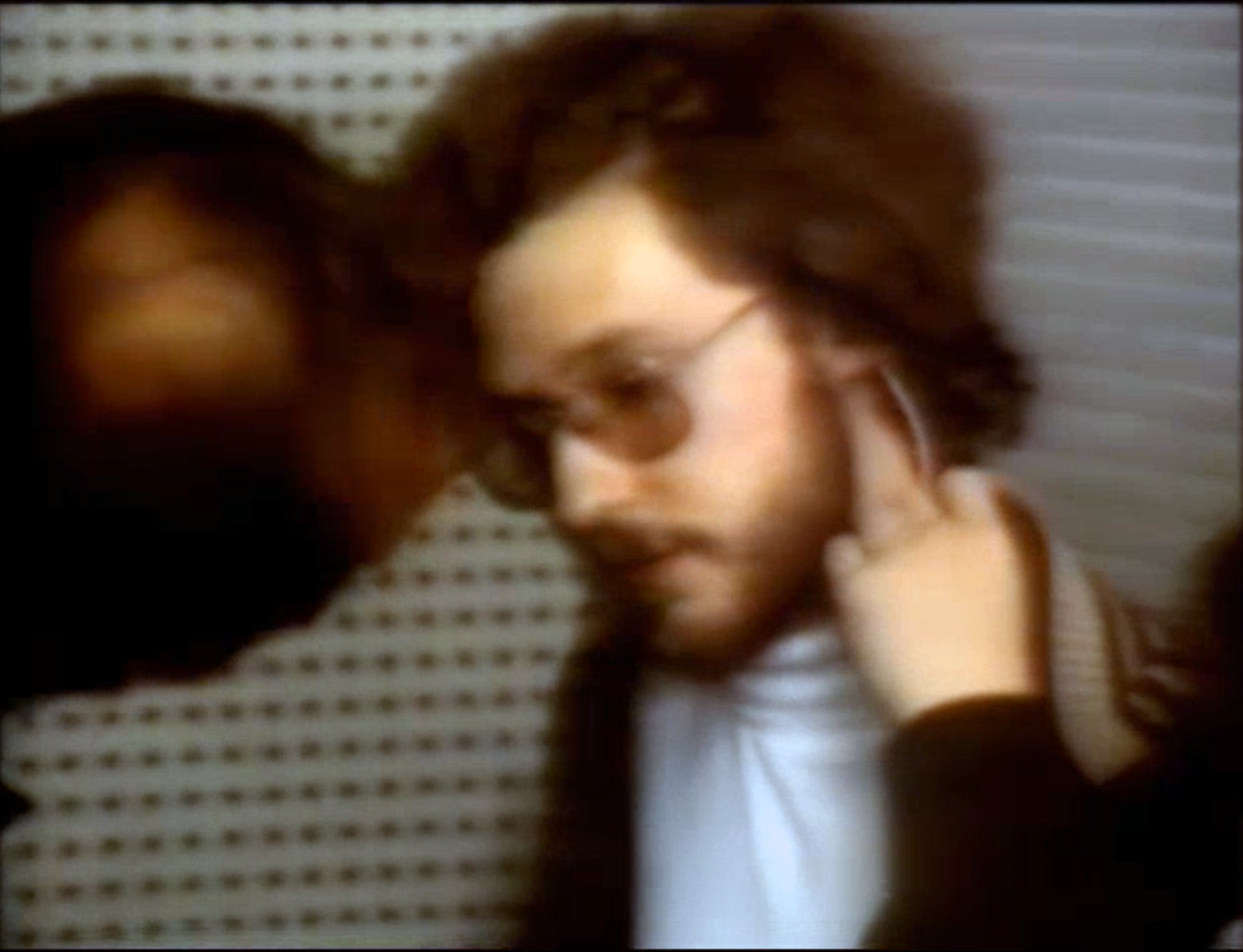
Frederic was able to talk to him from a vantage point high above the tournament hall. Ken was standing by in New Jersey to deliver the moves by phone.
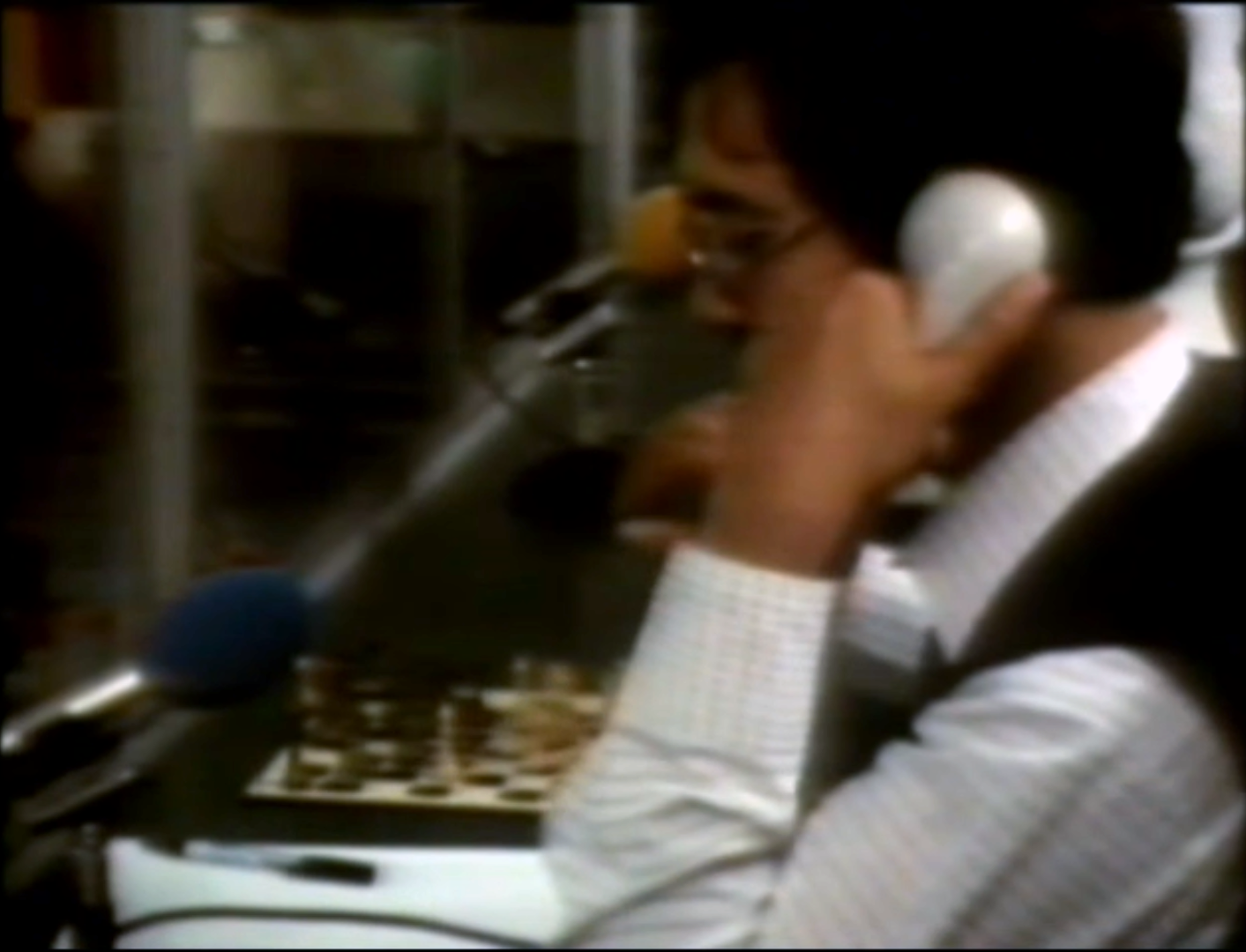
Using a pair of binoculars Frederic followed the moves on Dieter’s board. As soon as the grandmaster made a move he relayed it by phone to Ken, who entered it into the computer.
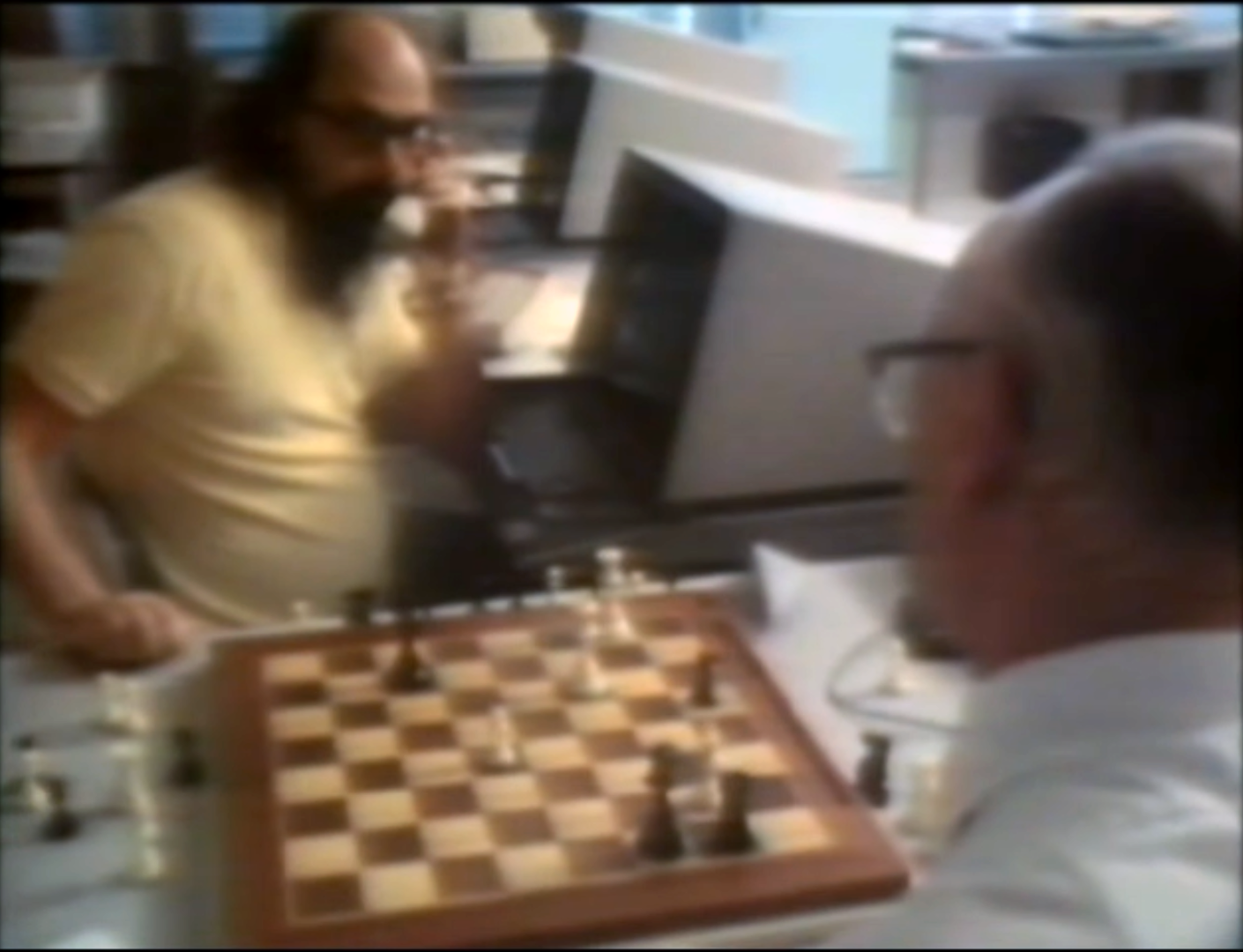
When Helmut approached the board again Frederic would warn Ken, who would give him Belle’s current best move. This was then dictated by radio transmission to Dieter’s earphone, and he executed it as naturally as possible on the board.
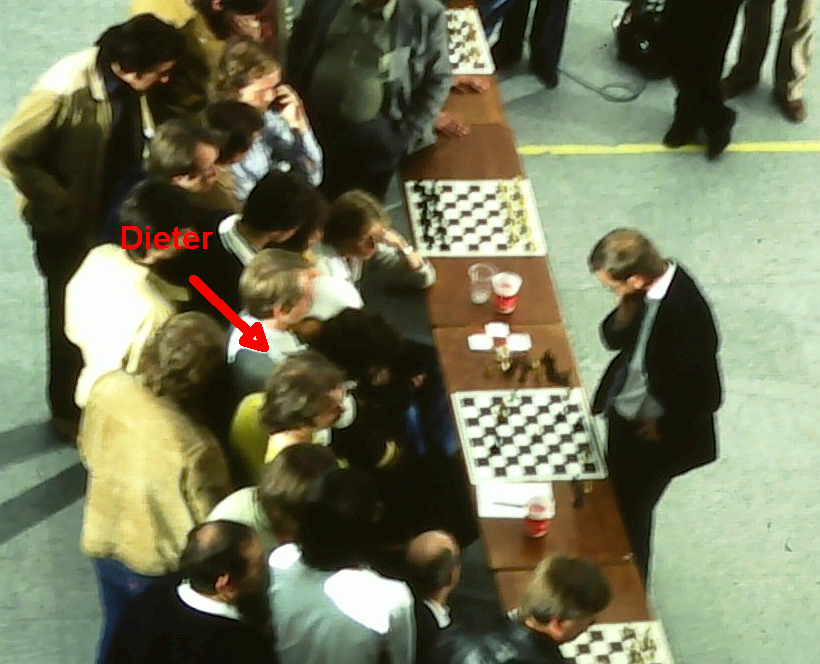
After some hours Helmut Pfleger was winning all his games, including the one against Belle! However, at move 49 he missed a clear way to end it.
Immediately after the game the Producers of the TV documentary pointed a camera at Helmut Pfleger and asked him whether he had noticed anything unusual. Nothing. One of the games, they told him, had been played by a machine. Helmut was very surprised. “Which game was that?” He was amazed to hear it was the one he lost. “I really noticed nothing. Wow, these things are really playing quite well these days.”
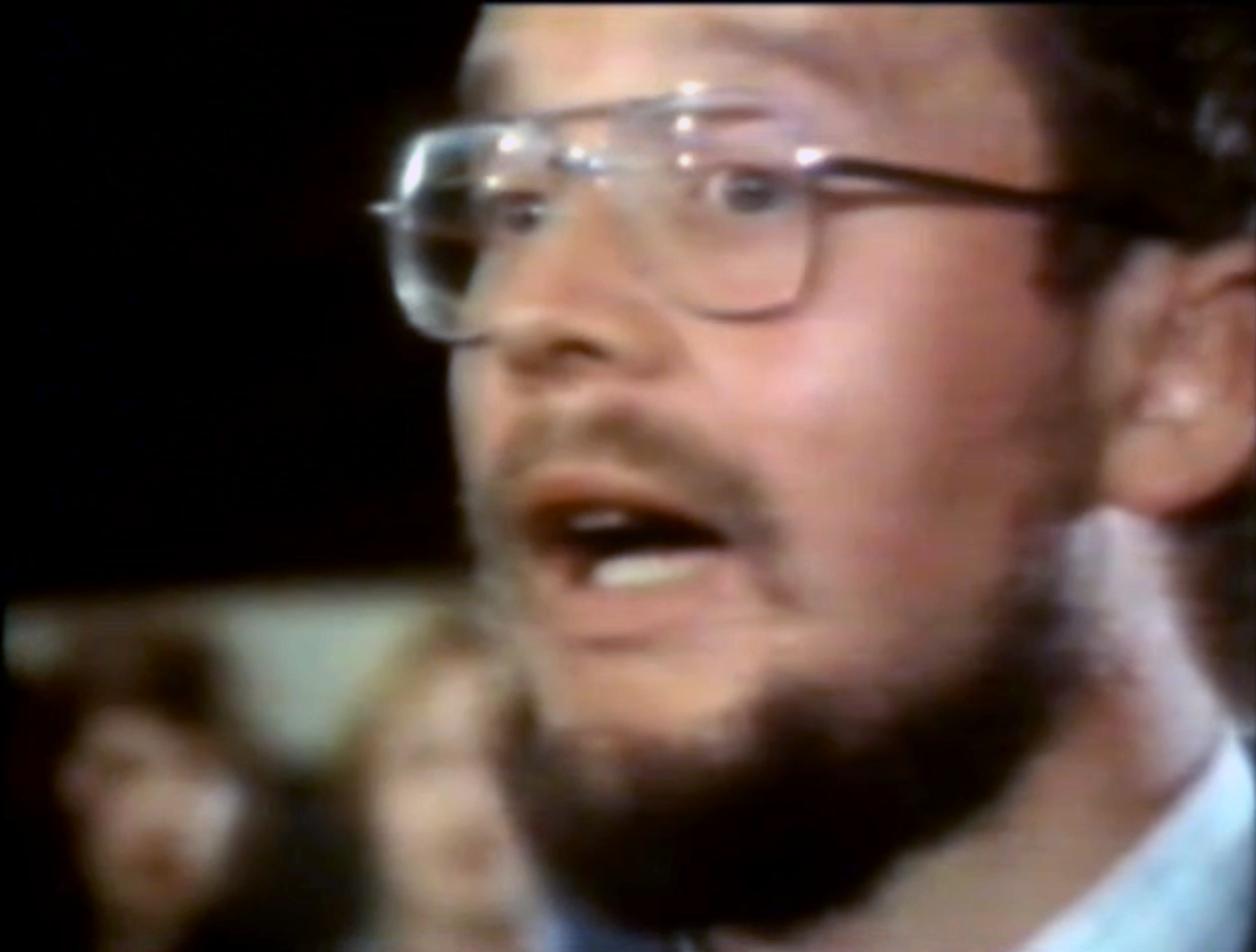
The sheer surprise by GM Pfleger that a mere machine could beat him, even in a simul, is a sign of its times.
The Friedel-Thompson-Belle game was of course not an example of cheating. It was an experiment in which the deception was immediately revealed. The same cannot be said about the later cases, in which the perpetrators tried to hide their activities as best they could.
Warmest thanks to Frederic Friedel for sharing the tale and footage, buried to history for so many decades.
The footage is from a 1980 documentary on German TV in a series called 'Bilder der Wissenschaft' and was produced by Albrecht Fölsing and Frederic Friedel.