4/4/2021 – In the mid-nineteenth century, sacrifice was king, and it was supposedly considered “ungentlemanly” to disdain the tasty bait which the opponent proffered. In today’s column, Jon Speelman looks at three examples of the decision-making process behind accepting or not a sacrifice made by the opponent. | Pictured: Vasily Smyslov | Photo: Dutch National Archive
new: Fritz 20
Your personal chess trainer. Your toughest opponent. Your strongest ally. FRITZ 20 is more than just a chess engine – it is a training revolution for ambitious players and professionals. Whether you are taking your first steps into the world of serious chess training, or already playing at tournament level, FRITZ 20 will help you train more efficiently, intelligently and individually than ever before.
YOUR PERSONAL CHESS COACH - Whether you’re taking your first steps into the world of club chess, or already playing at a tournament level: with FRITZ, you can train more efficiently, intelligently and with a more personalised approach than ever before. FRITZ is more than just a chess engine – it’s a training revolution! Whether you’re taking your first steps into the world of club chess, or already playing at a tournament level: with FRITZ, you can train more efficiently, intelligently and with a more personalised approach than ever before.
EXPAND YOUR CHESS HORIZONS
It doesn't get any better than this: the premium equipment perfect for tournament players and professionals: with ChessBase program '26, Mega Database, CORR-Database and much more.
€499.90
To take or not to take?
[Note that Jon Speelman also looks at the content of the article in video format, here embedded at the end of the article.]
In the infancy of modern chess, in the mid-nineteenth century, sacrifice was king, and it was supposedly considered “ungentlemanly” to disdain the tasty bait which the opponent proffered.
Later on, as standards rose, pragmatism asserted itself and sacrifices were judged on their merits: you accepted material when this seemed possible (or if there was no choice), but declined otherwise.
Personally, I err on the side of the latter, taking pieces when sacrifices look ridiculous, but otherwise, as a first reaction, striving to find a way to create my own threats and maybe take the bait later on, on my own terms.
Today we look at three examples of the decision-making process starting with a game from the heyday of sacrifice when, for once, its high priest Adolf Anderssen was hoist by his own petard.
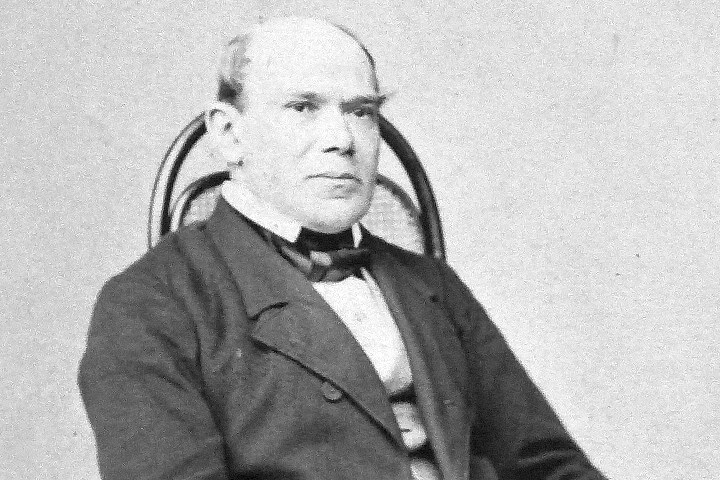
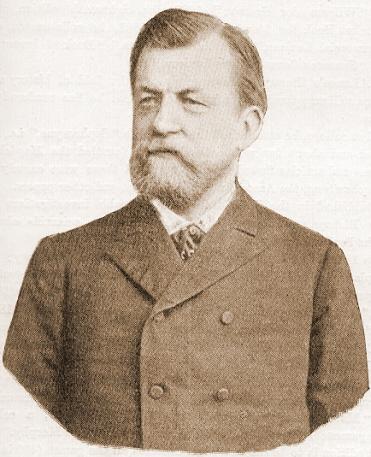
[Pictured: Max Lange (1832-1889)]
Adolf Anderssen | Photo: German Chess Federation
I actually began thinking about famous examples of refusing — or failing to refuse — sacrifices when analysing a recent game from the online European Club Cup, and we’ll look at it next before finishing with a very famous example from the mid-twentieth century.
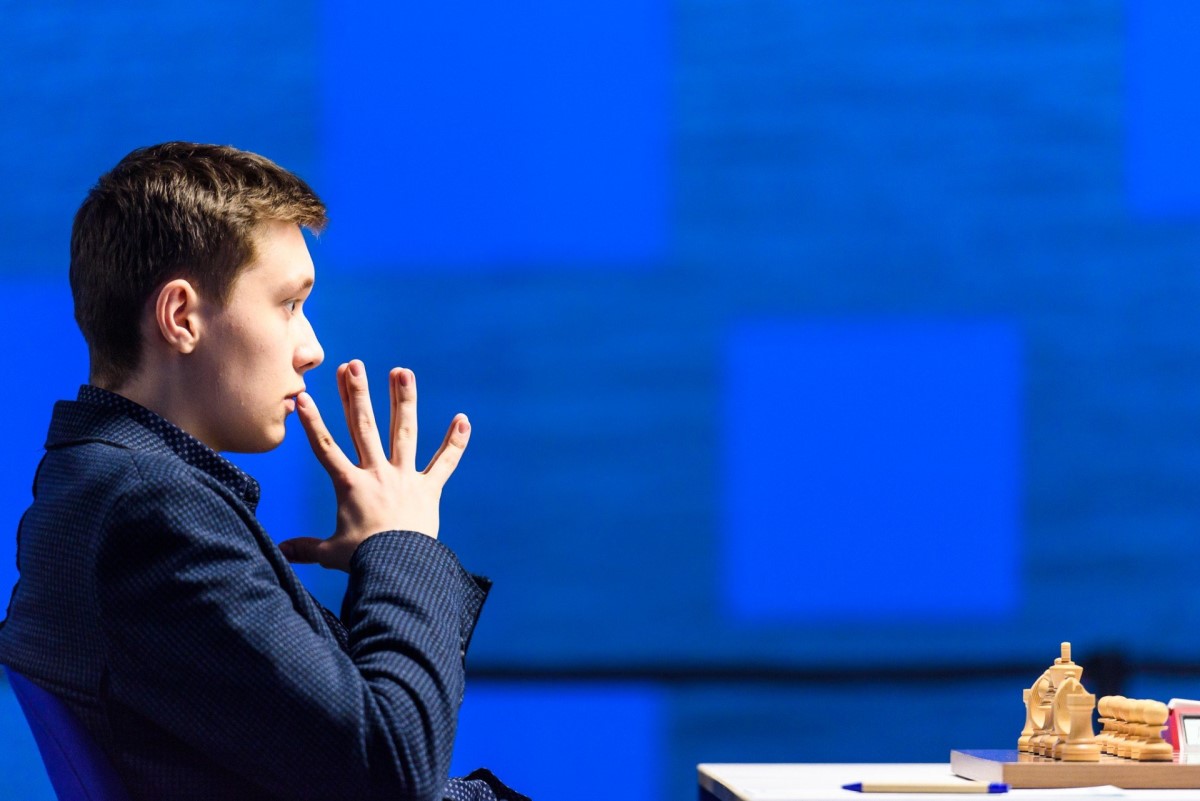
Andrey Esipenko | Photo: Jurriaan Hoefsmit
One of the most famous examples ever of refusing a sacrifice is this wonderful game from the 1953 Candidates Tournament in Zurich.
The aim of these Dvd's is to build a repertoire after 1.c4 and 2.g3 for White. The first DVD includes the systems 1...e5, the Dutch and Indian setups. The second DVD includes the systems with 1...c5, 1...c6 and 1...e6.
Jonathan SpeelmanJonathan Speelman, born in 1956, studied mathematics but became a professional chess player in 1977. He was a member of the English Olympic team from 1980–2006 and three times British Champion. He played twice in Candidates Tournaments, reaching the semi-final in 1989. He twice seconded a World Championship challenger: Nigel Short and then Viswanathan Anand against Garry Kasparov in London 1993 and New York 1995.
YOUR PERSONAL CHESS COACH - Whether you’re taking your first steps into the world of club chess, or already playing at a tournament level: with FRITZ, you can train more efficiently, intelligently and with a more personalised approach than ever before.
Slav and Semi-Slav Powerbase 2026 is a database and contains a total of 11 766 games from Mega 2026 or the Correspondence Database 2026, of which 1136 are annotated.
For the Slav and Semi-Slav Powerbook 2026 the ratings average was set again at 2400. 2.24 million games from the engine room of playchess.com met this threshold, to which were added over 130 000 games played by humans.
In this volume, we dive into core aspects of chess technique. Smyslov taught the principle of tactical hierarchy, “checks, double attacks, and unprotected pieces”, and Mikhalchishin demonstrates how this method of calculation is vital.
Videos: Nico Zwirs examines two Petroffs from the 2026 Candidates. Robert Ris has a tip against the Caro-Kann Advance Variation with 3…c5. Fiona Sieber reveals a surprise weapon against the Najdorf. ‘Lucky Bag’ with 40 analyses by Ganguly, L'Ami et al.
YOUR PERSONAL CHESS COACH - Whether you’re taking your first steps into the world of club chess, or already playing at a tournament level: with FRITZ, you can train more efficiently, intelligently and with a more personalised approach than ever before.
In this powerful new course, endgame expert Karsten Müller teams up with rising star Leon Mendonca to deliver what truly matters: 10 essential rules that every player must know.
€19.90
We use cookies and comparable technologies to provide certain functions, to improve the user experience and to offer interest-oriented content. Depending on their intended use, analysis cookies and marketing cookies may be used in addition to technically required cookies. Here you can make detailed settings or revoke your consent (if necessary partially) with effect for the future. Further information can be found in our data protection declaration.
Pop-up for detailed settings
We use cookies and comparable technologies to provide certain functions, to improve the user experience and to offer interest-oriented content. Depending on their intended use, cookies may be used in addition to technically required cookies, analysis cookies and marketing cookies. You can decide which cookies to use by selecting the appropriate options below. Please note that your selection may affect the functionality of the service. Further information can be found in our privacy policy.
Technically required cookies
Technically required cookies: so that you can navigate and use the basic functions and store preferences.
Analysis Cookies
To help us determine how visitors interact with our website to improve the user experience.
Marketing-Cookies
To help us offer and evaluate relevant content and interesting and appropriate advertisement.












 In the infancy of modern chess, in the mid-nineteenth century, sacrifice was king, and it was supposedly considered “ungentlemanly” to disdain the tasty bait which the opponent proffered.