Firouzja beats Pragg, many chances missed in remaining two mini-matches
Alireza Firouzja has a perfect score after two rounds of play at the Norway Chess super-tournament, as he followed up his opening win over Magnus Carlsen with a classical victory against Praggnanandhaa Rameshbabu. The other two games were drawn in classical chess and decided in Armageddon, where Carlsen and Wesley So scored wins with the white pieces.
Firouzja had white for the second day in a row in Oslo and again made full use of the opportunity. After defeating Carlsen in round one, the French representative beat Pragg on Tuesday to move to 6/6. He now leads the standings by 3½ points over Gukesh and So, and is guaranteed to remain sole leader after round three, regardless of the next set of results.
 YOUR PERSONAL CHESS COACH - Whether you’re taking your first steps into the world of club chess, or already playing at a tournament level: with FRITZ, you can train more efficiently, intelligently and with a more personalised approach than ever before.
FRITZ is more than just a chess engine – it’s a training revolution! Whether you’re taking your first steps into the world of club chess, or already playing at a tournament level: with FRITZ, you can train more efficiently, intelligently and with a more personalised approach than ever before.
The back-to-back wins by Firouzja gained him 10.7 rating points, which allowed him to reenter the world top ten in the live ratings list, as he came from losing 15.3 Elo points at the Super Chess Classic Romania, where he suffered an ankle injury after falling from the stage - and still played two more games from his bed in a hotel room.
Round three will feature Firouzja with the black pieces against Gukesh, in what will be the leader's first game without the white pieces in the tournament.
Round 2 results
| White |
Result |
Black |
| Alireza Firouzja |
3 - 0 |
Praggnanandhaa R. |
| Magnus Carlsen |
1½ - 1 |
Vincent Keymer |
| Wesley So |
1½ - 1 |
Gukesh Dommaraju |
Standings after round 2
| Player |
Rating |
Federation |
Points |
| Alireza Firouzja |
2759 |
France |
6 |
| Wesley So |
2754 |
United States |
2½ |
| Gukesh Dommaraju |
2732 |
India |
2½ |
| Vincent Keymer |
2759 |
Germany |
2 |
| Magnus Carlsen |
2840 |
Norway |
1½ |
| Praggnanandhaa R. |
2733 |
India |
1½ |
The key phase of Firouzja's game against Praggnanandhaa came when the Indian grandmaster chose to simplify into an endgame that proved more difficult than he had expected. Firouzja was able to build pressure and convert the resulting advantage, becoming the only player in the round to score the full 3 points available for a classical win.
Pragg, in fact, had a slight edge before playing 27...Qe4?!, offering a queen trade. Granted, Firouzja had just played the strong 27.Ne1, threatening to activate his knight via d3.
Only four moves later, Pragg faltered again in the endgame with rooks and knight against rooks and bishop. There followed 28.Qxe4 dxe4 29.Rc5 h3 30.gxh3 Rxh3 31.Rf5 Rd6?!
Defending the bishop with the rook leaves Black somewhat paralysed, as the bishop cannot move due to the pawn on f7. Instead, the correct 31...Bd8 would have given Black better chances to create counterplay and fight for a draw.
By move 43, Firouzja had coordinated his rook and knight to gain a decisive material advantage.
 You will learn how Black's dynamic piece activity and structural counterplay more than compensate for White's extra tempo in the colour-reversed setups.
The Benoni family of openings has toppled world champions, decided match games under the highest pressure, and rewarded those brave enough to play them with some of the most electrifying chess imaginable. In this Fritztrainer, Grandmaster Ivan Sokolov - continuing his successful series "Understanding Middlegame Structures" - takes you deep inside the complexities of the Colour-Reversed Benoni, the Colour-Reversed Benko Gambit, and the Colour-Reversed Blumenfeld Gambit.
Free sample video: Introduction
Free sample video: Colour Reversed Banoni - Game 1
The e4-pawn fell on the next move, and Firouzja continued to show strong technique until collecting the full 3 points for a second day in a row.

Alireza Firouzja outplayed Praggnanandhaa Rameshbabu | Photo: Norway Chess / Michal Walusza
The remaining two encounters followed a different pattern. Carlsen had clear chances to defeat Vincent Keymer in their classical game. The world number one obtained winning positions at more than one point, but failed to find the most precise continuations. Keymer held the draw, sending the match to Armageddon.
The tournament in Oslo gives players the possibility of sharing their thoughts in a confessional booth. During the classical game on Tuesday, Carlsen told the camera that he felt embarrassed for his play. In a rollercoaster struggle, it was him who missed the biggest chances - though Keymer also failed to find strong moves at critical points.
Carlsen's biggest miss surely came on move 43.
Keymer was already in trouble when he erred with 42...Qe6?, which gave White a chance to get a simple yet devastating attack with 43.Ra8+ Kg7 44.Bxf4 exf4 45.Qh5 (diagram below).
Black will need to make huge concessions to prevent White from giving checkmate.
However, none of this appeared on the board, as Carlsen went for 43.Qg4?? in the first diagrammed position. Keymer traded queens and defended a pawn-down endgame in which White's pair of bishops was unable to break through Black's stronghold.
 In this video course experts examine the games of Bent Larsen. Let them show you which openings Larsen chose, where his strength in middlegames were, how he outplayed his opponents in the endgame & you’ll get a glimpse of his tactical abilities!
Bent Larsen (1935–2010) was the greatest chess player in Danish history, and for a time, the second-strongest player in the Western world behind Bobby Fischer. Between 1954 and 1971, he won the Danish Championship six times, and achieved numerous international tournament victories throughout his career.
Free video sample: Introduction to Bent Larsen by Peter Heine Nielsen
Free video sample: Introduction to the Opening Section
Carlsen then won with the white pieces in the rapid-chess decider, collecting 1½ points from the mini-match. It was Keymer's second consecutive loss in Armageddon, though, unlike on Monday, he is probably happy to have obtained 1 point in his encounter against Carlsen.
Magnus Carlsen was well-aware of the fact he had missed big chances during the classical game | Photo: Norway Chess / Tor Nilssen
But the world number-one went on to show his class and managed to win the Armageddon decider | Photo: Norway Chess / Michal Walusza
So also won his Armageddon game with white after drawing his classical encounter against world champion Gukesh. The Indian ace had winning chances in the first game, but the position was not straightforward. So defended resourcefully in a complex material imbalance with queen and knight against rook, bishop and knight, and managed to hold the draw.
Gukesh missed his last big chance in this game in the position above. It should be noted, though, that such setups require very precise calculation, which is very difficult to execute with just seconds on the clock.
Here, as the engines point out, 65...Nf3+! is clearly winning, while Gukesh's 65...Nf5+?! allows White to escape. Still, kudos to So for showing splendid defensive technique in what turned out to be a 116-move marathon. Notably, Gukesh also played the longest game on Monday, as his classical game against Keymer lasted 144 moves.
In the tiebreaker, So got an advantage out of the opening, but failed to find an accurate combination on move 21.
A number of discovered attacks are in the air - and So went for the wrong one: 21.Nf6+? gxf6 22.Qxd6 Qe3+ allows Black to restore the balance (and he only needed a draw in Armageddon).
Instead, White should exploit the fact that his rook on e1 stands on the same file as the black queen on e8, and go for a slightly longer combination: 21.Rxc6 Bxc6 22.Nd4 (discovered attack against the queen) Qd7 23.Nxc6 - and a new discovered attack has suddenly appeared!
If Black plays 23...Qxc6 White has 24.Nf6+, and it is now the bishop on g2 which collects the queen. Black does get to also grab the opponent's queen with yet another discovered check - 25...Kh8 26.Bxc6 Bc5+ 27.Kg2 Rxd1 - but White is clearly winning after 28.Rxd1 gxf6
The position with rooks and bishops of opposite colours is clearly favourable for White.
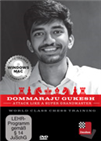 In this Fritztrainer: “Attack like a Super GM” with Gukesh we touch upon all aspects of his play, with special emphasis on how you can become a better attacking player.
However, none of this was played, and Gukesh seemed to be en route to getting the draw he needed. But it was the world champion who made the last mistake shortly after, as a tactical miscalculation gave So a rather quick 25-move victory.
Gukesh Dommaraju resigns in the rapid-chess decider | Photo: Norway Chess / Michal Walusza
The ever-polite Wesley So talks to the press after his victory over the reigning world champion | Photo: Norway Chess / Michal Walusza
All games - Classical
All games - Armageddon
Links